Introducing Micron Research Labs — a U.S.-based long-horizon research institution in Boise, backed by a planned $10B investment over the next decade. The first dedicated memory research hub of its kind in the U.S.
Bringing together academia, government, startups and industry to advance the memory and compute breakthroughs that will define the AI era.
Read more: https://t.co/s7sWB4PrVx
#Micron #IntelligenceAccelerated #AI
A fully utilized accelerator can still be wasting work.
Utilization tells us silicon is active. It does not tell us whether that activity is producing useful AI output.
Jeremy Werner explains why memory and storage are critical to turning accelerator time into productive results.
Read more 👉 https://t.co/BdLdfI6czU
Micron is helping shape the future of computing and scientific discovery as part of Micron Research Labs. Micron plans to invest up to $50 million to support the Genesis Mission graduate fellowship and national lab research. By supporting doctoral fellowships, technical mentorship, and collaborative research, we'll help accelerate innovation and strengthen U.S. scientific leadership. @WhiteHouse@WHOSTP47@ENERGY@mkratsios47@SecretaryWright
This technology is becoming a massive part of our daily lives. According to a report by MarketsandMarkets, the global autonomous mobile robot market is currently valued at roughly $2.75 billion and is projected to reach $7.07 billion by 2032.
To process all that visual data instantly without draining the battery, these robots require fast, energy-efficient memory and storage. That’s exactly what Micron provides.
Imagine a delivery robot cruising down the sidewalk to bring your dinner, when suddenly, a fallen branch blocks its path. How does it know to stop or steer around it?
That's thanks to #edgeAI! Instead of sending video footage to a cloud server and waiting for instructions, the robot uses AI to process its camera and sensor data right on the device.
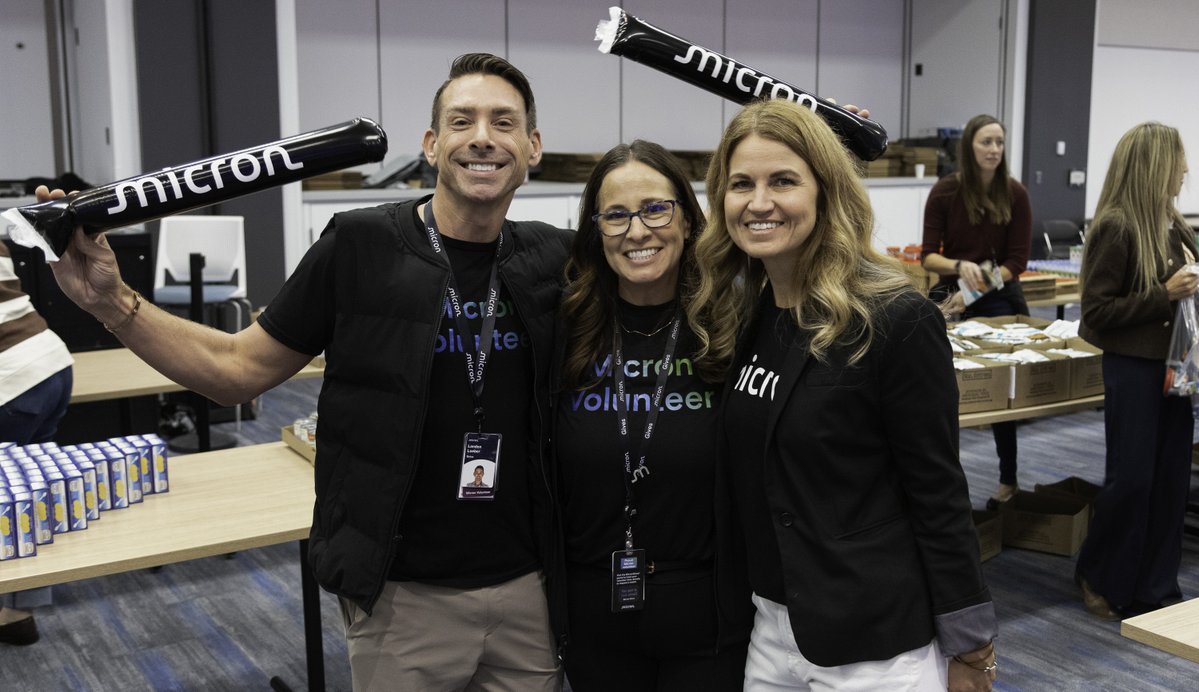
For 48 years, innovation at Micron has started with people.
From breakthrough technologies to meaningful community impact, our team members have helped shape what's possible by bringing curiosity, collaboration, and a commitment to making a difference every day.
As we reflect on our journey, we're grateful for the people who power our success, the communities that support us, and the spirit of innovation that continues to inspire what's next.
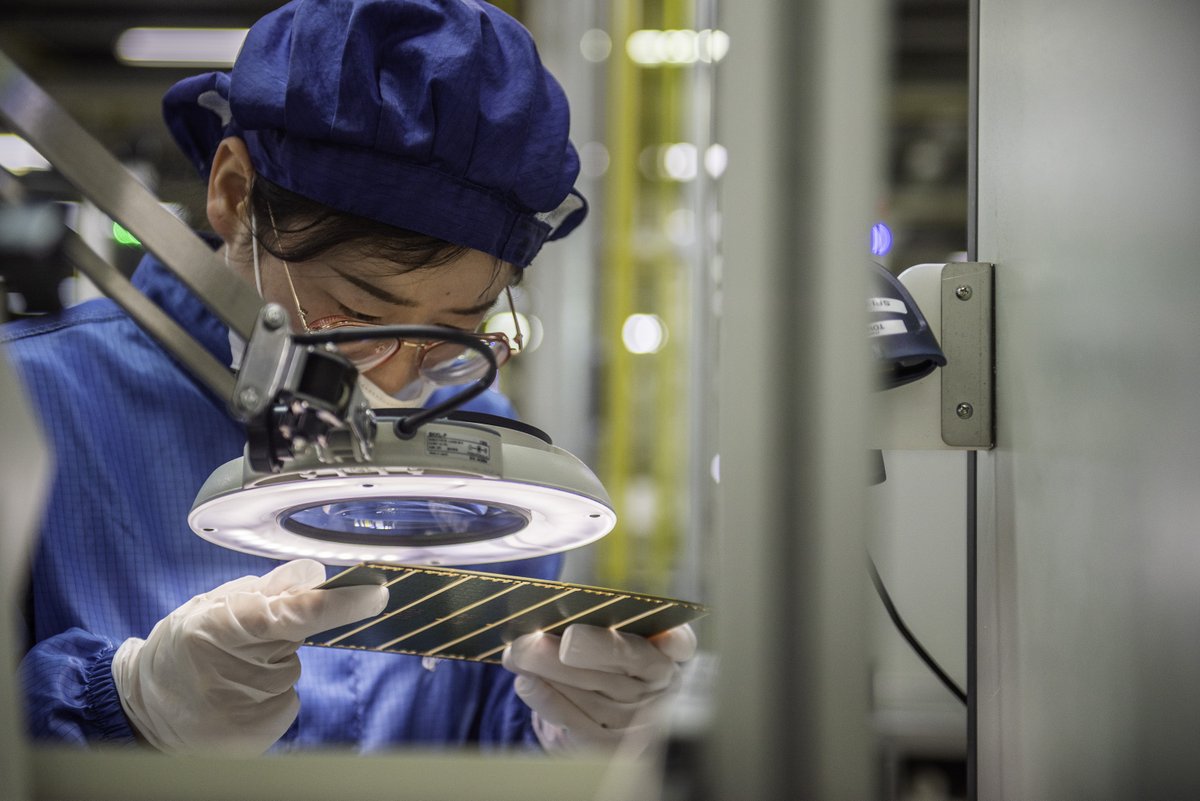
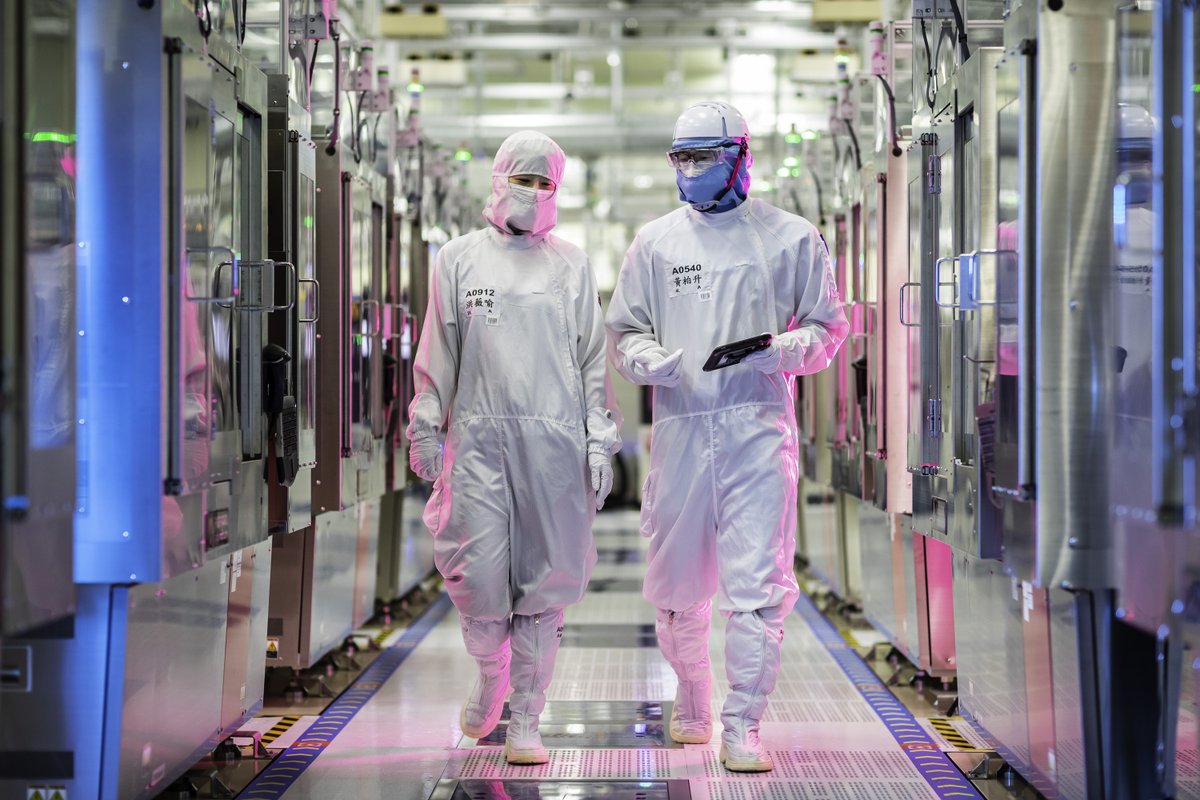
At Micron, manufacturing is about more than facilities. It's about creating opportunities, strengthening communities, advancing innovation, and helping build a more resilient semiconductor supply chain.
Right now, Micron is expanding memory and storage manufacturing and advanced packaging across the globe, with new fabs in Idaho and New York, a modernized manufacturing facility in Virginia, manufacturing and advanced packaging investments in Singapore, a cleanroom expansion in Japan, expanded operations in Taiwan, and India’s first assembly and test facility in Sanand. In the United States alone, this includes more than $250 billion in manufacturing and R&D investments expected to create over 90,000 jobs while helping meet growing demand for the memory and storage that power AI and other transformative technologies.
Semiconductor manufacturing is one of the most complex processes in the world, built by the engineers, technicians, construction teams and community partners at Micron sites everywhere we operate. Happy International Manufacturing Day.
#InternationalManufacturingDay #Manufacturing #Innovation
Following Micron's record fiscal Q4 and fiscal year 2026 results, Chairman and CEO Sanjay Mehrotra joined CNBC's Jim Cramer on Squawk on the Street to discuss the growing importance of memory and the strong demand environment driving Micron's momentum.
"Memory is key in this era of AI or super intelligence. Micron has a comprehensive portfolio of technology, products, manufacturing capabilities, and we continue to address the fast growing opportunities ahead," Sanjay shared, highlighting Micron's technology leadership, expanding customer commitments and continued investment in the talent powering that success.
Watch the full interview: https://t.co/wrQtPVEQl4
A human driver may need about 1.5 seconds to react. An AI-powered car can respond in a fraction of that time, but only if the hardware inside the vehicle is fast enough.
That's why memory matters. It enables vehicles to process data from cameras, LiDAR and radar in real time, helping #AI make decisions in milliseconds.
If your device's memory can't keep up, the AI processor gets starved for data. Memory and storage are the invisible pipeline that make those instant, flawless edits possible! 📱
Ever used an AI eraser tool to wipe a photobomber out of an otherwise perfect shot? 📸
It happens in the blink of an eye, but behind the screen, your device is actually crunching an unbelievable amount of data. 🧵👇
When you circle someone to remove them, the AI isn't just cutting them out...it’s painting over them. To pull that off, the AI has to instantly scan millions of surrounding pixels to figure out the lighting and textures. That means reading and writing huge chunks of data all at once.
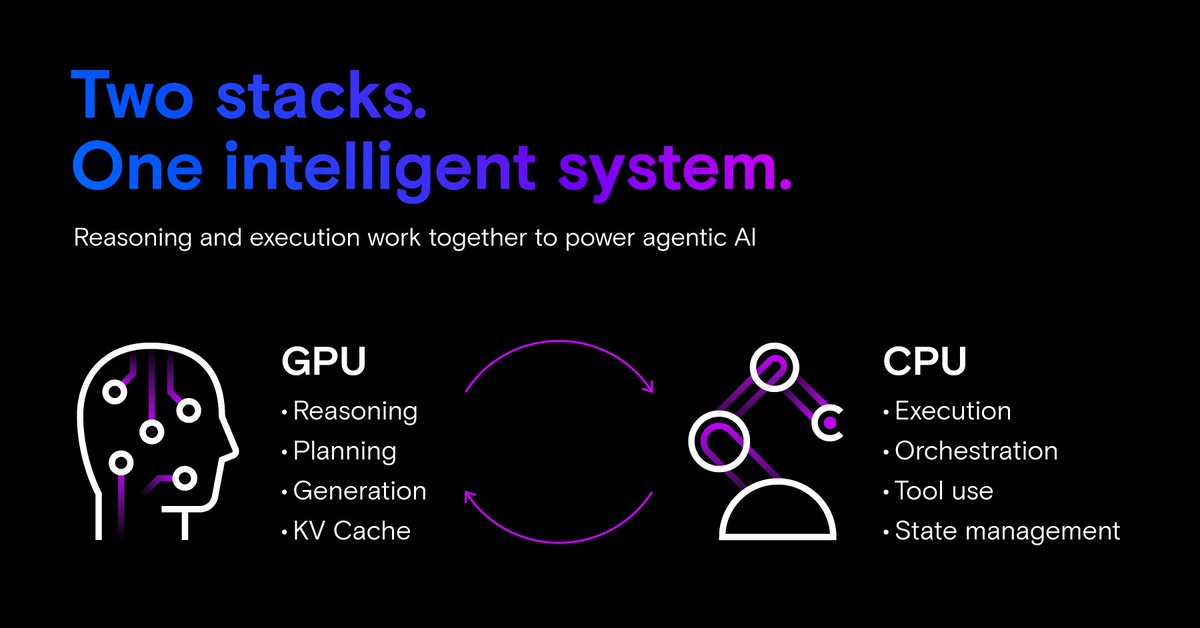
The promise of agentic AI is simple: less time spent managing tasks and more time focused on higher-value work.
As Micron SVP & GM, Core Data Center Business Unit, Jeremy Werner explains, agentic AI runs on two compute stacks, not one. The GPU reasons and plans, while the CPU orchestrates actions. Technologies like KV cache keep AI context available, but growing context sizes and agentic workloads are driving memory needs far beyond reasoning alone. Learn more: https://t.co/c0RUtxNexT
From personalized food recommendations to real-time translations to smarter on-device capabilities, these AI experiences all share one growing challenge: getting the right data to the right place, at the right time.
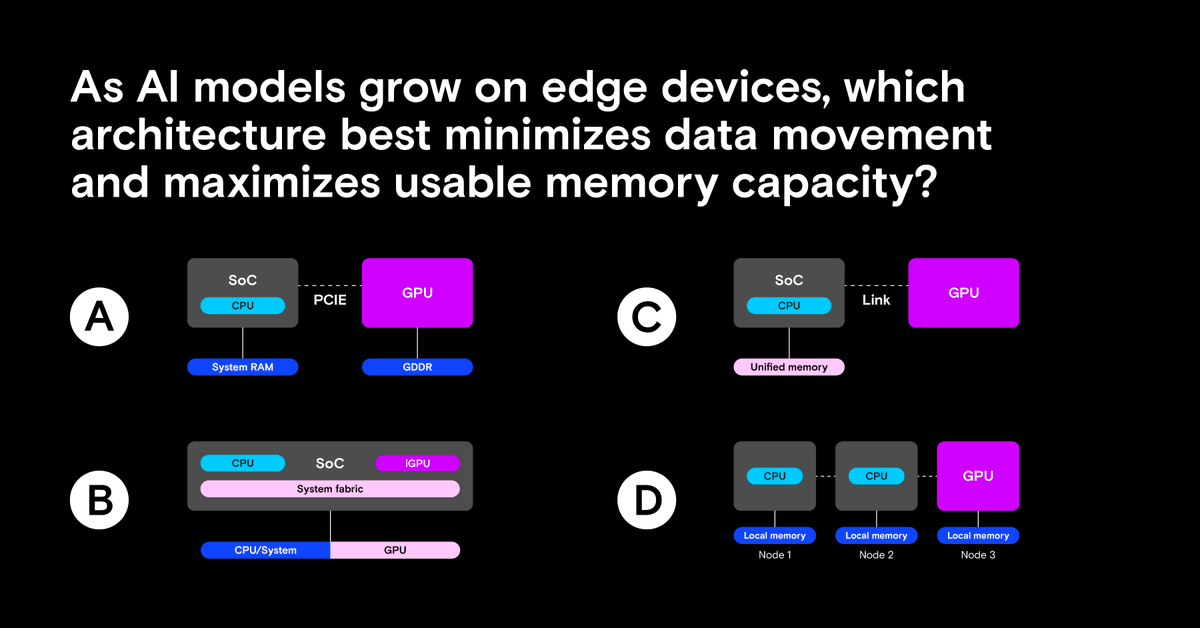
Which memory architecture do you think is best suited for sustained edge #AI inference as workloads become more demanding?
A. Discrete memory architecture
B. Shared memory systems
C. UMA with GPU implemented
D. NUMA architecture
Drop your answer in the comments below.
#EdgeComputing #IntelligenceAccelerated
How does AI know what comes next?
A language model doesn't rely on experience the way humans do. Instead, it navigates an entirely different space: the embedding space.
This is where words, concepts and relationships are encoded in ways that help AI recognize patterns and predict what comes next. It's also where the idea of AI "knowledge" becomes much more interesting.
Discover how meaning is represented in this space and explore what "knowledge" really means for AI. 👉 https://t.co/IBLaJNFOxK
AI that trains in the cloud and runs on your wrist needs one foundation: fast, efficient memory and storage. With Micron, #AI builds, runs and accelerates. https://t.co/U0itNeQJkI #IntelligenceAccelerated
AI is raising expectations for personal computing. Users want intelligent experiences that are responsive, personal, and available wherever they work.
Join Nirav Patel, CEO of Framework, and Chris Moore, VP of Marketing at Micron, as they discuss how AI is reshaping the future of PCs, from on-device AI and system design to the memory and storage innovations needed to deliver next-generation experiences at the edge.
Watch the full conversation. #AI #AIPC #FutureOfComputing https://t.co/AOomQafti6
That's where the memory comes in. The vacuum uses ultra-fast memory to catch, process, and analyze those 30+ frames per second. The memory allows the neural processor to identify a hazard in a fraction of a millisecond.
The faster the memory, the faster the vacuum hits the brakes! 🛑
Have you ever wondered how high-end robot vacuums manage to navigate around pet toys, shoes, and stray charging cables without getting tangled up?
It’s not just a camera; it’s #AI working at lightning speed. But for that AI to actually prevent a collision, it requires incredibly fast memory. Here is how it works... 🧵👇
When a robot vacuum rolls through your living room, its camera is capturing video at roughly 30 to 60 frames every single second. If the vacuum had to send that video feed to a cloud server to ask, "Is that a power cord?", the internet delay would mean the wheels would run over the cord before the AI could ever say "STOP!"
To prevent this, the AI has to run completely offline, right inside the vacuum itself.