AI helped @MIT DMSE researchers search 1.7 million possible polymers, uncovering promising solid-state battery electrolytes that could outperform today's leading materials. More in @Matter_CP: https://t.co/p6AaXCHiRk
Past Kavanaugh Fellow Alice Stanton was named one of @SciAm’s Young American Scientists. Stanton developed “mini brain” tissue models @MIT to help researchers better understand neurological diseases like Alzheimer’s—and advance personalized treatments. https://t.co/Z5nnACHnEl
The pursuit of ideas that seemed impossible, until they weren't. That's #CuriosityOnAMission.
In case you missed it, check out this great video and explore the stories behind it: https://t.co/CbBbjfqBh8
Diana Grass of @AnikeevaLab builds soft bioelectronic technologies to decode signals between the brain and the rest of the body. https://t.co/kUWjB1hRYJ
DMSE researcher Franco Rossi and colleagues reconstruct and decipher a Maya text at a site in Xultun, Guatemala, revealing the signature of Sak Tahn Waax, the first known Maya mathematician directly credited for his work. Read the @AntiquityJ paper: https://t.co/s0Q8XDxtww
DMSE’s Juejun Hu and Cosmin-Constantin Popescu PhD ’25 have designed an infrared lens on a chip that can reshape incoming light pixel by pixel, allowing future cameras to adapt what they capture without moving parts. https://t.co/BVqR5DUo1u
MIT researchers John Zhang, Maximiliano Jara Fornerod, and Xinyuan Zhang have been named 2026 Kavanaugh Fellows to help advance promising technologies toward real-world applications. https://t.co/yeeJyRL66q
Solid-state batteries are promising—but they can short-circuit because of metal spikes called dendrites. Researchers @MIT and @TU_Muenchen have discovered why they form, opening a path to better, more reliable solid-state batteries. https://t.co/cU06g3Zjaf
MIT researchers are making it easier to integrate electronics with photonics—combining electricity for computing with light for data transmission. The advance could help enable faster, more energy-efficient communications. https://t.co/Sl9I6HeyX2
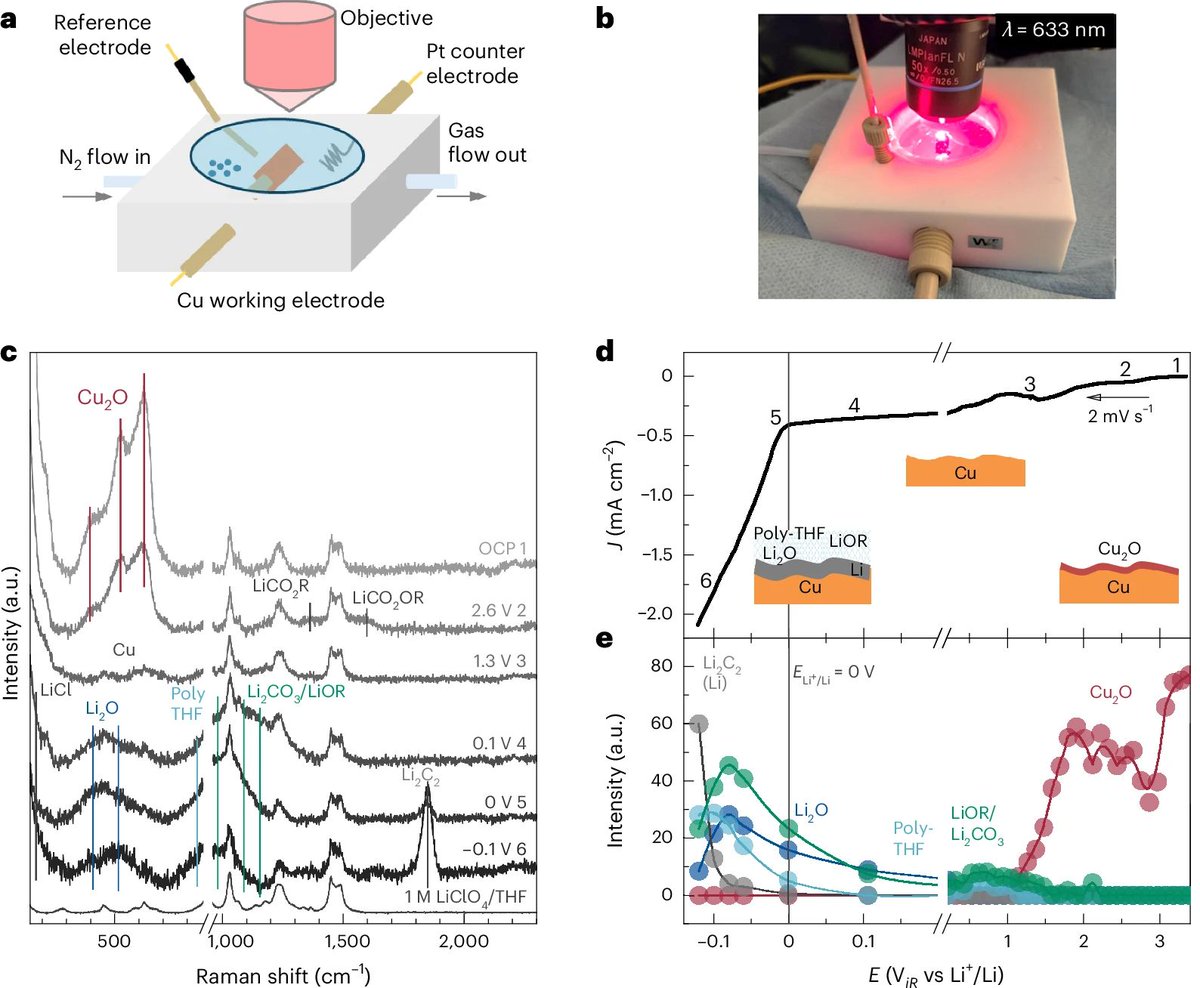
Making ammonia with electricity instead of fossil fuels could transform fertilizer production. Researchers discovered how a thin surface layer on lithium controls the reaction — and how to tune it for more efficient ammonia production. https://t.co/7eW5vcSxtu
MIT researchers developed a machine-learning approach that more accurately predicts how complex metal alloys will behave, helping speed the design of new materials for aerospace, energy, computing, and more. https://t.co/h6iq1CKpQn
DMSE’s Yet-Ming Chiang and seven other MIT affiliates were named to The Boston Globe’s 2026 Tech Power Players list. MIT President Sally Kornbluth highlighted the Institute’s role in advancing technologies across manufacturing, health, quantum, and energy. https://t.co/BiB5Zodang
Mike Coniglione, senior human resources representative in DMSE, was awarded a 2026 Infinite Mile Award from @MITEngineering. Colleagues praised his ability to proactively address challenges, manage complex processes, and strengthen the DMSE community. https://t.co/ossGaUskf7
Eugene (Jane) Park PhD ’26 was named to the @Forbes 30 Under 30 Asia list in Healthcare & Science. Park studies quantum materials and examined how magnetic materials could enable low-power computing beyond silicon. See the full list: https://t.co/zFNcoT6rGL
The summer issue of the Frontiers newsletter is out! Explore Lorna Gibson’s new book, Birds Up Close; meet DMSE Class of 2026 graduates Nik Sandu and Camille Cunin; learn about Kavanaugh Fellows’ innovations; and more. https://t.co/kCh97YZV4W
DMSE junior Emily Crespin Guerra is one of six students selected for the competitive Eloranta Summer Undergraduate Research Fellowship. She’ll develop synthetic collagen hydrogels to grow cells in the lab, potentially advancing tissue engineering. https://t.co/pIBfZfYXTb
MIT is ranked the world’s No. 1 university for the 15th year in a row. MIT also ranks first in 12 subject areas, including materials science. https://t.co/L9FnBmYSHE
DMSE graduate student Hao Nghi Luu has received a 2026 J-WAFS Travel Grant to attend World Water Week in Sweden for her work using engineered yeast strains to neutralize toxic elements in water supplies. https://t.co/7TxJFHXgxw
DMSE researchers developed a technique that improves predictions of how complex materials will behave, potentially reducing the time and cost of designing new materials. @MITEngineering https://t.co/f8IGFCNmFZ
The 2026 Kavanaugh Fellows are developing technologies that could remove longstanding barriers to practical applications: custom lenses manufactured more quickly and affordably, at-home strep testing, and infrared imaging without cryogenic cooling. https://t.co/QP1Dy4GV5d