I don't think we're talking enough about how Scott Bessent is starting to sound like Pete Hegseth.
Treasury has totally failed to anticipate or mitigate the economic fallout of this war and rather than course correct Bessent is bullshitting his way through the crisis.
Four out of four AI models agree that The Foundation for Defense of Democracies, the American Enterprise Institute, the Hudson Institute, and the Washington Institute for Near East Policy were among the top think tanks cheerleading the war in Iran reports @LobeLog.
I have seen Miad Maleki on The Newshour in the past few days (a terrible addition to a usually balanced news program—very disappointing). He strikes me more as an agent than an analyst.
This is a classic double bind and you are so focused on being right you fail to realize what you are arguing is not just bad policy, it’s also morally wrong.
Either the blockade is bad policy because I am right and it adds marginal economic pressure on a country that already expected the face such disruptions to trade while creating new headaches for US allies…
…or the blockade is bad policy because you are right and it leads to economic collapse and hyperinflation, which brings more misery and despair upon your fellow Iranians.
Collapsing an economy is a completely unacceptable policy aim. It’s something the international community decided was beyond the pale 100 years ago. If that’s your aim, why stop at a blockade? Why not blow up every power plant or sterilize the agricultural fields or poison the water supply?
I’m willing to grant that FDD has had a greater influence on US policy towards Iran over the last decade than any other think tank, but that is precisely why so much hardship has been brought upon ordinary Iranians and why the international community is dealing with the chaos of this stupid war.
A slavish commitment to maximizing pressure and pain leads you to see value in any policy that might hurt Iran, even if it *obviously* hurts ordinary Iranians in ways that are unconscionable and immoral.
You are in the wrong, even when you are right. Not sure there’s much honor in that.
After everything the Iranians inside the country and the diaspora have gone through in recent months and years, there is understandably a lot of consternation about the diplomacy now underway in Islamabad and what it means for the preservation of the Islamic Republic.
The lesson of the last two decades is that ordinary Iranians cannot live the lives they deserve without a transformative change in U.S.-Iran relations. If such a change can be achieved today, without further destruction and loss of life, the opportunity must be seized. This is an imperative even if the leaders negotiating the deal, on both sides of the table, have often failed to uphold the decorum of their offices and lack clear mandates from their electorates.
I firmly believe that Iran needs to experience fundamental political change. Ordinary Iranians have been failed by a political class unwilling or unable to ensure security, provide prosperity, deliver equality, and safeguard basic civil liberties. The political project of the Islamic Republic has failed.
However, in the face of this failure, Iranians have been persistent in their political activism and social organization. They have pushed back against state repression and economic deprivation to preserve spaces for self-expression and innovation and community to a degree rarely seen in the Middle East.
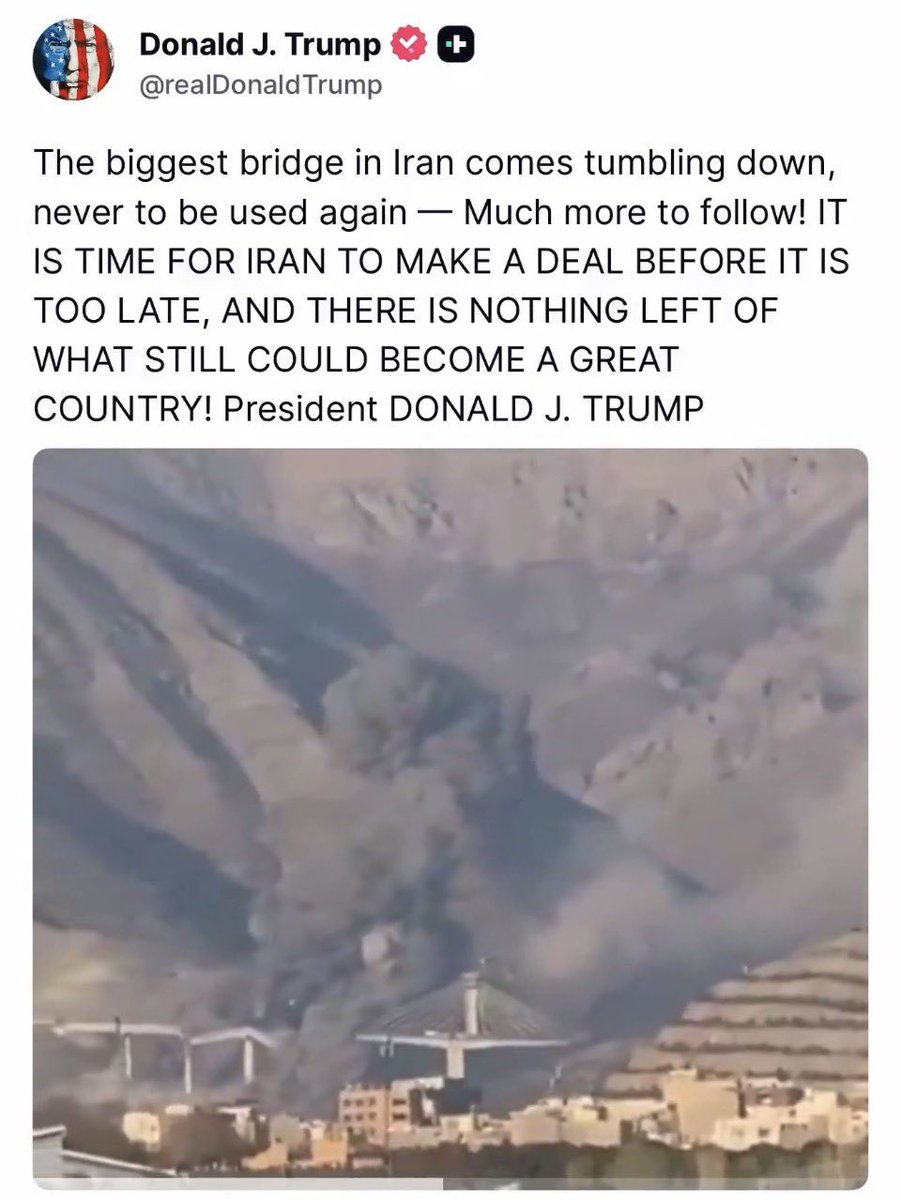
There are amazing things happening in Iran each day that speak to the resilience of ordinary people and their incredible capacity to imagine and realize better conditions for themselves and their communities. Each of the forty days of the war, we learned about a new person, or initiative, or place that represented the best of Iran and we also learned about how the war was threatening or destroying those sources of positivity: a schoolchild, an artist, a small business, a historic palace, a steel factory, a bridge, a medical institute etc.
If the talks now taking place in Islamabad can remove just some of the obstacles that have slowed the progress of the Iranian people in creating a more just and prosperous society, than diplomacy deserves our support.
Iranians cannot reasonably achieve their political aspirations if they are forced to live in a country traumatized and damaged by repeated wars. They will likewise struggle to pushback against authoritarian forces if their leaders remain completely unaccountable to the international community and especially the United States. Isolation breeds despotism. Insecurity breeds repression. Antagonism breeds paranoia. This is the lesson of 47 years.
The kind of diplomatic agreement that is being discussed right now could profoundly shift Iran's trajectory in political and economic terms. This would have an inherently positive impact on Iranian society precisely because the social fabric of Iran, although worn and tattered by so many years of internal repression and external pressures, remains that of a country in which people remain able to imagine and pursue their personal fulfillment so long as they are provided just a modicum of stability, support, and freedom.
Even in the difficult circumstances of the Islamic Republic people have managed to find dignity in their work and meaning in their social relations. But too few people are being provided such opportunities today. A diplomatic agreement that could improve economic welfare and reduce the isolation of the Iranian people is inherently worthy for it would mean more Iranians can access the stability, support, and space they need to lead fulfilling lives.
There is no promise that the talks will succeed. But there is no shame in hoping. Hope has gotten us this far.
Iran needs to know that Trump can control Bibi. That is the single most important factor for any kind of durable peace.
Forcing Israel to stop hammering Lebanon is the test.
If the administration doesn't understand this, there is really no chance that the ceasefire will hold.
This op-ed from @ProfessorPape argues that unless the U.S. undertakes "a long-term effort to reassert control over the Strait of Hormuz" then Iran will emerge as a "fourth center of global power." But the argument is detached from the reality of this war. It also misrepresents what control of the Strait of Hormuz entails.
Iran cannot "control" the Strait of Hormuz outside of the conditions of war and it cannot tolerate an attritional war forever. The ability to project a threat is not the same thing as control. Every country in the region has the same basic military capability as Iran to disrupt maritime shipping. It is not hard to fire a missile at a ship.
Iran's only distinguishing feature is that it is a country the U.S. and Israel are eager to attack. In response to such an attack, it made the decision to retaliate asymmetrically.
The best leverage Iran has to achieve a ceasefire is the promise of "opening" the strait. By definition this means that if a ceasefire takes hold, Iran will have forgone control. It may be able to use the threat of renewed attacks on the strait to deter further military aggression, but it will not be able to change the status of the strait or decide who gets to use it. This is because Iran can only credibly threaten vessels *while a war is ongoing*.
Iran was a middle power when this war began. Each day the country is being pounded by significant airstrikes, including strikes on civilian infrastructure, with more likely to come tomorrow. Even if by some measure Iran retains "control" of the strait, the country's hard power, which is derivative of its industrial base and mobilization capacity, will necessarily be diminished.
In short, Iran will not emerge from the war as a superpower and any arguments suggesting that further U.S. military action is needed to forestall that outcome are detached from reality.
https://t.co/gpTQeqHWMx
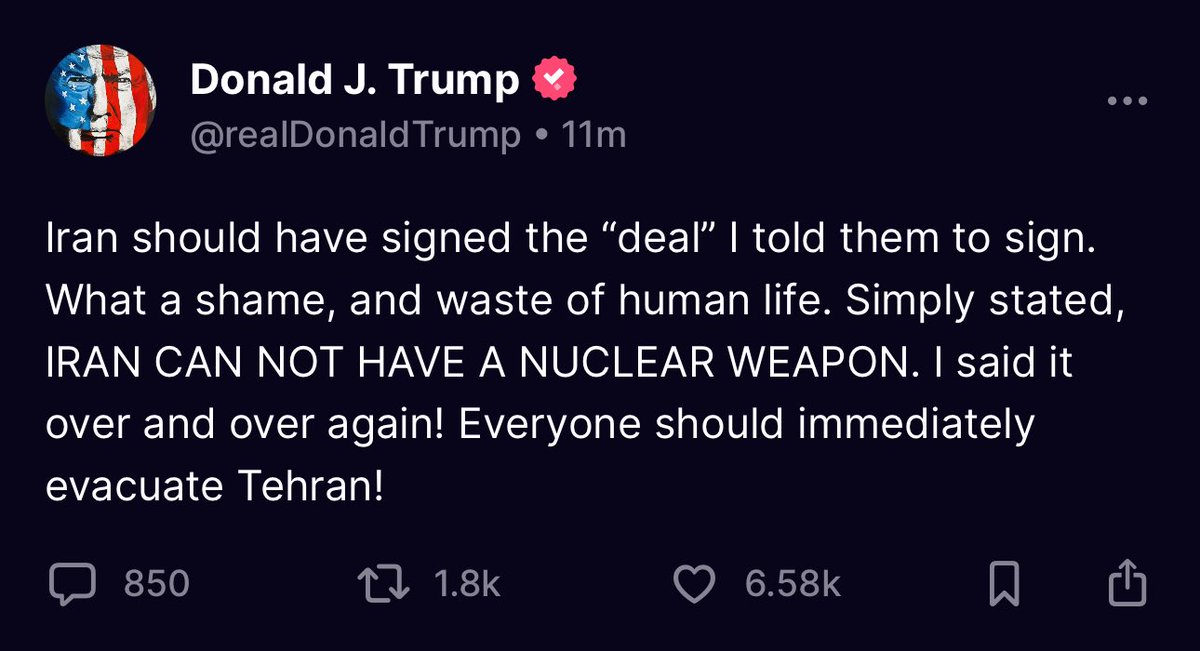
If Gulf leaders have any backbone they will publicly and forcefully condemn this statement. Their “partner” is acting without a shred of concern for their interests.
What Trump is threatening will set the entire region back decades.
He needs to be restrained, fast.
Iranian leaders have achieved operational success in externalizing the costs of this war. But their *strategy* still failed because they did not anticipate three things.
First, that U.S. allies, including the Gulf states that have so lavishly fetted Trump, would have essentially no influence over the decisions he makes.
Second, that neither the U.S. president nor his cabinet would care about unprecedented disruptions in the global economy and would make it known publicly that they don’t care.
Third, that the U.S. president could express glee about the prospect of endless escalation and the commission of war crimes and not a single part of the famous American system of checks and balances would block him from intensifying this idiotic, ruinous war.
In the face of Israeli and American aggression, Iran chose a perfectly rational, if risky, strategy. They managed to make it work operationally.
But Trump’s pursuit of this war is fundamentally irrational. He is a mad king. Rex interregnum.
been doing a series of videos telling stories as my record approaches. This one is about 'Like a Spark', the first single from the new album American Stories:
Yes, they can.
Iran is shopping central for high quality fakes and knockoffs made in China, and even made in Iran. (And some genuine brands, too.)
Go to any mall in Iran and you'll see hundreds of people--men and women--buying goods like this. And yes, people own homes, cars, and the occasional handbag or shoe.
You destroyed her home and now you question whether she can afford a purse? She probably has her documents, or a gold coin or two in it (Iranians buy gold coins as a hedge against hyperinflation).
Your post is not just offensive to every Iranian. it's pathetic. Delete it.
Money quote from this excellent @FinancialTimes article by @EdwardGLuce:
"The one offer Iran will never make is to give up its ability to disrupt the global energy markets. Yet that is the one thing Trump must have."
https://t.co/ZyxOBp1IKo
Iran's goal isn't just to survive this war—it's to make sure there isn't a next one. That reframes what "victory" for Iran would mean in ways most US commentary ignores. My latest in @NonzeroNews: https://t.co/Vo1DVR4dqG
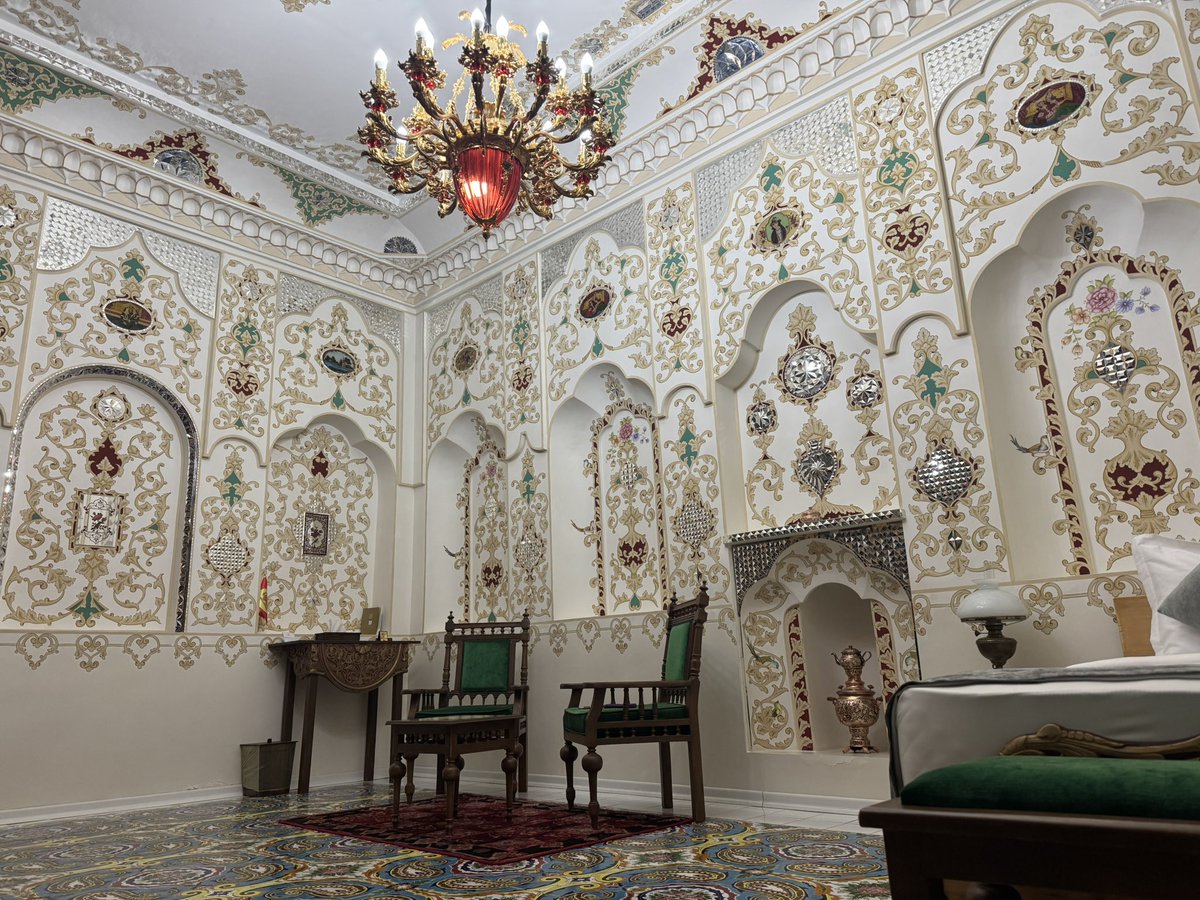
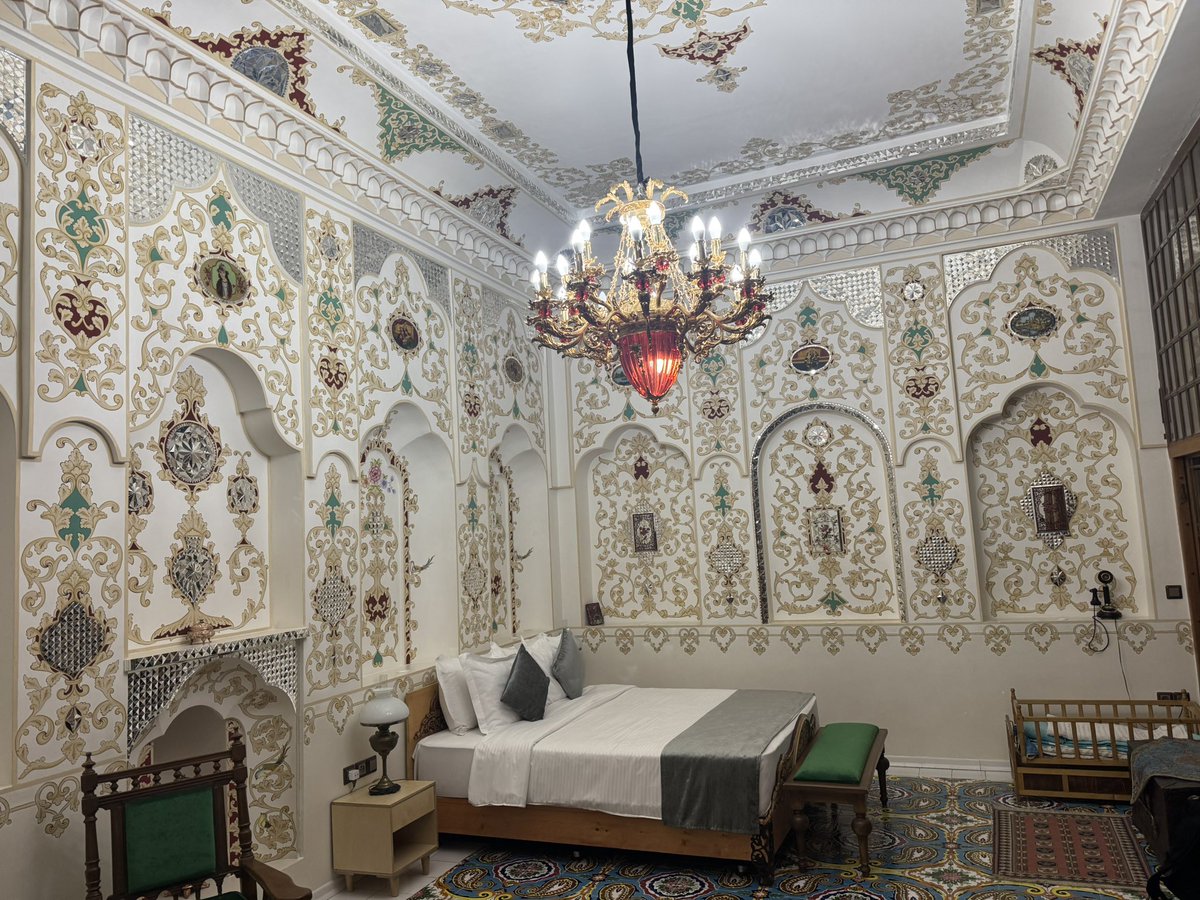
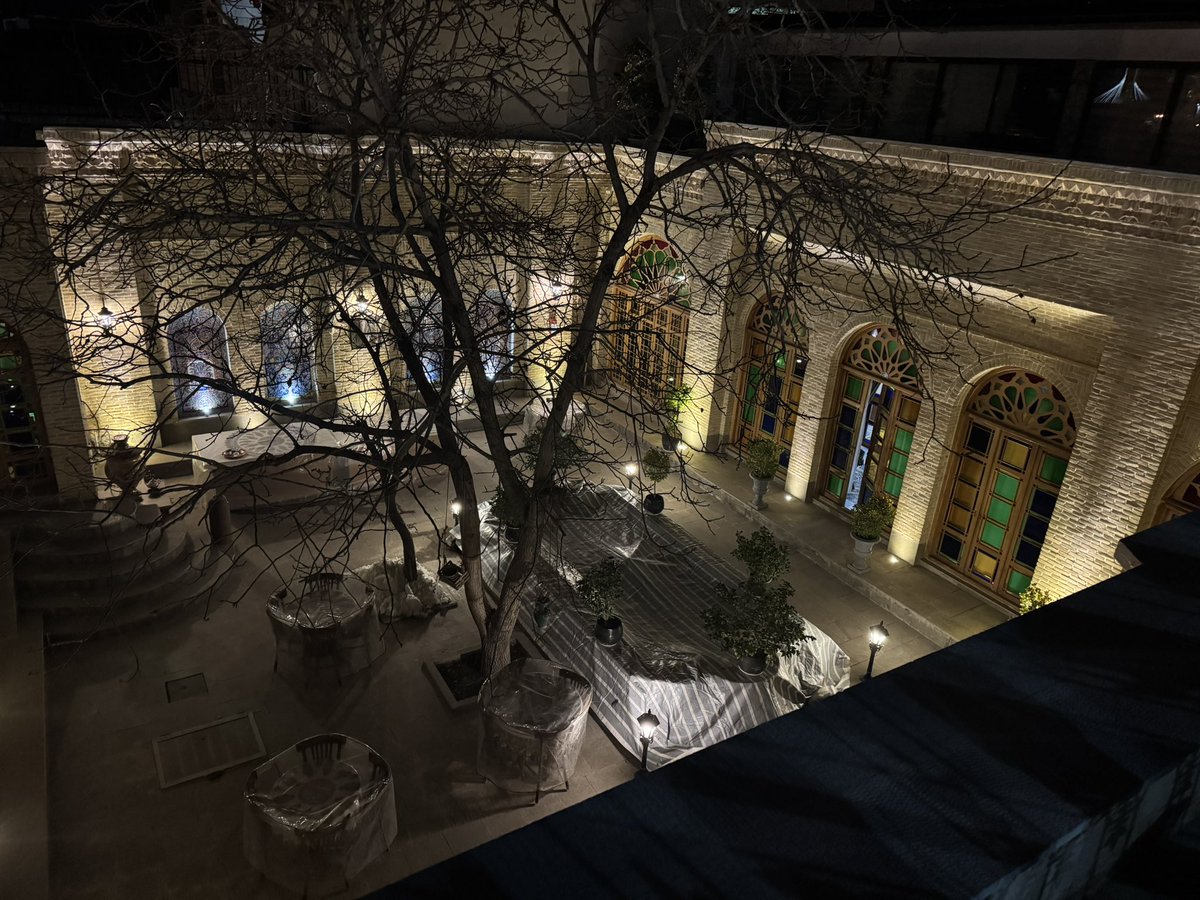
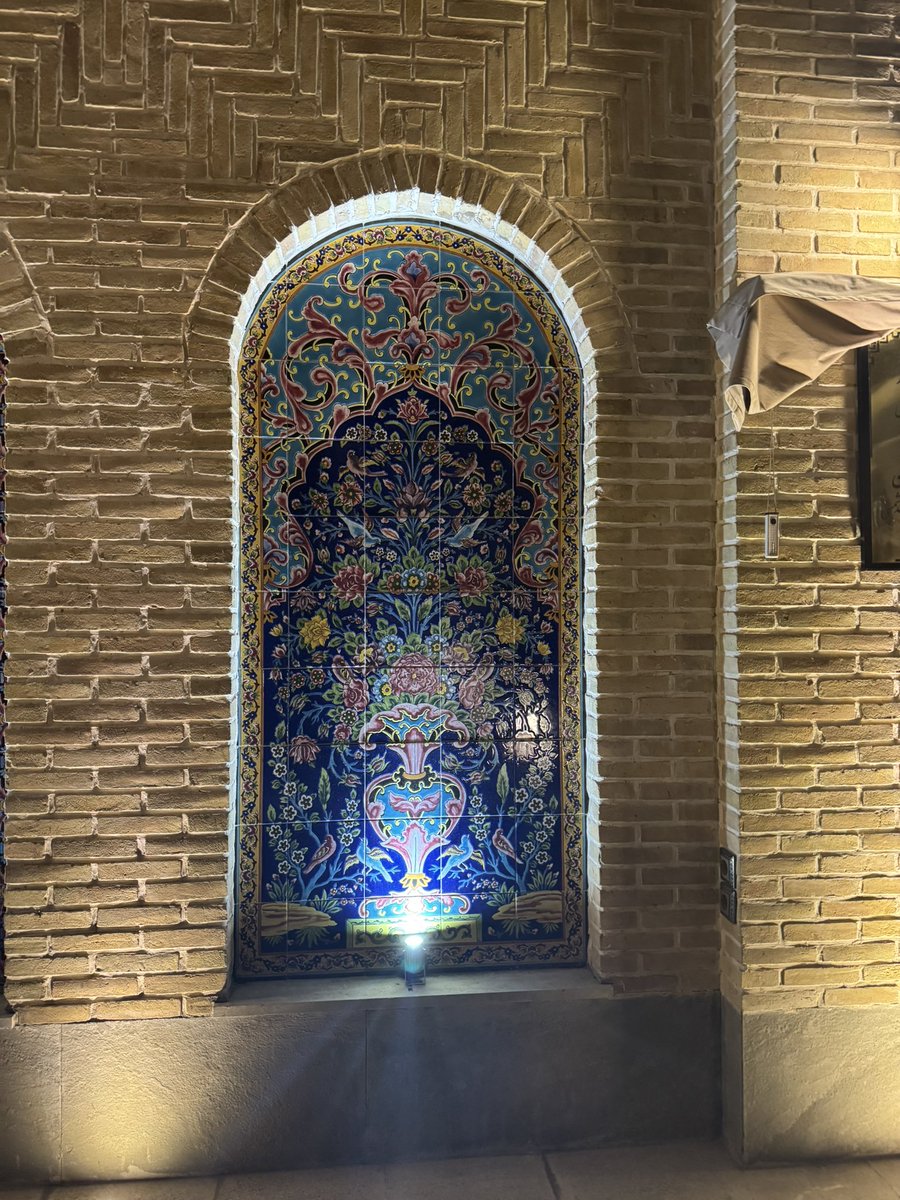
With everything going on I just want to say, I think Iran is one of the most beautiful places on earth with near endless economic potential. People extremely industrious with a love for detail. On our way in and out of Iran we stayed at two amazing small boutique hotels. The Zanjan Boutique hotel and the Saraye Ghahramani boutique hotel in Qazvin, check them out.
A landmark of seventeenth-century travel writing—now available for the first time in a complete, fully annotated English translation. https://t.co/5bkZjdjeBc