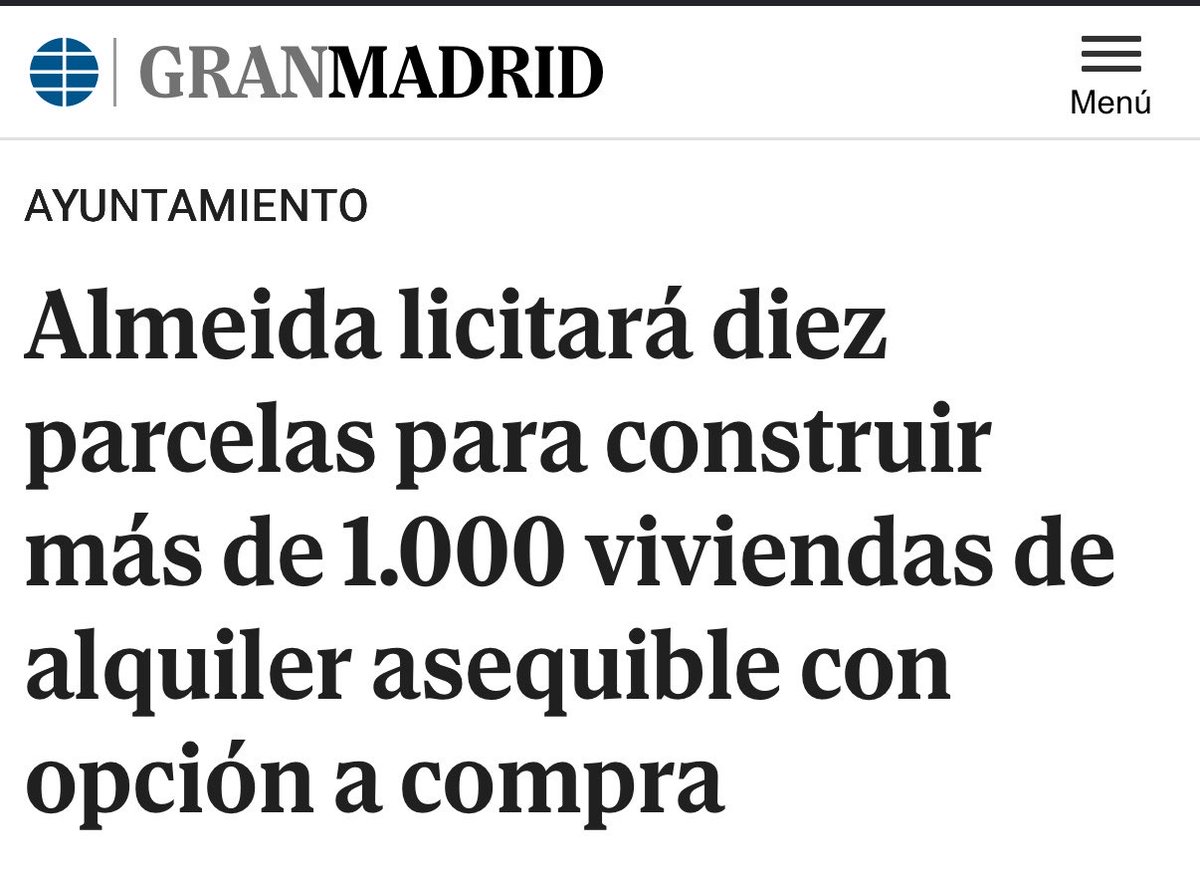
Madrid coge suelo público, permite construir más de 1.000 viviendas y, en vez de dejarlas como alquiler asequible público para siempre, las alquila durante 7 años y después permite que se compren.
¿Suena bien? Sí, hasta que llegas al final de la película. En 7 años, esas viviendas dejan de ser una herramienta pública y pasan al mercado privado. Se podrán vender, alquilar, revalorizar y especular con ellas sin ningún problema.
Otras 1.000 viviendas que podrían quedarse en manos públicas acaban convertidas en negocio privado. Y luego nos preguntaremos por qué no hay vivienda asequible.
Yo acabé 8º de EGB y en casa la celebración fue: “Muy bien. Baja la basura”.
Ahora acaban la ESO y parece la gala de los Oscar: trajes, vestidos, maquillaje, 37 fotos familiares y la abuela llorando como si hubieran ganado un Nobel.
Esto se nos ha ido de las manos.
"Se ha muerto sin poder recuperar los huesos de sus padres. Asi que, chavales desinformados, leed un poquito más y escuchad un poquito más, testimonios como este"
Isaías Lafuente ⬇️
Histórico!
Un diputado “desenrolla” en el Parlamento de Galicia los 1.579 contratos a dedo de la Xunta con la empresa de la hermana de Feijóo, solo de 2018 a 2023
Urgente. Han comenzado las tareas del vaciado de la Laguna de Ambroz en Madrid . Se va a vaciar entera y talar los árboles de alrededor de la laguna. Todo un atentado ecológico. Van a destruir los taludes donde hay colonias de avión zapador, gorrión chillón y abejarucos europeos.
Al conductor de autobús que se ha levantado en una parada y ha dicho "Los móviles con auriculares, por favor. Un respeto a los demás": Te deseo que nunca vuelvas a quemarte con una croqueta, siempre recuerdes tus contraseñas y encuentres aparcamiento a la primera.
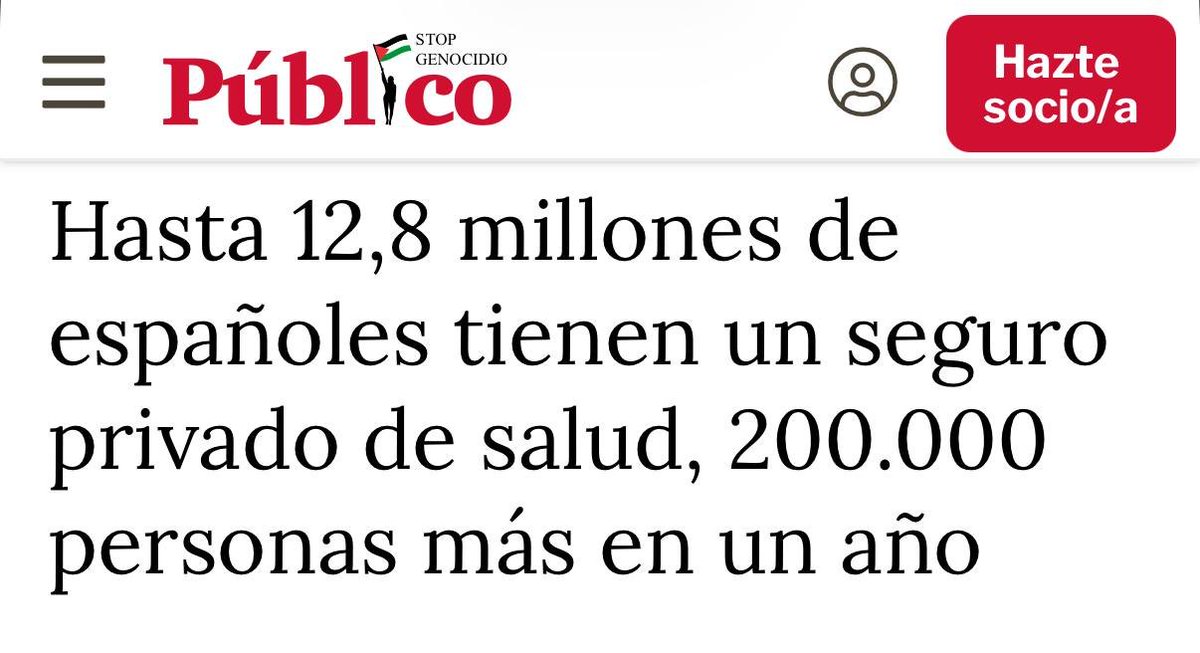
En España, 12,8 millones de personas tienen ya seguro médico privado: un 26% de la población. En Madrid, la cifra alcanza el 37%.
Mientras tanto, el negocio bate récords: 13.443 millones de euros en 2025, un 11,4% más.
Cuando se maltrata la pública, conviene mirar quién gana.
Las rebajas fiscales de Ayuso y Moreno Bonilla han supuesto 7.463 millones menos de ingresos en Madrid y 2.338 millones menos en Andalucía tan solo en 2024.
Pero luego te dirán que no tienen dinero para profesores y médicos.
Para tenerlo en cuenta cuando votéis.
Cuca Gamarra criticando que no exista la Agencia Estatal de Salud Pública cuando hace un año votaron EN DOS OCASIONES en contra de su creación.
El PP, siendo PP.
Before 1961, premature babies with failing lungs had almost no chance—doctors could only watch them slip away. Then one woman refused to accept that and changed medicine forever.
Picture a hospital nursery in 1960. A baby born two months early struggles to breathe. Her tiny chest rises and falls in desperate effort. Her skin turns blue. Nurses and doctors gather around her, but they have nothing to offer. In a matter of hours, maybe less, she will be gone.
This scene repeated itself thousands of times each year. Respiratory Distress Syndrome was a death sentence for premature infants. Their lungs were not developed enough to function. Medical textbooks described it as unavoidable.
But Mildred Stahlman refused to accept unavoidable.
Born in 1922 in Nashville, Mildred was not expected to become a doctor. Her affluent family imagined a traditional Southern life for her. But at eleven, she received a microscope—and everything changed.
She fought her way into Vanderbilt Medical School as one of only four women in a class of fifty. She studied abroad in Sweden at leading institutes. She returned home in 1951 and began witnessing the same tragedy again and again—infants dying because no one knew how to help them breathe.
And she made a decision: this would not continue.
In a small lab beside the Vanderbilt nursery, Stahlman began doing what seemed impossible. She took large adult breathing machines and redesigned them for the smallest patients. She created tiny airway tubes no wider than a straw. She developed methods to monitor oxygen levels in real time.
Her colleagues doubted her. The technology did not exist. The risks were severe. A single mistake could damage fragile lungs beyond repair.
Stahlman continued anyway.
October 31, 1961. A baby girl named Martha Humphreys was born two months early. She could not breathe.
Without intervention, she had only hours to live.
Dr. Stahlman placed her into the miniature respirator she had built. The machine gently expanded the baby’s chest, helping air reach lungs that could not function on their own. Then Stahlman set up a folding bed beside the machine and stayed, watching every breath.
Four days later, Martha was breathing on her own.
What had once been impossible was now real.
But Stahlman did not stop there. She established one of the first neonatal intensive care units in the United States. She trained specialists from around the world. She developed systems to transport critically ill newborns. She created standards of care that continue to guide medicine today.
"If you’re going to practice medicine," she told her students, "the first thing you must learn is charity—unconditional love."
She lived by those words. Her team tracked not only medical data but family needs—where they lived, what they could afford, what support they required. Every child mattered. Every family mattered.
Dr. Stahlman continued her work for decades. At 101, she was still advocating for premature infants when she passed away in June 2024.
And Martha Humphreys, the first baby she saved?
She grew up healthy. She married, becoming Martha Lott. And then she made a decision that brought the story full circle.
Martha became a nurse in the very same neonatal intensive care unit where her life had been saved.
The child who should have died in 1961 spent her life in that room, helping save others.
Today, hundreds of thousands of premature infants survive every year in NICUs around the world. Many of them owe their lives to the work that began with one determined doctor who refused to accept limits.
The next time you hear about a premature baby surviving against the odds, remember: someone once decided that those odds could change.
Someone refused to accept that small lives should be lost.
Someone redefined what was possible.
Before 1961, premature babies with failing lungs had almost no chance—doctors could only watch them slip away. Then one woman refused to accept that and changed medicine forever.
Picture a hospital nursery in 1960. A baby born two months early struggles to breathe. Her tiny chest rises and falls in desperate effort. Her skin turns blue. Nurses and doctors gather around her, but they have nothing to offer. In a matter of hours, maybe less, she will be gone.
This scene repeated itself thousands of times each year. Respiratory Distress Syndrome was a death sentence for premature infants. Their lungs were not developed enough to function. Medical textbooks described it as unavoidable.
But Mildred Stahlman refused to accept unavoidable.
Born in 1922 in Nashville, Mildred was not expected to become a doctor. Her affluent family imagined a traditional Southern life for her. But at eleven, she received a microscope—and everything changed.
She fought her way into Vanderbilt Medical School as one of only four women in a class of fifty. She studied abroad in Sweden at leading institutes. She returned home in 1951 and began witnessing the same tragedy again and again—infants dying because no one knew how to help them breathe.
And she made a decision: this would not continue.
In a small lab beside the Vanderbilt nursery, Stahlman began doing what seemed impossible. She took large adult breathing machines and redesigned them for the smallest patients. She created tiny airway tubes no wider than a straw. She developed methods to monitor oxygen levels in real time.
Her colleagues doubted her. The technology did not exist. The risks were severe. A single mistake could damage fragile lungs beyond repair.
Stahlman continued anyway.
October 31, 1961. A baby girl named Martha Humphreys was born two months early. She could not breathe.
Without intervention, she had only hours to live.
Dr. Stahlman placed her into the miniature respirator she had built. The machine gently expanded the baby’s chest, helping air reach lungs that could not function on their own. Then Stahlman set up a folding bed beside the machine and stayed, watching every breath.
Four days later, Martha was breathing on her own.
What had once been impossible was now real.
But Stahlman did not stop there. She established one of the first neonatal intensive care units in the United States. She trained specialists from around the world. She developed systems to transport critically ill newborns. She created standards of care that continue to guide medicine today.
"If you’re going to practice medicine," she told her students, "the first thing you must learn is charity—unconditional love."
She lived by those words. Her team tracked not only medical data but family needs—where they lived, what they could afford, what support they required. Every child mattered. Every family mattered.
Dr. Stahlman continued her work for decades. At 101, she was still advocating for premature infants when she passed away in June 2024.
And Martha Humphreys, the first baby she saved?
She grew up healthy. She married, becoming Martha Lott. And then she made a decision that brought the story full circle.
Martha became a nurse in the very same neonatal intensive care unit where her life had been saved.
The child who should have died in 1961 spent her life in that room, helping save others.
Today, hundreds of thousands of premature infants survive every year in NICUs around the world. Many of them owe their lives to the work that began with one determined doctor who refused to accept limits.
The next time you hear about a premature baby surviving against the odds, remember: someone once decided that those odds could change.
Someone refused to accept that small lives should be lost.
Someone redefined what was possible.
Un barrio de Madrid va a jugar una final europea.
Vallecas tiene a su equipo a una victoria del primer título de su historia.
Con mil problemas derivados de una directiva infame, pero ahí están.
Qué mérito, Rayo Vallecano ⚡️
El Hospital Isabel Zendal se construyó durante la COVID-19 para albergar a víctimas de pandemias.
Iba a costar 51M €, al final costó 170M y ya llevan gastados más de 300M. Con un paciente al día.
¿Por qué no llevan allí a los infectados de hantavirus?
Porque la razón de su existencia es el pelotazo que dieron con su construcción y su mantenimiento.
No sirve ni para almacenar sacos de cemento.
Algún día no muy lejano, Ayuso tendrá que rendir cuentas por malgastar el dinero público de esta manera.
Morgan Freeman: "Tal vez si pagáramos peor a los politicos y mejor a los profesores, habria personas más inteligentes y leyes menos estupidas..."
- Hilo -
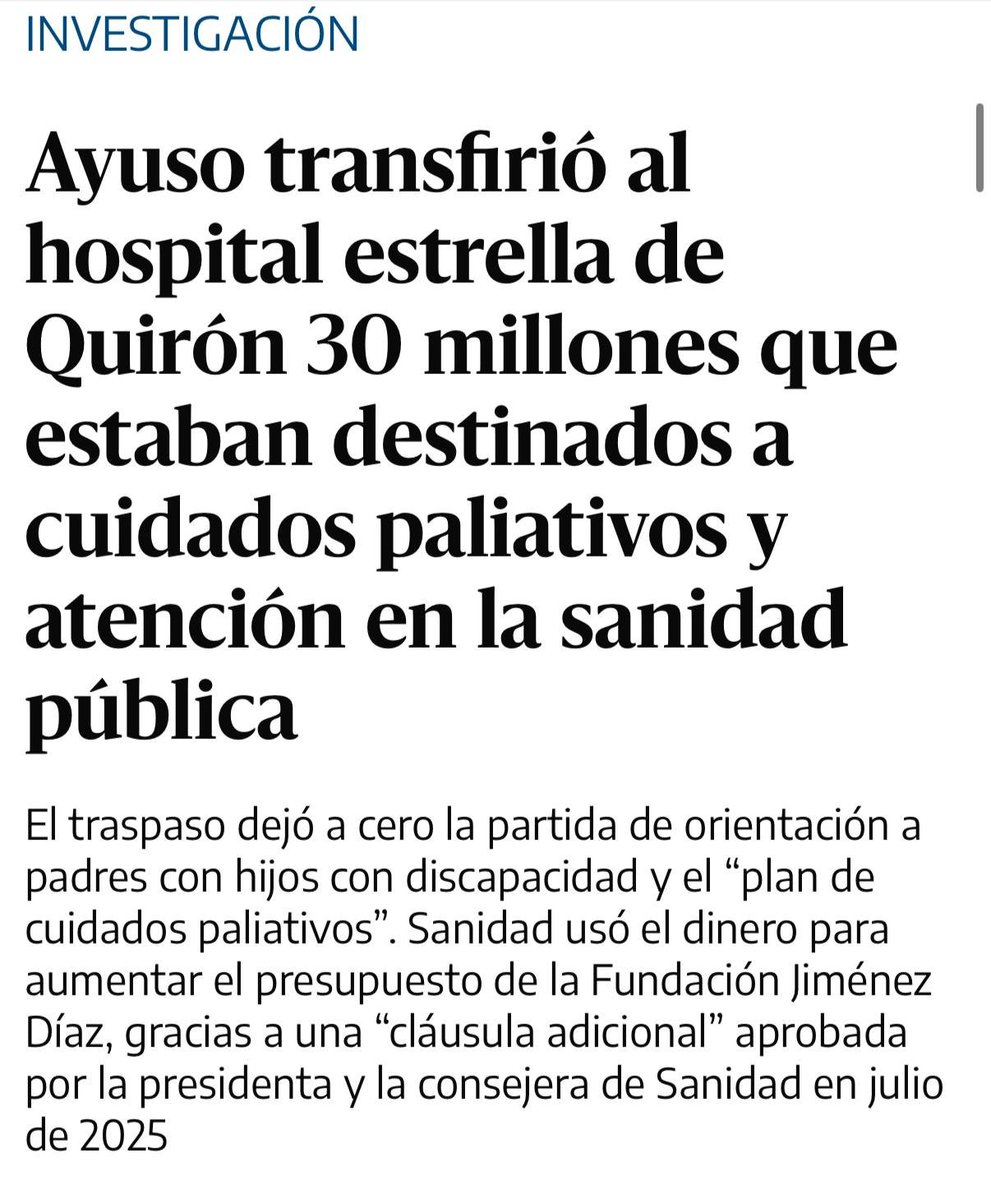
30 millones (más) de la sanidad pública para Quirón.
Luego dirán que lo público no funciona. Claro, no funciona porque lo están saqueando.
Lo tienen todo atado y bien atado.