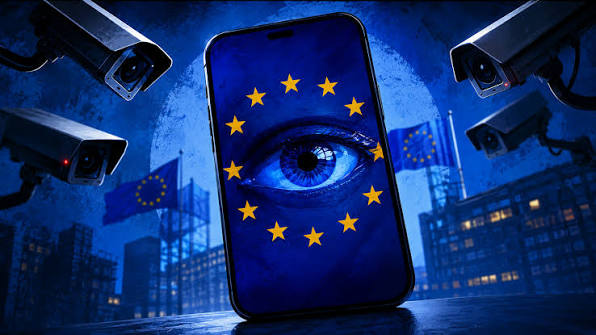
Ursula von der Leyen confirma que la Comisión Europea ya tiene lista una aplicación de verificación de edad para autenticar usuarios en redes sociales y otras plataformas digitales.
Asegura que la UE no tendrá acceso a las tarjetas de identidad de los europeos: el sistema usa un protocolo de privacidad que solo confirma si el usuario supera o no una edad determinada, sin revelar su identidad ni su fecha de nacimiento a las plataformas.
Von der Leyen ha subrayado que la herramienta es fácil de usar y que Europa ofrece una solución gratuita que puede proteger a los niños de contenido dañino , con los más altos estándares de privacidad del mundo .
La presidenta de la Comisión planteó además un acceso “progresivo y gradual” según la edad: los menores de 13 años solo podrían abrirse una cuenta con supervisión de los padres .
Confirmó que presentará una propuesta legislativa “después del verano” para armonizar la edad mínima de acceso a redes sociales en toda la UE.
🚨 FRANCIA Y LA OMS PIDEN VERIFICACIÓN DE IDENTIDAD PARA MENORES EN REDES 🇫🇷
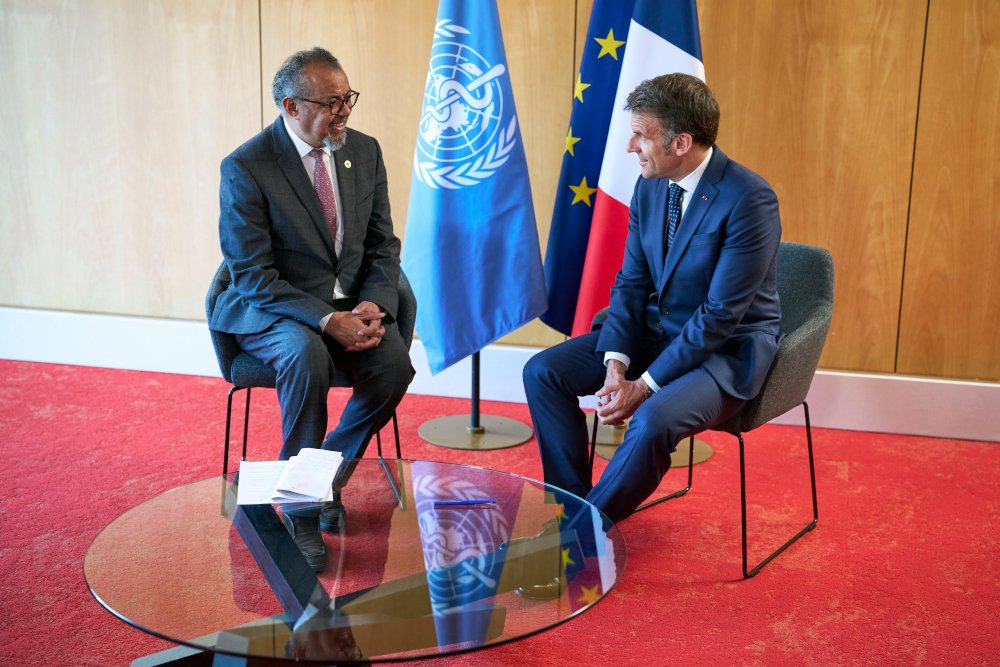
Emmanuel Macron y el director general de la OMS, Tedros Adhanom Ghebreyesus, firmaron el 1 de julio un comunicado conjunto que reclama verificación de edad obligatoria, rediseño legal de plataformas y reglas de "seguridad por diseño" en redes sociales, videojuegos e inteligencia artificial generativa.
El argumento es sanitario: presentan el entorno digital como determinante de salud infantil, al nivel del agua potable o la vivienda.
El propio texto reconoce el riesgo que genera su remedio. Verificar la edad exige verificar la identidad, y eso implica cruzar cada cuenta con documento oficial, biometría facial o historial crediticio.
Pero dicen que es un daño colateral...
Un sistema pensado para filtrar menores termina registrando también a todos los adultos que permanecen conectados. Australia, Francia, Indonesia, España, Irlanda, Reino Unido y Canadá ya avanzan restricciones similares para menores de 15 o 16 años.
La protección infantil funciona aquí como puerta de entrada a una infraestructura de identificación que, una vez construida, no tiene por qué limitarse a los menores.
Fuente: https://t.co/Sjnxqntx17
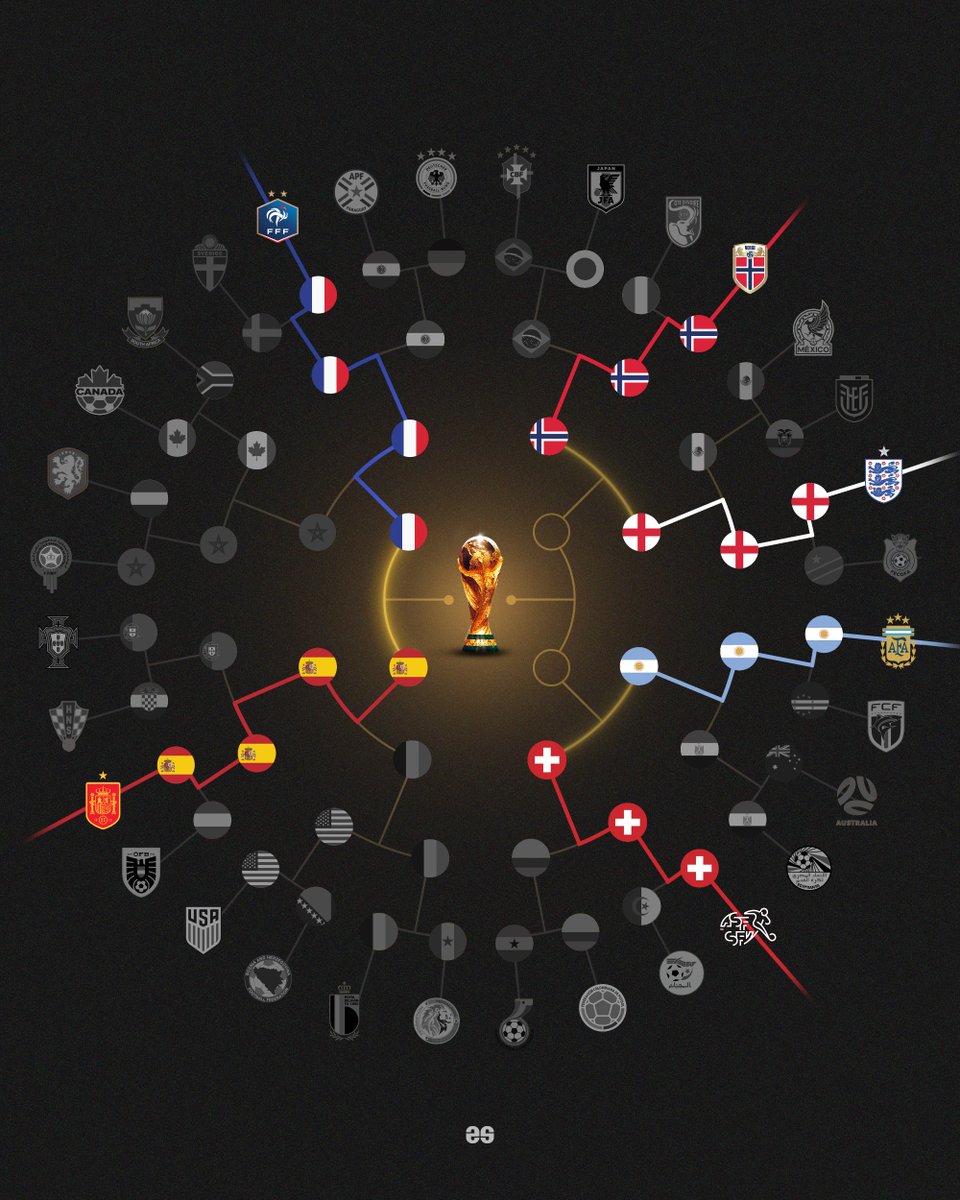
¿Quién pasará a Semifinales?
Ahora mismo el mercado “To Qualify” sitúa aproximadamente a: Inglaterra: 8/15, probabilidad implícita cercana al 65 % y Noruega: 9/5, probabilidad implícita cercana al 36 %.
🚨 REINO UNIDO PIDE A ESTADOS UNIDOS COBRAR UNA MULTA DE CENSURA 🇬🇧
El regulador británico Ofcom exige a 4chan el pago de 520.000 libras por incumplir la Online Safety Act, la ley de verificación de edad y contenidos del Reino Unido. Como la plataforma no tiene activos ni personal en suelo británico, Ofcom ha declarado que recurrirá a "especialistas en recuperación de deudas" y a "agencias policiales y tribunales locales" allí donde la empresa sí tenga bienes, es decir, en Estados Unidos.
El abogado de 4chan calificó la estrategia de jurídicamente inviable, recordando que la cooperación policial estadounidense para hacer cumplir una sanción de censura extranjera contra contenido protegido por la Primera Enmienda podría constituir delito federal. Juristas consultados coinciden en que ningún tribunal de EE.UU. hará cumplir una multa regulatoria de otro país sin base legal para ello.
El caso ilustra un patrón más amplio: regulaciones nacionales de contenido e identidad digital que buscan proyectar su autoridad más allá de sus fronteras.
Fuente: https://t.co/rFPAZYEpoH
The key point is that what has been slipped through the back door today, twisting Parliament's own rules, is one more step toward that Orwellian Europe represented by the AI Act, eIDAS 2.0 / the European Digital Identity Wallet, the Digital Euro, the Artificial Intelligence Act (AI Act), the Anti-Money Laundering Regulation (AMLR), the Digital Services Act (DSA), the Entry/Exit System (EES), ETIAS, Prüm II, the Age Verification Regulation, the UK Online Safety Act...
Each regulation is born with a different alibi, and all of them build the same skeleton: mandatory identification, permanent traceability, a citizen who stops being presumed innocent and becomes a suspect by default.
The trick isn't in the law that gets voted on. It's in the one that slips through without a vote, the one disguised as a delegated act, a technical amendment, an "update" nobody reads because nobody expects anything important to be at stake there.
And that's precisely the pattern: democratic substance keeps getting hollowed out through the back door while the front door still carries the sign "European Parliament," clearly visible for the photo.
What gets approved in committee wouldn't dare defend itself on the floor. What gets negotiated in trilogue wouldn't survive a public debate. And when someone points this out, the official answer is always the same: that it's a misunderstanding, that the intention is to protect, that whoever objects hasn't understood the text.
But the text is understood perfectly well. What isn't understood, or rather, what nobody wants to explain, is why protection always demands the same toll: less anonymity, more centralized databases, more power to scan the private life of someone who hasn't committed any crime.
A must-watch!
MEP @zarzalejosj debunks the chat control hoax.
Thanks to the @EPPGroup’s efforts, the @Europarl_EN moved one step furthe towards the adoption of a crucial measure to tackle child sexual abuse online.
Now, we urge the Council to find a solution to close the current legal gap immediately.
We will never give up on building a safer space for minors online, with an effective and robust permanent legal framework.
Listando a los que se han opuesto no convertís a todos en lo mismo. Cada uno lo ha hecho por unas razones determinadas.
La cuestión importante es que lo que hoy nos habéis colado por detrás, retorciendo la normativa del Parlamento, es un paso más hacia esa Europa orwelliana que representa la ley de la IA, eIDAS 2.0 / Cartera de Identidad Digital Europea, Euro Digital, Ley de Inteligencia Artificial (AI Act), Reglamento Antiblanqueo (AMLR), Ley de Servicios Digitales (DSA), Sistema de Entradas y Salidas (EES), ETIAS, Prüm II, Reglamento de Verificación de Edad, UK Online Safety Act...
Cada normativa nace con una coartada distinta y todas construyen el mismo esqueleto: identificación obligatoria, trazabilidad permanente, un ciudadano que deja de ser presunto inocente para convertirse en sospechoso por defecto.
El truco no está en la ley que se vota, está en la que se cuela sin votarse, la que se disfraza de acto delegado, de enmienda técnica, de "actualización" que nadie lee porque nadie espera que ahí se juegue nada importante.
Y ese es precisamente el patrón: la sustancia democrática se va vaciando por la puerta de atrás mientras la puerta principal sigue teniendo el cartel de "Parlamento Europeo" bien visible para la foto.
Se aprueba en comisión lo que no se atrevería a defenderse en pleno. Se negocia en trílogo lo que no resistiría un debate público. Y cuando alguien lo señala, la respuesta oficial siempre es la misma: que es un malentendido, que la intención es proteger, que quien se opone no ha entendido el texto.
Pero el texto se entiende perfectamente. Lo que no se entiende, o mejor dicho, lo que no se quiere explicar, es por qué la protección siempre exige el mismo peaje: menos anonimato, más base de datos centralizada, más poder de escaneo sobre la vida privada de quien no ha cometido ningún delito. Explicad eso y dejaros de juegos pueriles de "mira quién ha votado" o "que malos son todos"...
Los diputados de Vox en el Parlamento Europeo han votado con Bildu (Barrena) ERC (Riba), Comunes (Asens) Podemos (Montero y Serra) Sumar (Galán), BNG (Miranda), Compromis (Marzá) y PNV (Aguirregoitia) para hacer fracasar el reglamento que permite detectar contenidos de abuso sexual infantil en la red.
Y lo hacen ensuciando la causa de la libertad de expresión.
While everyone was focused on one thing, they slipped another one past us: "the European Parliament has fired the starting gun on negotiations over the DIGITAL EURO."
With 416 votes in favor and 169 against, the European Parliament has just given the green light to the mandate to negotiate the digital euro.
Guess who voted Yes.
In fact, the person leading the file is Spanish MEP Fernando Navarrete Rojas (PP). A Spaniard at the helm of one of the most sensitive financial dossiers since the creation of the "regular" Euro.
Though not all is lost.
The Member States with a strong cash culture, like Germany, Austria, and the Netherlands, fear that the digital currency will accelerate the disappearance of banknotes and erode privacy, while Spain and Italy see the digital euro as an opportunity to modernize payment systems.
It's called variable geometry: a privacy-protecting north vs. an accelerating south.
It's worth noting that this is only the negotiating mandate, not the final approval: the trilogue with the Council now opens, and the timeline points to formal adoption of the regulation by the Council before the end of 2026, with technical implementation running through 2029, the year when, if the deadlines are met, it could begin to circulate.
We're changing the middleman. We're not changing the watchman.
It's worth marking the gap between the official narrative and the hard facts: the mandate insists on "freedom of choice" and "guaranteed privacy," but the technical design (holding limits revisable by the Commission, forced settlement within 24h for businesses, direct issuance by the ECB) is, in effect, an architecture of centralized control over retail money without precedent in the eurozone.
Monetary sovereignty, they call it.
It's disheartening. That millions of people have no idea what's being approved in Brussels today.
It's stunning. That it's the European People's Party pushing it through.
It's infuriating. That they're doing it by twisting parliamentary rules.
It's insulting. That they hide behind children to justify it.
It's outrageous. That tomorrow's absences will count as votes in favor. That anyone who skips the trip to Strasbourg is, without knowing it, voting yes.
It's cynical. That they picked the last session day before summer recess, when half the chamber has already packed its bags.
It's serious. That blocking the text requires an absolute majority of 361 votes, while pushing it through just takes an empty room.
It's telling. That when a Parliament loses a vote, the answer isn't to accept it, but to change the rules until it wins.
It's troubling. That end-to-end encryption, the last real frontier of privacy, now hinges on a calendar trick.
It's paradoxical. That child protection is the justification, while child-safety organizations themselves are asking for the legal gaps to be fixed first, not for the extension to pass as is.
It's telling, again. That the European Data Protection Supervisor himself warns that any renewal must avoid general, indiscriminate scanning, and that warning changes nothing.
It's opportunistic. That the text on the table today is the exact same one Parliament rejected months ago, not a comma changed, just dressed in different procedure.
It's a bridge. That this temporary extension, the 1.0 version, is precisely the vehicle keeping alive the debate over the permanent Chat Control 2.0, the one that would make scanning mandatory.
It's alarming. That the exception is no longer framed until tomorrow, but until 2028, two years of room to normalize what in March was called unacceptable.
It's reckless. That an urgent procedure meant for real emergencies is being used for the sole purpose of dodging the outcome of a previous vote.
And it is, above all, a warning. Of how easy it is to legislate over the privacy of 450 million people when you pick the right day for no one to be watching.
We keep going…
The facts are shocking. Online child sexual abuse has become an epidemic in the digital world.
In 2010, there were 1 million reports of child sexual abuse material. Today, there are 20 million.
AI-generated Child Sexual Abuse Material (CSAM) has surged by 1,000% in just one year.
And 60% of this material is hosted in Europe, making our continent a global hotspot.
The EPP Group wants to change this, and that’s why we will support important legislation to combat Child Sexual Abuse Material (CSAM).
Watch and learn more from @ManfredWeber⤵️
#CSAM
It's disheartening. That millions of people have no idea what's being approved in Brussels today.
It's stunning. That it's the European People's Party pushing it through.
It's infuriating. That they're doing it by twisting parliamentary rules.
It's insulting. That they hide behind children to justify it.
It's outrageous. That tomorrow's absences will count as votes in favor. That anyone who skips the trip to Strasbourg is, without knowing it, voting yes.
It's cynical. That they picked the last session day before summer recess, when half the chamber has already packed its bags.
It's serious. That blocking the text requires an absolute majority of 361 votes, while pushing it through just takes an empty room.
It's telling. That when a Parliament loses a vote, the answer isn't to accept it, but to change the rules until it wins.
It's troubling. That end-to-end encryption, the last real frontier of privacy, now hinges on a calendar trick.
It's paradoxical. That child protection is the justification, while child-safety organizations themselves are asking for the legal gaps to be fixed first, not for the extension to pass as is.
It's telling, again. That the European Data Protection Supervisor himself warns that any renewal must avoid general, indiscriminate scanning, and that warning changes nothing.
It's opportunistic. That the text on the table today is the exact same one Parliament rejected months ago, not a comma changed, just dressed in different procedure.
It's a bridge. That this temporary extension, the 1.0 version, is precisely the vehicle keeping alive the debate over the permanent Chat Control 2.0, the one that would make scanning mandatory.
It's alarming. That the exception is no longer framed until tomorrow, but until 2028, two years of room to normalize what in March was called unacceptable.
It's reckless. That an urgent procedure meant for real emergencies is being used for the sole purpose of dodging the outcome of a previous vote.
And it is, above all, a warning. Of how easy it is to legislate over the privacy of 450 million people when you pick the right day for no one to be watching.
We keep going…
It's disheartening. That millions of people have no idea what's being approved in Brussels today.
It's stunning. That it's the European People's Party pushing it through.
It's infuriating. That they're doing it by twisting parliamentary rules.
It's insulting. That they hide behind children to justify it.
It's outrageous. That tomorrow's absences will count as votes in favor. That anyone who skips the trip to Strasbourg is, without knowing it, voting yes.
It's cynical. That they picked the last session day before summer recess, when half the chamber has already packed its bags.
It's serious. That blocking the text requires an absolute majority of 361 votes, while pushing it through just takes an empty room.
It's telling. That when a Parliament loses a vote, the answer isn't to accept it, but to change the rules until it wins.
It's troubling. That end-to-end encryption, the last real frontier of privacy, now hinges on a calendar trick.
It's paradoxical. That child protection is the justification, while child-safety organizations themselves are asking for the legal gaps to be fixed first, not for the extension to pass as is.
It's telling, again. That the European Data Protection Supervisor himself warns that any renewal must avoid general, indiscriminate scanning, and that warning changes nothing.
It's opportunistic. That the text on the table today is the exact same one Parliament rejected months ago, not a comma changed, just dressed in different procedure.
It's a bridge. That this temporary extension, the 1.0 version, is precisely the vehicle keeping alive the debate over the permanent Chat Control 2.0, the one that would make scanning mandatory.
It's alarming. That the exception is no longer framed until tomorrow, but until 2028, two years of room to normalize what in March was called unacceptable.
It's reckless. That an urgent procedure meant for real emergencies is being used for the sole purpose of dodging the outcome of a previous vote.
And it is, above all, a warning. Of how easy it is to legislate over the privacy of 450 million people when you pick the right day for no one to be watching.
We keep going…
https://t.co/CCYPO1iH4T
🚨🚨🚨🇪🇺 Mientras todos enfocaban una cosa, ellos nos colaban otra: "el Parlamento Europeo ha dado el pistoletazo de salida a la negociación del EURO DIGITAL".
Con 416 votos a favor y 169 en contra, el Parlamento Europeo acaba de dar luz verde al mandato para negociar el euro digital.
Adivina quienes han votado Sí.
De hecho, quién lidera el expediente es el eurodiputado español Fernando Navarrete Rojas (PP). Un español al frente de uno de los expedientes financieros más sensibles desde la creación del Euro "normal".
Aunque no todo está perdido.
Los Estados con fuerte cultura del efectivo como Alemania, Austria, Países Bajos, temen que la moneda digital acelere la desaparición de los billetes y erosione la privacidad, mientras España e Italia ven en el euro digital una oportunidad para modernizar los sistemas de pago.
Se llama geometría variable: norte protector de la privacidad vs. sur acelerador.
Cabe decir que esto es solo el mandato negociador, no la aprobación final: ahora se abre el trílogo con el Consejo, y el calendario maneja la adopción formal del reglamento por el Consejo antes de finales de 2026, con implementación técnica hasta 2029, año en el que, si se cumplen los plazos, podría empezar a circular.
Cambiamos de intermediario. No cambiamos de vigilante.
Vale la pena marcar la distancia entre el relato oficial y el dato duro: el mandato insiste en "libertad de elección" y "privacidad garantizada", pero el diseño técnico (límites de tenencia revisables por la Comisión, liquidación forzosa en 24h para empresas, emisión directa del BCE) es, de facto, una arquitectura de control centralizado del dinero minorista sin precedente en la eurozona.
Soberanía monetaria, dicen.
#EuroDigital #BCE #SoberaníaMonetaria
Hoy se ha votado una prórroga temporal, la 1.0, pero lo que es evidente es que es precisamente la vía que se usa para mantener con vida el debate del Chat Control 2.0 permanente, el que sí obligaría al escaneo.
Pero intentar controlar las aplicaciones de mensajería para “pillar a los malos” parte de una idea muy ingenua: que los malos van a seguir usando las mismas herramientas que usamos todos. ¿Estamos tontos?
No funciona así.
Hoy, una persona con conocimientos técnicos puede montar en muy poco tiempo su propio sistema de comunicación cifrada. Es decir, su propio “WhatsApp privado”, con servidor propio, aplicación propia y mensajes protegidos de extremo a extremo. Incluso puede usar sistemas de cifrado avanzados, preparados para resistir tecnologías futuras como la computación cuántica.
La pregunta es evidente: si alguien normal puede hacerlo como práctica o experimento, ¿qué no podrá hacer una organización criminal, un grupo con dinero o una red con recursos?
Por eso, debilitar el cifrado de las grandes plataformas no elimina el problema. Los delincuentes sofisticados se irán a canales alternativos, privados o directamente creados por ellos. En cambio, quienes perderán privacidad serán los ciudadanos normales: familias, periodistas, empresas, médicos, abogados, activistas o cualquier persona que simplemente quiera comunicarse sin ser vigilada.
La seguridad no se consigue rompiendo la privacidad de todos. Se consigue persiguiendo delitos concretos, no convirtiendo cada conversación privada en sospechosa.
Más control en el gasto y menos en los chats...
To Europe's startups, SMEs, businesses, and innovators: this is for you.
On behalf of @Europarl_EN, I have just signed the Digital Omnibus on AI, after MEPs delivered it at unprecedented speed.
Less paperwork. More innovation.
That's how we help small businesses compete on the global stage. That's how we make it easier for startups to scale up. That's how we strengthen our competitiveness.
Europe listens. Europe acts.
Es descorazonador. Que millones de personas desconozcan lo que supone lo que hoy se está aprobando en Bruselas.
Es flipante. Que sea el PP Europeo quien lo estimule.
Es irritante. Que lo hagan retorciendo la normativa parlamentaria.
Es insultante. Que se excusen en los niños.
Es indignante. Que las ausencias cuenten como votos a favor. Que quien no viaje a Estrasburgo en la votación esté aprobando la ley.
Es cínico. Que se haya elegido el último día de sesión antes del receso de verano, cuando medio hemiciclo ya tiene la maleta hecha.
Es grave. Que para frenar el texto haga falta una mayoría absoluta de 361 votos, y para colarlo baste con vaciar la sala.
Es revelador. Que cuando un Parlamento pierde una votación, la respuesta no sea aceptarla, sino cambiar las reglas hasta ganarla.
Es preocupante. Que el cifrado de extremo a extremo, la última frontera real de la privacidad, dependa hoy de un truco de calendario.
Es paradójico. Que se cite la protección infantil mientras las propias organizaciones de infancia digital piden que la prórroga corrija antes las carencias legales, no que se apruebe tal cual.
Es sintomático. Que el propio Supervisor Europeo de Protección de Datos avise de que cualquier renovación debe evitar el escaneo general e indiscriminado, y que ese aviso no frene nada.
Es oportunista. Que el texto que hoy se vota sea exactamente el mismo que el Parlamento rechazó hace meses, sin una coma de cambio, solo con el envoltorio procesal distinto.
Es un puente. Que esta prórroga temporal, la 1.0, sea precisamente la vía que se usa para mantener con vida el debate del Chat Control 2.0 permanente, el que sí obligaría al escaneo.
Es alarmante. Que la excepción se plantee ya no hasta mañana, sino hasta 2028, dos años de margen para normalizar lo que en marzo se consideró inaceptable.
Es temerario. Que se use un procedimiento de urgencia reservado para emergencias reales con el único objetivo de esquivar el resultado de una votación anterior.
Y es, sobre todo, un aviso. De lo fácil que resulta legislar sobre la intimidad de 450 millones de personas cuando se elige bien el día en que nadie mira.
Nunca de rodillas. Sea contra quien sea. Da igual.
Seguimos… https://t.co/fZmFj7VMd0