Built to last. 🏛
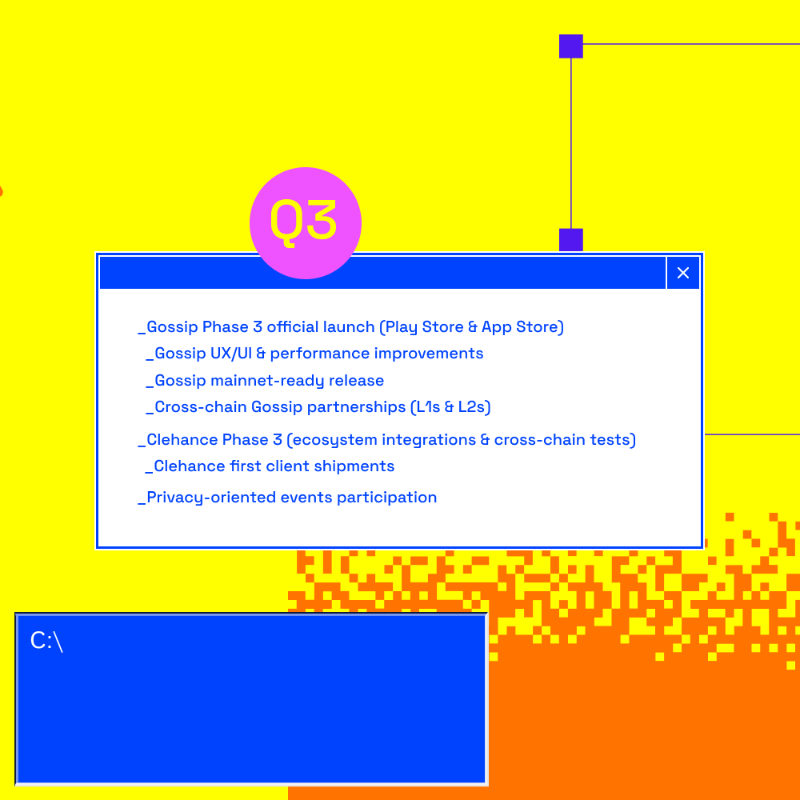
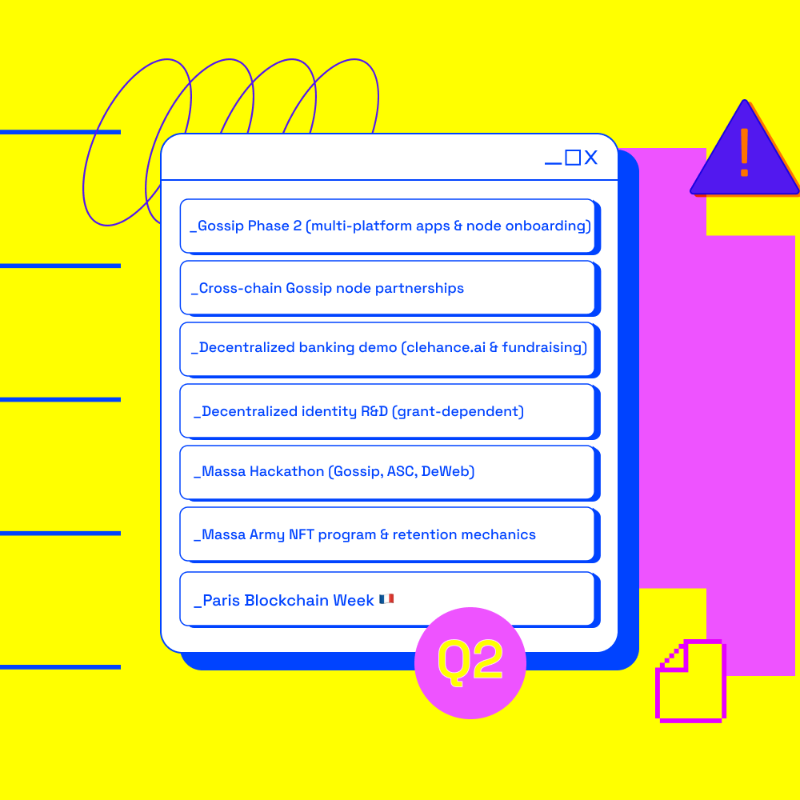
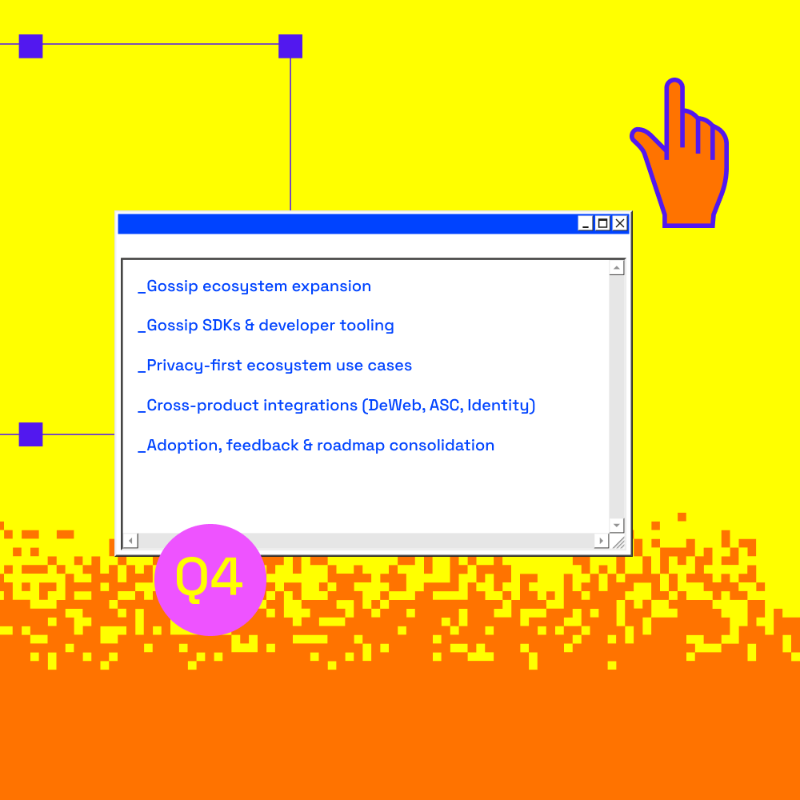
2026: Proving Decentralization Through Real Usage
👉🏻 https://t.co/qC6sACmBCBuilt to last. 🏛
2026: Proving Decentralization Through Real Usage
👉🏻 https://t.co/qC6sACmBCBuilt to last. 🏛
2026: Proving Decentralization Through Real Usage
👉🏻 https://t.co/qC6sACmBCBuilt to last. 🏛
2026: Proving Decentralization Through Real Usage
👉🏻 https://t.co/qC6sACmBCBuilt to last. 🏛
2026: Proving Decentralization Through Real Usage
👉🏻 https://t.co/qC6sACmBC9
⚠️ MAIN.5.1: Upgrade locked in!
More than 50% of the stake has now upgraded to MAIN.5.1, and the network upgrade is locked in.
🗓️ Activation: Monday, November 2, at 10:49:05 UTC
All node operators must update before activation. If your node is not updated by then, you risk forking from the rest of the network.
📖 Update guide: https://t.co/iZWlLpPxpd
📦 Massa Station: Update Massa Station first, then update your plugins.
⚙️ Node Manager: MAIN.5.1 is now available.
Please make sure your node is updated before activation to stay in sync with the network.
Thanks for helping keep Massa running smoothly! 🚀
📢 MAIN.5.1: New Node Version Released
A new Massa node version, MAIN.5.1, is now available:
https://t.co/DjCFQNZw59
⚠️ Please update your node as soon as possible
This is a breaking update of the Massa node.
All node operators should update ahead of activation to ensure a smooth transition and avoid falling out of sync with the network.
🗓️ How does the upgrade work?
Lock-in: The upgrade is locked in once nodes representing at least 50% of the stake have updated to MAIN.5.1.
Activation: The upgrade activates one week after lock-in.
Please update your node as soon as possible, and no later than November 2, 10:00 UTC, to avoid forking from the rest of the network.
📖 How to update:
Follow the node update documentation :
https://t.co/iZWlLpPxpd
🛠️ For builders:
Some of these changes may affect your applications or integrations. Please review the list of breaking changes (https://t.co/Ciim8eKJx9) and check whether any updates are needed before activation.
We'll share the full changelog once the upgrade is activated.
Thanks for your cooperation! 🚀
📢 New Buildnet version: DEVN.30.2 is live
A new node version has been deployed on Buildnet, bringing several performance and robustness improvements.
🗓️ What to expect
As the new version rolls out, you may encounter:
- Temporary instability on Buildnet, including restarts, resyncs and short interruptions.
- Inconsistencies between tools, as explorers, wallets, SDKs and indexers may take time to catch up and could temporarily display incorrect data.
- Differences in behavior between nodes running different versions.
This is expected during a Buildnet upgrade. Thanks for your patience while we manage the rollout!
⚠️ Notice something unusual?
Please report it here with as much detail as possible, including the tool you're using, node version, operation ID and timestamps.
Happy building! 🚀
Another project to explore on Massa DeWeb: @RustCoreMassa
The whole experience is served directly through DeWeb, with two main tools: RustCore Wallet and RustCore Launchpad.
The wallet supports staking, NFTs, MNS domains and Dusa swaps. The Launchpad handles MRC20 tokens, MRC721 collections, presales and an NFT marketplace.
We had a look through the code before sharing. It’s still a young project with no independent audit yet, so as always, DYOR.
Take a look around and explore what RustCore is building on Massa 👇
https://t.co/QxKGWQx1op
https://t.co/Hr0DNPqn14
What happens if an attacker gets access to your keys?
Encryption isn't only about keeping messages secret while everything goes right. A strong messaging protocol also needs to limit the damage if secrets are eventually exposed.
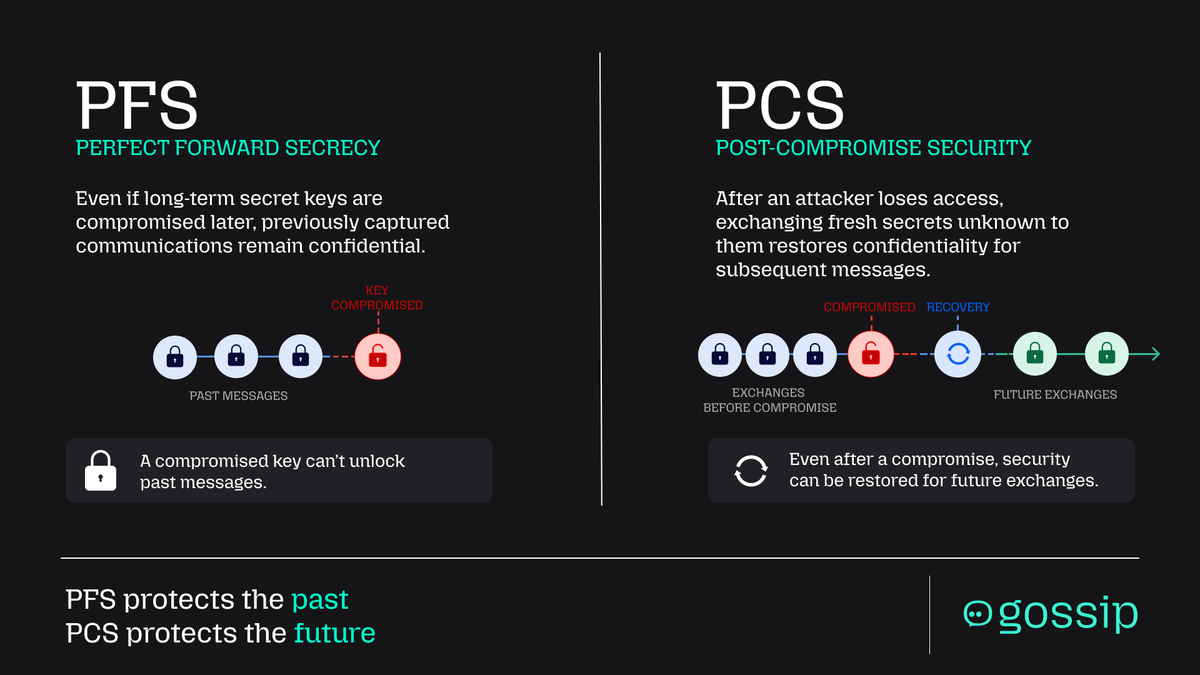
That's where Perfect Forward Secrecy (PFS) and Post-Compromise Security (PCS) come in.
With PFS, compromising long-term secret keys later shouldn't allow an attacker to go back and decrypt communications they previously captured. The protection of past messages doesn't depend on keeping today's secrets safe forever.
PCS addresses the other side of the problem. If an attacker temporarily gains access to a device or session, security shouldn't remain compromised forever. Once that access is lost, Gossip can use fresh secrets that the attacker doesn't know to restore confidentiality for subsequent exchanges.
This means a key leaked online doesn't have to expose an entire communication history or permanently compromise everything that follows.
PFS limits the damage to the past. PCS enables recovery for the future.
That's an important part of how Gossip is designed to handle compromise over time.
Why Massa?
When our three founders started researching blockchain technology in 2017, they saw a number of limitations in the way blockchains were being built.
Scalability often came with trade-offs in decentralization. Running a node could require significant resources. And applications still depended heavily on infrastructure outside the blockchain.
So they asked a simple question:
Can a blockchain scale without giving up decentralization?
That question led to Massa.
Years of research and development followed, eventually turning that question into a live network.
And that's how Massa started.
We’ve made a few updates to the Gossip website to make it easier to follow the project and see where we’re at.
The roadmap and changelog are now separated, making it clearer what’s coming next and what has already been shipped.
We’ve also given the website a small visual refresh and added our paper on PQ Rerand, recently published in the Journal of Cryptographic Engineering.
Go have a look and let us know what you think 👇
https://t.co/LgdONrYsxT
We talked quite a bit about the DeWeb during Global Gathering.
So here's a quick reminder of what it's about.
Most of the web today relies on centralized infrastructure. Websites depend on hosting providers, servers and platforms that ultimately sit under someone else's control.
The DeWeb takes a different approach: websites can be deployed on-chain and accessed through decentralized infrastructure.
Why does that matter?
It means fewer centralized points of control, making applications more resilient and more resistant to censorship.
The DeWeb also introduces on-chain MNS domains, giving decentralized websites a simple and recognizable way to be accessed.
The idea is simple: a web where no single entity controls the infrastructure. 🌐
📚 Explore the DeWeb:
https://t.co/e8QMG1EP6q
🎥 Want to see how to access it safely?
https://t.co/HMXRLd6rs9
We’re back from Global Gathering 2026 in Estoril 🇵🇹
Over the past few days, we had the chance to represent Massa and showcase what we’ve been building, with a particular focus on @UseGossip and DeWeb, while connecting with people working on privacy, human rights, freedom of expression and resilient communication.
We hosted a workshop around decentralized messaging, where we had the opportunity to pitch Gossip, discuss the challenges of building truly decentralized communication tools and hear different perspectives from the people attending.
The workshop was a real success, with a lot of people showing genuine interest in Gossip and the idea of building communication tools that don’t rely on centralized platforms.
We also had a Gossip booth where many people came by to learn more about the project, ask questions and test the app themselves.
DeWeb also generated a lot of interest, especially among independent media and activists we met throughout the event. The idea of having a more decentralized and censorship-resistant way to publish and access content really resonated with many of them.
We met a lot of great people working on privacy, digital rights and alternative solutions, and being able to discuss these challenges directly with them gave us a lot of valuable feedback and new perspectives on what we’re building.
The mission behind Global Gathering also shares a lot of common ground with ours: building a more open, free and resilient digital world.
We’re coming back with a lot of feedback, ideas and new connections to build on.
And this is only the beginning. 👀
Encrypt data.
Anyone (without the key) can turn the ciphertext into a fresh-looking one, billions of times. Still decrypts perfectly.
Our new mobile-friendly post-quantum primitive is the first step toward making border crossings safer for journalists.
https://t.co/USjGQy44me
A quick sneak peek... 👀
Over the past few months, part of our team has been working on cryptography research around post-quantum public re-randomization.
We're looking forward to making this work public soon.
Stay tuned.
Hey Massa community 👋
We've been a little quiet lately, so we just wanted to check in.
Our mission hasn't changed.
From day one, our goal has been to help build a more open, decentralized internet where users stay in control and developers can build freely.
Whether you've been running a node, building on Massa, or simply following our journey, thank you for sticking with us. Your support truly means a lot.
We'll keep building with the same conviction that brought us here in the first place.
Thanks for being part of the journey. 💙
We're excited to announce that Massa will be attending Global Gathering 2026 in Estoril, Portugal, from September 4–6.
Members of both Massa Labs and the Massa Foundation will be there to present Gossip, our decentralized messenger built for privacy, freedom of speech, and resilient communication.
Global Gathering brings together communities working at the intersection of technology, human rights, and social justice. We're looking forward to joining the conversation, sharing what we've been building, and meeting the people shaping a more open and resilient digital future.
We'll have more to share about our participation over the coming weeks, so stay tuned.
If you'll be in Estoril, come say hi!
Over the past few weeks, we've been working alongside @CDTChinese as part of Gossip's first real-world testing phase.
China Digital Times is an independent organization focused on internet censorship, digital rights, and online freedom. Their work and community made them a valuable partner to evaluate Gossip in environments where privacy and secure communication matter most.
Throughout this testing phase, participants helped us validate the application under real-world conditions and provided valuable feedback to improve the user experience.
We'd like to thank China Digital Times and everyone who took part in this first testing phase for their trust, their time, and their invaluable feedback.
This milestone brings us one step closer to building a communication platform that combines strong privacy guarantees with practical usability.
More updates will follow as Gossip continues to evolve.
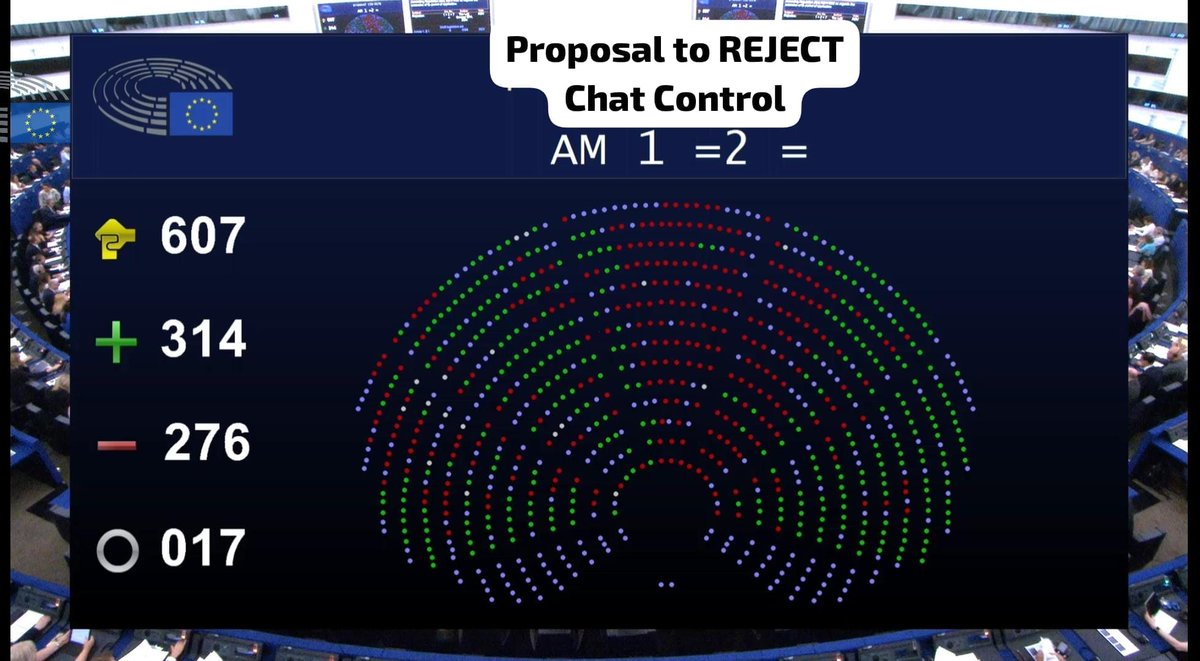
Chat Control is back. Again.
For the third time, the EU has brought mass chat scanning back to the table. And once again, private communication is at the center of the debate.
This time, a motion to reject the proposal failed in the European Parliament. Despite more MEPs voting against than in favor, the required absolute majority wasn't reached, allowing the proposal to move forward in the legislative process.
Whatever your position on Chat Control, one thing should be clear:
When the future of private communication depends on political decisions or centralized platforms, it can change far more easily than most people realize.
Privacy shouldn't be something that survives from one vote to the next.
That's why we're building Gossip.
Our vision is a messaging protocol designed to protect not only message content, but also metadata, remove unnecessary identifiers like phone numbers, and move toward a decentralized network with no single point of control.
Because the future of private communication shouldn't depend on trust.
It should be built into the architecture.
Gossip is currently in an early stage of deployment.
All core security features are already implemented in the current version, including encryption, metadata protection mechanisms, and privacy properties such as plausible deniability.
The main limitation today is not the security model, but parts of the backend infrastructure, which remain centralized or hybrid to ensure stability during early testing.
This allows us to validate the protocol and user experience in real-world conditions before scaling the system further.
The next step in the roadmap is to progressively decentralize the backend layer, by moving toward a distributed infrastructure based on Massa’s node network.
This integration is planned as the next phase of the project, not part of the current version.
Development is iterative and driven by real usage and feedback from early deployments.
We are continuing the first real-world testing phase of Gossip.
This phase is not about releasing new features, but about understanding how the system behaves under real conditions.
Early testing helps us evaluate:
- how users interact with privacy-first communication tools
- how the system performs in constrained environments
- what assumptions need to be adjusted based on real usage
At this stage, Gossip is still evolving, and the architecture is being refined based on feedback from early deployments.
The goal is to close the gap between design assumptions and real-world behavior.
We will continue sharing learnings as the testing phase progresses.
Most messaging systems depend on centralized infrastructure.
This creates a single point of control and a single point of failure.
Gossip is designed to reduce this dependency as much as possible over time.
In its current version, the system is still evolving, but it already includes multiple access paths to the application.
One of them is a Progressive Web App (PWA), which can be accessed even if traditional distribution channels become unavailable.
The goal is resilience through multiple layers of access, not a single controlled entry point.