We congratulate #WUPhysicianScientist Dr. Pamela Woodard as she becomes the next Head of the Department of Radiology and Director of the Mallinckrodt Institute of Radiology on July 1! @PamelaWoodardp@MIRimaging
Come by tomorrow to Neighborhood 12 to discuss strategies for earlier recognition and treatment of Rapidly Progressive Dementia ( patients who go from baseline to #dementia in 1-2 years 😮😧😦)
#AANAM@AANmember@GDay_Neuro@MayoClinicNeuro
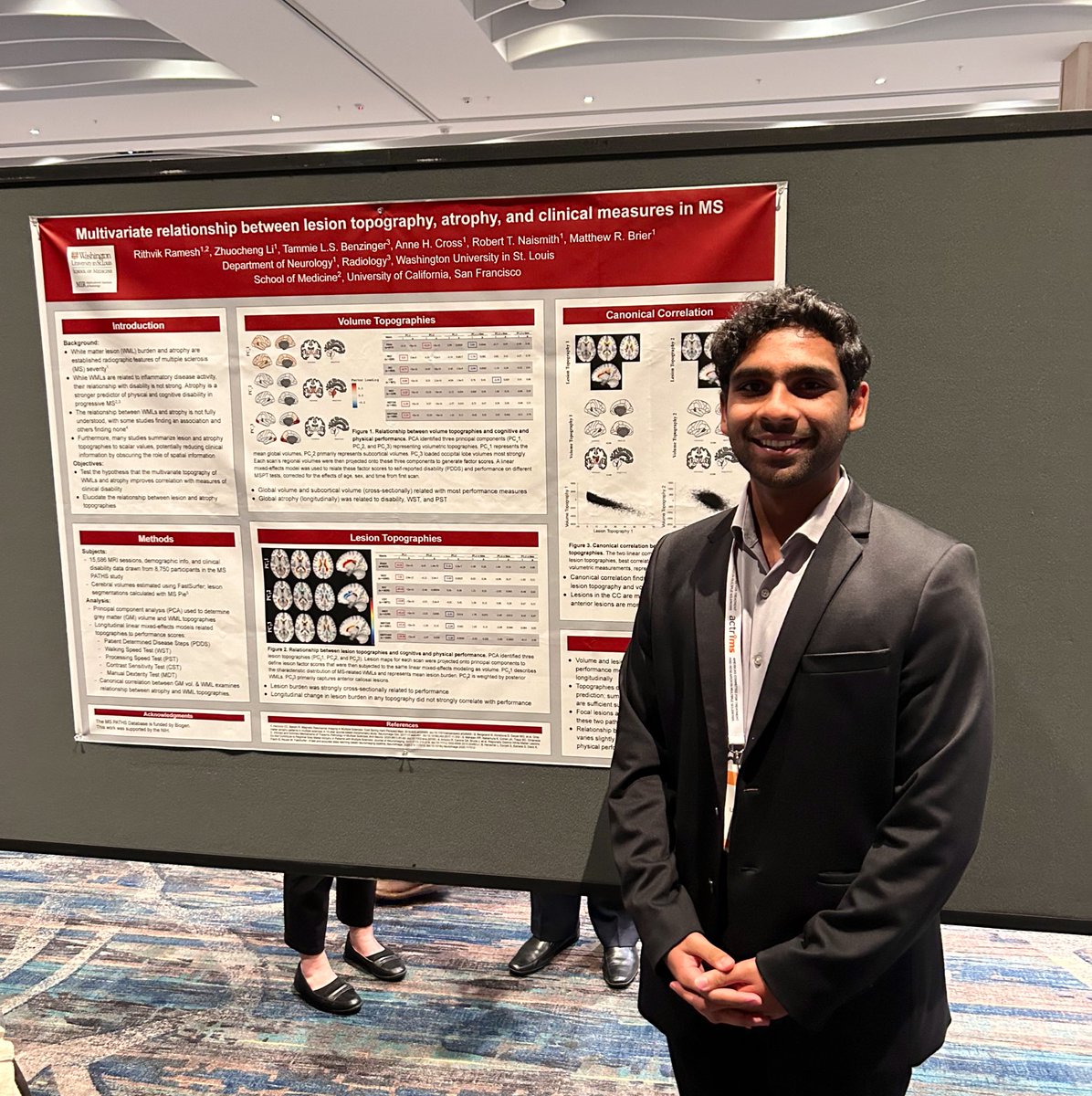
So grateful for the opportunity to present my undergrad work on lesion and atrophy topographies in multiple sclerosis at #ACTRIMSForum! Great chance to reflect on the luck of finding a mentor as dedicated and encouraging as @MatthewBrier four years ago!
Piccio: Randomized Clinical Trial of Intermittent Calorie Restriction in People with #MS. 2 days a week of 400-500 caloric restriction associated with decrease #BMI, lower pro-inflammatory #leptin, increase in T regulatory cells & better SDMT scores.
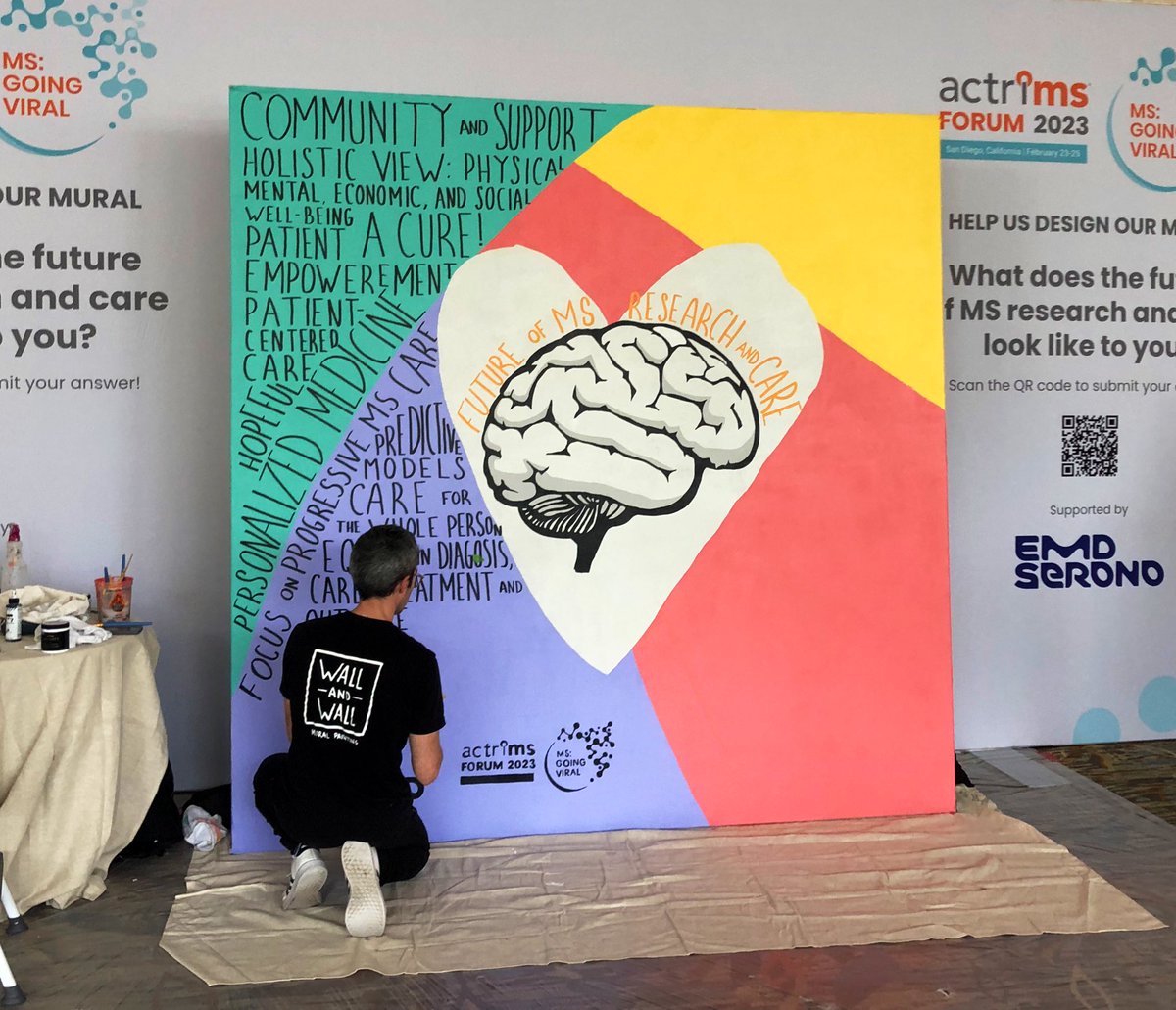
#ACTRIMS2023#ACTRIMSForum
We congratulate #WUPhysicianScientist Dr. Gregory Wu on his election to @the_asci! Dr. Wu studies how the immune system is dysregulated in multiple sclerosis (MS) and related autoimmune neurological conditions. @MS_ResearchDoc@WashUNeurology
Ever wondered if your interesting brain-behavior correlation was affected by head motion, but were afraid to ask? We’ve created a motion impact score for detecting spurious brain-behavior associations. Excited to share my 1st preprint on Science Twitter! https://t.co/3gDH7zSb8K
Congratulations to @MatthewBrier, MD, PhD and colleagues for publishing his article "Increased white matter glycolysis in humans with cerebral small vessel disease" in @NatureAging! https://t.co/sfX0jem2mb
Hopkins representation continuing today with Dr. Harrison talking about racial disparities in treatment among people with MS.
#curems#nmss#HopkinsMSCenter
We are going to address these limitations in the future but in the mean time are very excited to share this work. Thanks to all the patients who participated and the mostly twitter-less collaborators.
There are some important caveats. These data were collected on lower resolution PET scanners than what is available now which is why so much effort is dedicated to partial volume correction. Additionally, this is qualitative and not quantitative PET.
WMLs in SVD appear in a stereotypical pattern. We looked the metabolism in these regions and found that the areas where WMLs form tend to be less glycolytic than areas that are relatively protected.
We hypothesize that glycolysis plays an important role in the resiliency of tissues to injury and may re-emerge in a repair or mitigation type process in the face of pathology.
One idea was that there may be a penumbra around the WMLs where glycolysis was increased but what we found was that glycolysis was increased throughout the WM of SVD patients. This was shown using a number of different numerical assumptions for PET analysis.
We studies older patients with SVD as well as younger and older controls. Each subject underwent MRI and multi-tracer PET to measure cerebral metabolic rate of glucose (CMRglc), CMRO2, and glycolytic index, a measure of relative amounts of glycolysis.
We reproduced prior work showing that glycolysis declines with age and extended that finding to the WM where its less studied in humans. Interestingly, glycolysis was relatively increased in the WM of SVD patients.
Specifically we were interested in glycolysis because WM relies on glycolytic metabolism to provide trophic support as well as to repair damage caused by e.g. SVD.