@gothburz Appreciate the detailed write-up. Agree he’s doing a strong job in a tough post that's always generated heat, and has adapted to modern communications better than most people his age.
DATA CENTERS IN SPACE🇺🇸
Today, in a historic first, the FCC approved SpaceX’s request for 1 million satellites (orbital compute modules) to create data centers in space
The Starmind & competitor constellations will use solar power to extend America’s lead in Super Intelligence
@CynicalTrader82@BobEUnlimited@stevehou That's why I cited seven years of BLS data.
Also, the SF Fed, whose TFP data Bob is citing, notes that labor productivity and TFP similarly diverged in 1996, early in the internet investment boom
https://t.co/PdD3wEfZfH
@BobEUnlimited@stevehou Sorry the latest data point, left off the Apollo chart, is inconvenient to your thesis.
The BLS puts productivity growth at 2.2% this cycle vs. 1.5% last cycle. That's a 47% acceleration. Capital deepening is a feature of the AI investment cycle.
@BobEUnlimited@stevehou Nonfarm productivity is +3.6% annualized, twice the post GFC average.
Output +3.7%
Hours worked +0.1%
Unit labor costs -0.7%
Very favorable combination for corporate margins and disinflation.
@TheStalwart The only possible glut will be in chips that have no energized data center to plug into, not in data center space itself.
The math is very clear -->
https://t.co/pxKYeMsNX1
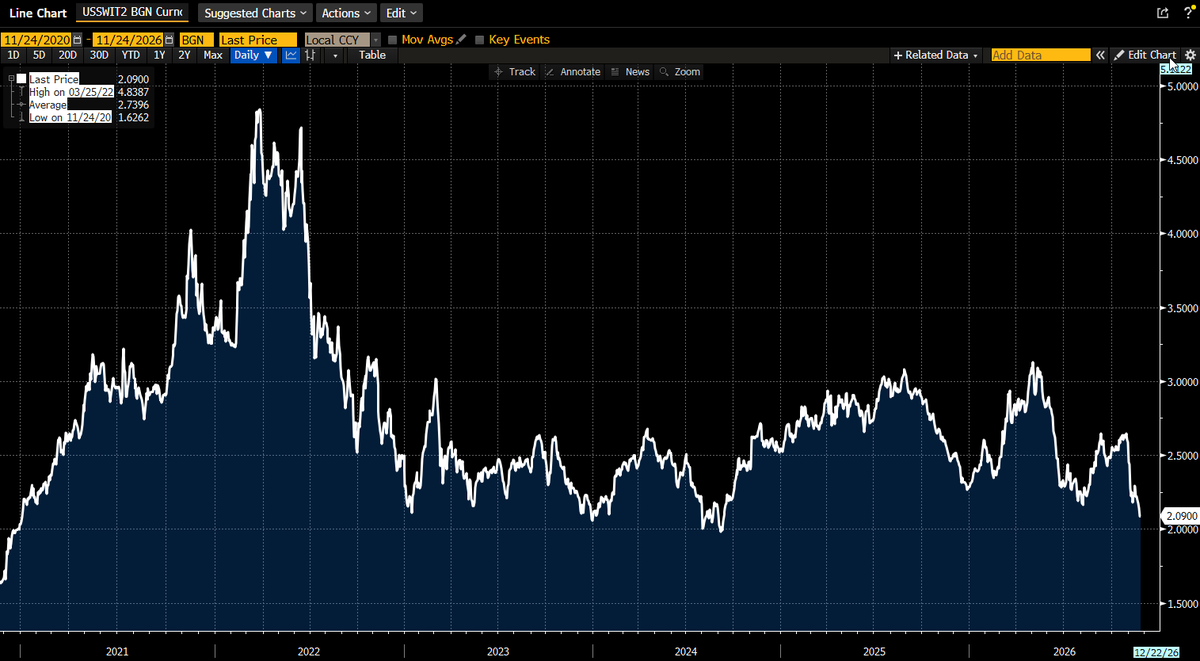
First of all, since Central Banks have cited rising energy prices as a reason for rate hikes, falling swap spreads on that basis are still relevant.
Second, recent studies have made the case that they are not purely coincident. They embed forward-looking pricing of persistence, demand, policy responses, etc.
"Historical comparisons show inflation swaps have had better predictive accuracy for realized CPI than many surveys or consensus forecasts in some periods. They move with oil but also diverge when markets price energy shocks as temporary or when other inflation drivers dominate."
$CLSK reports good news and bad news.
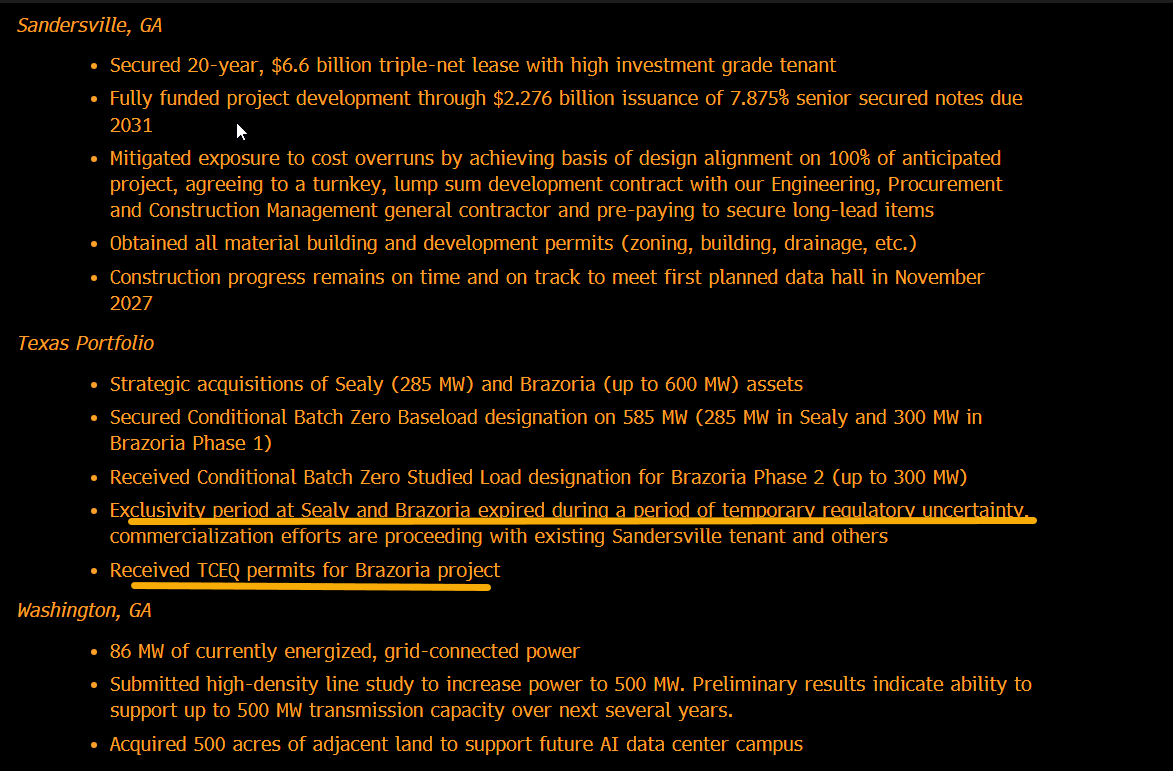
Best news: Sanderson (the $META lease) is on time, on budget, and fully funded with all permits in hand
Good news: Brazoria (300-600MW) got TCEQ permits
Bad news: Customer exclusivity at Sealy (285MW) & Brazoria expired with no deal.
Interest burden = rate × debt. US public debt is ~100% of GDP and interest is now over 3% of GDP, a record, so the rate the system can tolerate falls.
Treasury has also let bills climb to ~23% of marketable debt (TBAC's comfort zone is 15-20%) by funding deficits short instead of terming out the debt. So, more of the US government's interest bill now floats with the Fed, a classic on-ramp to fiscal dominance.
The GFC set the modern standard for bailouts (2008, 2020, 2023). GS's Financial Conditions Index (yields, credit spreads, equities, dollar; higher = tighter; chart below) has never again been allowed to tighten as badly as 2009. With little political appetite for real belt-tightening, the path of least resistance is monetization.
That's why we're constructive on scarce assets like Gold and Bitcoin over multi-year periods.
(Although BTC's flat 5-year record is a fair rebuttal at this point.)
$HUT gets Notice of Intent authorization for Beacon Point Phase II from the regulator TECQ; clears the full 1 GW campus for construction.
As a reminder, the first Phase 2 data hall delivery is targeted for Q2 2028.
Waiting on ERCOT audit report December 10 for further de-risking.
Hut 8 has received a Notice of Intent authorization from the Texas Commission on Environmental Quality (TCEQ) for Beacon Point Phase 2. With the full one-gigawatt campus cleared for construction and site preparation underway at Phase 2, Hut 8 remains committed to working closely with local stakeholders as construction progresses.
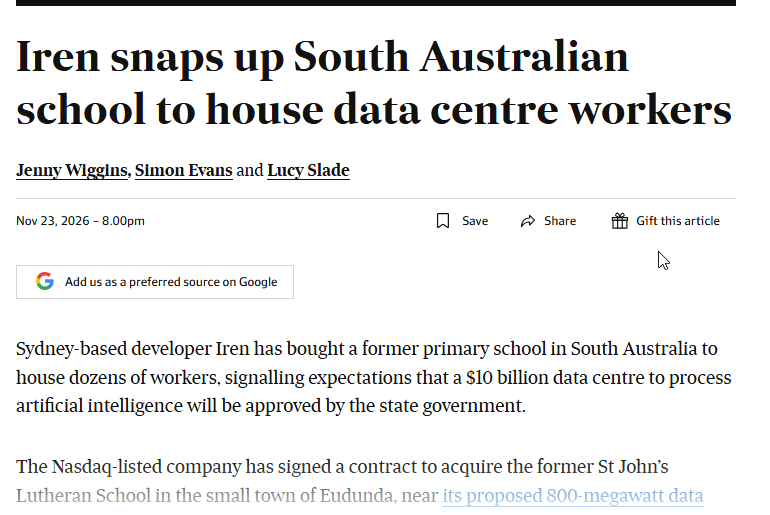
" $IREN has bought a former primary school in South Australia to house dozens of workers, signalling expectations that a 800MW, $10 billion data centre to process artificial intelligence will be approved by the state government."
@carson54480446 bad in that it foreshadows economic weakness ahead.
good in that the Central Bank will have to pay attention and potentially pivot if it continues.