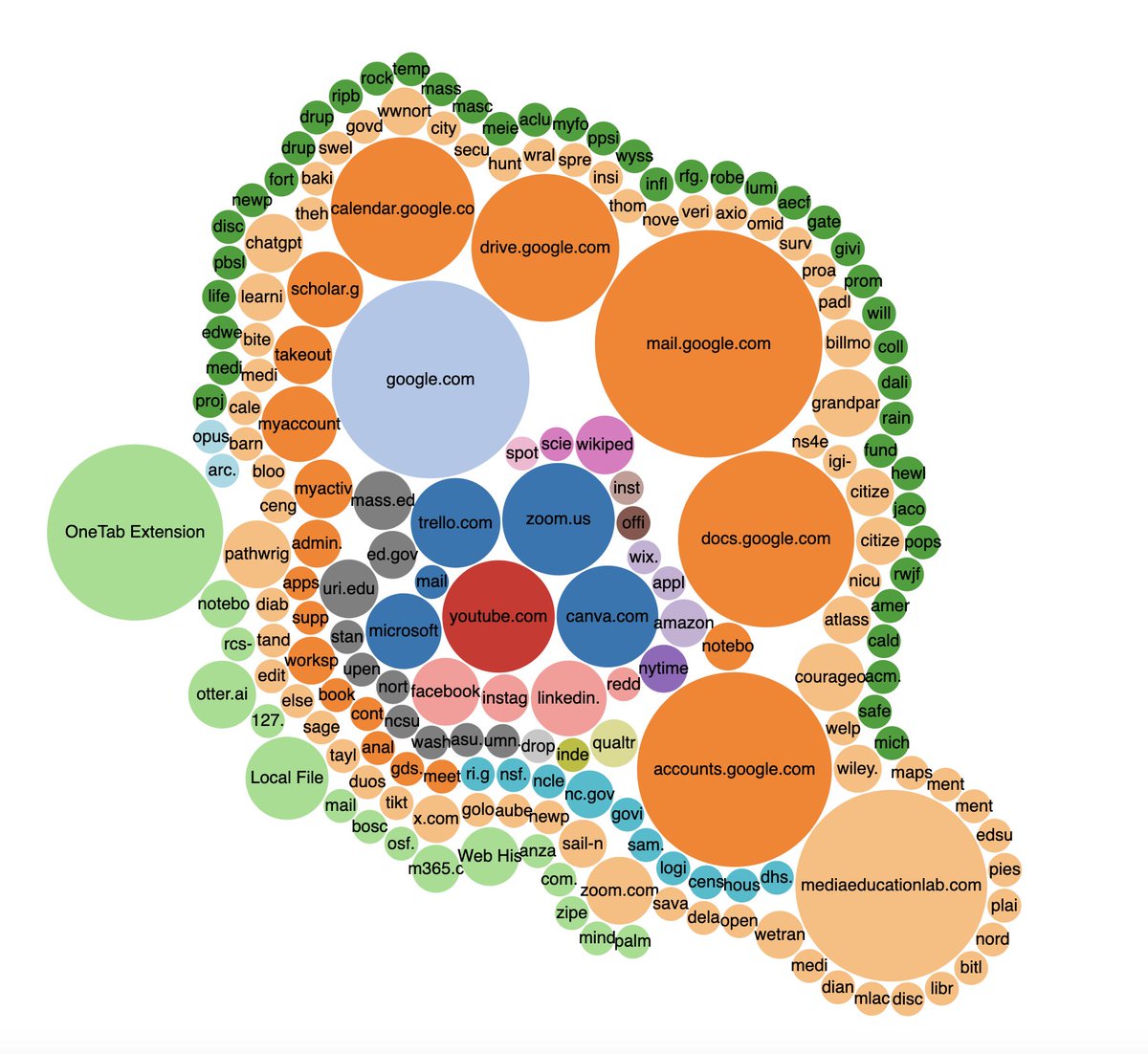
Don't miss this opportunity to use @Spotify Unwrapped for informal #medialiteracy dialogue with your family and friends. @MedEduLab Learn how to do it: https://t.co/ADGhifhLEh
Wondering what you think about this: What should media literacy educators do about the sense of helplessness that leads people to be less interested in seeking out differing views on social media? https://t.co/S5SCJQmM3y
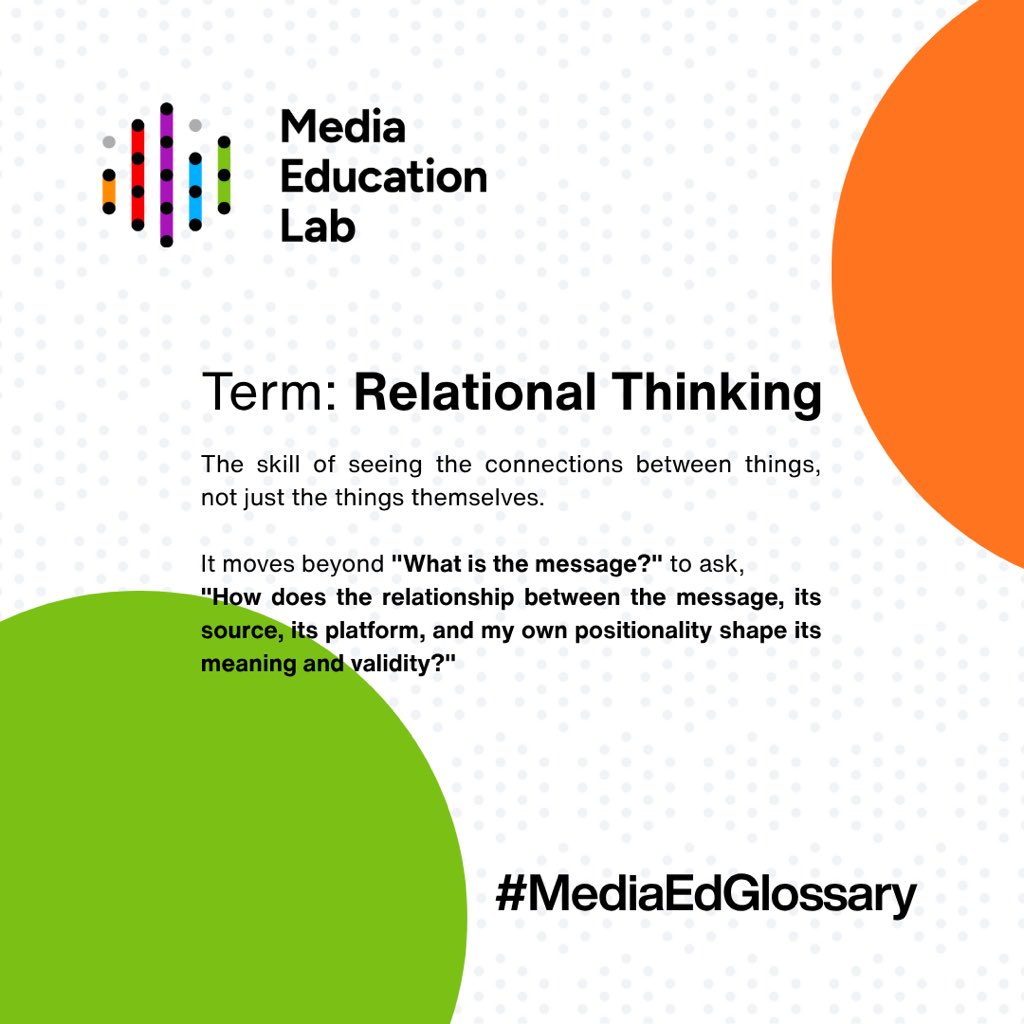
Today’s #MediaEdGlossary term is 'Relational Thinking'.
It's the critical skill of assessing information by focusing on dynamic relationships, not isolated facts.
As researcher Stella Christie notes: "Relational thinking is the foundation for creativity and innovation."
All illusions are potential ways of ordering reality. The goal of criticism should therefore be not to destroy illusions but to make us more sensitive to their workings and their complexity.
- Leo Braudy, The World in a Frame, 1977
We really need more media literacy #MediaLit lessons on food, nutrition, diet, and lifestyle: “identifying trusted voices”
(content warning, brief profanity, not safe for school classroom playback) #sift cc @MedEduLab via @wegotwits
Social media giant Meta will end its fact-checking program for a “community notes” model. Renee Hobbs, @HarringtonURI comm. studies prof. & founder of @MedEduLab, is not surprised. "It’s clear that the company’s approach to content moderation was flawed."
https://t.co/Zl6g8lrOGZ
Join @MedEduLab's MediaEd Forum 👏 The conference will feature discussions on varying stakeholder perspectives and the complexities of defining and advancing media literacy.
Learn more 👉 https://t.co/3OLqXvZOFn
Some amazing #medialiteracy conversations are scheduled for Jan 10 - 11 when we host the MediaEd Forum, a 2-day fully online conference. Join us! https://t.co/s1rJ1FFw13
Our friends at @MedEduLab are hosting a session for teachers hoping to prioritize media literacy education on October 14, 12-1 PM EST.
Register here: https://t.co/UfR08bKjkh