The leading payments network. Instant money movement across any asset, chain, or platform, connecting hundreds of exchanges, wallets and financial institutions.
Mesh and @Visa are partnering to make crypto and stablecoin balances spendable anywhere Visa is accepted: 175M+ merchant locations, straight from the wallet apps people already use.
No separate card. No cash-out. Nothing for merchants to change.
https://t.co/4gYUAzPrpA
AI agents could soon generate 1,000x more web traffic than people.
If they pay per request, that's ~1,000x the transaction volume of Visa, the world's largest payments network, at fractions of a cent each.
The hard part won't be one payment. It'll be orchestrating billions.
https://t.co/pC1mIIgu1Z
CEO @crossmint, @alfongj explains the two legs of agentic payments
"When you're thinking about the agentic payments, there's two legs in a payment where before there was only one."
"The first leg, which is a human delegate and payment method to their agent, I think the vast majority of that is gonna be the payment methods that we are familiar with that have points, that have customer protections. I think most of that is gonna be cards, maybe bank accounts."
"The second leg, the one that the agent executes, these agents are gonna be pretty comfortable using sometimes cards and if they can extract a delegated card from our virtual card from the original payment method. And other times, they'll use stablecoins, and they will just use the path of least resistance."
"Human to agent, probably cards for the majority of the use cases. From agent onwards for agent to pay against the merchant, that's where we'll be seeing, I think, a mix."
Each leg answers a different question, what the human trusts versus what settles fastest, and those two answers do not have to match.
🎙 Listen to the latest episode on Tokenizedpod(dot)com
🚨 Ep. 14 of Agentic Commerce: Know Your Agent Is the Most Important Problem in Payments
@sytaylor & @bamazizimesh are joined by:
👉 @alfongj, Co-Founder, @crossmint
To discuss:
🏛️ Crossmint's infrastructure for agent payments, virtual cards, and stablecoins
💳 Why card payments and stablecoins will coexist in agentic commerce
🛠️ Crossmint's toolkit for virtual cards, automated checkout, and agent wallets
🤔 Determining liability when AI agents make mistakes or unauthorized purchases
🔎 Comparing UCP, WebMCP, Shopify, and browser automation for agent checkouts
How Know Your Agent identity and reputation could prevent fraud
🤖 How AI agents can accept stablecoin payments and generate revenue
📈 The emergence of agent-native merchants, microbusinesses, and machine payment services
📃 How the Legal Context Protocol standardizes commercial terms for agents
🌐 Why discounts and promotions could drive mainstream agentic commerce adoption
***
Timestamps:
00:00 Introduction
01:49 Crossmint's infrastructure for agent payments, virtual cards, and stablecoins
03:32 Why card payments and stablecoins will coexist in agentic commerce
07:47 Crossmint's toolkit for virtual cards, automated checkout, and agent wallets
14:08 Determining liability when AI agents make mistakes or unauthorized purchases
17:01 Comparing UCP, WebMCP, Shopify, and browser automation for agent checkouts
22:30 How Know Your Agent identity and reputation could prevent fraud
28:03 How AI agents can accept stablecoin payments and generate revenue
30:03 The emergence of agent-native merchants, microbusinesses, and machine payment services
32:16 How the Legal Context Protocol standardizes commercial terms for agents
37:02 Why discounts and promotions could drive mainstream agentic commerce adoption
***
👉 𝘚𝘦𝘢𝘳𝘤𝘩 '𝘛𝘰𝘬𝘦𝘯𝘪𝘻𝘦𝘥 𝘗𝘰𝘥𝘤𝘢𝘴𝘵' 𝘖𝘯 𝘠𝘰𝘶𝘛𝘶𝘣𝘦. 𝘈𝘱𝘱𝘭𝘦, 𝘚𝘱𝘰𝘵𝘪𝘧𝘺 𝘰𝘳 𝘢𝘯𝘺 𝘗𝘰𝘥𝘤𝘢𝘴𝘵 𝘗𝘭𝘢𝘺𝘦𝘳! 👈
Fiat in. Stablecoin in the middle. Fiat out.
@bamazizimesh on the “stablecoin sandwich” at #Money2020: the experience feels exactly the same. Everything underneath it changed.
From our main stage session announcing our partnership with @Visa.
Asia made up about 60% of all stablecoin payments worldwide, led by Singapore, Hong Kong and Japan.
Jason Ne Win, CEO, APAC at @meshpay, tells @johnyonthefloor what the Gulf can learn from that. He says “the Gulf has done a really good stablecoin regime” and sees “a lot of cross-pollination” ahead.
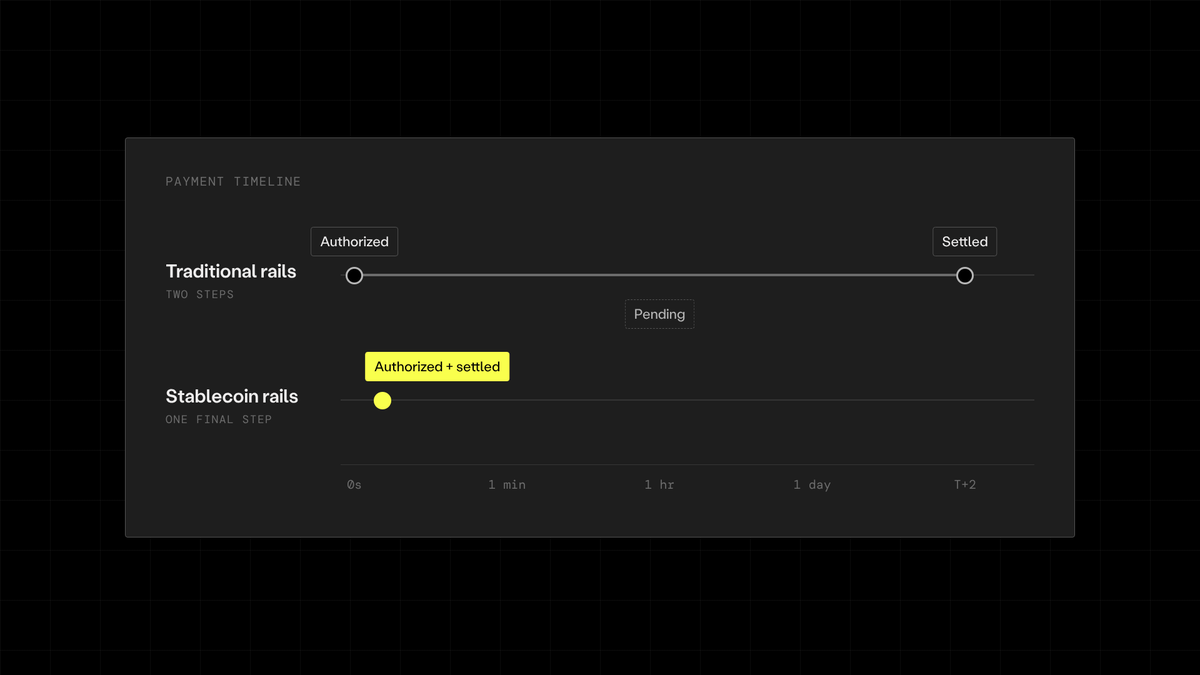
Most payments feel instant. Very few settle instantly.
That works for people. An AI agent buying data at 3 a.m. on a Saturday needs to know the payment actually landed.
Agents don't need faster approvals. They need final settlement →
https://t.co/s2TO3C1Iwn
Spending crypto should pass the grandma test.
@bamazizimesh on the #Money2020 main stage with @Visa: crypto and stablecoin balances, spendable anywhere Visa is accepted with a single tap👇
https://t.co/zqCELRjnI3
We bought a coffee with stablecoins. Live on the @Money2020 main stage. ☕
One tap in the @worldmoney app. Face ID. Paid from USDC. Approved in a second.
The merchant? Settled by @Visa like any card swipe.
774M crypto owners. 175M merchants. One tap.
#Money2020
Many of you have asked whether the recent Binance hack impacted Mesh: The short answer is no.
Mesh doesn't hold or take custody of users' or customers' assets. Our systems were not affected, and our network continues to operate normally.
But a $6.3 billion hack is serious, and it should be treated that way.
Here's what the headlines missed.
Stablecoin issuers moved quickly to freeze billions in compromised assets. Exchanges blocked affected wallets. Binance committed to covering customer losses. Markets reacted, but the industry continued operating.
And let's put this in perspective.
Traditional finance has faced massive scandals too. Danske Bank's money-laundering scandal involved approximately €200 billion in transactions over several years, a significant portion of which were suspected to be illicit. The bank ultimately pleaded guilty to defrauding U.S. banks.
These are different types of incidents, and suspicious transaction volumes aren't the same as stolen funds.
But the broader lesson is the same: no financial system is immune to fraud, attacks, or failures.
What matters is how quickly the industry responds, how effectively it protects customers, and what it learns.
The future of finance won't be defined by the absence of incidents. It will be defined by our ability to build systems that are more secure, transparent, interconnected, and resilient.
This incident exposed real vulnerabilities. It also demonstrated how quickly an interconnected ecosystem can mobilize to contain damage.
That's progress. And there's still a lot of work ahead.
It used to cost $20 to place a stock trade. Then programmatic trading made it nearly free.
@PeteCooling thinks payments are next: high-frequency payments, driven by agents.
New @TokenizedPod: Agentic Commerce with @sytaylor and @bamazizimesh.
🎧 https://t.co/VU6CJgsm2k
Well said, @brian_armstrong and @cz_binance . Moments like this also remind us that the industry needs a better, safer way to move crypto between platforms.
@binance and @coinbase are industry leaders, and both are investors in @meshpay .
Both platforms embrace open banking APIs to make fiat deposits seamless. Yet when it comes to crypto, exchanges are still hesitant to enable secure, open banking type experience for deposits from one another.
Why? Because exchanges don’t want to lose deposits to competitors so they make the user experience as sub-optimal as possible for the end users. But making withdrawals harder won’t stop users from moving their assets. It only makes the process less secure and opens the door to attacks like this.
With 300+ integrations, @meshpay already has the infrastructure to make crypto transfers safer, simpler, and more seamless, reducing reliance on manual wallet addresses and potentially preventing certain types of transfer-related attacks.
I’d love to see Binance and Coinbase lead the way in building a safer, open crypto deposit standard for the entire industry.
Mesh is willing to provide this infrastructure at zero cost.
Security shouldn’t be a competitive advantage. It should be an industry standard.
Payment networks are identity networks. Our founder @PeteCooling on @TokenizedPod with @sytaylor and @bamazizimesh: how authorization, reversals, and verifiable credentials come to stablecoin payments, and how settlement operators compete to move money for less.
Give it a listen!
https://t.co/hs1R5tcbbx
“If you look at the use cases for crypto, it’s like this. But if you look at the use cases for the US dollar, it’s infinite.”
@zakfolkman and @ZachWitkoff (@worldlibertyfi) and @bamazizimesh(@meshpay) on taking USD1 beyond crypto
Full session: https://t.co/b0XN9mJCb3
🚨 Ep. 13 of Agentic Commerce: Payment Networks Are Identity Networks
@sytaylor & @bamazizimesh are joined by:
👉 @PeteCooling, Founder & CEO, @atumhq
To discuss:
🏗️ Building Visa's stablecoin settlement infrastructure and founding Atum
🌐 How Atum connects fragmented payment apps, rails and currencies
🛤️ Stablecoin payments, fiat settlement operators and future lending opportunities
⛓️ Bringing authorisation, fraud prevention and chargebacks to stablecoin payments
🔎 Digital identity, verifiable credentials and tokenization for secure payments
💸 How Atum's settlement operators compete to deliver lower-cost payments
🤝 X402 and MPP support amid limited agentic payment adoption
📈 Why stablecoin micropayments could outperform traditional card networks
📊 High frequency streaming payments and the rise of automated transactions
🤖 AI agent hyper negotiation and real time contractor payment arrangements
***
Timestamps:
00:00 Introduction
02:39 Building Visa's stablecoin settlement infrastructure and founding Atum
05:53 How Atum connects fragmented payment apps, rails and currencies
08:43 Stablecoin payments, fiat settlement operators and future lending opportunities
10:34 Bringing authorisation, fraud prevention and chargebacks to stablecoin payments
12:18 Digital identity, verifiable credentials and tokenization for secure payments
18:00 How Atum's settlement operators compete to deliver lower-cost payments
20:58 X402 and MPP support amid limited agentic payment adoption
23:47 Why stablecoin micropayments could outperform traditional card networks
27:16 High frequency streaming payments and the rise of automated transactions
30:49 AI agent hyper negotiation and real time contractor payment arrangements
***
👉 𝘚𝘦𝘢𝘳𝘤𝘩 '𝘛𝘰𝘬𝘦𝘯𝘪𝘻𝘦𝘥 𝘗𝘰𝘥𝘤𝘢𝘴𝘵' 𝘖𝘯 𝘠𝘰𝘶𝘛𝘶𝘣𝘦. 𝘈𝘱𝘱𝘭𝘦, 𝘚𝘱𝘰𝘵𝘪𝘧𝘺 𝘰𝘳 𝘢𝘯𝘺 𝘗𝘰𝘥𝘤𝘢𝘴𝘵 𝘗𝘭𝘢𝘺𝘦𝘳! 👈
Mesh has been named to the @CBinsights 2026 Fintech 100, recognizing the 100 most promising fintech startups in the world.
Thank you to the partners and customers who build with us, and congratulations to the rest of this year’s cohort.
https://t.co/92qYWIYQQO
Welcome Joe Hamade, Mesh’s new CFO.
Joe joins after four years as CFO of Polygon Labs, where he helped drive more than $250M in acquisitions.
At Mesh, he leads finance, treasury, capital strategy, and corporate development.
Work with Joe: https://t.co/j58rxUozwM
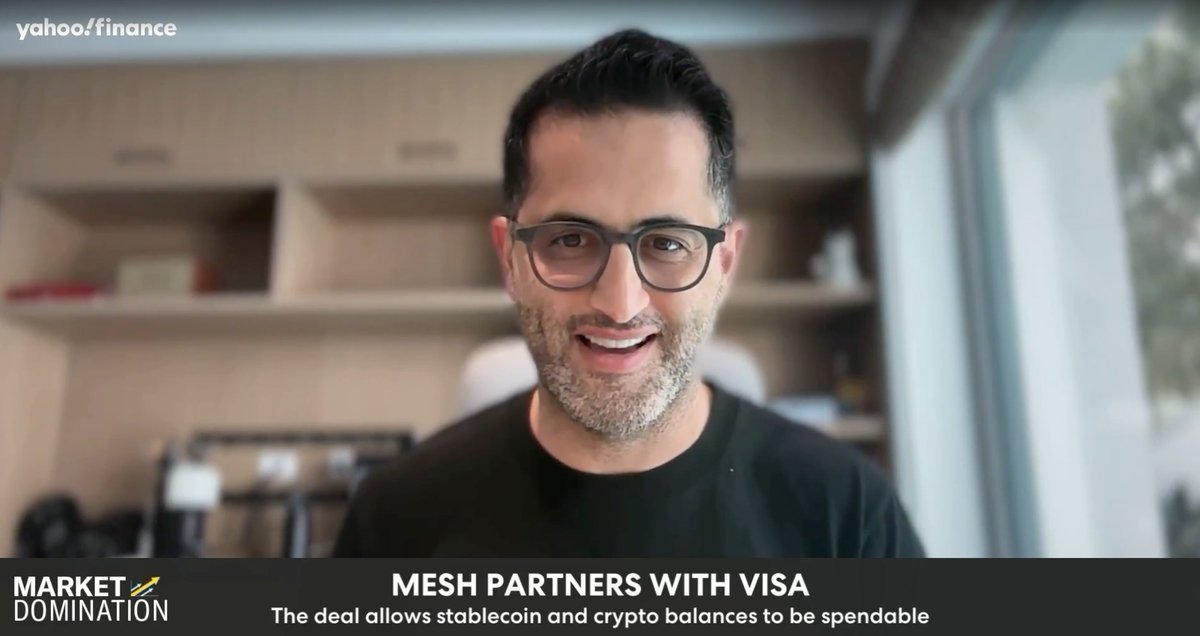
One week since we announced our @Visa partnership on the @Money2020 main stage.
@bamazizimesh joined @BrookeDiPalma on @YahooFinance to talk fixing crypto’s last mile.
774M crypto owners. 175M merchants.
Watch: https://t.co/1pd0v9acrN
Incredibly bullish on stablecoins.
~$5T of global commerce could be driven by agents by 2030.
Stablecoins are the best payment method for agentic finance (AiFi) because agents need instant, global, real time settlement, including for small amounts.
We've built the infrastructure to support this at: https://t.co/PL8EVZpeK4
What happens to payments when AI agents become the ones making them?
“Agents are looking for low friction ways to accomplish tasks.”
@TurnkeyHQ Co-Founder and CEO @sadbryce sees crypto rails becoming a natural fit for agents that need to transact as they complete tasks.
Speaking with @bamazizimesh on Stable Pulse: CEO Beat, he shares his vision for money moving more freely across consumer payments, B2B transactions, and digital services.
🎧 Building in agentic commerce? Hear his perspective on the wallet infrastructure behind it: https://t.co/S01v7SOSeW