The dream #xcelpacks was just a thought and idea till I pushed for it last year with a team great individuals.
We envision to be the ultimate packaging solution providers across the continent.
Find some samples below :-)
A man spends 50 years teaching at MIT.
He knows his time is running out.
So he records one last lecture — everything he knows, distilled into a single hour.
He died 5 months later.
This is that lecture.
The most important hour you'll watch this week. 👇
Bookmark it for later
I barely do this but I beg any Ghanaian to read the following write up by Chris-Vincent Agyapong. Bookmark, share etc cos wtf 😳
1/4
“Ghana's NITA Bill 2025: How a Government That Cannot Fix Potholes Wants to Certify Your Keyboard Strokes
There is a particular brand of Ghanaian governance that operates on a simple, well-rehearsed logic: identify the one sector in which ordinary young people, without connections, without family money, without a politician uncle are actually building something for themselves, and then erect a magnificent bureaucratic tollbooth right in the middle of it.
The National Information Technology Authority Bill, 2025 currently making its way through Ghana's legislative machinery with the quiet confidence of a document probably written by a majority of people who have never debugged a line of code in their lives is precisely that tollbooth. It is, in its 105 sections and accompanying Schedule, one of the most breathtaking exercises in regulatory overreach this country has produced in recent memory. And given our regulatory track record, that is genuinely saying something.
The ICT sector is the one industry where a boy from Ashaiman, or, like my friend from Pulima, Aliu Wahab, with a second-hand laptop and a YouTube tutorial, can compete with someone whose father went to Achimota. It is the one space where talent, not tribe; skill, not surname; output, not old-boy network, still carries meaningful weight. It is, bluntly, the only functioning meritocracy left in Ghana's economic life.
And our government, with the NITA Bill 2025 has decided that this is precisely the sector that requires the most elaborate regulatory architecture since the tale of Moses coming down from Sinai with the Ten Commandments.
The Absurdity of Section 46: Certifying Everyone, Everywhere, Always
Let us begin with what is, without competition, the most extraordinary provision in this bill. Section 46(1) states, in plain and unambiguous terms:
"A person shall not be appointed as an ICT professional in a public or private institution unless that person is certified by the Authority."
Read that again. Public or private.
This is not a provision that limits itself to government systems handling national security data. This is not a narrow carve-out for critical infrastructure. This is a provision that means the software developer at a startup in Osu, the data analyst at a logistics firm in Tema, the web designer freelancing from her bedroom in Kumasi, all of them, every single one must first obtain certification from a government authority before they can lawfully be employed.
Who dreamed this up? Under what theory of governance does it make sense for the government of Ghana which cannot consistently process a DVLA licence within six months, which spent years and hundreds of millions on a national identification system that still cannot talk to the health insurance database to position itself as the certifying gatekeeper for an entire profession across the entire economy?
And here is the delicious irony that the framers of this bill seem constitutionally incapable of perceiving: the government's own ICT record is the single most compelling argument against giving it certification authority over anyone. You do not hand the keys of the wine cellar to the person who has been drinking the wine.
Politicians: The One Profession That Needs Certification Most, and Gets It Least
Since we are on the subject of certification, let us pause to consider who in this country is not required to demonstrate any competence whatsoever before being handed consequential power over millions of lives.
Continued below
Every impactful conversation needs the right voice to guide it.
Meet Vanessa Addo, Product Owner, who will be hosting Beyond the Classroom: Preparing Women for Careers in Tech.
With her experience in product development and user-focused thinking, Vanessa brings a strong ability to connect ideas, experiences, and perspectives into a conversation that is both practical and engaging.
She will be leading a session designed to help women move from learning into building real careers in tech.
📆 7th May |⏰ 3:30 PM |📍 Virtual
Register here: https://t.co/Inkl82wl4o
#WorkwithAmaliTech #WomenInTech
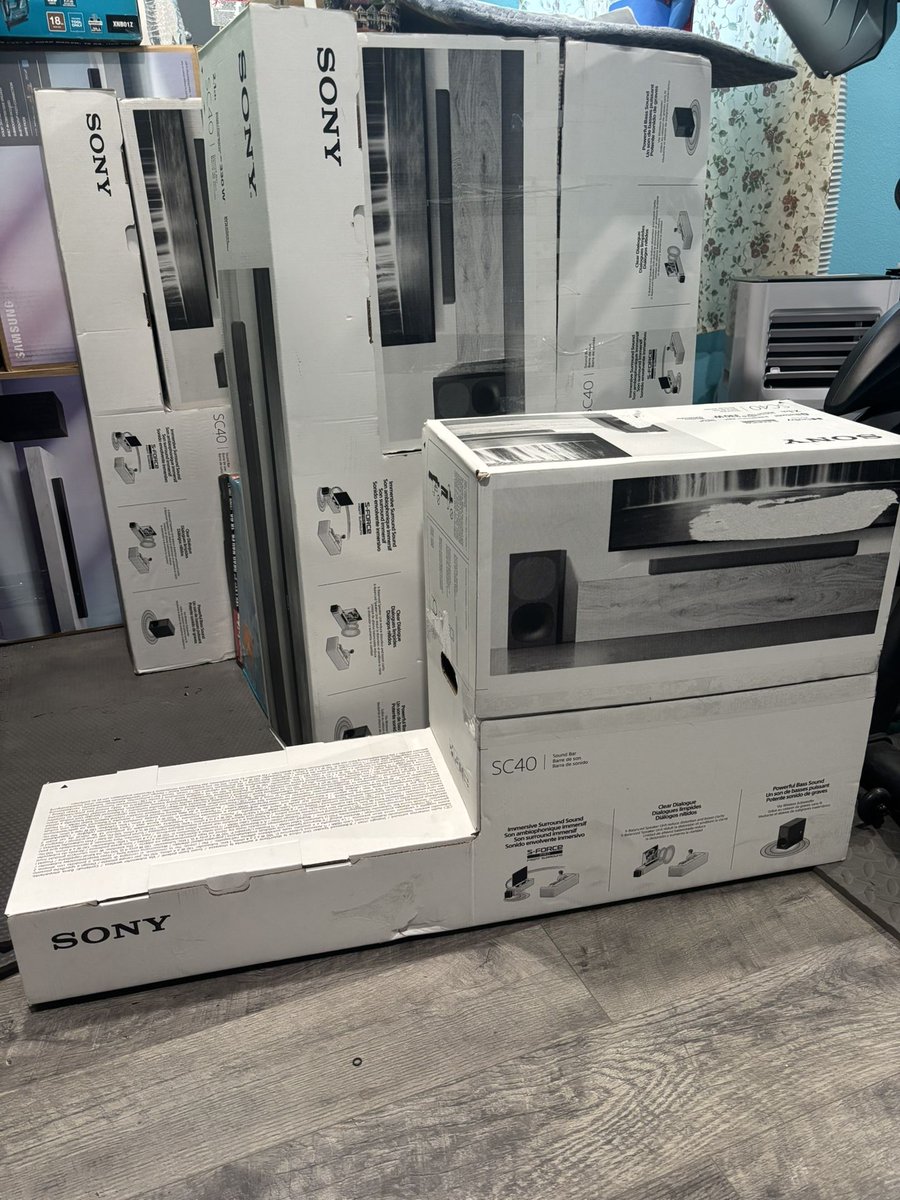
FOR SALE !!!!
Sony SC40 Sound Bar; A compact soundbar with a wireless subwoofer that delivers clear, powerful sound and deep bass, plus easy Bluetooth and HDMI connectivity for an instant TV audio upgrade.
Price: GHC 4000
Free delivery anywhere in Accra. hit me up on 0246653969.
if you buy more than two, ill give you a great discount!!
Repost for me.
For your mental health
Please date kind women
Please date women who are kind to your soul.
Please date women who can articulate themselves.
Please date women with conscience
Please date women who have self control.
I can't stress this enough.
His father was a national hero. A name that once filled stadiums.
It’s hard enough chasing a football dream.
Harder when you’re carrying the legacy of a father the nation once adored.
This Sunday, we hear from @bqjr10, and honour both journeys.
Get in https://t.co/3y6GEgsJWG
Benjamin "Shamo" Quaye Jnr, son of Ghanaian football legend Shamo Quaye, has faced countless challenges but never lost his love for the game.
In this documentary, he talks about his struggles, resilience, and relentless pursuit of his dream.
https://t.co/6Y0HS3Oqsh
This official statement from the Ghanaian presidency confirms that Vice President Naana Jane Opoku-Agyemang received medical treatment following a sudden illness and will seek further care abroad. Wishing her a swift recovery. #Ghana#VicePresident#HealthUpdate
By now, many of us must have watched the BBC Africa Eye documentary about the crazy opioid crisis starting to overwhelm West Africa.
1. Recap: a chap by name Vinod Sharma runs a pharma company in India called Aveo that has "invented" a poison by mixing two powerful drugs - tapentadol & carisoprodol. The formulation has not been approved anywhere in the world and is thus GLOBALLY ILLEGAL.
2. Aveo and some other Indian companies are flooding countries like Ghana & Nigeria with this concoction under brands such as Timaking, Tafrodol, & Super Royal-225. They are also shipping in ILLEGAL, high-dosage, forms of tapendatol & carisoprodol as standalone drugs.
3. Vinod acknowledges candidly to the undercover journalists that tafrodol, for instance, is poisonous. However, in his words, "it is has become a business."
4. He further reveals that Nigeria has tightened its borders and Ghana is now the easiest channel to get his cute poisons into West Africa (food for thought for all you Ghanaians who think Ghana has the most superior systems in West Africa.)
5. I think I also heard him say that he can churn out 5 million pills at a go. Dude is a machine!
6. All the craziness above, something else , that was not discussed further in the documentary, is what truly blew my mind. Even before the documentary aired. It is Samospharma's role as Ghana's biggest opioid importer.
7. Customs data and intelligence shows that a large chunk of the tafrodol, tapendatol & carisoprodol batches imported into Ghana is financed by Sahelian merchants, mostly based in Niamey. However, one Ghanaian company stands head to toe with them: Samospharma.
8. By November 2024, Samospharma had imported more than $6 million of opioids and other drugs from PRG Pharma of India, for instance. It also imported perfectly legal "eye drops" from the likes of Zuche and Indiana Pharma.
9. As was shown in the documentary, Samospharma and its three founsers are the main business partners of Vinod and Aveo in Ghana, as well as of Aveo's sister company, Westfin. Of the $20 million worth of opioids that Aveo has shipped to the region in recent times, Samospharma was responsible for about 12%.
10. Why was I completely bewildered by this? Three reasons. First, the founders of Samospharma are behind acclaimed platforms like DrugNet, and have been industry advisors to Ghana's national e-pharmacy portal. They are respected in the pharmacy profession for their youthful acumen and public engagements.
11. Second, their core work at DrugNet and through various industry initiatives has focused on tightening supply chain and quality assurance, subjects that I know a bit about. Their involvement in this whole saga simply doesn't add up.
12. Most bewildering of all, they have NOT been smuggling in these opioids. They have been OPENLY importing them into Ghana. Attached, see a list of bills of lading covering some recent shipments. The Ghanaian authorities have been authorising clearance even though Samospharma hasn't registered any of these products with the FDA.
13. I was thus shocked when the authorities attempted to throw the importers under the bus in their interviews with the BBC. It is very clear that Ghana is happily letting these opioid through. Even now. Despite the loud protests about the addiction epidemic opioids are causing. Despite the occasional seizures and bonfires. Ghana's ports remain open.
14. What exactly is the national policy here? 🤷🏾♂️🤷🏾♂️🤷🏾♂️