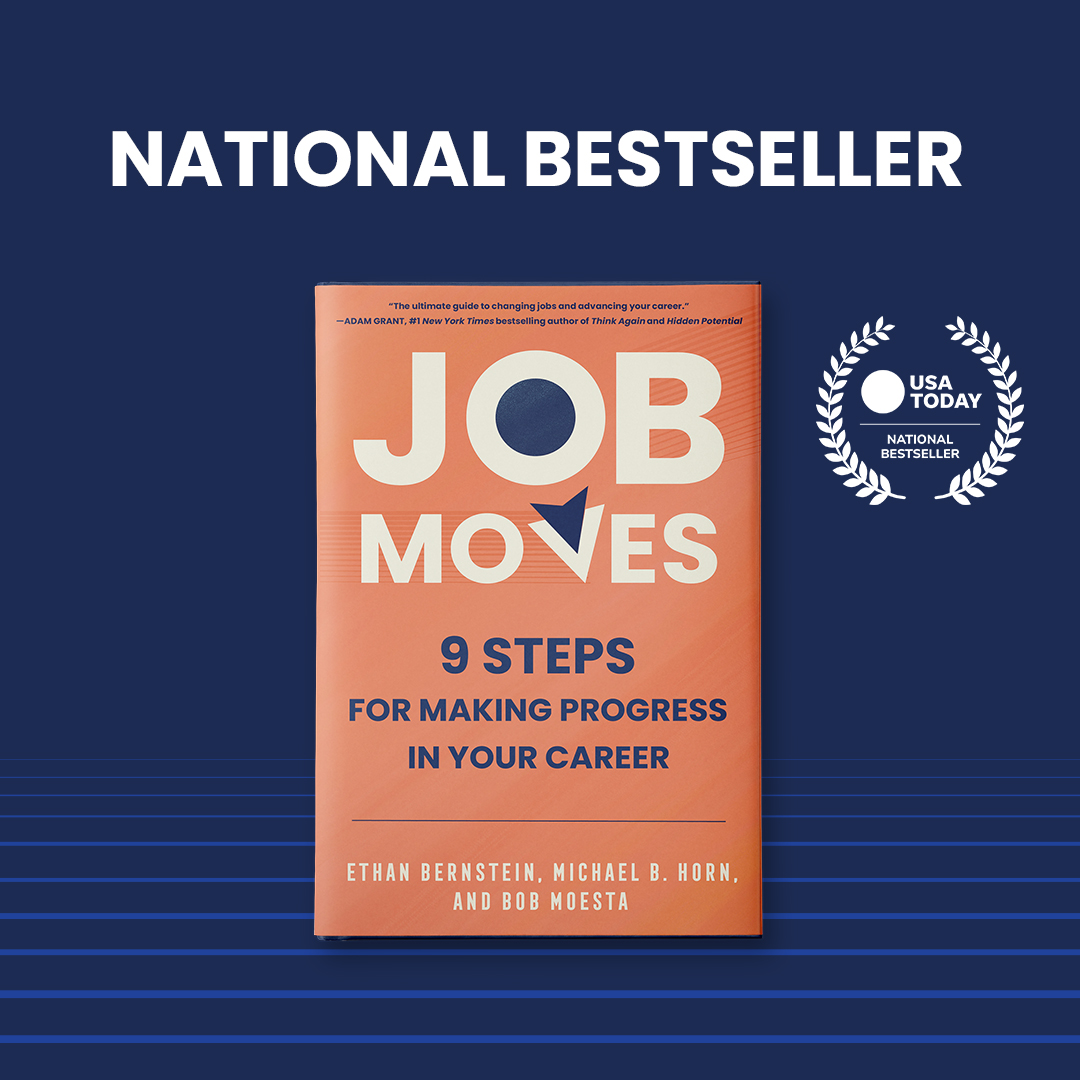
Thank you so much to all of you who have purchased copies of the book I wrote with @ethanbernstein and @bmoesta , Job Moves, to help you or those around you make progress in your career and life.
Because of you, we debuted at 19 on the USA TODAY bestseller list:
https://t.co/QGvdrfYyO3
More than anything, what this means is that thousands of individuals now have access to the 9 steps from our research and coaching to make meaningful progress as they switch jobs.
Now that's gratifying.
https://t.co/MA0gsQCLUe
As I have said repeatedly, there is real cause for concern around education technology right now.
And while the calls for blanket bans are, in some ways, understandable, they are also blunt and counterproductive
Last week, The Guardian published an article (linked below) that captures this phenomenon through what is perhaps the most talked-about segment of education technology right now: AI.
The question is not whether schools should be “for” or “against” AI.
It’s whether they can develop the judgment, evidence base, and accountability systems to distinguish what helps students learn from what merely looks innovative.
That’s a much harder conversation than calling for a blanket ban.
It’s also the one worth having.
I talk a lot about the future of education but remembering its history is just as important.
If that rings true to you, check out the first edition of a new timeline game I launched on my Substack.
Order the six landmark events correctly to win…the pride of knowing you know your American education history.
https://t.co/hxZOG9EGxy
When I spoke with @Jorge_Elorza , CEO of @DFER_News, one of his core arguments was that if Democrats want to lead on education again, then Democratic governors and other leaders have to be willing to lead the effort on creating real choice in their states.
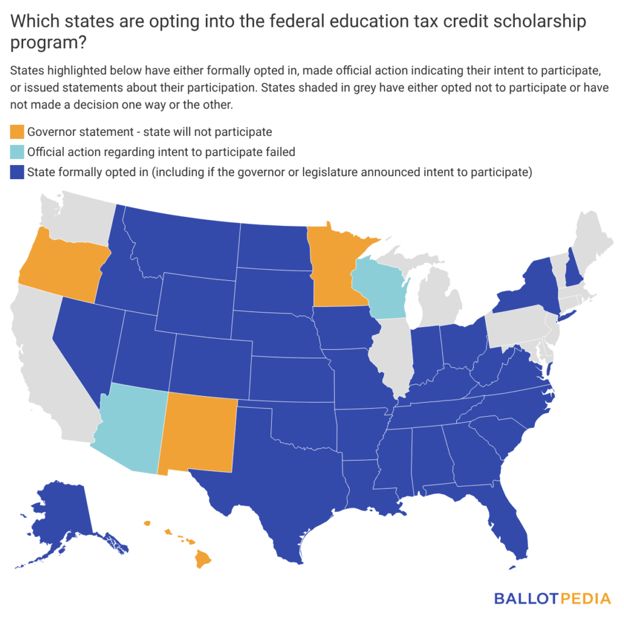
There has been one notable example of that in the time since we aired that episode: @GovKathyHochul’s decision to opt New York into the Federal Education Freedom Tax Credit Program – which expands educational choice by offering a federal tax credit for donations to scholarship-granting organizations.
In my conversation with Jorge, he made the case that this moment is different. Not only because many families want more options, but also because a new generation of Democratic leaders may be more open to embracing choice, innovation, and a broader definition of public education.
His point was that the real opportunity is not just one policy here or there. It is building a larger ecosystem: one that gives families more agency, creates room for new school models, and makes it politically possible for more blue and purple states to move in that direction.
Whether Hochul’s move is a signal—or an anomaly—is a big question at this moment. If Jorge is right, then this may be less of a one-off than an early sign of where future efforts could go next—as more governors and gubernatorial candidates begin to see both the policy case and the political opening. But with Oregon’s governor going the opposite way, this is very much an open question still.
What do you think will happen in the other states that haven’t decided yet about the Federal Education Freedom Tax Credit Program? And will those that opt in embrace more choice-friendly policies in their state as well?
When it comes to higher education outcomes, the conversation is finally getting more serious.
That’s a good thing.
For too long, colleges have largely been judged by inputs, reputation, and enrollment—not by whether students are actually better off for having enrolled.
A few takeaways from my latest piece:
1️⃣ The field is right to focus more on ROI and student outcomes - With weak completion rates and a significant share of degree programs producing negative economic returns, the shift toward asking whether programs do economic harm to students is overdue.
5️⃣ The bigger lesson may be about infrastructure - Texas was able to do this because it has the data systems to support it. Most states do not. If we are serious about building guardrails so students are not left worse off when they enroll, then better governmental data infrastructure has to be part of the next chapter.
Economic return is not the only thing that matters in education.
But “do no economic harm” feels like a reasonable baseline.
And if we want that principle to mean something, we need measurement systems robust enough to back it up.
This season of @FutureUpodcast kept returning to one straightforward question:
What is a given college actually there to do?
In the season wrap-up, @JSelingo and I looked back across the year’s biggest themes—and one idea kept surfacing: in a period of real pressure and change, mission matters more than ever.
A few ways that theme showed up across the season:
@futureupodcast@jselingo That, to me, was the throughline of the season:
Not every institution should look the same.
But every institution should be able to answer, clearly and honestly, what are we really here for?
You wouldn’t use a sledgehammer to crack a walnut.
Yet, many education leaders risk making a similar mistake right now in response to the very real problems with edtech.
Yes, there is too much technology in many traditional schools.
Yes, too much of it has been layered into incoherent models that were never going to produce great outcomes in the first place.
And yes, some of the criticism landing on edtech right now is deserved.
But that does not mean the answer is a blunt, one-size-fits-all policy response that destroys the good along with the bad.
A few things can be true at once:
The issue is whether schools are using it with clarity, discipline, and accountability.
That’s a much harder conversation than “ban it” or “adopt it everywhere.”
But it’s also the one worth having.