https://t.co/UFGznSoSS4
The trouble with a generous article like this one is that it makes a long series of questionable career decisions look like a plan. I’m tempted to take the credit, but too many of you have been here long enough to know better.
Big thanks to Jessica Manfre and @WeAreTheMighty for making me sound considerably more organized than I am, and for drawing attention to the work we’re doing at mikeroweWORKS—including opportunities for veterans to learn a skilled trade. Sorry it took so long to share, but I've been busy, making it up as I go along.
If you’re unfamiliar with We Are The Mighty, they’re a veteran-led media company dedicated to informing, entertaining, and supporting service members, veterans, and their families. They tell the stories of that community and help the rest of us better understand the people who serve. It’s worthwhile work, even if their editorial judgment occasionally leads them to highlight a former opera singer who became marginally famous for crawling through sewers with no discernible mechanical ability.
As always, the people worth lionizing are the ones who actually know how to build the stuff we all rely upon, and I’ve been fortunate to meet a lot of them, and smart enough, occasionally, to get out of their way. That's the only plan I've ever had, and I'm sticking to it....
I want you to know Nick Nichols. Retired Colonel, USAF. Fighter pilot. Currently running a terrific foundation called @FoldsofHonor, which provides scholarships to families and spouses of soldiers and first responders who don’t make it home.
Nick and I were introduced by John Rich a couple years ago, and today, we finally had a chance to sit down and solve the problems of the world. I honestly don’t recall enjoying a conversation more than this one. (Nathan Fillion came close, but that’s only because we hadn’t seen each other in 20 years.)
Colonel Nichols has been there and done that. All of it. His experience in combat, and in life, offer a treasure-trove of insight to anyone who cares about our country, and wishes they could do more to support it. (Spoiler alert, you can.)
Fascinating chat with a guy we’re lucky to have on our side. Short clip attached. Whole conversation here.
https://t.co/VczTvu82t5
Along the Old Tiburon Trail, where I often atone for my sins with a vigorous 8-mile ruck and film dirt-cheap commercials for Pure Talk on my iPhone, there’s a charming old gazebo where I sometimes pause to rest in the shade, gaze across the bay toward The Golden Gate Bridge, and contemplate the meaning of life. It’s called The Little Lori Gazebo, and it was built by a woman named Barbara Meislin, known to the locals as The Lady in Purple, since that’s the only color she ever wears. Barbara even lived in a purple house, until it burned down in 2009.
Anyway, the gazebo was built as a memorial to her daughter, Lori, who died very young, and I’m not the only one to enjoy its shady charm over the years. I’ve noticed however, that’s it’s been in need of repair, and last week, as I was filming one of those dirt-cheap commercials for affordable wireless while rucking along the Old Tiburon Trail, I noticed that the long overdue refurbishments had finally begun. I also met the contractor who was hired to do the work.
“Holy crap! It’s you!”
Since there was no one else around, and because the man was looking directly at me, I quickly deduced that I was the object of his query.
“You are correct,” I said. “It’s definitely me.”
The man struck me as delighted. Perhaps, a bit too delighted.
“This might sound a little creepy,” he said, “but I took this job because of you."
“You’re painting a gazebo because of me? Why?”
“I’m not just painting it,” he said. “I’m rebuilding everything below the roof.”
“Because of me?” I asked. “I don’t understand.”
“I don’t normally bid on projects this small, but I’ve been wanting to meet you for a long time. And I’ve seen those ads you do while hiking along this trail. I figured I might run into you during the work, so I bid on the gig. And now, here you are!
“You’re right,” I said. “That does sound a little creepy.”
The man laughed and walked toward me, hand out-stretched, as I unclipped the hip-strap on my ruck, just in case I had to drop the 60lbs on my back and run away. I’ve had some unusual encounters over the years and learned that running away is often the best option.
“Name’s Mike Sanguinetti,” he said. “My daughter and I have seen every episode of Dirty Jobs, and we love everything you do. I run a Painting and Construction Company here in town.”
The logo on his tee-shirt confirmed the claim. And the presence of a daughter was comforting. I relaxed.
“Mike Rowe,” I said. “Nice to meet you.”
We shook hands and Mike Sanguinetti said, “You know, I saw you in Vegas last year at SEMA, when you were auctioning off that truck for your foundation. I stood in line to meet you, but you had to go before I got a chance to hello. I waited around for hours.”
“You’re making it creepy again,” I said.
Mike laughed. “I just wanted a chance to tell you, in person, what Dirty Jobs meant to my daughter and me. Best father/daughter bonding time ever. And I really love what you’re doing for the trades. Means the world to us independent contractors.”
Like a lot of guys in the trades today, Mike Sanguinetti has a front row seat to the skills gap. He runs a small operation, and deals with all the challenges I talk about at mikeroweWORKS everyday. We talked about those challenges for a few minutes, along with the importance of a decent work ethic, and the extraordinary opportunities for those who would simply master a skill that’s in demand.
“Maxine won’t believe this,” he said. “She thinks I’m crazy for believing we’d run into each other.”
“Maxine is your daughter?” I asked.
“Yeah. She’s in high school now, plays varsity volleyball. But we still watch Dirty Jobs whenever it’s on. It’s kind of our thing, you know?”
“That’s nice,” I said. “Can I send her a video?”
“Oh my God,” said Mike. “She won’t believe it.”
Mike handed me his phone, I recorded a personal message to Maxine, and that was that. Mike thanked me for being the same guy he knew from the TV, (or at least, for appearing to be,) and I thanked him for going so far out of his way to say thanks.
“Seriously,” I said. “On a percentage basis, how much did the possibility of meeting me factor into your decision to bid on this gazebo job?”
“At least 95%. Maybe more.”
“Well, congratulations,” I said. “You’ve made it creepy again!”
Mike laughed and went back to work, as I walked off to film another commercial for affordable wireless, thinking all the while about the good fortune that allowed for two Mike’s with wildly different skill sets, to work on the same trail.
I had to travel the next couple days, but when I threw on the ruck three days later for another 8 miles of penance, I walked by the gazebo and was blown away by its transformation, and the speed with which the work had been completed. One guy, armed with the necessary skills and a work truck filled with the necessary tools was all it had taken to restore Little Lori’s Gazebo to its former glory.
I’ve attached a photo, along with a shameless plug for Sanguinetti’s Painting and Construction. He does good work. https://t.co/o9q8RXer6O
Happy Trails, Mike!
(You too, Maxine.)
PS. The Lady in Purple, Barbara Meislin, is now 91, and by all accounts, delighted by Sanguinetti's work.
Like young Maxine, Barbara has excellent taste.
In Defiance
Thousands of companies who manufacture products in America are searching for authentic ways to tell their own stories without sounding like they’re patting themselves on the back. Others are searching for a genuine way to reinvigorate the skilled trades without making a recruiting commercial, or coming off as false, self-serving, or manipulative. I know this because I’ve talked to many such companies and encouraged them at every turn to tell their story in the only way I’ve ever seen to be effective - through the eyes of their own employees. Because no one can talk more honestly about the mission of an American-made enterprise than the people who do the actual work.
Attached, for your consideration, is a short example of what that looks like. It’s a video from a company called @DECKED, which I suspect many of you have never heard of. DECKED makes a sliding drawer system that can be installed into the beds of virtually any pick-up truck. It’s an ingenious design that allows tradespeople, farmers, and hard workers of every stripe to access the stuff they haul around with remarkable ease. DECKED’s ingenuity has been rewarded with remarkable growth. The product is entirely American made, and 90% of their manufacturing is accomplished in a town called Defiance, Ohio, with 250 employees working away in several hundred thousand square feet of space, along with a LOT of machinery and technology that I won’t attempt to describe.
Anyway, two of the principals, Greg Randolph and Bill Bonta, decided to host a company event last week that brought together employees, local media, local politicians, and yours truly, to discuss the challenges of making things in America. More importantly, Greg and Bill had the good sense to record everything, edit it together in a sensible fashion, and then share it as broadly as possible. I promised to do my part to spread the word, and if you agree with the effort, I’d appreciate it if you passed this video on. Because what DECKED is doing in Defiance is important. And so, too, is the way they’re doing it.
The bottom line is obvious. If America is to truly reinvigorate our manufacturing base, it’ll require something more than sensible policies and logical incentives out of DC. It’ll also require something more than trade unions fighting for a better deal from management. I’ve got nothing against unions, (at least, not all unions), and I understand the eternal struggle between labor and management. But this struggle is not that struggle, and even if it were, we can’t have the conversation we need to have with just 8% of the workforce, which is currently the percentage of workers represented by a union. This is a struggle for the essence of who we are as country and what kind of country we will become, if we simply give up on the challenge of making quality goods ourselves. This is about entrepreneurs betting on themselves, their people, and their ideas, despite a global playing field that’s not level, and the need to assume a level of risk that most Americans simply couldn’t stomach.
DECKED is doing that. They’re manufacturing a terrific product in defiance of a great many obstacles. They’re also doing it in Defiance, literally, which is good news for Ohio, good news for the United States, and good news for the 250 employees who are proud of what they do, and eager to share the success of their company. Which you’ll see them do in the attached video. Please give it a look, and pass it on...
Where's the Beef?
Fundamentally, Dirty Jobs was a tribute to two industries – agriculture and mining. In the words of a fourth-generation coal miner I met back in Season One, “There ain’t but two jobs in the whole world – farmin’ and minin’. Every thang else is jist a hobby folks get paid for.”
He wasn’t the first to say it, and I won’t be the last to repeat it. Especially today, when so much of what we do for work takes place in spaces that we can’t physically occupy. The cloud, the blockchain, the latest LLM, and whatever other digital layer now passes for a modern workplace would not exist without our ability to extract rare earths and critical minerals and turn them into something useful. Beyond the infrastructure that defines civilized life, every single piece of modern technology – including all of the software and all of the artificial intelligence that’s overtaken the headlines - is wholly reliant on mining. Just as every single miner, regardless of what they’re in the business of extracting, is wholly reliant on modern agriculture - not only to keep them fed, but to keep them clothed.
It’s easy to forget about our reliance on farmers and ranchers when the national pantry is fully stocked with affordable food, but that's not the case today. In fact, the government - through a presidential proclamation - just agreed to import 300,000 metric tons of ground beef into our national food supply, from places like Mexico and South America. And every rancher I know is alarmed, to say the least.
On this weeks episode, I asked Brooke Rollins @SecRollins, the Secretary of Agriculture, to explain what the administration is doing with regard to cost of beef, and how this decision to import so much beef is good for American farmers and ranchers. Like everyone else who shares my addiction to chewing and swallowing things, I'm appalled by the current price of meat, and curious as to why our ranchers are suddenly unable to provide us with affordable ground beef.
I’m glad the Secretary made time to chat, and hope you enjoy our conversation as much as I did.
https://t.co/60VfF3v5G0
A number of people have asked me if the attached video is AI. It is not. That’s really me, fifteen years ago, testifying before Congress about the need for some kind of national effort to reinvigorate the skilled trades (The suit is also real, but alas, no longer fits the way it used to). Since the original video of that testimony has resurfaced and is currently making the rounds, I thought I’d use some of it to shamelessly plug https://t.co/IhaBSMIY6b
As you may know, The Pentagon and mikeroweWORKS have partnered around a simple initiative to highlight a few hundred thousand AI-proof, six-figure jobs currently open in the defense industrial base. The campaign is called Build Freedom, because that’s exactly what it does, and we’re expanding every month. We’re currently in six states and hope to be in twelve by early next year. And half the country soon thereafter.
The jobs at https://t.co/UnEdFDZ8M4 are truly essential, and in desperate need of being filled. They do not require a four-year degree, but they do require training, and I’m happy to tell you that mikeroweWORKS has received a check from Build Freedom for $10 million, which we’ve set aside to pay for the training you’ll need to land one of these essential jobs. I’m even happier to report that the check, (like me,) is not AI, and that the money is very real, and waiting to be claimed, at: https://t.co/CSGu1RA4wd
To review, find an AI-proof, six-figure job at:
https://t.co/MrG2Xc7hH7
And apply for a work ethic scholarship at:
https://t.co/CSGu1RA4wd
https://t.co/gf1N0KpEDd
Over the last couple years, there’s been an extraordinary revelation among America’s most influential CEO’s with regard to America’s skills gap. Many, if not all, have come to the conclusion that the skills gap is,
a) really real
b) really wide
c) really dangerous
d) really a matter of national security
It’s almost as if a memo has gone out to the C-Suite, and outlined in no uncertain terms just how dire the situation is, and just how badly we’ve bungled the business of training, preparing, and most of all, encouraging the next generation of skilled workers to explore a long list essential careers currently in demand like never before. At long last, people are beginning to pay attention.
No less extraordinary than this sudden realization among business leaders, for me anyway, are the invitations I’ve received to participate in a variety of gatherings and conferences to help reimagine the way we prepare the next generation for the economy that’s coming. One such event will commence this week in Detroit, and once again, I’m very flattered for the opportunity to talk about our efforts at mikeroweWORKS, and mouth off about what I think can be done to reinvigorate the skilled trades.
This particular event is called Accelerate the Essential Economy, and it’s been organized by Jim Farley over at @Ford, who has spoken about this for years, and emerged as one of leading voices on this issue. Obviously, Jim has a lot of skin in the game, and is currently doing all he can to hire experienced technicians all over the country. But he’s also taking real steps to fill the pipeline with skilled technicians, and making what I think is a pretty persuasive case to teenagers for careers in the automotive industry.
I say good for him, and good for all of the other movers and shakers about to convene in Motor City, including leaders in finance and technology. Because the truth is, every business in America - and every major industry - is now competing for a skilled workforce that simply isn't there in sufficient numbers. We need all the big brains on this issue, and we need them working together - yesterday.
I think it’s gonna be a worthwhile event, and you can livestream some or all of it below. I’m on a panel Wednesday morning with The Secretary of Education and The Honorable Mike Duffey, Undersecretary of War for Acquisition and Sustainment. I’ve met Linda McMahon once or twice, and Mike is my boss, sort of, around an effort called https://t.co/IhaBSMIY6b, which I’ll talk about in more detail later. Should be a lively discussion...
Broadcast News
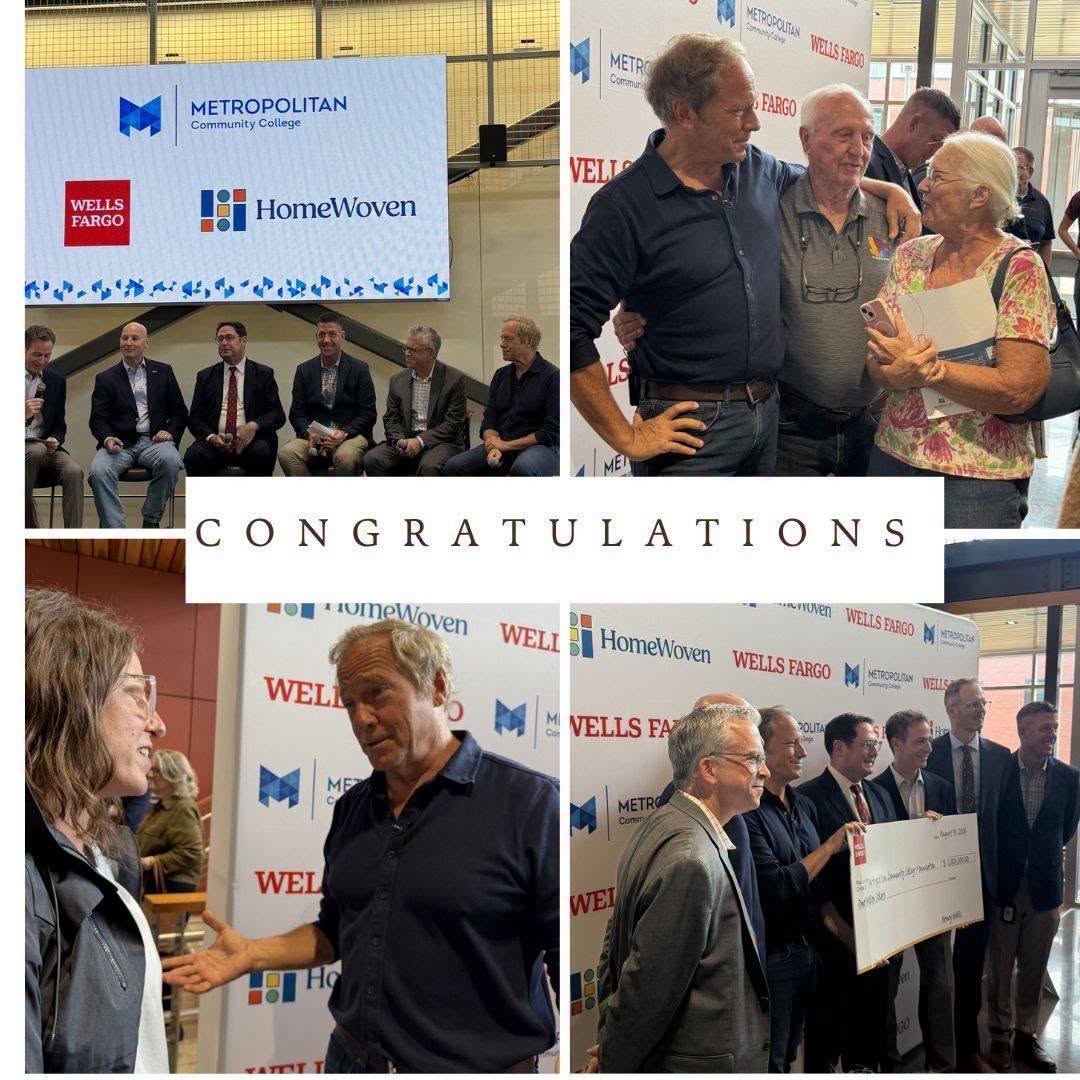
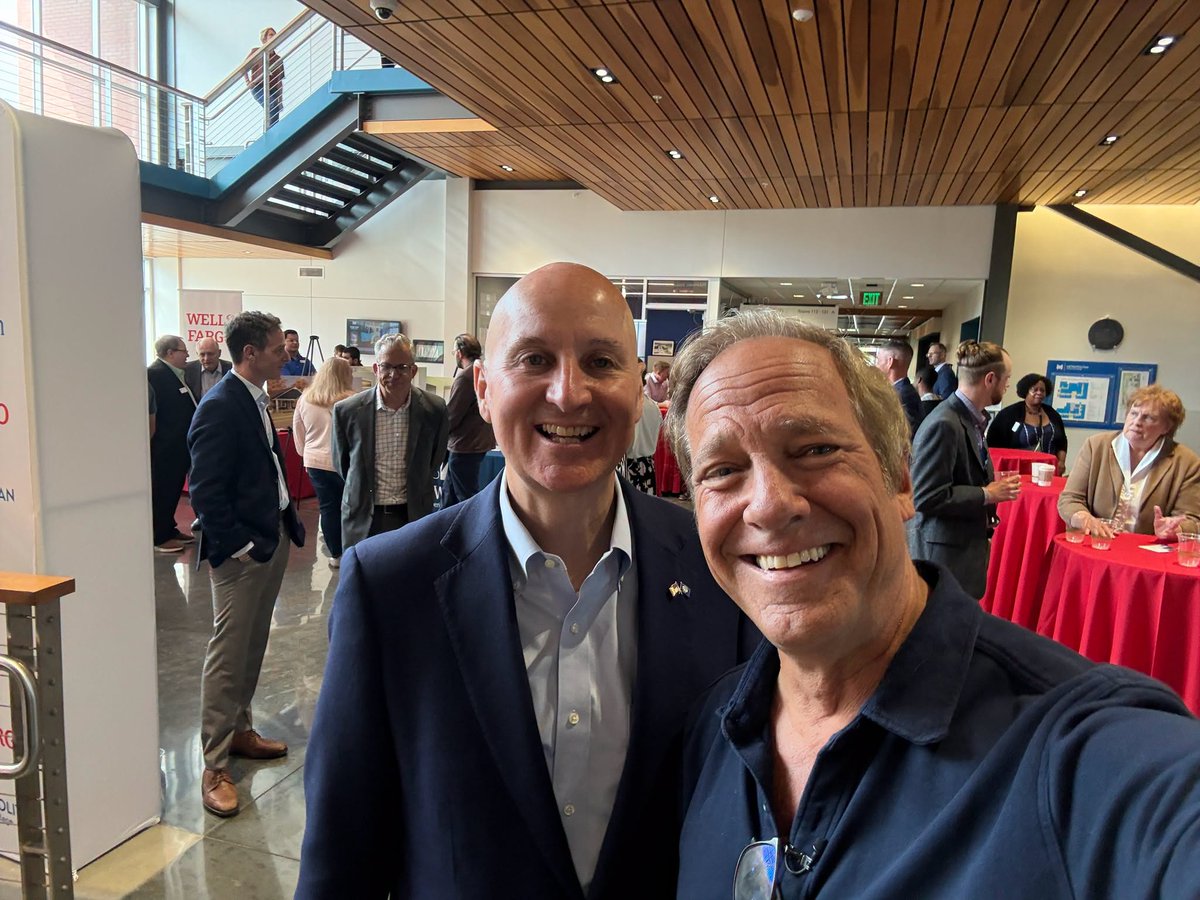
There’s something about Nebraska farmland that makes me want to stand up straight. Not sure what it is, but every time I pass through this part of the country I find myself trying to stretch my body into the sprawling landscape, and wind up looking vaguely ridiculous. In spite of all the attached images, I wasn’t in Omaha last month to be photographed – at least, not primarily. I was there as a guest of @WellsFargo, who continues to spread their money around America like a farmer, broadcasting seed into the tilth of a plowed field.
Did you know that “broadcasting” was a farming term, long before it became the name of my chosen industry? It’s true. Broadcasting was first used to describe a method of distributing seeds that don’t need to be buried deeply, like cover crops, alfalfa, and clover. It allows allows a grower to cover a massive amount of acreage much faster than you could with a precision seed drill. The drawback, is that seeds which are “broadcast” simply land on top of the dirt. Because they lack good seed-to-soil contact and are exposed to the open air, they’re vulnerable to being eaten by birds, blown away by the wind, or drying out before they can germinate. To fix this, farmers will usually follow a broadcast seeder with a light harrow or roller to gently press the seeds into the soil.
It occurs to me that my roll in Wells Fargo’s current campaign is akin to that of a seed drill. I’ve been invited to tag along in order to make sure the seeds that Wells Fargo has spread throughout Pennsylvania, Texas, Alaska, North Carolina, Wyoming, South Dakota, Iowa and Nebraska, have a better chance of taking root in the fickle field of public awareness, where every crop is competing for attention, and every farmer tills from dawn to dusk. Toward that end, I want to tell you about Metro Community College here in Omaha, and their partnership with a local charity called HomeWoven.
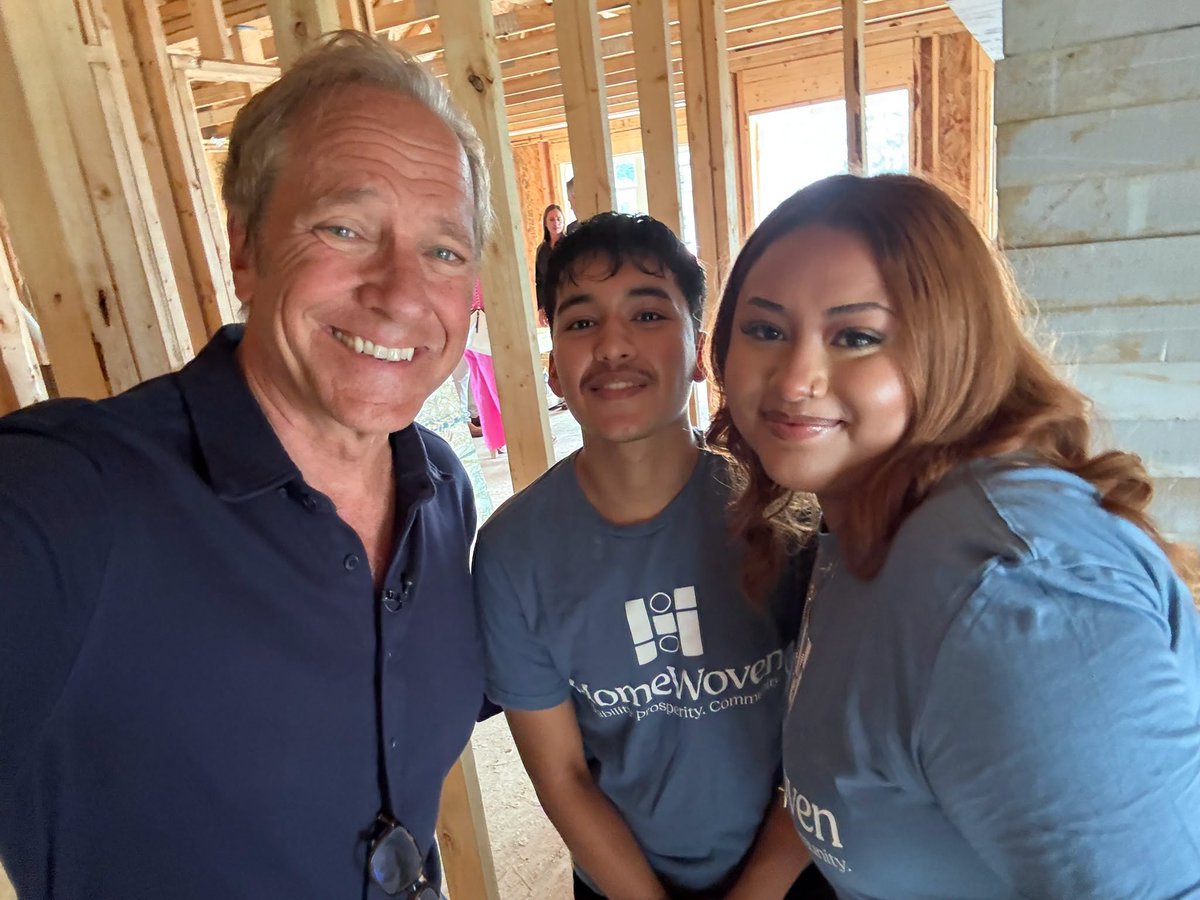
In short, students enrolled in the Construction and Building Science program at MCC are getting hands-on, real-world experience through structured internship programs managed by a local non-profit called HomeWoven. I’ve met these students, and they’re awesome. Currently, they’re applying their classroom training directly to local construction projects, physically building affordable homes in South Omaha. While HomeWoven addresses neighborhood housing stability, MCC fulfills the essential demand by supplying the skilled workforce required to execute each project. My job was to once again shake hands with the local politicians, (Senator Ricketts, in this case) meet the key people involved, talk to the local media about the importance of reinvigorating the skilled trades, and present a large check on behalf of Wells Fargo - in this case, a $1.25 million investment for a local solution that’s actually working. Pretty great gig.
Honestly, I don’t know where I’d be today, but for a few great teachers at Essex Community College way back in 1980. They straightened me out, showed me a way forward, and gave me the confidence to try things I never imagined I might be good at. MCC is doing the same thing for a lot of kids entering the skilled trades, and their partnership with HomeWoven is working. Lots of families who could otherwise never afford a new home, are now in one, thanks to a construction program at a local community college, a local non-profit that’s connecting the dots, and a big national bank that’s investing in the towns where they do business.
Seems to me, that’s a story worth broadcasting, and a seed worth drilling down on...
My guest today is a woman who looked at the modern food pyramid and said, "Thanks, but I’d rather eat drywall."
@Realalexclark is the host of the hit podcast Culture Apothecary, a driving force behind a fantastic documentary, "Breaking Big Food," and a person currently on a deeply personal crusade to figure out why our breakfast cereal has a longer shelf life than the average car battery.
I wanted to hear from Alex about how Big Food and Big Tobacco sing from the same hymnal, and why your favorite "healthy" snack might actually double as an industrialized adhesive. Please welcome a woman who is bravely trying to save us from our own shopping carts, the wonderfully fired-up Alex Clark. (Honestly, if I can get her out of her shell, this woman is going places...)
Short clip below. Whole conversation here... https://t.co/RvMUgs9hh6
Today is the third Friday of September, also known as National Tradesmen Day. To celebrate, a young and cheeky editor at mikeroweWORKS has assembled a video to remind the world about what I looked like 18 years ago, back when I boldly proclaimed my intention to reinvigorate the skilled trades with some sort of ad hoc PR initiative.
Looking back, I think you’ll agree my performance – delivered after several beers on Labor Day of 2008 - was a fairly cringe-worthy spasm of uncharacteristic earnestness. It was, however, well-intended, and useful I think, in rallying others who shared my sentiment. In fact, a few years later in 2011, when Irwin Tools decided to launch National Tradesman Day, they called upon me to announce the occasion, which I was delighted to do. In return, Irwin donated $10,000 to my newly formed foundation, which I used to help fund our first round of work ethic scholarships.
Since then, lots of other likeminded companies and organizations have asked me to help them launch similar efforts to reinvigorate the trades, including the latest initiative from the Pentagon called https://t.co/IhaBSMIY6b. I agreed, and in return, Build Freedom has donated $10 million dollars to mikeroweWORKS, which we’ll spend on the next round of work ethic scholarships. And so, we appear to be trending in the right direction.
Anyway, enjoy the attached video, a genuine blast from my past, and hopefully, an accurate look into the future. Better yet, share it with it someone in the trades, and help us commemorate National Tradesman Day by reminding the country that many excellent opportunities in the skilled trades are waiting to be filled, and that mikeroweWORKS is here to pay for the training you need to get started.
Apply today at https://t.co/ju76O0XWgC
Carry on,
Mike
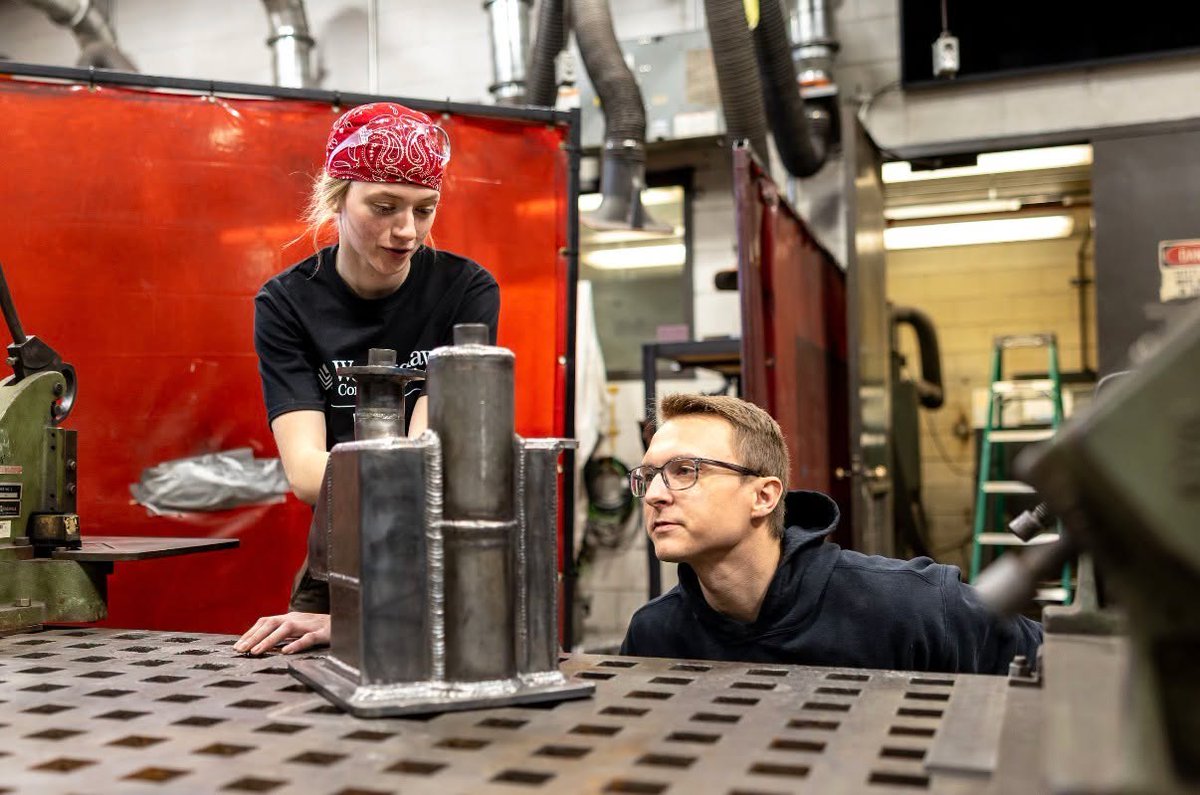
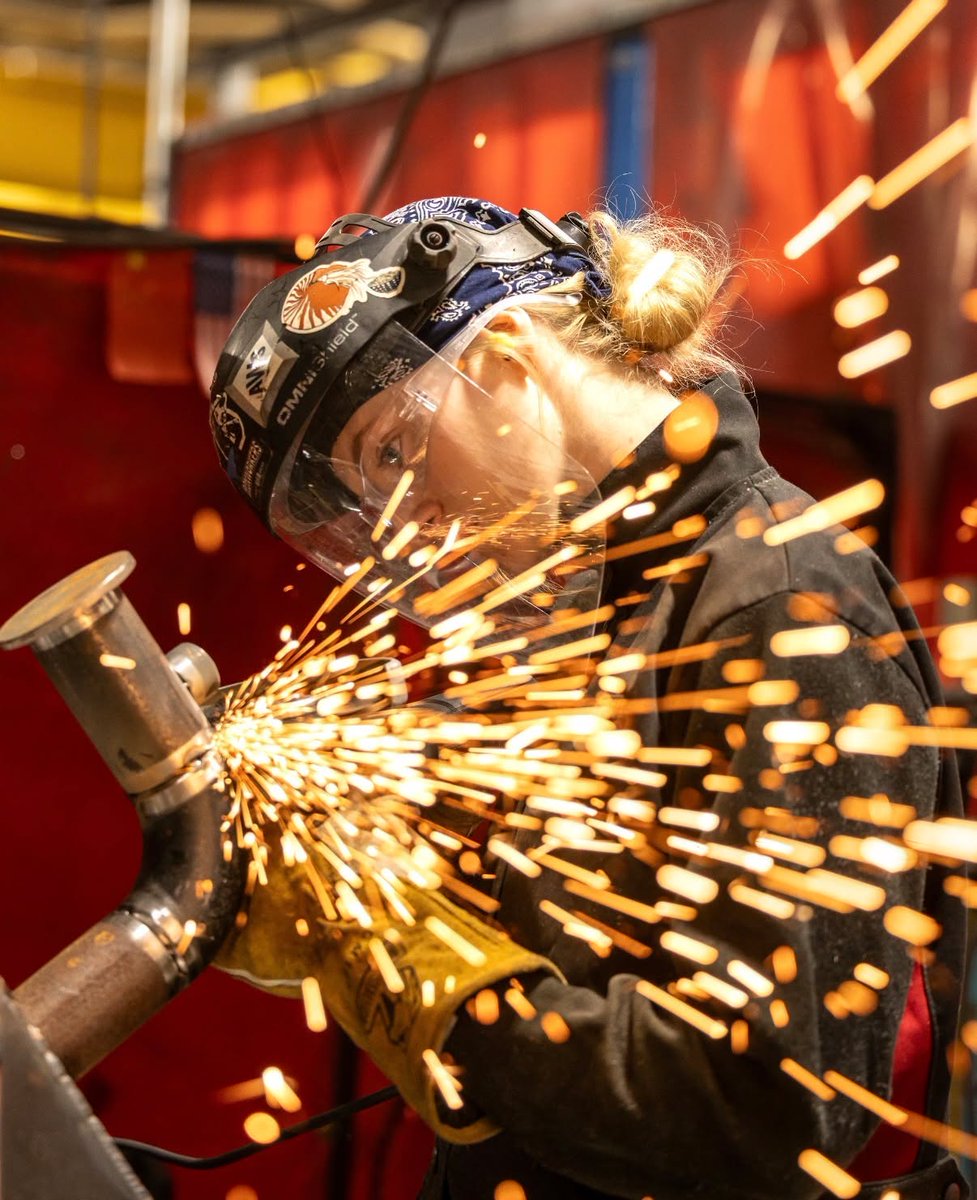
A couple years ago, Mikala Sposito applied for a work ethic scholarship from my foundation. She asked for $2,700.00 to help realize her dream of becoming a welder. (Actually, her first dream was to become an Olympian. As a kid, she excelled at horseback riding, dance, soccer, and track, but not quite at the Olympic level. So, Mikala adjusted her dream and focused on something within her reach. Precisely the kind of commonsense approach to making a living we try to encourage.) Toward that end, Mikala filled out the application, jumped through all the necessary hoops, and signed the S.W.E.A.T. Pledge, as all applicants must.
According to our internal ranking system, which is inherently subjective and relative to each batch of new applicants, Mikala scored a 94, and was awarded $2,100.00, or roughly 80% of what she asked for. This is typical of the average percentage awarded to an excellent applicant. As a rule, we almost never award the entire amount requested. We want our recipients to have some skin in the game, and we encourage all applicants to apply for additional scholarship funds elsewhere, which Mikala did. But in this case, if I had it to do over again, I think I’d have awarded Mikala the full $2,700.00. Why? Because this woman is precisely why I award work ethic scholarships in the first place, as recent headlines prove. Headlines all over the country that identify Mikala Sposito as the sole welder to represent Team USA in the upcoming @WorldSkills Competition in Shanghai.
This is a very big deal. The World Skills competition is often referred to as the Olympics of the skilled trades, so it looks like Mikala’s dream is coming true after all. And it seems to me her journey is worth a brief encapsulation. Before she applied for a scholarship from mikeroweWORKS, Mikala demonstrated an affinity for welding in SkillsUSA. As a senior at Dexter High School, she won 1st Place at the SkillsUSA Michigan high school competition and went on to place 14th nationally. Then, as a freshman at Washtenaw Community College, she repeated her success by taking 1st Place in the Michigan college division. She then advanced to nationals, where she finished 8th in the country. That earned her an invitation to the Team USA pre-trials, which whittled the nation's top 16 young welders down to three. At the final USA Weld Trials at the Robotics Technology Park in Huntsville, Alabama, each competitor was evaluated on precision, safety, technical execution, craftsmanship, and multi-process capabilities under extreme time constraints. Mikala Sposito took the Gold, officially becoming the first woman to represent the United States in welding at WorldSkills. Next week, she’ll face off against the absolute best of the best from all over the world.
I should point out that Mikala would prefer it if the press didn’t make a big deal of her gender, and I completely understand. (She’s a welder – not a “weld-her.”) But today, the industry is in desperate need of proof that women can and do excel in the trades. Nationally, just 4.3% of tradespeople are female. At mikeroweWORKS, our female applicants are closer to 20%, but I assure you that percentage could be much higher. Companies are anxious to recruit talented welders of any gender, and women need to understand and believe the opportunities are real. Mikala prove that in spades, and I want to offer her my sincere congratulations, and invite all of you to do the same. Because Mikala Sposito is exactly what our country needs a lot more of. People who understand that talent is never enough to compensate for laziness.
In her application, she wrote, “Hard work beats talent any day of the week, and nobody is going to outwork me. Period.”
She also connected with every point of the S.W.E.A.T. Pledge but said the final tenet resonated with her the most. “Some people choose to be lazy. Some people choose to sleep in. I choose to work my butt off.”
My favorite quote, however, is Mikala’s response to seasoned professionals who see her wield a torch and call her a “natural.”
“I’m not a natural,” she says. Far from it. And none of this came easy. I worked and trained 60-80 hours a week for two years to get here.”
Regardless of what happens in Shanghai, the job offers are already piling up, including the most recent from SpaceX. She hasn’t graduated yet, but the future looks bright, and I for one would not bet against her.
PS. I never do this, but since my name is in the title of the foundation, I suppose I can. Mikala – please accept the additional $600 you requested from mikeroweWORKS two years ago. Shanghai is expensive, and since you’re representing all of us, we’d like to provide you with a little walking around money. The check is in the mail.
Now…go get the gold!
Somewhere in my smart phone, is an authentic photo of Bob Mackie and me. I’ve been looking for it ever since his passing earlier this week but can’t seem to find it. So, I asked Claude to conjure up an image of the two of us, looking exactly as we did twelve years ago, when we ran into each other at Osteria el Doge in New York City.
The AI image is attached, and I must say, it looks identical to the one I remember. Which begs the obvious question – do you think a legendary fashion designer like Bob Mackie – universally beloved for his originality and fierce commitment to authenticity - would object to being memorialized in a fake photograph? Personally, I don’t think so. I think Bob would be just fine with this image. Not because it’s fake, but rather, because it wasn’t presented as real. Because if Bob Mackie knew anything, it was the difference between a fraud and the real deal.
I base this belief on my only other interaction with the man, long before our chance meeting at Osteria in 2016. That would have been sometime in 1992, back when I was impersonating a show host on The QVC Cable Shopping Channel. Bob had come to QVC about the same time as Joan Rivers and Richard Simmons, both of whom were making a very good living by simply being themselves. Bob had come to QVC to introduce his Wearable Art Collection, a new assortment of scarves, blouses, and knits with impossibly bold, geometric patterns that many believed would fall flat with QVC’s conservative audience.
I never worked directly with Bob, but we did meet backstage on a Saturday evening after his first live show, when every single piece of Wearable Art sold out in minutes. Everyone was blown away by how approachable and authentic he was on the air, and the viewers absolutely loved him. I introduced myself, because I wanted to meet the man who made a dress out of curtains for Carol Burnett, and decided to leave the curtain rod in.
“Congratulations,” I said. “I don’t know a thing about fashion, but I really admire all you’ve accomplished.”
“Oh my God,” he said. “You’re the man in the middle of the night!”
“That’s me,” I said. “King of the Graveyard Shift.”
“I was just watching you last week,” he said, “from my hotel room. I couldn’t sleep, so I put on QVC, and there you were, selling unbreakable kitchenware.”
“I don’t remember that particular item,” I said. “But then again, I don’t remember much of anything that happens between 3 and 6am.”
“No?” said Bob. “Well, I’ll never forget it. You said, ‘Ok, America, let’s see just how ‘unbreakable’ this kitchenware really is.’ Then you jumped on a plate until it snapped in half! I nearly peed myself laughing.”
“Big claims require big proof,” I said. “And in my experience, everything is breakable.”
Bob clutched his metaphorical pearls and whispered dramatically, “I shudder to think what you’d do with one of my caftans, assuming you were ever asked to present one.”
“I’ll tell you exactly what I’d do,” I said. “I'd model it myself. In fact, if one ever shows up in the overnight inventory, I’ll wear it till the thing sells out.”
Bob laughed again and said, “You know, I’d pay to see that!”
Several months later, at 4:30am, during an hour called, “Leisurely Living,” it happened. One of the stagehands brought me a caftan from Bob’s Wearable Art Collection, and I wore it till it sold out. In fact, I wore it for the entire shift because, if I’m being honest, it was damn comfortable, and wearing it amused me to no end. Consequently, we had something to talk about 24 years later when our paths finally crossed again, in one of my favorite New York restaurants.
“Congratulations on Dirty Jobs," he said. "You've come a long way from QVC."
"Thanks. I like to think I worked my way up to the sewer."
"You know, I never had a chance to thank you for modeling my caftan. I haven’t been that proud of myself since Cher introduced my Naked Dress to the masses.”
“It was a high-water mark for me as well. In fact, I was fired from QVC shortly after that shift.”
“Oh no!” said Bob. “Because of the caftan?”
“No, there were other reasons. All justifiable and long overdue.”
We ordered martinis and discussed the glory days of home shopping, back when a grown man, secure in his masculinity and desperate to stay conscious in the wee small hours of another endless night, could model a lady’s caftan just to keep himself amused. We also chatted about the importance of being true to yourself, even if you’re not yet sure who you are, and being as honest as you can with the audience you have, no matter how large or small that audience is.
Anyway, that was the last time I saw Bob Mackie - The Sultan of Sequins, The Rajah of Rhinestones, and one of the more authentic celebrities I’ve ever had the pleasure to meet. And though we lived and worked in two very different worlds, he certainly made the one we shared a lot more interesting. My condolences, to those who knew him better, and miss him most.
PS. FYI, the other photo is totally authentic. I found in a shoebox in my garage, along with many others. Unless, of course, I told Claude to make up that one as well, and just forgot to tell you...
Chris Power @2112Power came to this country from Australia in 2019 with $6,000. From a hotel room in Texas, he cold-called hundreds of manufacturers to find where supply chains were failing and concluded that precision manufacturing for aerospace and defense suffered from a massive lack of automation and a vanishing skilled workforce. He founded Hadrian in 2021 to use physical AI, software, and robotics to make high-precision metal parts drastically faster and more efficiently. The company is now worth billions, with high-tech facilities in Southern California and Arizona, and lots of interesting contracts within the defense industrial base. Best of all, Chris is transforming the way skilled tradespeople get the training they need, specifically in the manufacturing sector. It’s a true fast-track, and oftentimes involves kids coming straight from high school to the manufacturing floor, and the results are impressive. Here’s the case study that originally got my attention. https://t.co/y4KjXnGf1t
Big thanks to Chris for coming on the show. A short clip is below. Our whole conversation is here. https://t.co/6oBqwgOCUg
On September 11, 2001, Lieutenant Colonel Brian Birdwell was working on the second floor of the Pentagon's E-Ring (the outermost ring) when American Airlines Flight 77 struck the building. He was just 15 to 20 yards away from the exact point where the nose of the plane penetrated the structure, making him one of the closest people to the impact to survive.
Moments before the crash, Birdwell had stepped out of the restroom. When the aircraft hit at 9:37 a.m., he heard a sound louder than anything he had ever experienced. The explosion tossed him "like a rag doll" down the corridor and instantly set him ablaze. The intense heat and fuel vapor melted his polyester military uniform directly onto his skin. Trapped in pitch-black, toxic smoke, and unable to breathe due to searing air and jet fuel vapor, Birdwell collapsed. Believing he was about to die, he prayed, said a silent goodbye to his family, and "accepted his death". Suddenly, the Pentagon’s ceiling sprinkler system activated right above him, extinguishing the flames on his body. This gave him just enough strength to crawl and find help.
A group of colleagues found him in the smoke, pulling him to safety. Because the burns were so extensive across his body, a medical team at a makeshift triage station inside the Pentagon had to administer an IV and morphine directly through his feet, which were the only parts of his body left unburned. Birdwell suffered burns over 60% of his body, with nearly half of them being third-degree. His most critical injury was an intensive internal inhalation injury. The scorching air and toxic fumes had severely seared his lungs, requiring him to be placed on a respirator for several weeks.
Doctors initially gave Birdwell less than a 1% chance of survival, prompting him to say what he thought were his final goodbyes to his 12-year-old son from his hospital bed. Against all odds, he survived. He spent 92 days at the MedStar Washington Hospital Center Burn Unit and underwent 39 reconstructive surgeries over four years of agonizing rehabilitation to regain his mobility. He was awarded the Purple Heart for the wounds he received that day.”
--
Almost 25 years later, I met Brian at the Pentagon, not far from where he cheated death. That’s him, all the way on to my right, barely in the frame. The guy in the green tie with a big smile. We met in The Hall of Heroes, where I had just accepted a check for The mikeroweWORKS Foundation, on behalf of everyone at Build Freedom - including The Honorable Brian Birdwell.
“My name is Brian Birdwell,” he said. “And I just wanted to say hello and thank you for all those dirty jobs! And for what you’re doing with your foundation. I think it’s terrific!”
“Thanks,” I said. “I appreciate your support and I promise to spend the money wisely. Oh, and thank you for your service.”
It was a rather assumptive thing to say, since I didn’t know at the time that Brian Birdwell had been a Lt. Colonel in the Army, much less what he’d endured 25 years ago. But there was something about his bearing. His posture. The flag on the lapel. The scars on his hands. He seemed like a man who understood sacrifice.
“This is the greatest country in the world,” he said, “and it’s my privilege to serve it. Now keep on doing what you do, Mr. Rowe!"
There were many other hands to shake that day, and lots of other people to meet, including the fine Americans standing with Brian, all of whom have stories worth sharing. But on this day, I’ll focus on Brian Birdwell. Partly because I really appreciate what Build Freedom is doing for our country, and partly because I really am grateful for the service and the sacrifice he made for you and me. But mostly, because 25 years after those murderous swine tried their best to kill him, Brian Birdwell is still standing. Still smiling. Still serving the country he loves.
I realized all of this several minutes ago, after I boarded a United flight from LAX to San Francisco. As we waited on the tarmac, I saw a link in my newsfeed to the article I quoted above, and learned about the man who somehow survived the attack on the Pentagon 25 years ago. A man I last saw in The Hall of Heroes, wearing a green tie and a big smile. A man called Brian Birdwell, who didn’t bother to tell me about himself the day we met. Hopefully, he won’t mind too much if I tell you about him today, before wising all of you safe travels, in friendly skies.
I'm Legal!
Today I’m pleased to announce that mikeroweWORKS is finally legal. The foundation turns 18 years old this Labor Day, which means that MRW can legally buy a lottery ticket, get a tattoo, jump out of a plane, operate heavy machinery, rent a hotel room, open a bank account, move out of Mom’s house, and vote for whatever knucklehead seems less likely to wreck the nation, among other things. (Alas, we’re still too young for a shot of my grandfather’s whiskey, but whatever…I don’t make the rules. Online sales, ironically, still benefit the foundation, and – if you’re 21 or older – I’ll invite you to celebrate this milestone with any of the award-winning adult beverages at https://t.co/oa6vnhVvZl. But I digress…)
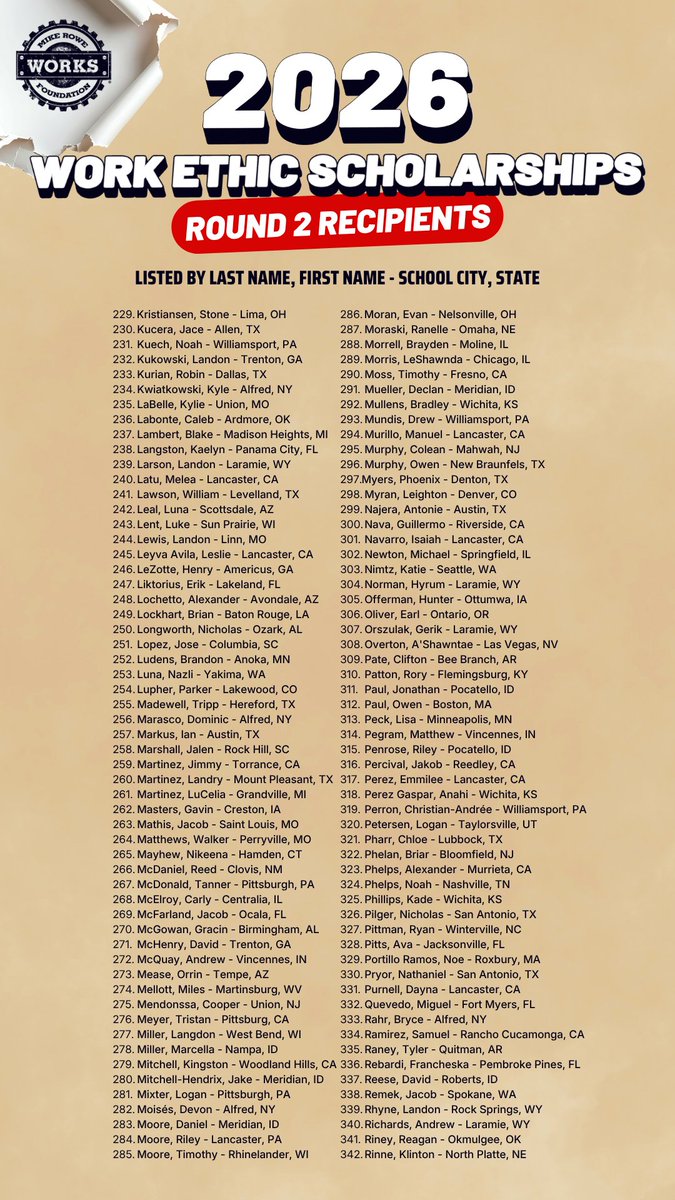
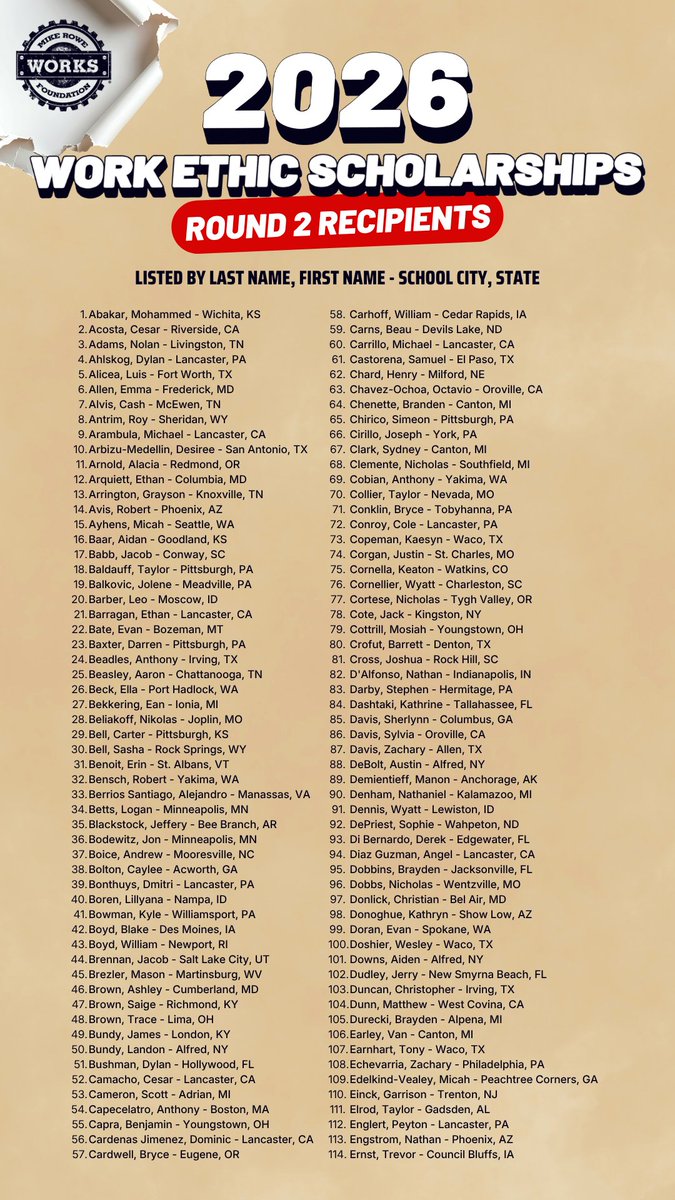
To celebrate our 18th birthday, and America's observation of Labor, I'm pleased to announce another tranche of work ethic scholarships, in our ongoing efforts to help train the next generation of skilled workers. In this round, we have 450 recipients who will collectively receive $3.5 million to further their training in 23 individual vocations. To date, that’s $22.5 million dollars awarded to 3,350 individuals. What a sublime legacy for an unscripted TV show that make me marginally famous for crawling through sewers.
Also, attached below, are the donors who made this round possible. Many thanks to all of you. And thanks also, to the many individuals on this page who have supported MRW from its infancy, financially and otherwise. Your encouragement over the years is priceless, and your willingness to share posts like this one, is the primary reason we have finally reached the age of majority. So please, share away. We're already taking applications for the next round. Apply at:
https://t.co/CSGu1RA4wd
Having said all of that, I’ll now take my 18-year-old alter ego out for non-alcoholic beverage and ponder the future.
Happy Labor Day
Our Sponsors…
@BuildFreedomUS@WellsFargo
Fisher Global Foundation
@ferguson@PureTalk@JK_trashremoval@FoldsofHonor
Berens Foundation
@Google@Montanaknifeco
Software Engineering of America
Ford Philanthropy
@BlackrockFD
James & Shirley Rippey Family Foundation
@LockheedMartin
Hearst Foundations
Suffolk Care Charitable Foundation
Turbine X Energy
@aligneddc@coigncard
Grady Family Foundation
@PaulMitchellEdu
And a sincere thanks to my own team at MRW…
Jen, Shari, Jade, Mary, Chuck, Paige, Libby, Logan, Charlie, Noah, Kristi, and the committee who helped us review every application. And Jade, again, because she killed it, as always.