Official Announcement Regarding the Cessation of Operations and Asset Withdrawal of Mint Blockchain
Dear Mint Users:
The Mint Blockchain officially ceased operations on April 17, 2026. To ensure the safety of your assets, please withdraw the following four assets from the Mint Chain to the Ethereum mainnet:
- ETH
- WBTC
- USDC
- USDT
Withdrawal Deadline: October 20, 2026
Withdrawal gateway: https://t.co/BFayWFMTmL
Assets not withdrawn by the deadline will be unavailable for processing. Please complete the withdrawal process before this date.
Thank you for your support and understanding of Mint.
MintCore Team
April 17, 2026
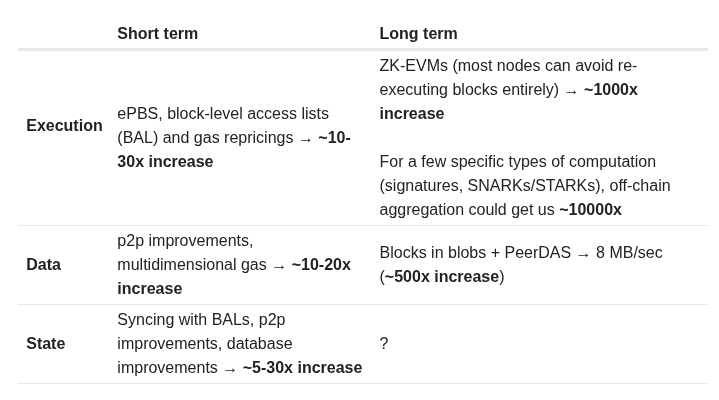
Hyper-scaling Ethereum state by creating new forms of state:
https://t.co/7nL9qOQqxO
Summary:
* We want 1000x scale on Ethereum L1. We roughly know how to do this for execution and data. But scaling state is fundamentally harder.
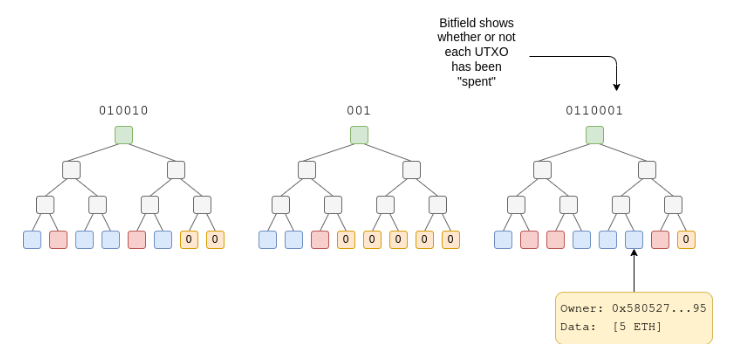
* The most practical path for Ethereum may actually be to scale existing state only a medium amount, and at the same time introduce newer forms of state that would be extremely cheap but also more restrictive in how you can use them.
* In such a design, the present-day state tree would over time become dominated by user accounts, defi hub contracts, code, and other high-value objects, while all kinds of individual per-user state objects (eg. ERC20s balances, NFTs, CDPs) would be handled with cheaper but more restrictive tools. Making the developer abstractions to make this easy to implement for the use cases that make up >90% of state today seems very doable.
I think it's time to seriously think about our future. We need to make changes to adapt to this changing on-chain world. Whom do we serve? How do we create value? How do we achieve sustainable development? These are all good questions!
There have recently been some discussions on the ongoing role of L2s in the Ethereum ecosystem, especially in the face of two facts:
* L2s' progress to stage 2 (and, secondarily, on interop) has been far slower and more difficult than originally expected
* L1 itself is scaling, fees are very low, and gaslimits are projected to increase greatly in 2026
Both of these facts, for their own separate reasons, mean that the original vision of L2s and their role in Ethereum no longer makes sense, and we need a new path.
First, let us recap the original vision. Ethereum needs to scale. The definition of "Ethereum scaling" is the existence of large quantities of block space that is backed by the full faith and credit of Ethereum - that is, block space where, if you do things (including with ETH) inside that block space, your activities are guaranteed to be valid, uncensored, unreverted, untouched, as long as Ethereum itself functions. If you create a 10000 TPS EVM where its connection to L1 is mediated by a multisig bridge, then you are not scaling Ethereum.
This vision no longer makes sense. L1 does not need L2s to be "branded shards", because L1 is itself scaling. And L2s are not able or willing to satisfy the properties that a true "branded shard" would require. I've even seen at least one explicitly saying that they may never want to go beyond stage 1, not just for technical reasons around ZK-EVM safety, but also because their customers' regulatory needs require them to have ultimate control. This may be doing the right thing for your customers. But it should be obvious that if you are doing this, then you are not "scaling Ethereum" in the sense meant by the rollup-centric roadmap. But that's fine! it's fine because Ethereum itself is now scaling directly on L1, with large planned increases to its gas limit this year and the years ahead.
We should stop thinking about L2s as literally being "branded shards" of Ethereum, with the social status and responsibilities that this entails. Instead, we can think of L2s as being a full spectrum, which includes both chains backed by the full faith and credit of Ethereum with various unique properties (eg. not just EVM), as well as a whole array of options at different levels of connection to Ethereum, that each person (or bot) is free to care about or not care about depending on their needs.
What would I do today if I were an L2?
* Identify a value add other than "scaling". Examples: (i) non-EVM specialized features/VMs around privacy, (ii) efficiency specialized around a particular application, (iii) truly extreme levels of scaling that even a greatly expanded L1 will not do, (iv) a totally different design for non-financial applications, eg. social, identity, AI, (v) ultra-low-latency and other sequencing properties, (vi) maybe built-in oracles or decentralized dispute resolution or other "non-computationally-verifiable" features
* Be stage 1 at the minimum (otherwise you really are just a separate L1 with a bridge, and you should just call yourself that) if you're doing things with ETH or other ethereum-issued assets
* Support maximum interoperability with Ethereum, though this will differ for each one (eg. what if you're not EVM, or even not financial?)
From Ethereum's side, over the past few months I've become more convinced of the value of the native rollup precompile, particuarly once we have enshrined ZK-EVM proofs that we need anyway to scale L1. This is a precompile that verifies a ZK-EVM proof, and it's "part of Ethereum", so (i) it auto-upgrades along with Ethereum, and (ii) if the precompile has a bug, Ethereum will hard-fork to fix the bug.
The native rollup precompile would make full, security-council-free, EVM verification accessible. We should spend much more time working out how to design it in such a way that if your L2 is "EVM plus other stuff", then the native rollup precompile would verify the EVM, and you only have to bring your own prover for the "other stuff" (eg. Stylus). This might involve a canonical way of exposing a lookup table between contract call inputs and outputs, and letting you provide your own values to the lookup table (that you would prove separately).
This would make it easy to have safe, strong, trustless interoperability with Ethereum. It also enables synchronous composability (see: https://t.co/9jy6v1X6Fw and https://t.co/gZmu3YjebM ). And from there, it's each L2's choice exactly what they want to build. Don't just "extend L1", figure out something new to add.
This of course means that some will add things that are trust-dependent, or backdoored, or otherwise insecure; this is unavoidable in a permissionless ecosystem where developers have freedom. Our job should make to make it clear to users what guarantees they have, and to build up the strongest Ethereum that we can.
How the buyback works: Superchain networks contribute a portion of their sequencer revenue back to Optimism. This proposal directs 50% of that incoming revenue to buy OP on a monthly basis for the next year. Purchased OP flows back into the token treasury.
PeerDAS (EIP-7594) is a headline improvement in Ethereum's latest upgrade, Fusaka.
It unlocks up to 8x data throughput, giving rollups cheaper blob fees and more space to grow.
Learn more from voices across the ecosystem.
Official announcement:Please note that the Discord links for the Mint community have been maliciously registered:
https://t.co/nhZILcizfS is OK;
https://t.co/RqNyPiweks is a scam.
Mint blockchain Upgrade Announcement: Mint recently underwent a chain upgrade. RPC services have now returned to normal, and the block explorer is in the process of being restored. We look forward to restoring service as soon as possible.
189 builders
81 onchain applications
113 devtooling projects
Each recognized through Retro Funding — rewarding measurable impact across the Optimism ecosystem.
October results ↓
August on the Superchain:
- $21.8B in assets secured across 33 chains
- 17M transactions processed daily
- Median transaction cost: $0.0014
Proof that Ethereum can scale securely, efficiently, and at global scale.