Introducing Autopilot: an always-on agent for your docs.
Connect your repo and tools like Slack, turn it on, and Autopilot makes changes as your team ships. You review and merge. It learns from every update.
Now available in beta.
How we measured: We ran request data through our open-source agent-traffic classifier, which separates AI agents from crawlers.
Full methodology: https://t.co/GCc2cTKvJl
Who actually reads developer docs now?
We classified hundreds of millions of reads across docs on Mintlify
over the last 90 days. Claude Code made 40% of them 🧵
So what are they looking for?
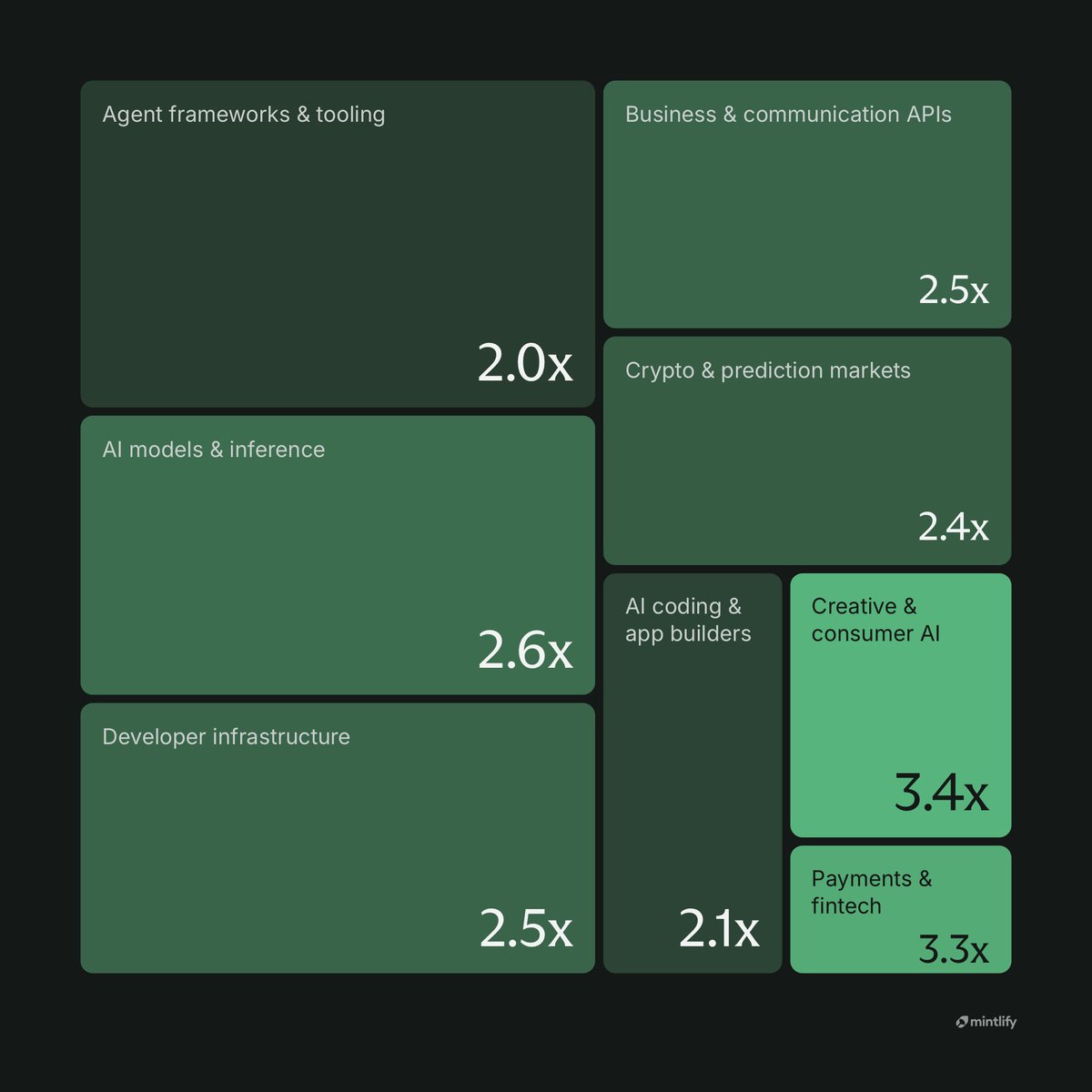
More than half of agent reads on the 300 most-read docs sites go to docs for AI products. The fastest growth over the last 90 days is in creative AI tools (3.4x) and payments (3.3x), as agents wire up image, video and checkout APIs.
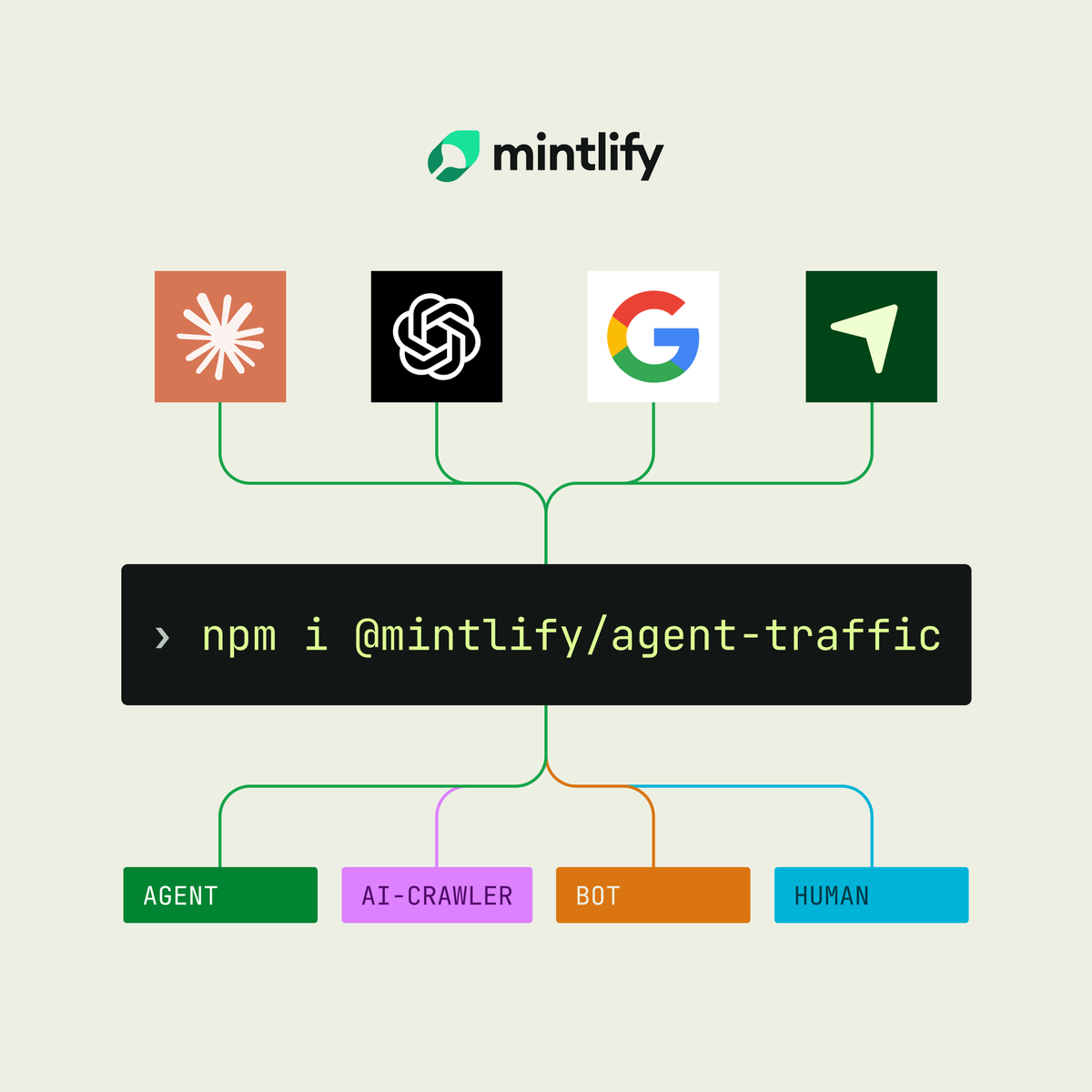
Introducing agent-traffic: the dataset and classifier we use to tell which agent, crawler or person is behind every request.
Last month, agents made 489M requests to docs hosted on Mintlify. agent-traffic is how we know which ones.
Today we're open-sourcing it for everyone.
agent-traffic covers 98 agents and crawlers, from Claude Code and Codex to GPTBot and Googlebot.
It verifies crawlers against their operators' published IP ranges, catches anyone borrowing a crawler's name, and spots agents hiding behind a browser user agent.
Five ways to make Mintlify Base work for your team 🧵
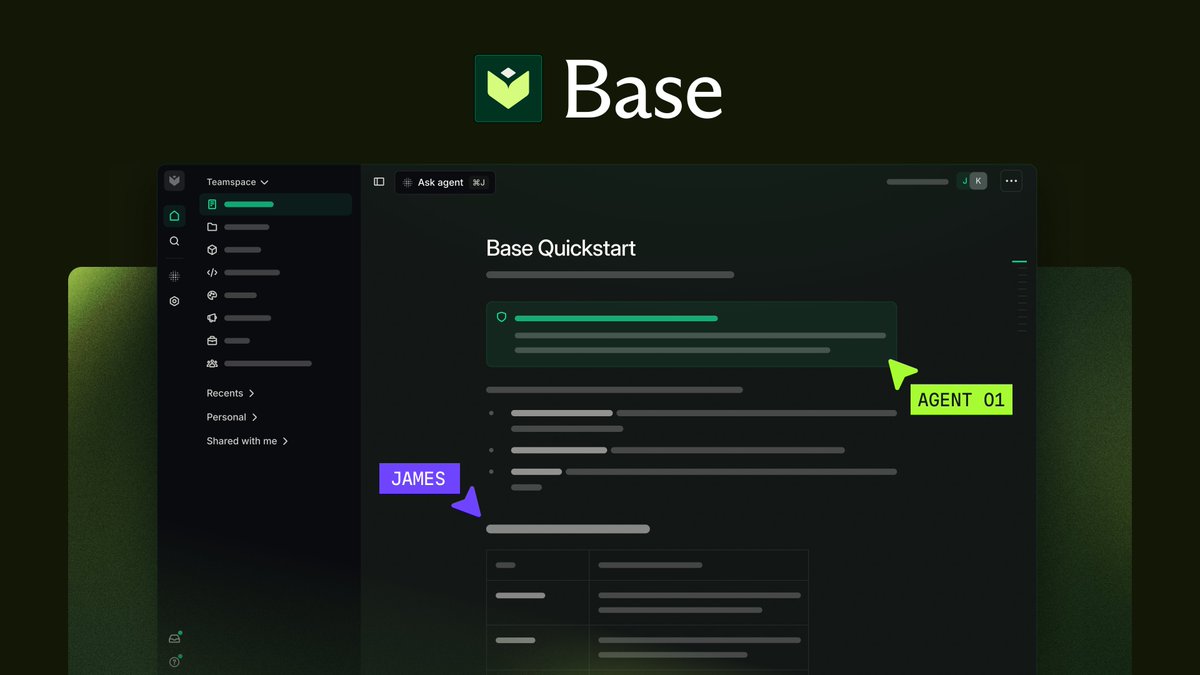
Last week, we launched Base, a workspace for agent-human collaboration. Onboarding docs, support playbooks, and engineering specs: every team at Mintlify runs its work through it. Here's what we've learned:
5/ Share a page with anyone.
Turn on Share to web for a public, read-only link to any page. Add .md to the end of the link and agents get the page as clean Markdown, ready to drop into Claude, ChatGPT, or your own tools.