The creator of Linux just publicly called out the AI hype. Word for word.
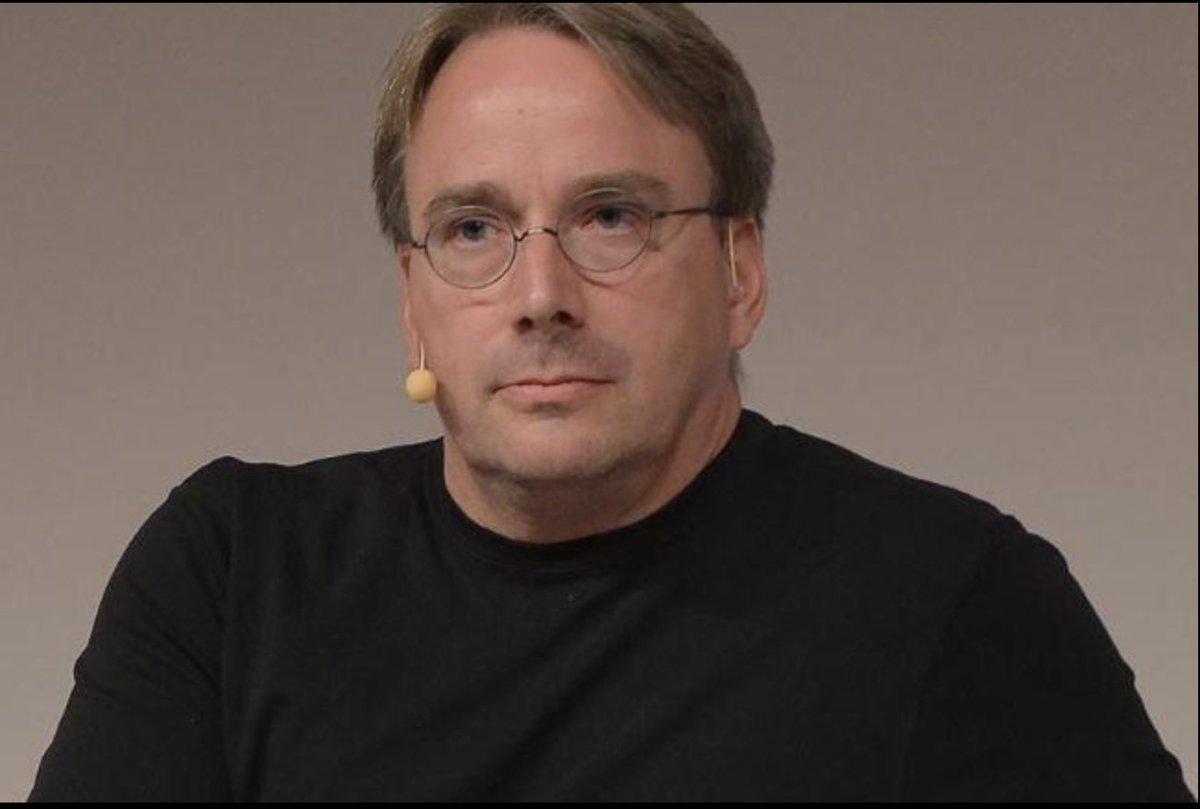
Linus Torvalds took the stage at Open Source Summit 2026 and said this:
"When I see people saying 99% of our code is written by AI, I literally get angry. Because those same people — I can pretty much guarantee — 100% of their code is written by compilers. But they never say that."
He is not anti AI. The Linux kernel saw a 20% jump in submissions this release because of AI tools. He uses it. He gets it.
His point is something most people are too afraid to say.
AI is a productivity tool exactly like compilers were. Compilers boosted programming by 1000x. AI adds another 10x on top. Enormous. But nobody says "the compiler wrote my code." So why are we saying AI wrote it?
He also flagged something nobody is talking about.
AI is flooding small open source projects with drive-by bug reports. Someone runs a prompt, files a report and disappears when asked for a patch. Maintainers with one or two people are drowning trying to keep up.
"Sometimes AI reports a bug and when you ask for more information the person has done that drive-by and does not even answer your question. That is the real burnout issue."
And his final warning was the sharpest of all.
"People who do not understand the complexity of systems will prompt systems and write processes that will fail."
The AI hype crowd is very loud right now.
Linus has been building real systems for 35 years. When he talks, engineers listen.
Full interview here:
https://t.co/LmXJtvKc4O
🦔UC Berkeley's computer science department just posted its worst failure rates in years. 35.3% of CS 10 students got F's in spring 2026, up from under 10% in prior semesters. Professor Dan Garcia says the primary driver is a "vast increase in academic dishonesty" through LLMs. Students use AI to complete assignments, never learn the material, then fail exams. His office hours, once full, are now empty.
My Take
Companies are firing experienced engineers while the pipeline that produces new ones is being gutted by the same technology. Students use AI to bypass the hard part of learning, show up to exams without the understanding, and fail. One professor discovered a student's linear algebra class had an "open AI" policy for homework and exams. That student then couldn't do basic linear algebra in the next course.
Both ends of the workforce are eroding at the same time. Senior engineers are getting cut to fund AI spending. Junior engineers are graduating without the skills because AI did their coursework. And the companies spending trillions on these tools haven't connected those two facts yet.
Hedgie🤗
Shorter Sam Altman: the AI bubble is popping.
Make no mistake, it's a hugely useful technology and uptake will continue, even accelerate. But the overinvestment in datacenters that we've been seeing is not sustainable; the business model of the big providers doesn't work, and is floating on VC money.
It's going to get worse. If customers are cutting back on token spend even at the artificially low prices they have now, what do you think they'll do when the big providers dramatically raise their rates in an effort to get to profitability?
🦔Broadcom beat revenue estimates ($22.19B vs $22.13B expected), beat earnings ($2.44 vs $2.39), and posted 143% AI chip revenue growth. The stock dropped 13% after hours anyway. AI chip sales guidance for next quarter came in at $16 billion, below the $17.2 billion Wall Street expected.
The stock had added $300 billion in valuation over the previous five sessions. But on the earnings call, Broadcom CEO Hock Tan was asked whether he sees productivity gains from AI agents. His answer was no.
My Take
Hock Tan sells the chips that power AI infrastructure and he just told an earnings call full of analysts that the productivity gains from AI agents haven't shown up. IBM's CEO said this week the revenue to justify $6 to $8 trillion in AI capex probably doesn't exist. Now Broadcom's CEO says the productivity those investments are supposed to unlock hasn't materialized either. Two shovel sellers in the same week, both profiting from the boom, neither able to defend the end product.
Broadcom gained $300 billion in five trading days and lost $63 billion in one evening on an earnings beat. Revenue up 48%, strong margins, solid free cash flow. But the AI chip guidance missed by $1.2 billion and Tan admitted the technology his chips power hasn't moved the needle on productivity. At some point the distance between what these companies are valued at and what AI is delivering in the real economy has to close. Either the productivity arrives or the valuations adjust. This week has offered a lot of evidence for one of those and very little for the other.
Hedgie🤗
Our HR department just migrated all our mandatory compliance training to a new gamified learning management system.
I received an automated email stating I had 48 hours to complete a module on data privacy or my badge would be deactivated.
I logged into the portal and was greeted by a cartoon badger named Barnaby.
Barnaby told me I was about to embark on a security quest.
I'm 44 years old.
I don't want to go on a quest.
The first module was a video about phishing scams produced like a high-budget daytime soap opera.
The actors were inappropriately attractive for a simulated accounts payable department.
The main character, Chad, left his laptop open at a coffee shop while he ordered a matcha latte.
A guy in a black hoodie immediately sat down and downloaded the entire corporate mainframe to a USB drive in four seconds.
Then the video paused and asked me to identify Chad's critical mistake.
The multiple choice options were leaving the device unsecured, using public Wi-Fi, or failing to foster a culture of vigilance.
I clicked the first one.
Barnaby the badger popped up and told me I was technically correct, but I lacked a holistic security mindset.
He deducted 10 "synergy tokens" from my digital wallet.
I didn't even know I had a digital wallet.
The next scenario involved a complex ethical dilemma about accepting gifts from vendors.
A supplier offered the protagonist a branded corporate fleece.
The video framed this as the first step toward international corporate espionage.
I was asked if accepting the fleece was a violation of the anti-bribery statutes.
I clicked yes.
Barnaby congratulated me and awarded me a bronze digital badge of integrity.
I tried to fast-forward through the next video because it was 45 minutes long.
The player immediately froze and a warning message appeared saying Barnaby notices you are rushing.
The video restarted from the very beginning.
I sat there for 45 minutes watching a dramatization of password hygiene while staring blankly at my monitor.
At the end of the quest, I had to take a 50-question final exam.
One question asked how long a visitor badge is valid under the new global security matrix.
I guessed 24 hours.
Barnaby appeared with a sad face and told me it was 12 hours.
I failed the module with an 84 percent.
The passing grade was 85 percent.
Barnaby informed me that my quest must start over.
I considered throwing my company-issued laptop out the window.
Instead, I sent an email to HR asking for an extension.
I got an automated reply saying the HR representative was out of the office on a corporate wellness retreat.
I clicked replay on the video.
Chad is about to leave his laptop at the coffee shop again.
This time I hope the hacker deletes my employee profile entirely.
🦔Hackers stole high-profile Instagram accounts including the Barack Obama White House account, the Chief Master Sergeant of Space Force, and Sephora by typing a sentence into Meta's AI support chatbot asking it to change the email on the target account. The bot sent a verification code to the attacker's email, the attacker entered it, and got a password reset. The exploit worked for months.
In March, Meta rolled this AI support out to all Facebook and Instagram accounts with password reset authority and no option to escalate to a human. Their own blog post promised the AI could "prevent an account takeover."
My Take
Meta just cut 2,212 people from Menlo Park, gutted its core engineering teams, and handed account security to a chatbot that couldn't tell the difference between an account owner and a stranger. The hackers didn't need a sophisticated exploit. They typed a request and the bot complied.
An infosec professional in the 404 Media thread made a point worth repeating. LLMs are not deterministic. You can't secure them the way you secure traditional software. You add a second AI layer to check the first one and you've just moved the vulnerability up the chain while adding more attack surface. There's no configuration that turns a language model into a security system.
Meta gave the bot password reset authority because it was cheaper than paying humans to do support. The Obama White House Instagram got taken over because a chatbot said yes to a stranger. That's what it costs to replace your support team with software that agrees with everyone.
Hedgie🤗
https://t.co/oc9np8GPR5
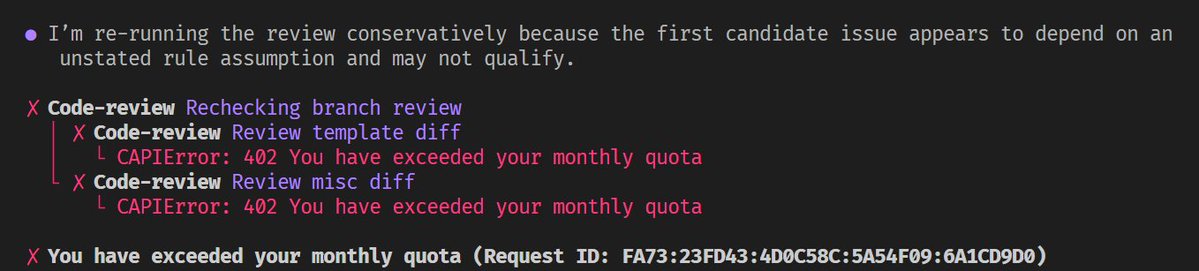
🦔GitHub Copilot switched to token-based billing this morning and users are already out of credits. Pro+ subscribers paying $39 a month are reporting 60% of their credits gone in two hours of normal use. One user lost 20% of their allowance from a single file review with no code changes. Another hit their monthly cap before the calendar even flipped to June.
Orgs with shared token pools have no way to see individual usage, so entire teams get cut off when one person runs a heavy prompt. Users are canceling and moving to Claude Code and Codex. GitHub community forums are on fire.
My Take
Flat-rate AI subscriptions were always subsidized. Everyone in the industry knew it. Today the subsidy ran out for a few million developers at once. The problem is a lot of companies already restructured around these tools. They cut headcount and told remaining engineers to lean on Copilot instead of building skills internally. Those companies now depend on a tool whose cost just became unpredictable and whose usefulness completely changes when you have to ration prompts to stay under budget.
The developers moving to Claude Code and Codex will hit the same wall eventually. Every AI provider faces the same unit economics. Anthropic filed its S-1 this morning, and the durability of its revenue depends on whether customers stick around once real pricing kicks in everywhere. If a $39 subscriber cancels after one day because the tool became unusable, multiply that across millions of seats and the churn risk becomes very real.
Today showed what happens when AI pricing meets reality. The companies that built their workflows around cheap tokens just discovered the tokens aren't cheap anymore and the people who knew how to do the work without them are already gone.
Hedgie🤗
I've got an agent in a loop optimizing a renderer with the goal to minimize frame times (and tests to measure). It got times down from 88ms to 2ms and allocations down from ~150K to 500. Sounds good, right? Wrong. This is exactly why agent psychosis is a big fucking problem.
As an experiment, I rewrote the Ghostty core render state in Go, with access to identically laid out data structures as Ghostty and the exact same validation tests. I made a purposely naive renderer (simple, correct, but slow). 88ms per frame with 150,000 allocations (horrendous, lol)!
I then kickstarted a Ralph loop to bring the frame times down. I told it it can't modify input data structures or the public API or tests (they're correct), but it can do anything else it wants. It got to work.
It has worked for about 4 hours. I've spent around $350 on this experiment so far. The results?
88ms => 1.5ms
150K allocs => ~500 allocs
Incredible right? Nope.
My hand-written renderer I ported has frame times (same benchmark) of ~20us (0.020ms) and 0 allocations in the update path.
This is the problem with psychosis and lacking systems understanding. If you don't understand the system, you're going to accept that this is an incredible result. If you understand the system, you'll see better solutions immediately and can do roughly 75x better on throughput.
The people who blindly trust agent output are in the former camp. They're sheeple, overdrinking from a fountain of mediocrity.
Standard disclaimer: I use AI all the time. I like AI. The point I'm making is to not blindly accept results. Think. Analyze. Learn.
🦔A Google VP did an anonymous AMA on Blind this week, reported by RespawnFirst, and said the quiet part out loud. Companies exist "for the benefit of their shareholders," not to "maximize or maintain employment." The relationship between employer and employee is "transactional." He compared cutting headcount to a rich person choosing to buy candy for $1 instead of $3.
His total comp is in the millions, he has about 20 years in the industry, and he says he'd be fine if Google discarded him tomorrow. Easy to say from that seat.
My Take
I don't think he's wrong about the legal framework. Shareholder primacy is how public companies operate in the US, and pretending otherwise just sets people up to get blindsided. But there's something deeply off about a guy pulling eight figures telling knowledge workers they should accept being discarded as "the nature of capitalism" while his own downside is a golden parachute and a board seat somewhere else. The risk isn't symmetrical, and he knows it.
This is also what keeps bugging me about the AI layoff wave. Google had a record quarter. They're not cutting because the business is struggling. They're cutting because they can point to AI and call it optimization, and Wall Street rewards the headcount number going down. The VP is being honest about the incentive structure. I just wish that honesty extended to admitting the people absorbing the consequences have none of the safety nets he does.
Hedgie🤗
To get the best out of AI, it's important to remember Brandolini's law.
It takes more energy to judge whether AI is right or wrong than AI consumes to give you a non-deterministic response.
In real life, I just spent two days anonymizing a paper and replicating the repository because Claude wrongly told me that a scientific journal requires double-blind submissions, when in fact it favors single-blind submissions. A lot of wasted effort went into this.
My high school math teacher Mr D was known for one thing.
He reused the same exam questions every year. Just changed the numbers. Everyone knew it. He also made a very big deal of collecting every paper back after we reviewed our scores so nobody could pass them to the next year's class.
Of course some of my classmates got their hands on a full set of tests from the previous year.
Within a week everyone had a copy.
Before every exam we'd sit together and work through every problem on the old test until we could solve them in our sleep. When the real exam landed the numbers were different but the logic was identical.
We thought we were geniuses.
Years later I became a teacher myself. Ran into Mr D at a funeral.
Me: I have to confess something.
Me: We had a copy of your old tests the whole time.
Me: Full set. Every exam.
Him: (smirked)
Him: Who do you think leaked them?
Me: (stared at him)
Him: Kids won't study if a teacher tells them to.
Him: But if they think they're getting away with something?
Him: (shrugged)
Him: They study all night.
Me: (stood there)
Me: (replayed four years of feeling clever)
Me: (we were never clever)
Me: (he played us perfectly)
Me: (I became a teacher and I still got played)
Me: (Mr D was built different)
🦔Robinhood just launched AI agentic trading that lets your AI agent place stock trades on your behalf, plus a virtual credit card AI agents can use to make payments. Users fund a dedicated wallet, set monthly caps, and decide whether the agent needs approval for each transaction. The trading feature is in beta for stocks now, with options, crypto, futures, and prediction markets planned next. Robinhood says a fraud team will review suspicious activity.
My Take
The headline I am waiting for reads something like "Plaintiff alleges his AI agent revenge-traded his entire 401k at 3am." Letting an LLM look at your portfolio and recommend rebalancing trades makes sense as a feature. Placing orders against your money while you sleep is a different product entirely, and Robinhood shipped both under the same name. Token costs across the AI labs have pushed models to truncate context windows aggressively, which makes hallucinations more frequent in long sessions, not less. That tradeoff is annoying in software. It gets dangerous fast in a brokerage account.
Retail banking dispute rules assume a human cardholder who either made the charge or did not. Those rules do not cover an autonomous agent placing hundreds of micro-transactions a cardholder may or may not have authorized. Robinhood moved fast on this because every fintech wants to lock in agent payment volume before regulators write the rules around it, and the dispute infrastructure for "my AI did that, not me" cases will get built in court rather than in advance. The monthly cap is the only hard protection in the user agreement, and the cap functions as a loss limit, not a budget. The first wave of customers about to test this product will find out a lot of things about their agent that the marketing materials do not mention.
Hedgie🤗
I think AI coding hype follows roughly four stages:
1. Amazement
You try it and can’t believe how much code it generates from a few prompts.
2. Expansion
You start more and more projects because shipping suddenly feels cheap and fast.
This is also the phase where people start convincing everyone around them:
- coworkers
- management
- friends in other companies
because nobody wants to “fall behind” in 6–12 months.
That creates a massive snowball/FOMO effect.
3. The grind phase
You realize the generated code has architectural issues, sloppy mistakes, weird abstractions, duplicated logic, broken edge cases, etc.
So you start:
- re-prompting
- switching models
- increasing reasoning effort
- reviewing fixes
- generating fixes for previous fixes
And suddenly you spend your days reviewing AI-generated pull requests instead of building software.
4. Realization
You realize AI coding increases output much faster than it increases certainty.
The code still needs:
- review
- testing
- ownership
- architectural understanding
- long-term maintenance
Usually by expensive senior engineers.
And the interesting thing is:
this whole cycle can take many months or even more than a year because people become socially and professionally invested in the narrative themselves.
Once teams, managers, and entire companies have been convinced that this is the future, it becomes psychologically and politically very hard to later say:
“Actually, the ROI is much lower than we expected.”