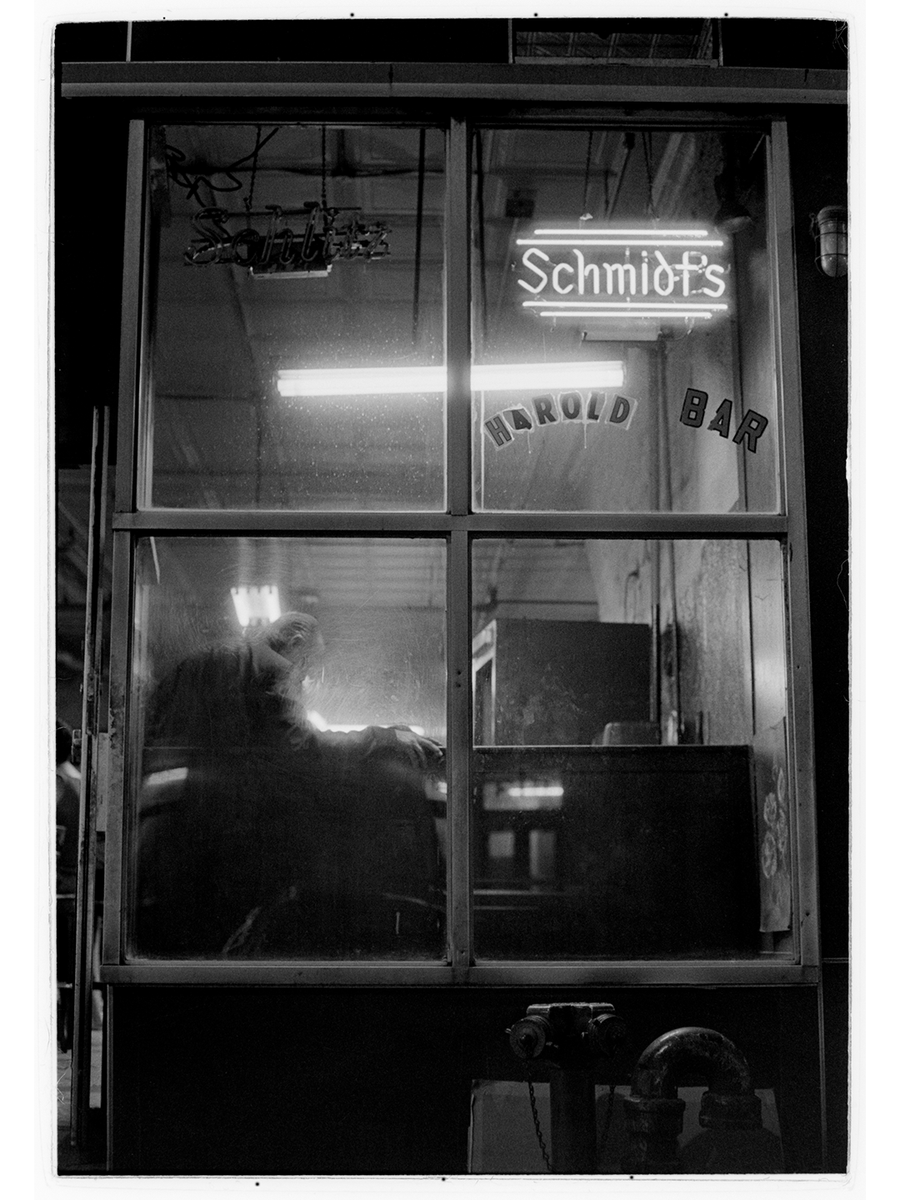
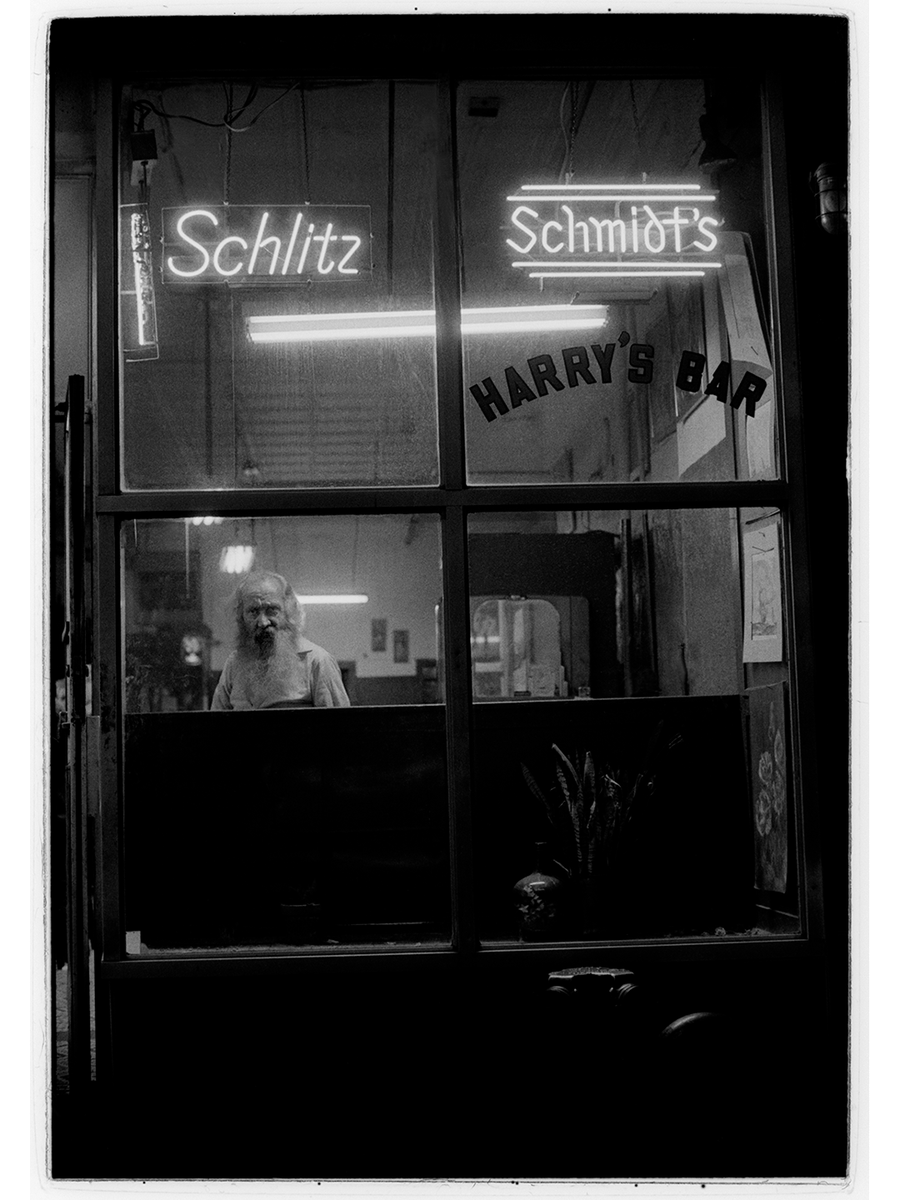
Happy hour, 1976.
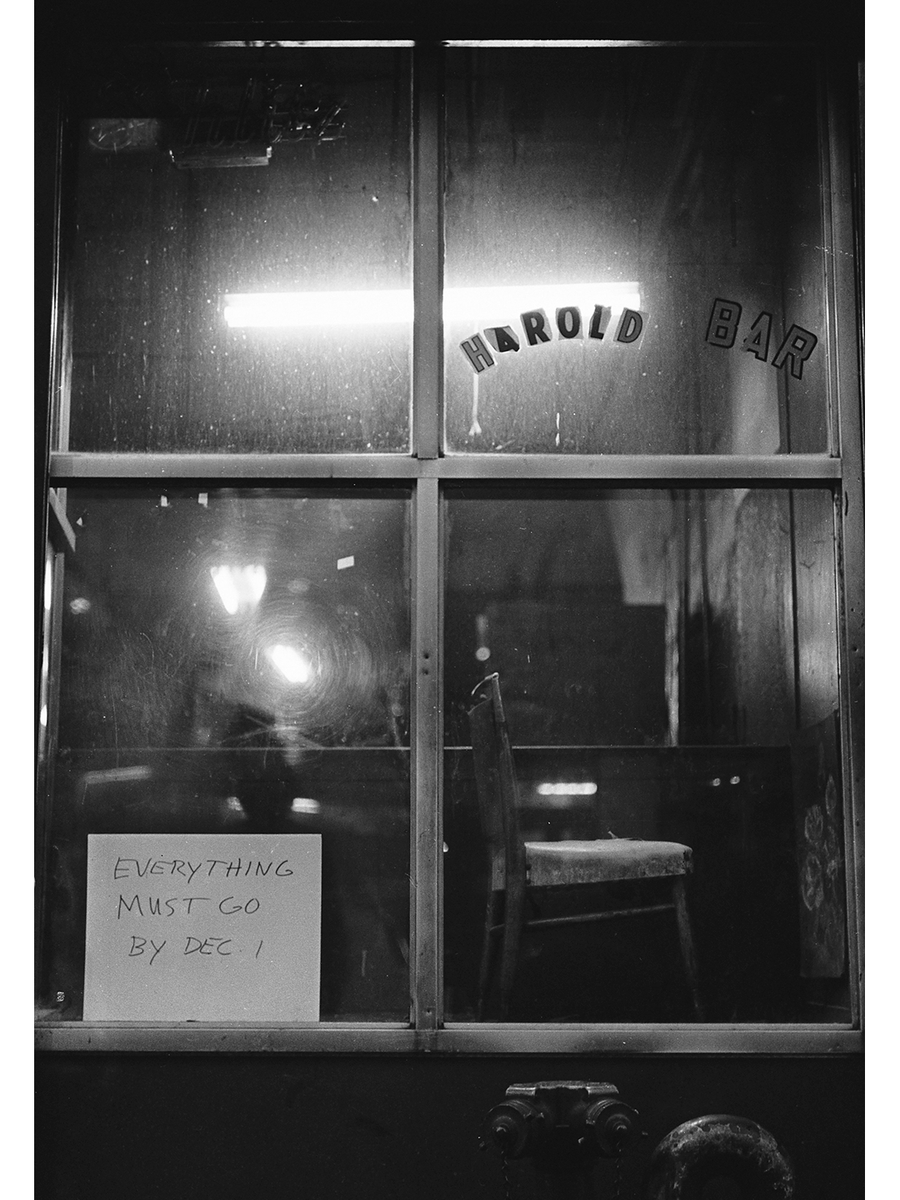
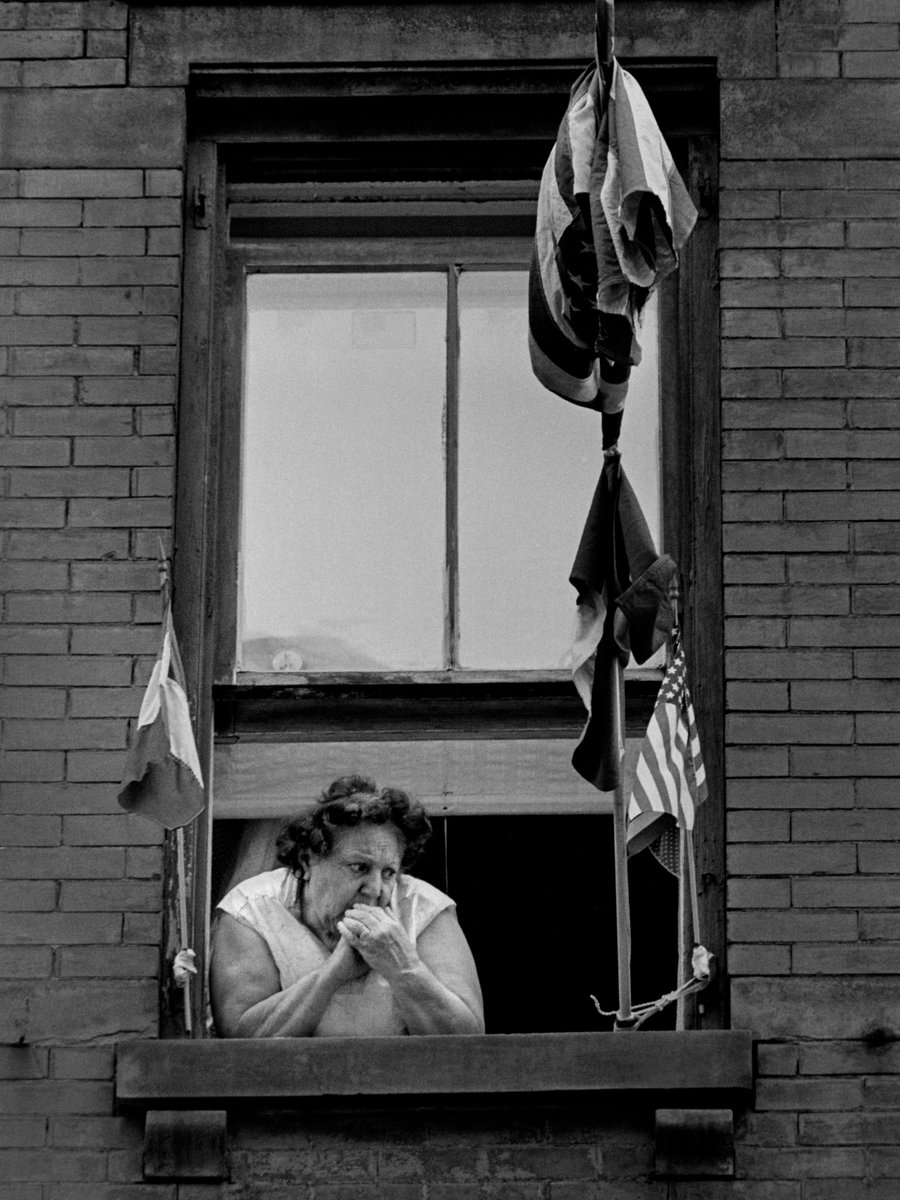
In 1970s New York, bars were required by law to keep their windows clear so passersby could see inside. Masao Gozu took them up on it. For five years, each time a customer at Harry’s Bar, a dive at 98 Bowery, looked out the window, he took a picture, on foot or from his parked car.
The series ends with a sign in the window: “Everything must go.” Gozu asked to buy the window itself. When the bar said no, he started salvaging pieces of demolished buildings instead.
See Harry’s Bar in Masao Gozu: Windows and Bars, on view through March 15 at MoMA PS1. Admission is free for all.
—
Masao Gozu. "Harry's Bar, 9 pm, July 1976," 1976. Gelatin silver print. 17 1/4 × 12 1/4" (43.8 × 31.1 cm) (image). Courtesy the artist
Masao Gozu. "Harry's Bar, 1 am, February 1981," 1981. Gelatin silver print. 17 1/4 × 12 1/4" (43.8 × 31.1 cm) (image). Courtesy the artist
Masao Gozu. "Harry's Bar, 8 pm, March 1981," 1981. Gelatin silver print. 17 1/4 × 12 1/4" (43.8 × 31.1 cm) (image). Courtesy the artist
"It was just a big wallop against you if you dared to be abstract." –Howardena Pindell
For @nytimes, writer Aruna D'Souza asks what abstraction means to three generations of artists featured in Hard Art, an exhibition she says "asks the question: What are the threads, historical and artistic, that tie these artists together? And: What might abstraction be able to say about Blackness itself?"
Hear from Pindell, Martin Puryear, Jennie C. Jones, Aria Dean, Maren Hassinger, Rodney McMillian, and Suzanne Jackson, and see their work in Hard Art.
https://t.co/S6itno8hFR
Modern Spotlight: Fred Wilson is now on view 💡
Fred Wilson’s black Murano glass chandelier, “To Die Upon a Kiss” (2011), comes to MoMA PS1 straight from the collection of @themuseumofmodernart. Its title is taken from Othello’s final line in Shakespeare’s play, which follows a Black general in sixteenth-century Venice to his tragic end.
Representing the United States at the 2003 Venice Biennale, Wilson looked to the people of African descent who appear in centuries of paintings of Venetian life but whose own accounts are missing from the historical record.
Modern Spotlight is a series that brings works from MoMA’s collection to PS1. Experience the work for yourself on the second floor. Admission is free for all.
—
Fred Wilson, "To Die Upon A Kiss," 2011. Glass. 70 × 68 ½ × 68 ½". The Museum of Modern Art, New York. Gift of Agnes Gund in honor of Maria Martin. Photo: Steven Paneccasio
Take a peek at the show chronicling a time “when the fashion world was truly cutting edge," in the words of @nymag.
Fashion usually enters a museum after it’s starched in history. At PS1, it arrived in season. From 1980 to 1984, stylist and makeup artist Hollywood Di Russo handed our third-floor galleries over to young New York designers, showing the clothes people in the city were wearing, as they were wearing them. Mannequins posed mid-dance in crocheted wigs, gender-neutral clothes damaged in mass production lay in a grid on the floor, and at one show, visitors crossed a Christo floor to reach the gowns.
In celebration of our 50th anniversary this year, "New York Fashion at PS1, 1980–1984" exhumes this little-known program from our archives, presenting installation views, letters, unrealized proposals, and partial reconstructions of installations by Julio, Charles James, Willi Smith, and Betsey Johnson.
Now on view through March 15. Come see it all for yourself.
--
📸: Steven Paneccasio
Every series begins somewhere. This is the first of over one thousand images artist Masao Gozu would take of NYC windows during a three-decade span.
In 1972, a year after moving from Tokyo to New York, Masao Gozu photographed an elderly man looking out of his apartment window in Chinatown. He kept photographing windows, on and off, until 2004.
See the print that started it all in Masao Gozu: Windows and Bars on view through March 15.
—
Masao Gozu. "Mott St., Chinatown, May 1972." 1972.
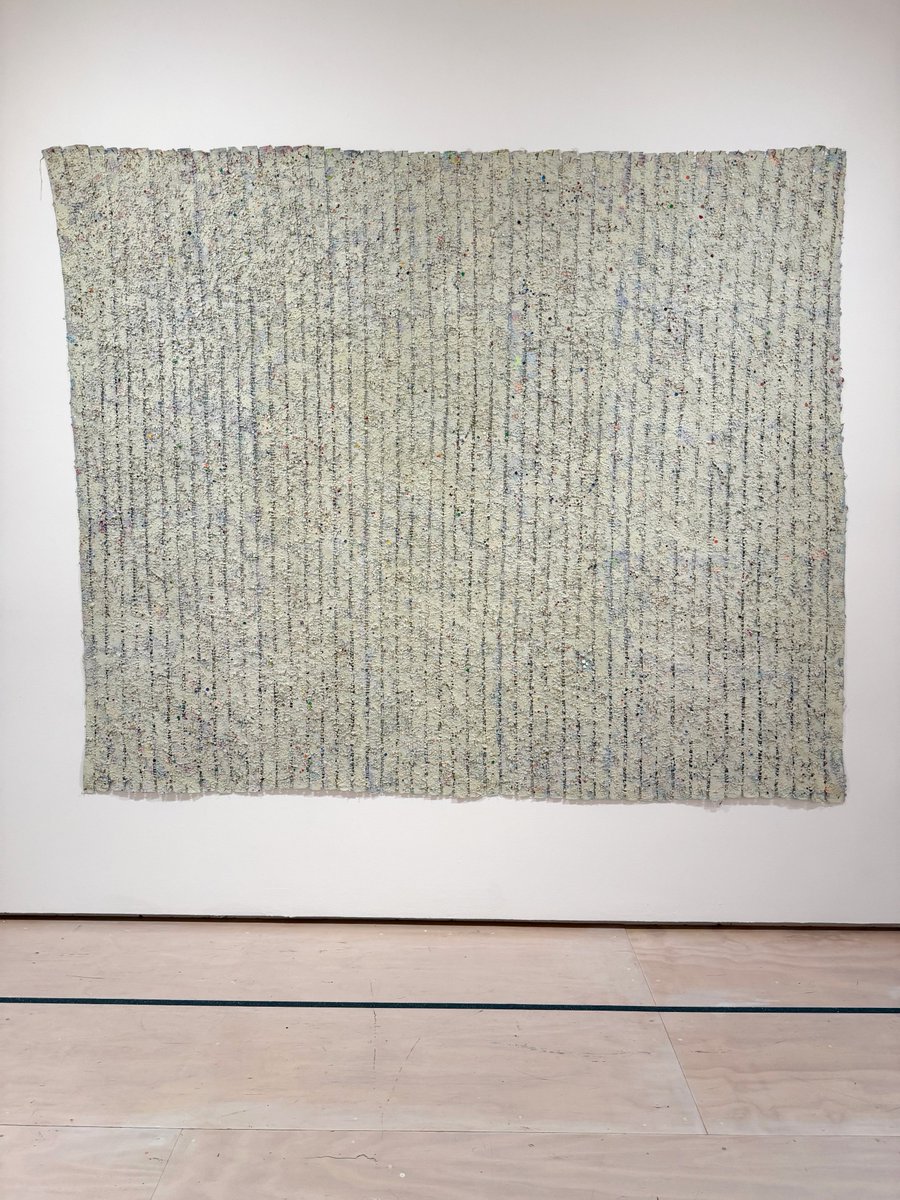
In 1980, Howardena Pindell’s layered, tactile surfaces and James Little’s luminous geometries were shown in the landmark exhibition Afro-American Abstraction at PS1 . The show included artworks with “a bold physicality, rhythmical vitality, and textural richness, as well as a tendency to use linear, geometrical imagery, and high-energy color.” Nearly five decades years later, their work returns to the galleries this weekend in Hard Art, and they'll be here to tell us all about it.
On Sat, Nov 7, at 3:30 p.m., the two legendary artists sit down with Connie Butler, The Agnes Gund Director, to discuss these two exhibitions, on the occasion of PS1's 50th anniversary.
RSVP for this free talk, and all Open House activities, at the link in bio.
—
Howardena Pindell. "Feast Day of Iemanja II, December 31." 1980. Acrylic, dye, paper, powder, thread, glitter, and sequins on canvas. 86 × 103 in. (218.4 × 261.6 cm).
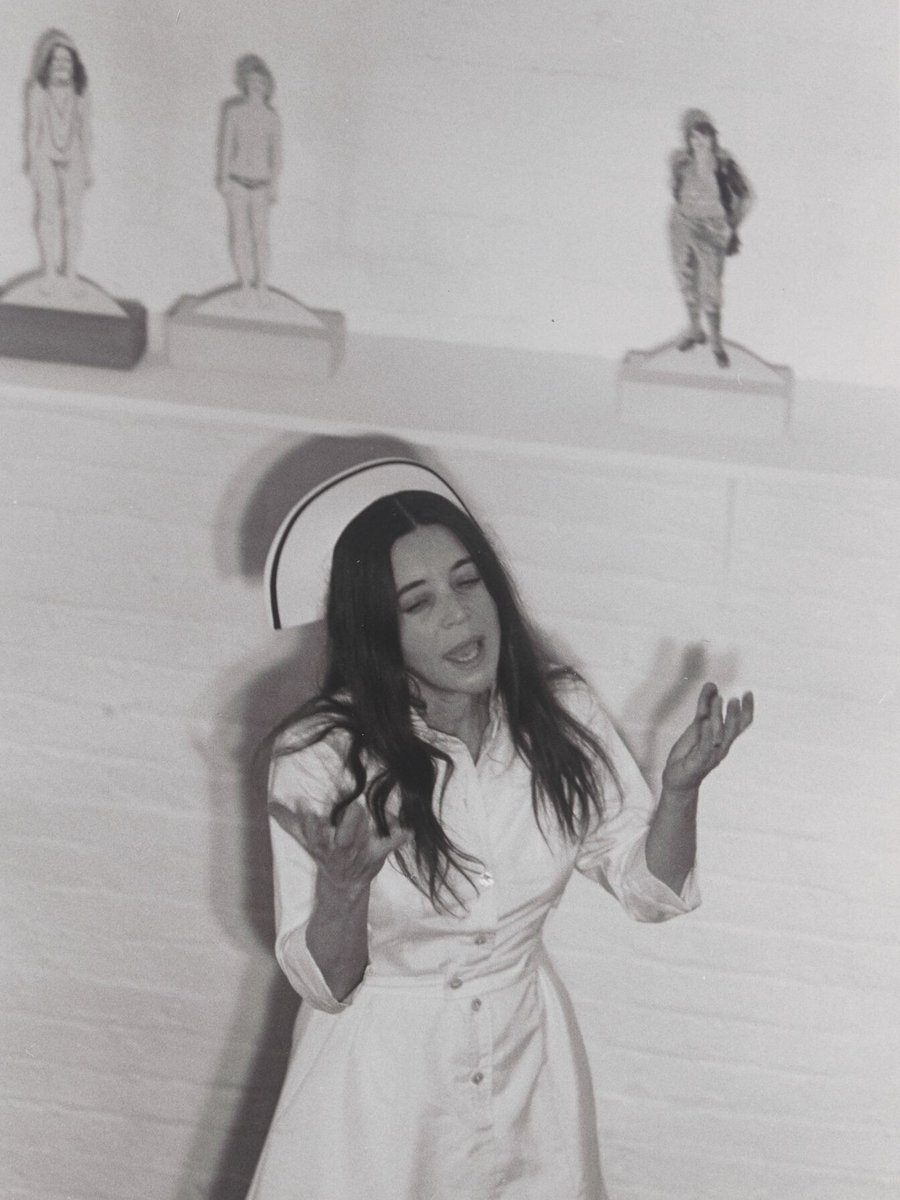
Happy Halloween! Here's some last-minute costume inspo for tonight, courtesy 50 years of our eccentric archive. Take a look at performances by Karl Anderson and Leslie Derrick, Eleanor Antin, Charlotte Moorman (in chocolate, no less), and more.
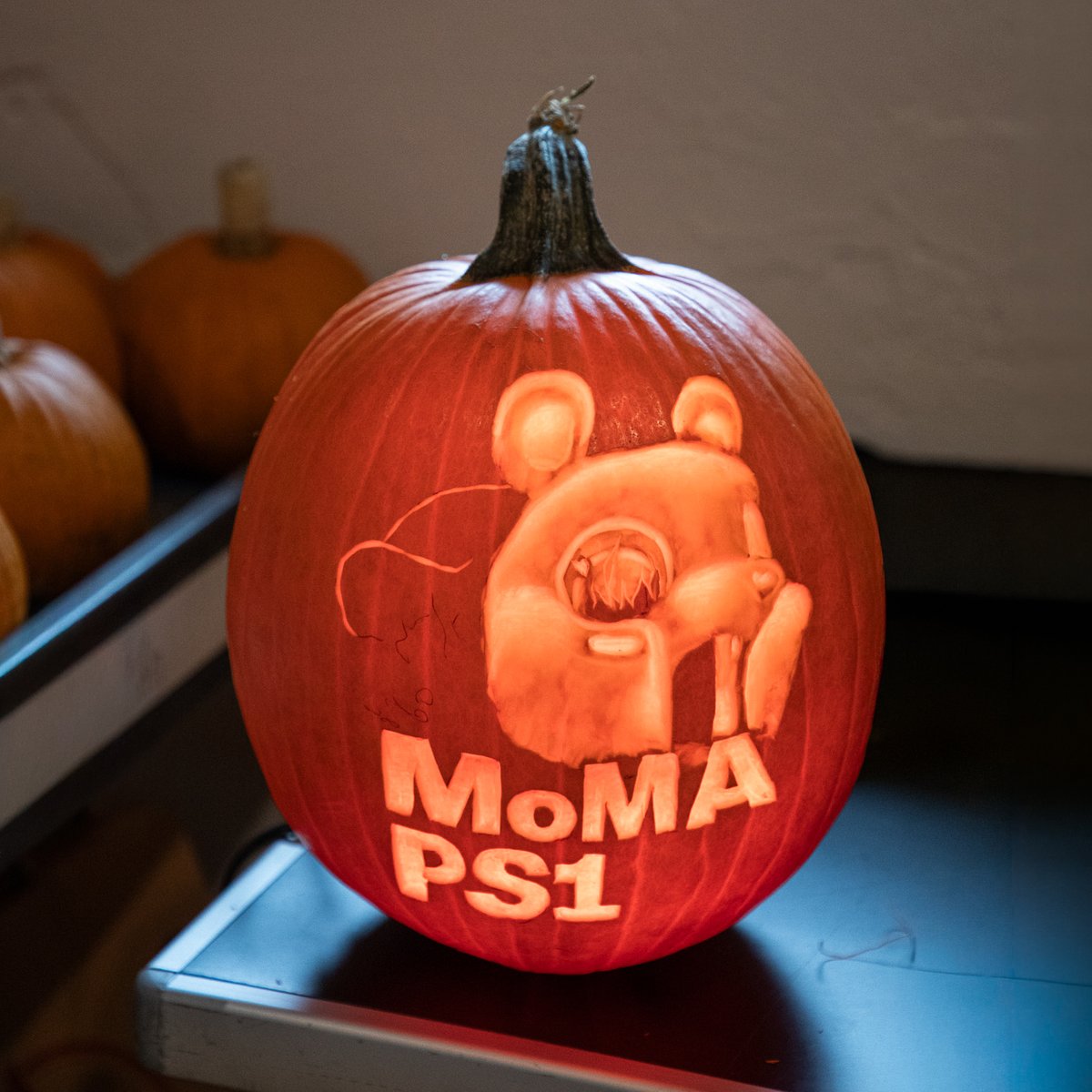
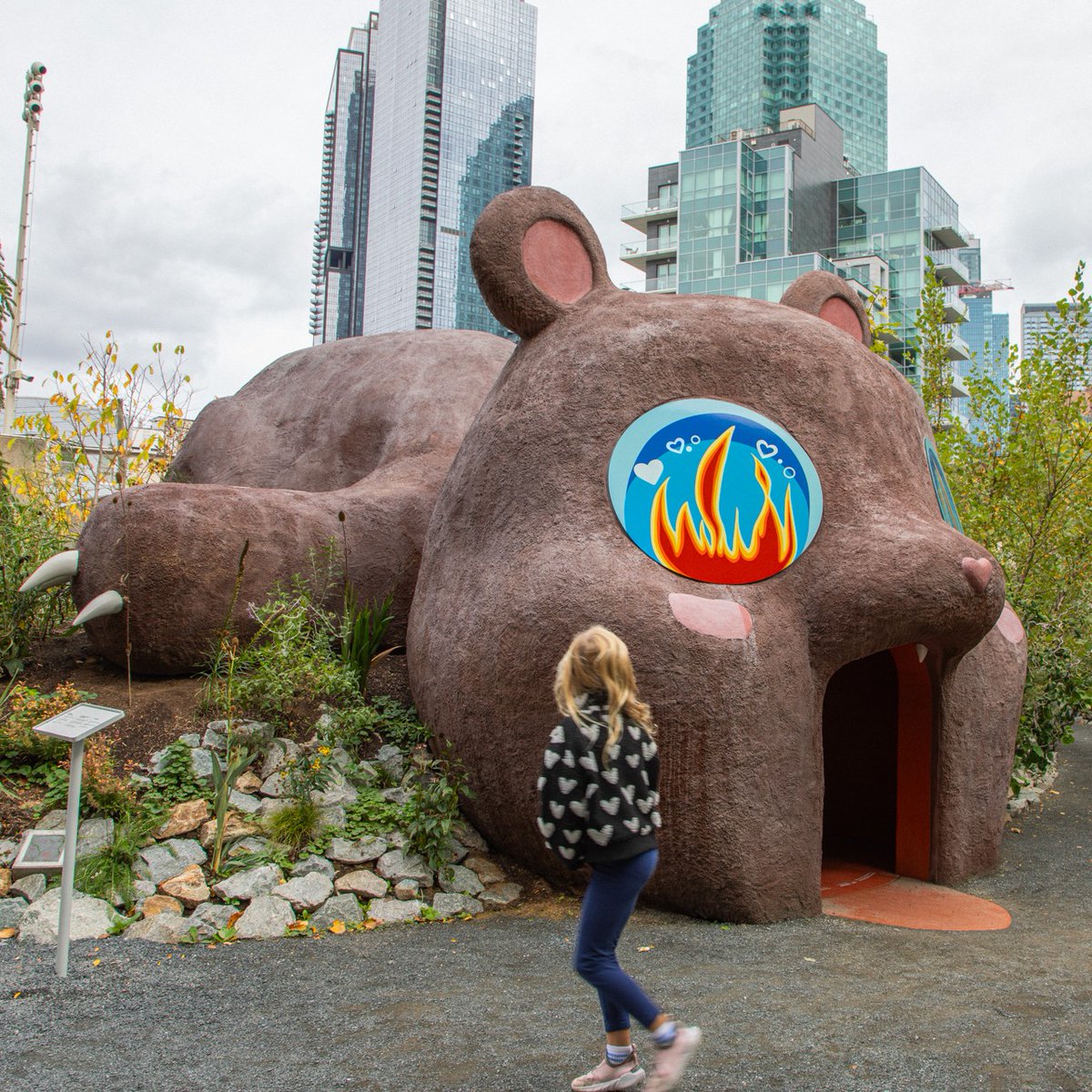
Say hi to our bear-o'-lantern 🐻
Danielle De Jesus (@danielledejesus), whose work appeared in our 2022 exhibition Life Between Buildings, carved this pumpkin after Precious Okoyomon’s Courtyard Commission. See it for yourself at our front desk this Halloween weekend 🎃
New York Fashion at PS1, 1980–1984 opens November 5, with original silver gelatin prints, letters, typewritten press releases, magazine clippings, and more pulled from the MoMA PS1 archives during our 50th anniversary year.
Between nights at Studio 54 and moonlighting for MTV, stylist and make-up artist Hollywood Di Russo (1946–2005) turned PS1 into what was then the only “non-commercial showcase for living fashion designers in America.” Starting in 1980, ten exhibitions featured experimental installations by rising New York designers, as slinky disco silhouettes gave way to boxier shapes and gender-fluid power-dressing.
During our upcoming Open House on November 7, cultural theorist Marco Pecorari (@p_e_c_o_m) will give a talk on the uniqueness of PS1’s program, followed by a conversation with critic Matthew Linde (@matthewlinde_01) and Assistant Curator Kari Rittenbach. RSVP to “A Fashion Alternative” at the link in bio, and see the full list of events celebrating our new exhibitions.
—
Installation view of the P.S. 1 exhibition Fashion (Fall 1981): "Homer Layne's Collection of Charles James Fashions" (October 18-December 13, 1981)
Field report from the first School Nite: @isabellalovestory and @b0yg1rlmusic played live, @alirqqq held down the decks, the galleries stayed open late, and somewhere in the crowd there was a teen recording it all on his laptop 💻❤️
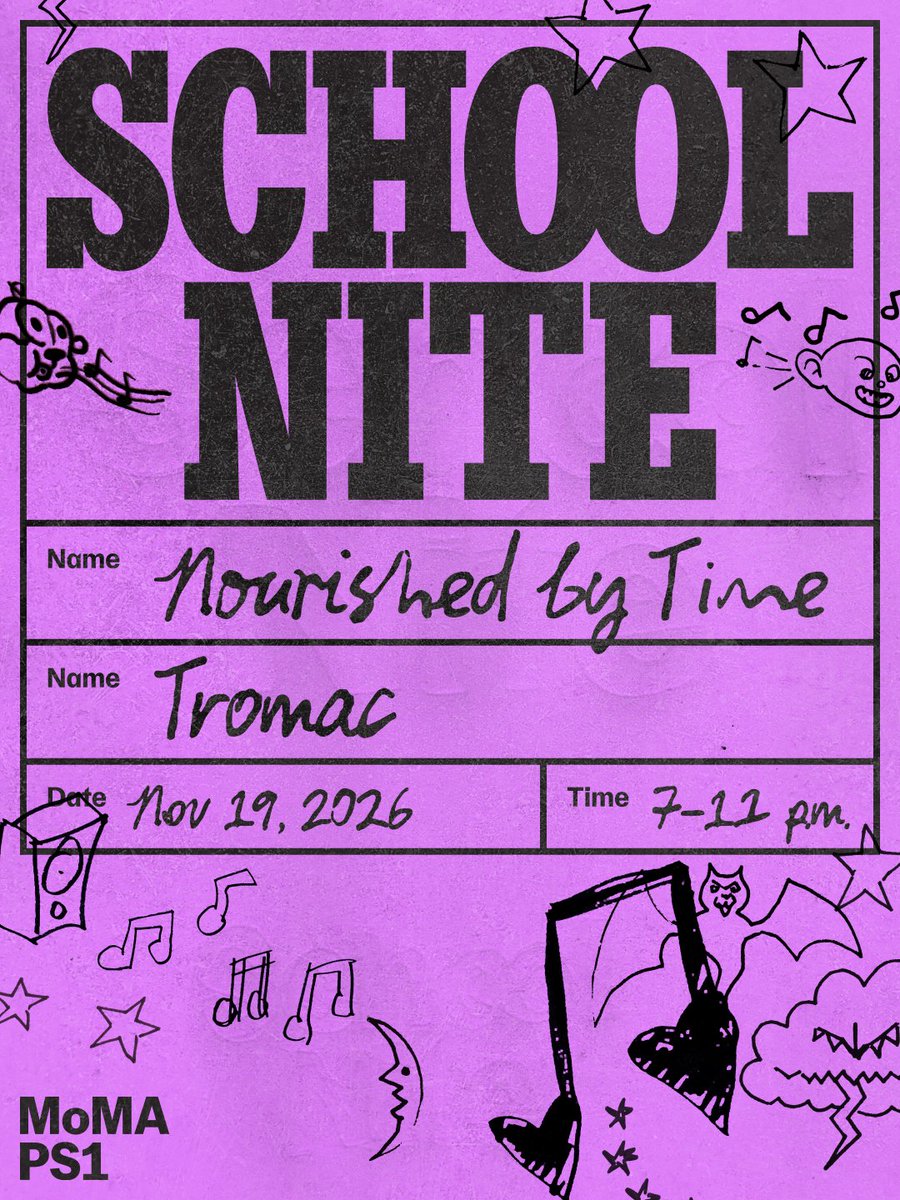
Thanks to everyone who came out Thursday night for the first of the series. Round two on Nov 19 with Nourished by Time and Tromac is already sold out, but stay tuned...there’s more coming up!
Special thanks to our friends @hoppy for holding it down behind the booth 💿
📷: Marissa Alper and Mila Rae Mancuso
Take a ghost tour of MoMA PS1 at night 👻
From the attic to the boiler room to the seemingly infinite stairwells and corridors, people have long said PS1 has haunted vibes. And with a building dating back to the 1800s, it would be kind of lame if we didn't have a ghost or two?
📽️ Watch the full 2018 paranormal investigation of MoMA PS1 and @museumofmodernart: https://t.co/mwz8qiuU9t
Visit this weekend and check out the Boiler Room in the basement for yourself. Admission is free for humans and ghosts alike.
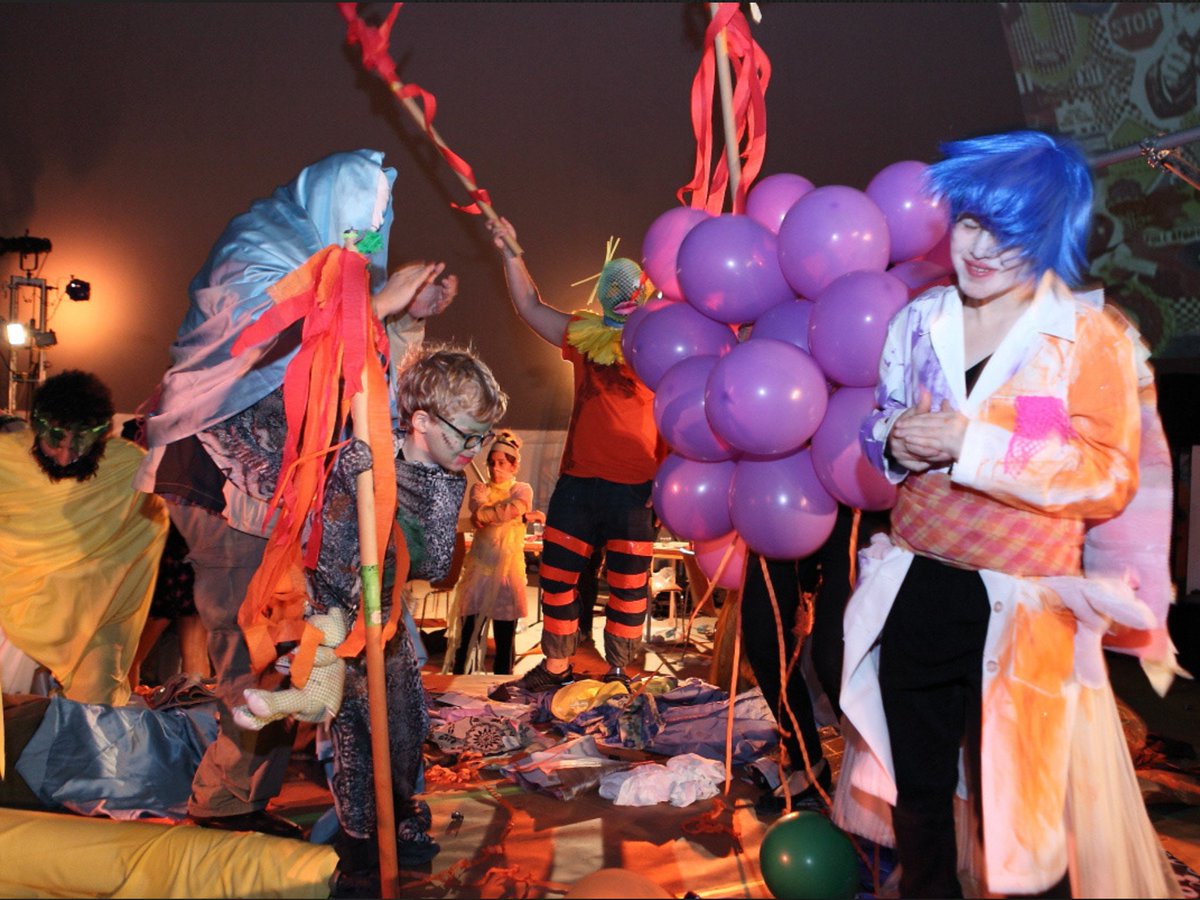
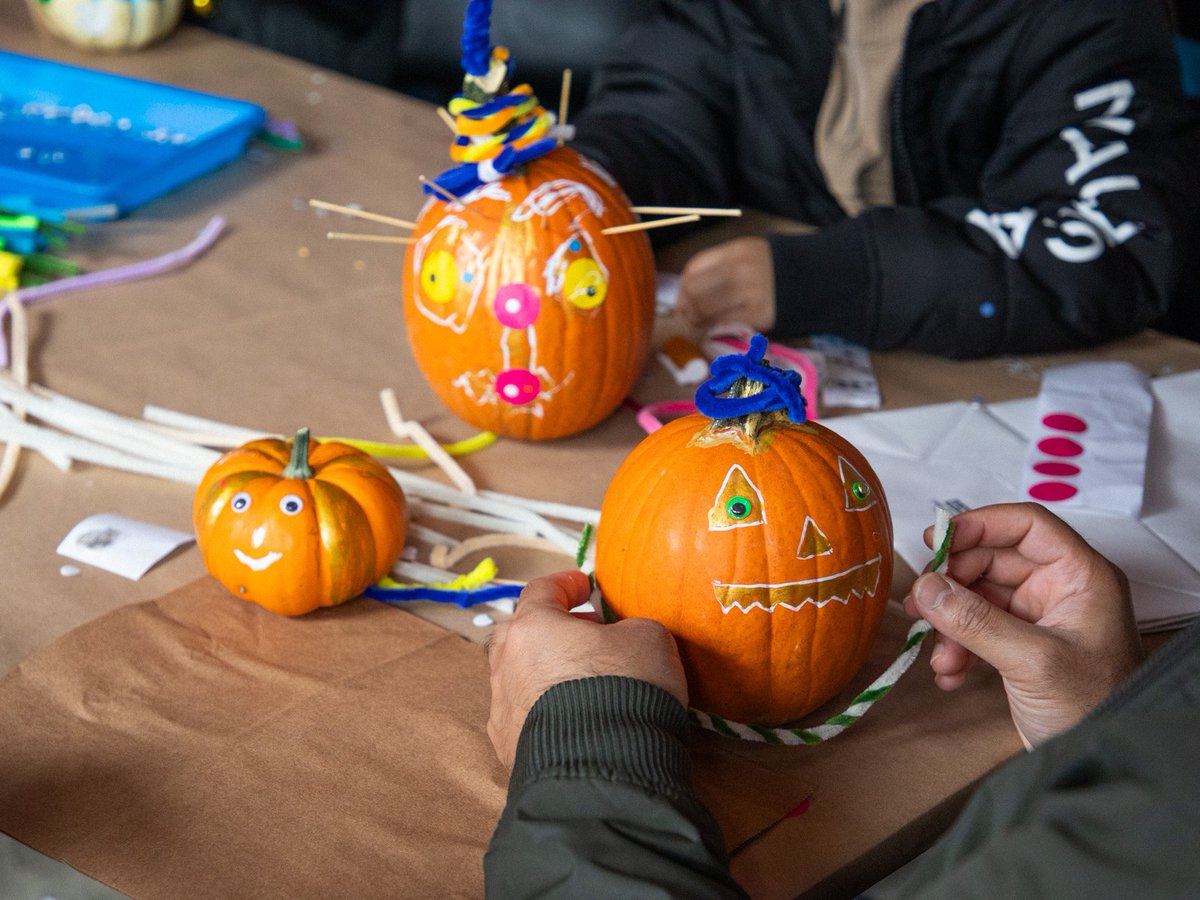
Our youngest artists brought big ideas and steady hands to last weekend’s Halloween Family Day.
More making is on the way: join us at Open House on Saturday, November 7, for a free family workshop inspired by Masao Gozu and a family Joyflow class with @healspacenyc 👯 RSVP to save your spot, link in bio.
Can’t wait that long to visit? The greenmarket is open Saturday in our plaza, 8 a.m.–3 p.m. Stock up on locally grown, organic pumpkins before Halloween, then come say hi to Precious Okoyomon’s 25-foot teddy bear, explore the galleries, and roam the halls of Queens’ first public school (-turned-museum), all for free.
—
📸: Yasmin Kuczynski
In 1972, Masao Gozu began photographing strangers at the moment they looked out of their windows. The thousands of images he took form an architectural and psychological portrait of New York City across decades.
In 2025, he went back to sites where he had photographed windows decades earlier and took the pictures again. Some buildings have changed dramatically or vanished, while others have held, with surprising continuity.
The first US museum exhibition of his work, Masao Gozu: Windows and Bars opens November 5 and runs through March 15, 2027.
—
Masao Gozu. "Eldridge Street, Lower East Side, September 1972." 1972.
Masao Gozu. "Mulberry Street, Little Italy, 11am, September 28, 1975." 1975.
What if we went out on a School Nite 🤓
Isabella Lovestory (@isabellalovestory), B0YG1RL (@b0yg1rlmus1c), and ali rq (@alirqqq) kick off School Nite, our new after-hours music series, Thursday, October 22, 7–11 p.m. in our former schoolhouse.
Two days away and only a few tickets are left, link in bio💛
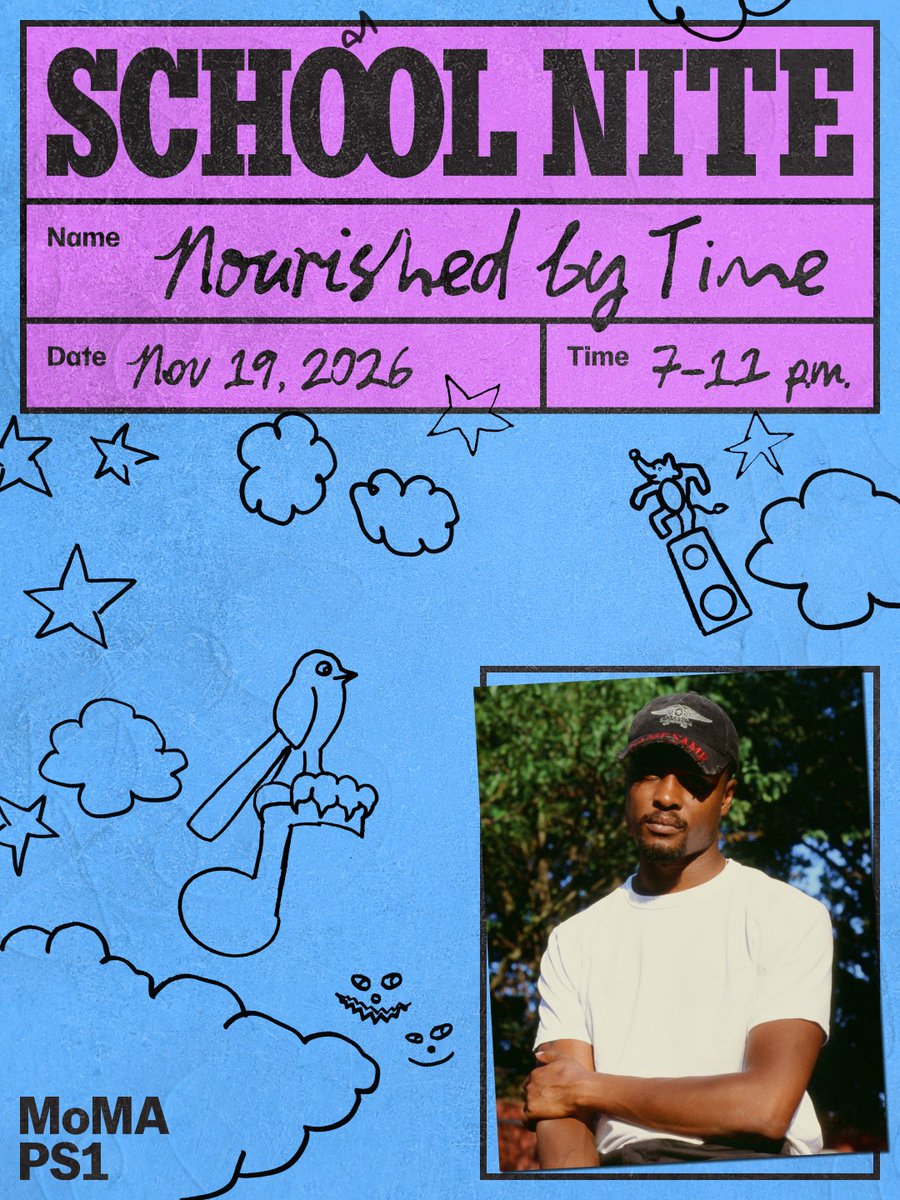
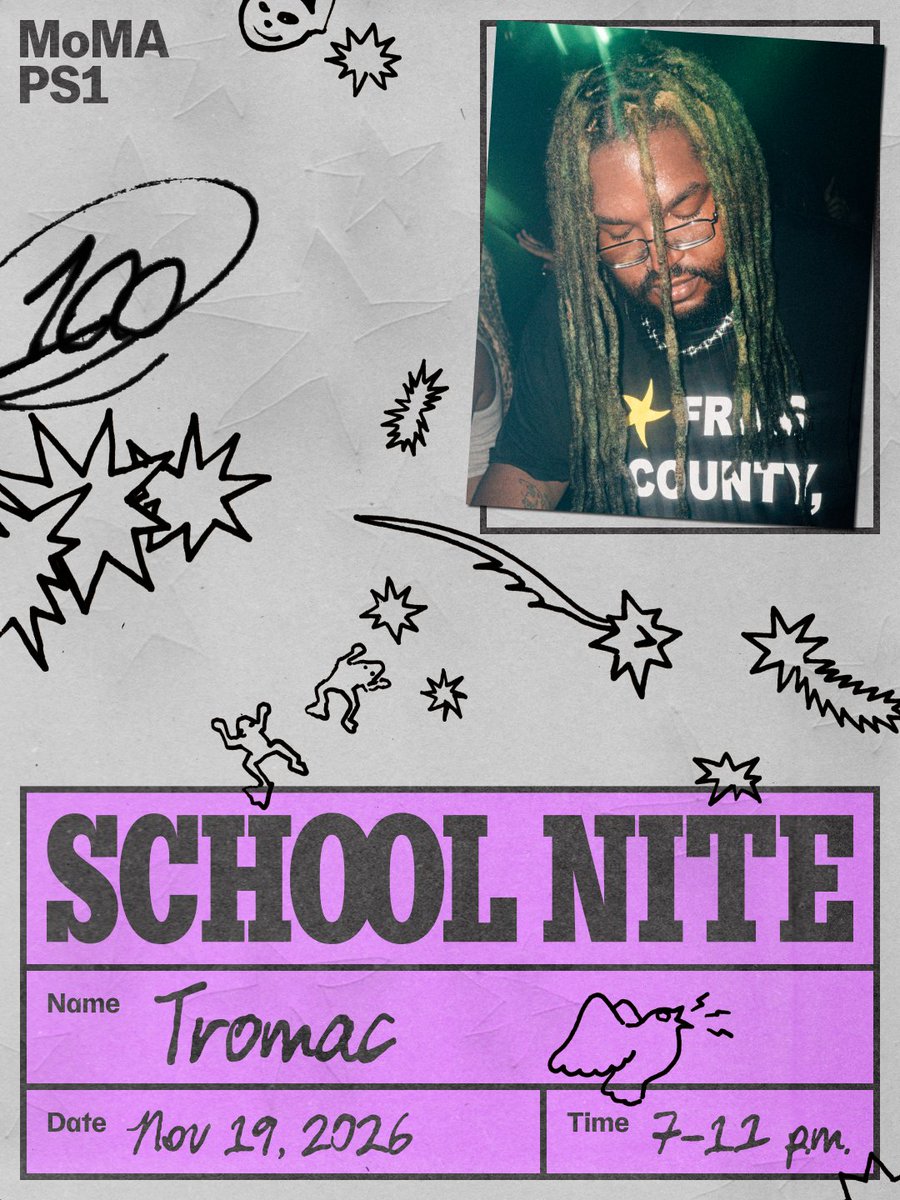
Just announced: Our next School Nite on November 19 features Nourished by Time (@nourishedbytime) and Tromac (@tromac) 📓
Nourished by Time brings his time-warped, existential R&B up from Baltimore, and Tromac follows with a set that moves through house, techno, jungle, and Baltimore club. This one is indoors, so capacity is limited. Bar and galleries open late.
The first School Nite is this Thursday, btw. You might as well double down and get tickets to that one, too.
Tickets are now live: https://t.co/8iRjQcw1CG 🔭
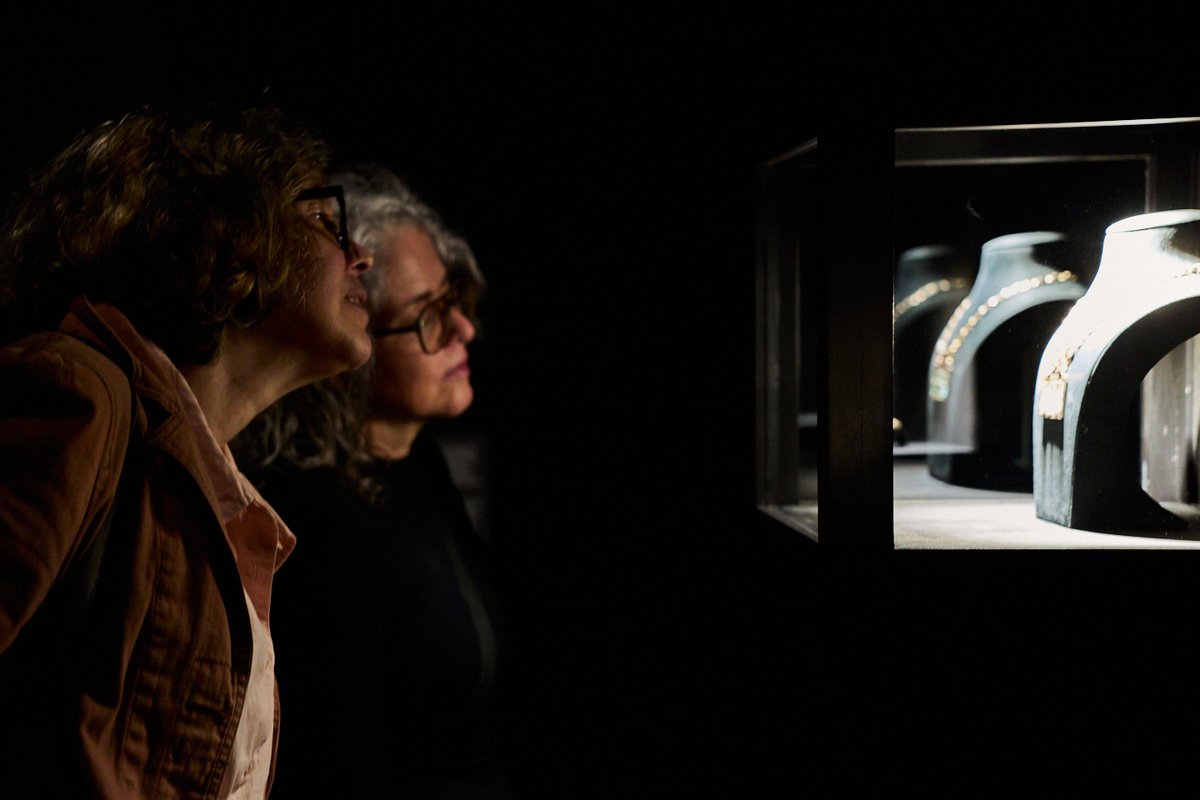
After years working with organic materials and forensic evidence from Mexico City's morgue, Teresa Margolles shifted in the early 2000s to materials tied to criminal acts in public space. Her work began to examine violence through the residue left in the streets, what she frames as the "periphery of the body."
These two pieces of jewelry are made with glass shards recovered from score-settling incidents of organized crime in Culiacán, Sinaloa. A local jeweler recreated designs from his repertoire, setting the glass in place of precious stones.
See them in "Teresa Margolles: En el lugar de los hechos (At the Scene)," on view through Feb 8.
—
Teresa Margolles. "Joya (Cadena) (Jewel [Chain])," 2007. Ten-carat gold with inlaid glass sourced from windshields shattered by car-to-car crossfire in Culiacán, Mexico. Courtesy the artist and Galerie Peter Kilchmann, Zurich/Paris