We publish our on-chain data openly on Dune, because infrastructure this important should be verifiable, not taken on trust.
So it's good to see AfriFlux build on that open data and map the footprint. The hard part isn't the headline number, it's mapping the infrastructure underneath the venues, which almost no one does well. They did.
adding stablecoin payments to your product?
point your coding agent at our docs and it maps the whole flow, deposit addresses per customer, auto-sweeps, webhooks, payouts to bank accounts.
claude mcp add --transport http blockradar-docs https://t.co/RMt57kXWf7
answers from live docs, not model memory.
https://t.co/J1DxqpOBFi
We've backed @Arc since testnet, so being live on mainnet from day one isn't a coincidence, it's a bet we made early.
Excited for what fintechs build on this. Congrats to the whole Arc team 🫡
Arc Mainnet is live.
Built for programmable money, global markets, and agentic economic activity, Arc brings stablecoin-native infrastructure to builders and institutions from day one.
Explore what’s live on Arc: https://t.co/2dpsrq6vW3
Today, money and assets got a programmability upgrade.
With @arc now live, developers and agents have a purpose-built ledger for programming digital currencies and assets like @USDC, EURC, and cirBTC directly into applications, workflows, and autonomous systems.
Start building → https://t.co/LQxlYz6pUV
Arc mainnet is live. And Blockradar is live from Day One.
Fintechs and developers can now build wallets and process transactions on @arc mainnet through Blockradar’s API, with gas fees paid directly in USDC.
We have supported Arc since public testnet, helping fintechs test wallets and transactions through Blockradar. Today, they can begin bringing those same products onto mainnet.
Welcome to mainnet, @arc.
The world's most requested payment rails are here. Today we're launching USD & EUR Virtual Accounts and Payout Rails on Blockradar.
Fintechs around the world can now access USD and EUR payment infrastructure through our single API, making it easier to build products for customers who want to send, receive, and move the world's most widely used currencies.
Whether you're expanding into new markets or building cross-border payment experiences, USD and EUR Rails are now part of the same infrastructure you already use for wallets, treasury, and local payment rails. Build without borders.
Example payment flows: USD → USDC → MXN | MXN → USDT → USD
Learn more here ⬇️
https://t.co/7fehFJ9aOQ
London! 🇬🇧
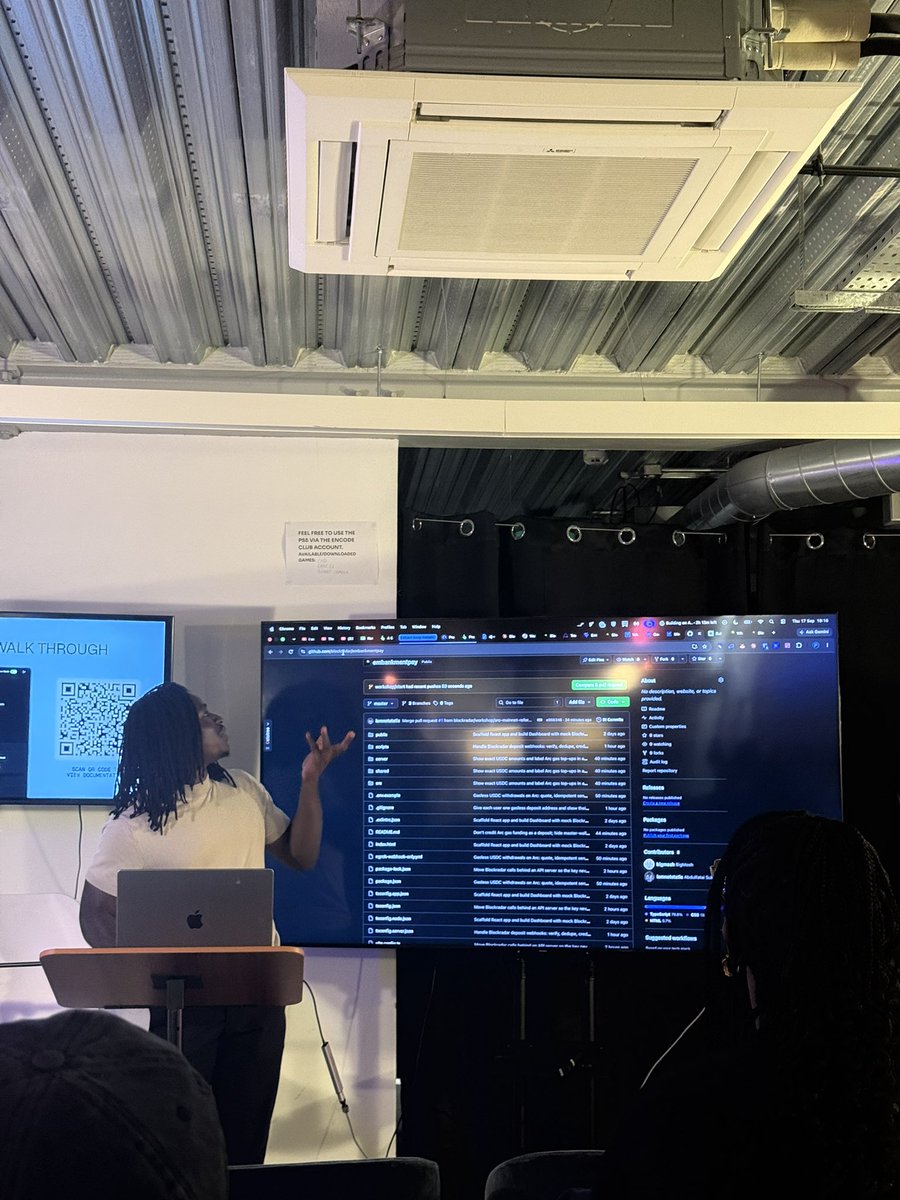
We’re incredibly excited for the Arc mainnet launch on the 16th of September. To mark the occasion, we’ve partnered with @arc and @encodeclub to host a hands-on technical deep dive on the 17th into building fintech and payment applications on Arc.
Starting with a working app prototype, our Co-founder and CEO, Abdulfatai Suleiman (@iamnotstatic), will show you how to turn it into an end-to-end payment experience using Blockradar.
We’ll code along to add Arc wallets, fiat rails, stablecoin payments, and bridging to Arc, connecting everything into a working fintech application.
Bring your laptop, your project and anything you’re currently stuck on.
Register: https://t.co/OLLK9utGtp
4/ Today, we're launching USD & EUR Virtual Accounts and Fiat Payouts on Blockradar. Fintechs can now enable their customers to collect in USD or EUR through Virtual Accounts, move value over stablecoins, and pay out through local payment rails, or vice versa.
1/ As we continue building for fintechs around the world, especially those serving markets that have historically had limited access to USD and EUR payment infrastructure, I've been thinking a lot about what financial access really means.
3/That's why this launch feels especially meaningful to me. Expanding access to financial infrastructure has been a personal north star throughout my career, and this is another step in that direction.
Excited for this one. India's one of the most important markets in the world for what happens next with stablecoins, and I'm looking forward to being in the room for it.
See you in Mumbai 🇮🇳
Today there are a lot of great orchestrators making fiat → stablecoins → fiat incredibly simple. And for a lot of businesses, that’s exactly what they need.
But some fintechs want more control over what happens in between. Maybe I collect Colombian pesos into USDC on @ethereum because that’s what’s available from the liquidity provider. But maybe I also want to bridge it to @base because it’s cheaper. And maybe I want my customers to hold an earning balance in USDC or USDT on @aave before they decide to off-ramp to Mexican pesos.
Or maybe I want to build an entirely different flow. That autonomy is what we want to give fintechs with Blockradar. Connect to local rails, then decide what happens next.
Today, we’re adding payment rails for Mexico, Brazil and Argentina to Blockradar. 🇲🇽 🇧🇷 🇦🇷 Together with Colombia 🇨🇴, which we launched last month, we now have local rails across 4 of Latin America’s biggest markets.
Fiat in → stablecoins → fiat out. But the real flexibility is everything in between: modular wallet infrastructure that fintechs can configure around their own product and use case.
This is a big step toward our bigger vision of making it radically easier to launch financial products across the Global South.
More currencies coming soon!