👆 Tap the All tab on my profile if you want to see everything I post on 𝕏. The Posts tab doesn’t show all of it.
⚠️ @mrcauliman is my only account. I don’t have backup accounts, secondary accounts, private accounts, or anyone posting on my behalf.
🏛️ https://t.co/XF78IuZJjM is the only official hub for the House of Cauliman XRPL ecosystem.
If an account, project, link, or message isn’t coming from @mrcauliman or connected through the House hub, don’t assume it’s me or anything affiliated with what I’m building.
🚫 I don’t DM people asking for money, wallet access, seed phrases, recovery information, or private keys.
Report and block the impersonators.
You went from crying about $XRP prices to throwing a tantrum, digging through my website, and posting screenshots of applications I’ve actually built.
You tried to call me a fraud and brought the receipts proving I do exactly what I said I do.
You can’t make this shit up. Thanks for the free advertising, jackass.
I’m so sick of the constant price talk surrounding $XRP. I’ve been doing this way too long to have any patience left for it.
Every development, every announcement, every conversation somehow turns into what it means for the price. There’s an entire ecosystem being built and used, and some of you can’t see past the number on your screen.
If all you care about is when $XRP is going to make you rich, you’re missing a lot of what’s happening right in front of you.
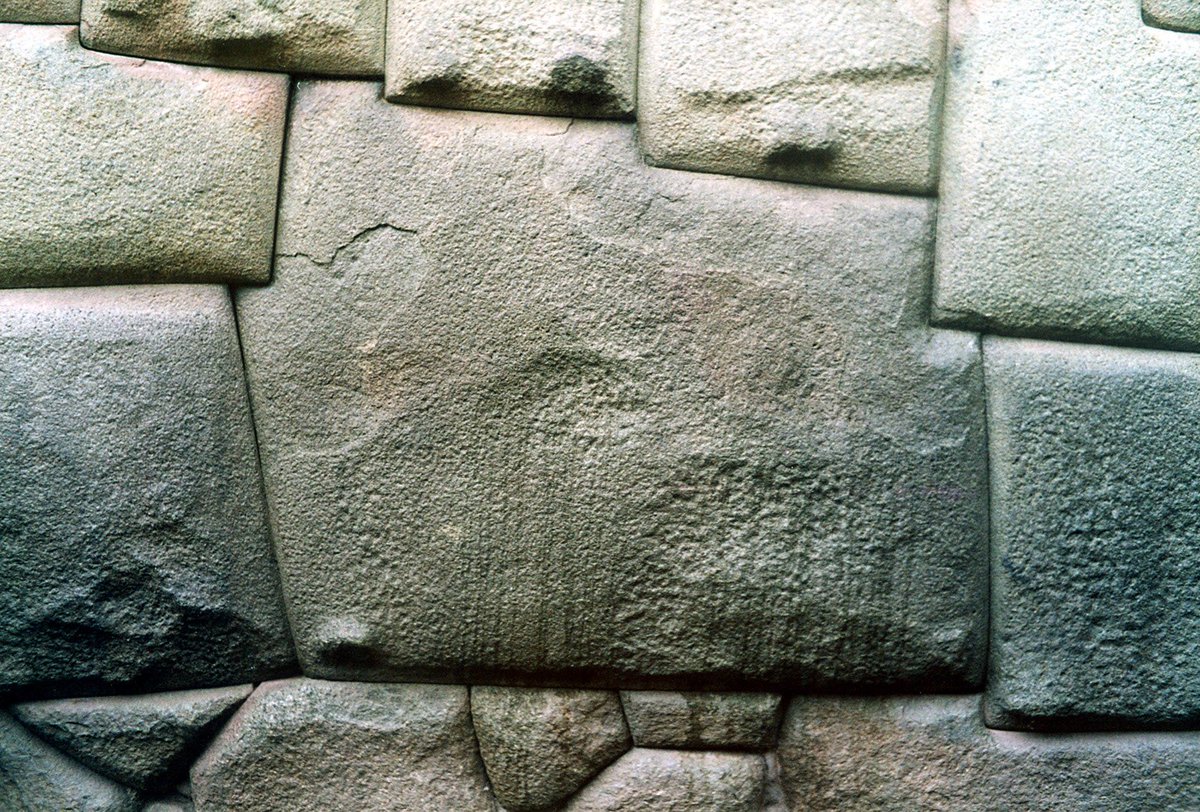
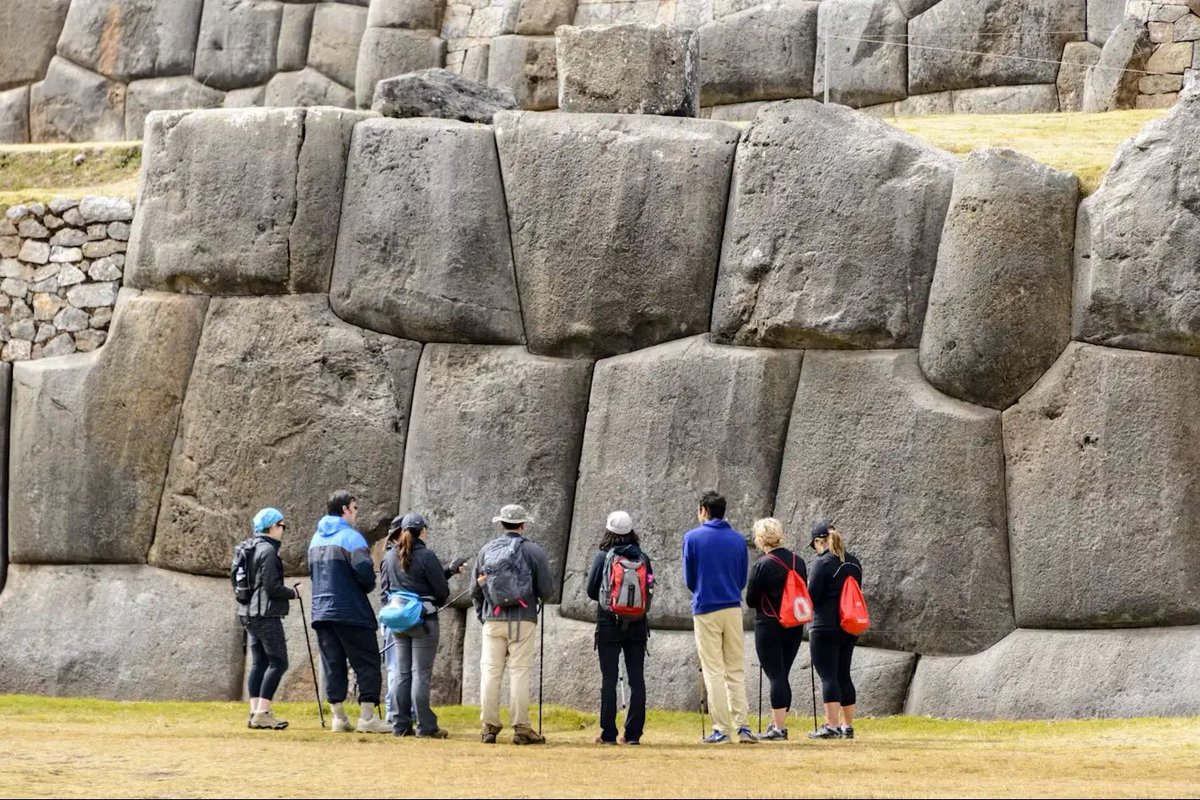
I’ve been looking into the massive stone structures built by the Inca, and I’m starting to question how some of these blocks were actually made. We’re talking about enormous stones weighing many tons, fitted together with incredible precision. I have a theory that many of them weren’t carved and fitted individually. I believe some may have been poured into place using crushed rock, smaller stones, and some kind of natural binder.
What really caught my attention are broken blocks that appear to have smaller rocks embedded inside them. I know certain types of rock form naturally this way, but what if some of these stones were manufactured? What if the builders were using molds and a mixture that hardened into what we see today? That could explain some of those incredibly tight joints and irregular shapes without requiring every surface to be individually carved.
I’m also not convinced every one of these massive blocks was individually carved, transported, and fitted together using the methods we’re commonly told about. The more I look at these structures, the more I question whether we’re missing something about how they were built.
These builders were obviously intelligent and capable of extraordinary engineering. I want to know what they actually did, not just what we’ve accepted they did. Believe your own eyes and question what you’re told.
@Fresco_GP That’s exactly what MONOLITH is for. You can showcase your NFTs on your coordinate page and list them in the NFT marketplace. The merch store is separate, so you can sell your physical products there and accept $XRP. Sounds like you’ve already got plenty to work with!
Want to know what you can do with your $XRP? Set up your own coordinate page on MONOLITH, open a merch store and get paid in $XRP. Buy and sell NFTs in the NFT marketplace or list your digital real estate on the XRPL tile market.
There are already over 1,600 active coordinates in the $XRP community, and the wall is endless. Click the link and see what you can build for yourself.
Every tile on the MONOLITH wall has a coordinate. That coordinate is your piece of real estate on the XRPL, with a MySpace-style page you can make your own. Add your music, show off your NFTs, open a shop, or give your business a place people can actually visit.
Shop the merch store. Buy and sell NFTs in the NFT marketplace. Pick up a coordinate or list yours in the tile market. If you sell products, your tile page gives customers a place to find you and pay in $XRP. Buy with $XRP, sell for $XRP, and accept $XRP for what you make.
Pick a coordinate on the wall and build something people want to come back to.
$XRP LEDGER CHECK
The lending votes moved again. SingleAssetVault is up to 25 of 35 validators, and LendingProtocol and LendingProtocolV1_1 are both at 24 of 35. They need 29 before the two week clock can even start, so the vault is four votes short and lending is five short.
Nothing is live yet. The votes are moving, but they still have work to do before any countdown starts.
RLUSD on XRPL is around $730 million, about 26 percent of the roughly $2.78 billion total across chains. Most of the rest is sitting on Ethereum.
There were also some big $XRP moves. One was around 120 million $XRP between two unlabeled wallets, and earlier moves totaled about 281 million $XRP into wallets that had been set up with small test funding weeks before. We know the $XRP moved. We still don’t know who owns those wallets or what the moves were for.
$XRP is trading around $0.97 tonight, down about 1 percent over 24 hours depending on the venue. The dollar is around 103.8 to 103.9 and the US 10 year is around 5.06 to 5.07 percent.
SingleAssetVault is at 25 and Lending is at 24. They’re still short of 29, but the votes moved again and that’s what changed on XRPL today.
There are already plenty of photo vaults and archive services out there. That’s not what we build. Our focus is cryptocurrency and financial applications and utilities.
LAV isn’t limited to cryptocurrency, though. You can use it to plan the transfer of anything you want to pass on to your family, including instructions and information about personal files. What you leave behind and how you want it handled is entirely up to you.
Your crypto. Your legacy. Your family. 🔐
Meet the ultimate security package from House of Cauliman.
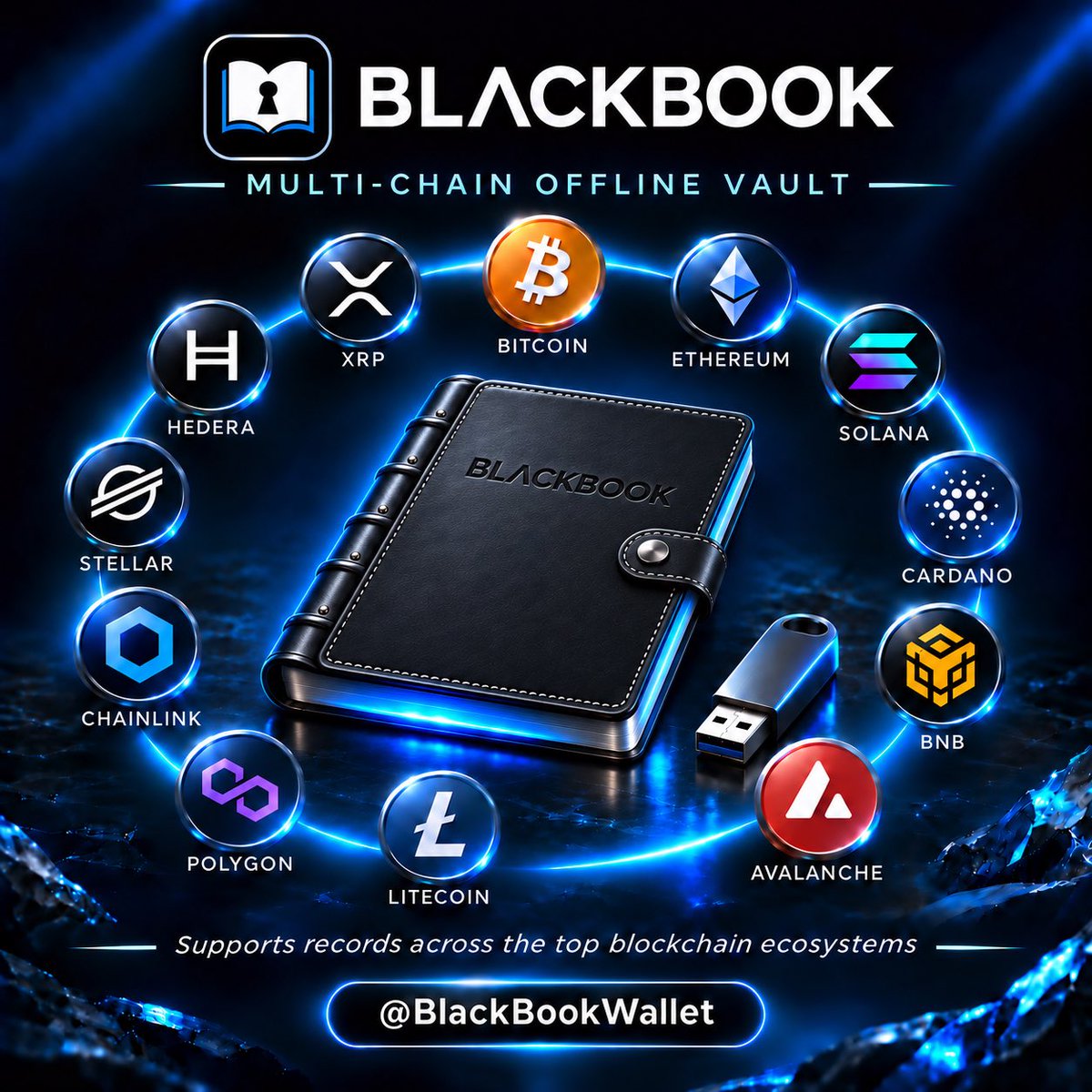
📕 BLΛCKBOOK @blackbookwallet keeps every chain's wallet records, $BTC $ETH $XRP $SOL and more, in one encrypted book, offline on your own USB. No cloud, no accounts, just yours.
👉 https://t.co/Q61MRzo9FW
🛡️ LAV @lavxrpl (Legacy Access Vault) makes sure your family is never locked out. You choose who gets your accounts, documents and final wishes, and when.
👉 Start your 3-day free trial at https://t.co/DehZalf0xu
Protect what you have today. Pass it on tomorrow.
$BTC $ETH $XRP $SOL
Every tile on the MONOLITH wall has a coordinate. That coordinate is your piece of real estate on the XRPL, with a MySpace-style page you can make your own. Add your music, show off your NFTs, open a shop, or give your business a place people can actually visit.
Shop the merch store. Buy and sell NFTs in the NFT marketplace. Pick up a coordinate or list yours in the tile market. If you sell products, your tile page gives customers a place to find you and pay in $XRP. Buy with $XRP, sell for $XRP, and accept $XRP for what you make.
Pick a coordinate on the wall and build something people want to come back to.
BLΛCKBOOK is LIVE, and if you’re serious about protecting your digital information, you need to take a look at what we’ve built.
Your wallet information, private keys, recovery phrases, passwords, and important records shouldn’t be sitting on somebody else’s cloud server. BLΛCKBOOK gives you an encrypted personal vault that runs from your own USB drive. No cloud storage, no subscriptions, and no handing control of your sensitive information to somebody else.
You can securely organize information for $XRP, $BTC, $ETH, $SOL, and other assets. It’s software, not a hardware wallet, and it doesn’t sign transactions or move your assets.
You can purchase BLΛCKBOOK with $XRP through Xaman, access your downloads, and receive updates without paying for the software again.
The first 100 purchases are $29. If you want control over your sensitive information, BLΛCKBOOK was built for exactly that.
@BlackBookWallet
Ripple is a private company. XRPL is a decentralized blockchain that operates independently of Ripple, and $XRP is the network’s native asset. They’re three different things.
Ripple’s acquisitions don’t automatically increase demand for $XRP. You’re measuring $XRP’s utility by Ripple’s business deals while ignoring the payments, DEX, AMMs, escrow, and applications already operating on XRPL.
@Chiara_831 Did you even read the post? The technology, utility, applications, and actual adoption of XRPL. Price matters, but so does understanding what you own.
Nobody said investing wasn’t about making money. I’m saying if you’re going to invest in $XRP, take the time to understand what you bought. Payments, escrow, the DEX, AMMs, and tokenization are already functioning on XRPL. Calling everything unknown just tells me you haven’t bothered to look.
@BTC_XRP_XLM_CC_ Where the fuck did you get that I support $10,000 or three-digit $XRP predictions? You literally invented an argument, assigned it to me, and then laughed at it. You’re debating yourself, genius.
Every once in a while, I’ll be having a conversation about cryptocurrency, technology, payments, or actually using it, and somebody pops into the comments talking about fucking tax implications.
We know taxes exist. Nobody’s suggesting we ignore them, but not every conversation about cryptocurrency needs to turn into a discussion about the IRS.
There’s an entire industry worth understanding beyond what you might owe in taxes.
WHY I KEEP MINIMAL MONEY IN TRADITIONAL BANKS
I have traditional bank accounts, but I keep the bare minimum in them. I prefer having control over my money and how I access it.
Look at what’s been happening with banks lately.
On November 16, JPMorgan Chase experienced a software failure that delayed transactions and affected payments involving other banks. Chase confirmed it wasn’t a cyberattack, but some transactions were delayed for hours.
On November 4, Crédit Mutuel Arkéa in France confirmed a cyberattack involving fraudulent transfers from the bank’s own accounts through a third-party provider. Customer funds weren’t stolen, but certain transfers were temporarily suspended.
These incidents weren’t connected, and the causes were different. Customers can have money sitting safely in their accounts and experience problems accessing or moving it.
How I manage my money
I have multiple $XRP wallets, and @XamanWallet is my primary way of managing them. I keep my assets distributed across different wallets, and I can move $XRP directly on the XRPL without waiting for traditional banking hours.
@UpholdInc and @krakenfx are my on and off ramps. When I need dollars, I can transfer $XRP to either exchange, convert it, and use their supported withdrawal methods. Both are equally important parts of how I manage my money.
I use my Uphold card for everyday purchases and receive $XRP rewards every month. 𝕏 Money is my main dollar account, which I fund through its supported methods and use for my everyday financial needs.
Why I use $XRP
The XRPL settles transactions in seconds, with fees generally costing fractions of a cent. I can transfer $XRP between my wallets or send it to another compatible wallet without depending on a bank’s operating hours.
Converting cryptocurrency into dollars involves exchanges, compliance requirements, and processing times. I understand those limitations, which is why I don’t depend entirely on any one service.
Security and responsibility
Cryptocurrency isn’t immune to cyberattacks. Self-custody requires protecting your own keys, and transactions can be irreversible. Exchanges can experience outages, and $XRP carries market risk.
Banks provide deposit insurance, fraud protections, and legal recourse. Those protections have value, and I’m not suggesting everybody should abandon traditional banking.
My perspective
I don’t need to choose between traditional banking and cryptocurrency. I use both, but I prefer keeping control of my assets through multiple $XRP wallets and maintaining different ways to access my money.
Uphold and Kraken handle my conversions and off ramps, my Uphold card handles everyday spending, and @XMoney handles my dollar banking.
I don’t expect any financial service to be perfect. I just don’t want my entire financial life depending on one institution.
Having control over my assets and the freedom to move my money matters to me. That’s why I manage my finances this way.
Here’s a little common sense advice for the $XRP community. Start following actual builders, CTOs, and developers who’ve put in the work and understand the technology. Unfollow the influencers who’ve never built a damn thing but somehow have an opinion on everything.
Stop spreading conspiracy theories and lecturing people about infrastructure you’ve never worked with. If you haven’t actually put your hands on the technology, stop pretending you know what’s happening behind the scenes. Ask questions, learn something, and listen to people who can actually show you how it works.
Imagine how much stronger this community would be if people spent more time learning and less time repeating bullshit. Less anxiety, fewer ridiculous rumors, and a better understanding of what you actually hold.
That’s how you build a stronger $XRP community.
@LegendaryAllen@Revolut I’ve never had an issue with Revolut. Not one. I’ve been able to use their services without any of the problems you’re describing.
I don’t talk about @Revolut much, but I’ve been using them since they started in 2015. I’ve watched them go from a simple currency exchange and travel card to a global financial platform with over 80 million customers and a $115 billion valuation.
What’s getting my attention now is $XRP. Revolut supports buying, selling, and transferring $XRP in eligible markets. I like seeing digital assets become part of financial services people already use instead of being treated as something separate.
I’ve used Revolut for over a decade, and they’ve earned my respect. I don’t give companies credit just because they’re big. I give them credit when they build something useful and keep improving it. Revolut deserves more attention.
That’s your personal experience, and you’re entitled to it. But calling a company scammers and making accusations without receipts doesn’t establish anything. I’ve had nothing but great experiences with Revolut, and plenty of others have too. Your experience doesn’t invalidate mine.
If someone followed you around all day, would they find Jesus?
Not just in what you say, but in how you treat people, how you handle adversity, and what you do when nobody’s watching.
It’s easy to talk about faith. Living it is where your relationship with Christ becomes visible.