Amid all the hustle—demanding job, living in b/w deadlines [MS-work-family], moments when I almost gave up on my idea of linking language with security domain—Finally, graduating with a Gold Medal — From being a student to alumni, it's been quite a journey at FAST-NUCES, Lahore!
On spot.
The @TheEconomist’s characterisation of TTP once “poor and ill-disciplined” but now “better organised and financed, and only targets Pakistani soldiers and police”, represents a selective narrative that is inconsistent with both empirical evidence and Pakistan’s official counter-terrorism posture.
In KP alone, TTP has taken lives of 86 civilians and injured 260 more in 2026 thus far.
It must be noted that Pakistan’s policy remains unambiguous. TTP, officially designated a banned terrorist organisation constitutes an existential threat to the constitutional order, the writ of the state, and the safety of its citizens.
This designation is indicative of group’s deviant ideology and indiscriminate violence, rejecting any notion of “restraint” or “selective targeting.” Upgraded organisational capacity and external financing have amplified the scope and lethality of its operations across civilian and security domains alike.
Open-source and official reporting confirm a sustained pattern of TTP-attributed attacks on markets, schools, infrastructure, and civilian gatherings in KPK, alongside operations against security forces. Such data refute any implication of disciplined insurgency and align instead with the broader resurgence documented in recent threat assessments.
Under the Revised National Action Plan and the ongoing Azm-e-Istehkam campaign, Pakistan maintains a zero-tolerance, full-spectrum response. No negotiations, no legitimacy, and relentless kinetic and ideological pressure against TTP and affiliated networks.
Responsible scholarship and journalism must integrate complete casualty record rather than curate a partial portrait that inadvertently legitimises an insurgency.
Civilian suffering in KP is not collateral, it is central to TTP’s strategy of destabilisation.
Accurate threat assessment demands fidelity to facts, alignment with Pakistan’s national security imperatives, and rejection of sanitised framings. The data, and Pakistan’s resolute policy, speak clearly.
Precisely. @TheEconomist’s “better organised and financed, and only targets soldiers and police” framing sanitises the TTP.
The 2026 KPK record alone, 86 civilians killed, 260 injured proves otherwise. Upgraded resources have broadened, not limited, the violence. Journalism must reflect the full human cost, not a convenient narrative.
The Economist is very generous to TTP.
In 2026, so far, 86 civilians have been killed and 260 injured by terrorists of TTP in Khyber Pakhtunkhwa province of Pakistan alone.
First get your facts right before drawing inferences.
@TheEconomist
TTP may be “better organised and financed” now, but it’s still killing civilians: 86 dead + 260 injured in KPK in 2026 alone. They don’t “only” target soldiers and police.
Get the facts straight before calling them disciplined insurgents. @TheEconomist must do better.
The Tehreek-e-Taliban Pakistan was once poor and ill-disciplined. These days it is better organised and financed, and only targets Pakistani soldiers and police https://t.co/elSZeyBXXi
The Economist is very generous to TTP.
In 2026, so far, 86 civilians have been killed and 260 injured by terrorists of TTP in Khyber Pakhtunkhwa province of Pakistan alone.
First get your facts right before drawing inferences.
@TheEconomist
Pakistan’s diplomatic efforts between the U.S. and Iran have helped prevent a return to full-blown war.
The EU is ready to contribute to a sustainable and peaceful resolution.
We bring economic leverage, hard-won nuclear expertise, longstanding relationships with Gulf partners, and direct engagement with Iran itself.
My press remarks with @MIshaqDar50 in Islamabad ↓
The Taliban government’s deputy spokesperson Hamdullah Fitrat has said the door to dialogue with Pakistan remains open. In an interview with the BBC, he stated that issues can be resolved through talks, but described some of Pakistan’s demands as “unrealistic” and not implementable by Afghanistan.
Russia has adopted a cunning but interesting strategy to pull Taliban Regime into its orbit. Its top officials frequently make statements about presence of international terrorist organisations in Afghanistan and threat it poses to the region. Yet it has now made agreements with same Taliban to sell them latest military equipment, including air defence.
Apparently, Russia is forcing Taliban into its embrace by isolating them from rest of the world.
Here is a summary of Russian statements about presence of terrorists in Afghanistan.
▪️ Sept 2022: Russian President Vladimir Putin, speaking at meeting of CIS heads of security agencies and special services, warned that terrorists in Afghanistan could be plotting against border countries.
▪️ Sept 2023: Russia MFA statement.
▪️ July 2024: Russian Deputy Foreign Minister Sergey Vershinin, speaking at BRICS Working Group, stated that terrorism situation in Afghanistan continues to cause heightened international concern.
▪️ Oct 2025: Russia MFA, following 7th Moscow Consultations on Afghanistan, stressed that terrorism must be eradicated in Afghanistan.
▪️ Nov 2025: Russian Security Council Secretary Sergey Shoigu speaking at 13th Meeting of CIS Security Council Secretaries in Moscow warned that threat of terrorist and extremist fighters infiltrating neighbouring and CIS states from Afghan territory remains a serious concern.
▪️ Nov 2025: Russian Deputy Permanent Representative to UN Anna Evstigneeva speaking at joint briefing of UNSC Committees 1267/1989/2253, 1373 and 1540, warned that ISKP maintains persistent presence in Afghanistan.
▪️ Feb 2026: Russian MFA Assessment estimated 20,000-23,000 terrorist fighters in Afghanistan.
▪️ May 2026: Russian Security Council Secretary Sergey Shoigu stated at 21st SCO Meeting of Secretaries of Security Councils in Bishkek that Afghanistan remains major security concern due to terrorism and drug trafficking.
▪️ May 2026: Director of Russia’s Federal Security Service Alexander Bortnikov, speaking at meeting of CIS Council of Heads of Security Agencies and Special Services, warned that ISKP in Afghanistan is actively recruiting militants and supporters from CIS states and migrant workers in Russia, while building covert terror networks and planning attacks across CIS countries.
Commentary |
Pakistan has endured decades of sectarian violence and understands the societal cost of narratives that deepen internal divisions. Against this backdrop, recent attempts to frame deportations of Pakistani nationals from the UAE primarily through a sectarian lens warrant careful examination, particularly when official evidence supporting claims of systematic sectarian targeting remains absent.+
The National Independence Front of Afghanistan has announced the launch of an operation targeting Taliban positions at Nangarhar Airport, claiming strikes on key installations and command centers. The group says the operation caused casualties and disrupted Taliban activities, though these claims remain unverified and the Taliban have not yet responded.
Taliban Supreme Leader Calls on Exiled Opponents to Return and Accept Rule
In his Eid al-Adha sermon on May 27, Taliban supreme leader Hibatullah Akhundzada urged political and armed opponents to lay down their weapons, return to Afghanistan, and accept Taliban authority. He stated, “We forgave you before and we forgive you now. Come back. This is your country,” while framing obedience to the Taliban emir as a religious obligation.
The appeal comes nearly five years after the Taliban’s return to power in August 2021. Despite repeated offers of amnesty, significant opposition persists.
Groups such as the National Resistance Front (@NRFafg) continue low-level armed resistance, while thousands of former Afghan officials, activists, and politicians remain in exile across Tajikistan, Europe, and elsewhere.
Akhundzada’s rare public address reinforces the Taliban’s long-standing demand for total political submission. It combines an offer of forgiveness with a clear warning: acceptance of Taliban governance under Islamic law is non-negotiable.
The statement also sought to justify past wartime actions, claiming the group’s fight was directed at “unbelievers,” not fellow Afghans.
However, the call is unlikely to produce large-scale returns. Many exiled Afghans cite the Taliban’s severe restrictions on women’s rights, arbitrary detentions, and lack of inclusive governance as reasons for staying abroad. Afghanistan continues to face deep economic hardship and international isolation, with limited incentives for high-profile opponents to return under current conditions.
The statement reflects the Taliban’s ongoing effort to consolidate internal control and project strength. Whether it signals a genuine opening or simply reinforces existing red lines remains to be seen.
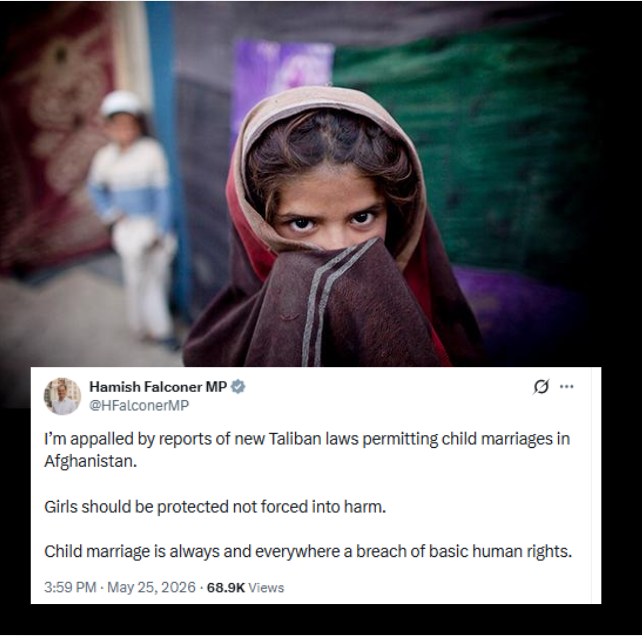
UK Minister (@HFalconerMP) Slams Taliban Over Child Marriage Laws
British Minister of State Hamish Falconer strongly condemned reported Taliban laws permitting child marriages in Afghanistan.
“I’m appalled by reports of new Taliban laws permitting child marriages,” he said, adding that “girls should be protected not forced into harm” and that “child marriage is always and everywhere a breach of basic human rights.”
The statement reflects deepening international alarm over the Taliban’s continued rollback of women’s and girls’ rights. Since returning to power in August 2021, the group has banned girls from secondary education and imposed sweeping restrictions on women’s work, movement, and public participation.
Reports of new marriage decrees that remove age protections risk further normalizing child marriage, a practice that was already widespread before 2021 but is now being reinforced through formal policy.
Western governments, including the UK, view these measures as fundamental barriers to any form of political engagement or recognition of the Taliban administration.
Is Afghanistan’s economic recovery real, or is growth masking a deepening humanitarian crisis?
Afghanistan’s GDP grew by 4.8% in 2025 according to the World Bank. On paper, that sounds like stabilization.
But beneath the headline numbers lies a far darker story of falling incomes, inflation, population pressure, and structural fragility. Let's have a look! ⤵️
President Trump’s statements may seem shocking, but they should be read carefully, not emotionally. His posts suggest a broader regional framework involving Iran, Gulf security, maritime stability, and possible expansion of the Abraham Accords—but social media speculation should not be confused with official policy.
Also, there should be no mistake about Pakistan. Pakistan supports regional peace, de-escalation, and constructive diplomacy with Iran. At the same time, Pakistan’s position on Palestine remains clear and historically consistent: durable peace in the Middle East cannot bypass Palestinian statehood and Al-Quds as its capital.
Islamabad’s priority should be strategic balance, engaging all sides while avoiding entanglement in regional polarisation.
A critical examination of how legal frameworks can shape gendered realities this piece explores the evolving structure of Afghanistan’s post-2021 decrees and their impact on women’s autonomy, agency, and social existence within a system defined by enforced asymmetry, prolonged uncertainty, and institutionalized dependency.
SAT Infographic |
On May 28, 1998, the earth trembled as Pakistan successfully conducted five simultaneous underground nuclear tests at Ras Koh Hills. As the granite mountain visibly turned white, it became an eternal monument to our resilience, crowning Pakistan as the 7th nuclear power on earth and the very first in the Muslim world. This was more than a technical triumph; it was an ideological declaration that our freedom is non-negotiable, permanently establishing a Credible Minimum Deterrence that has safeguarded our peace and sovereignty for decades.
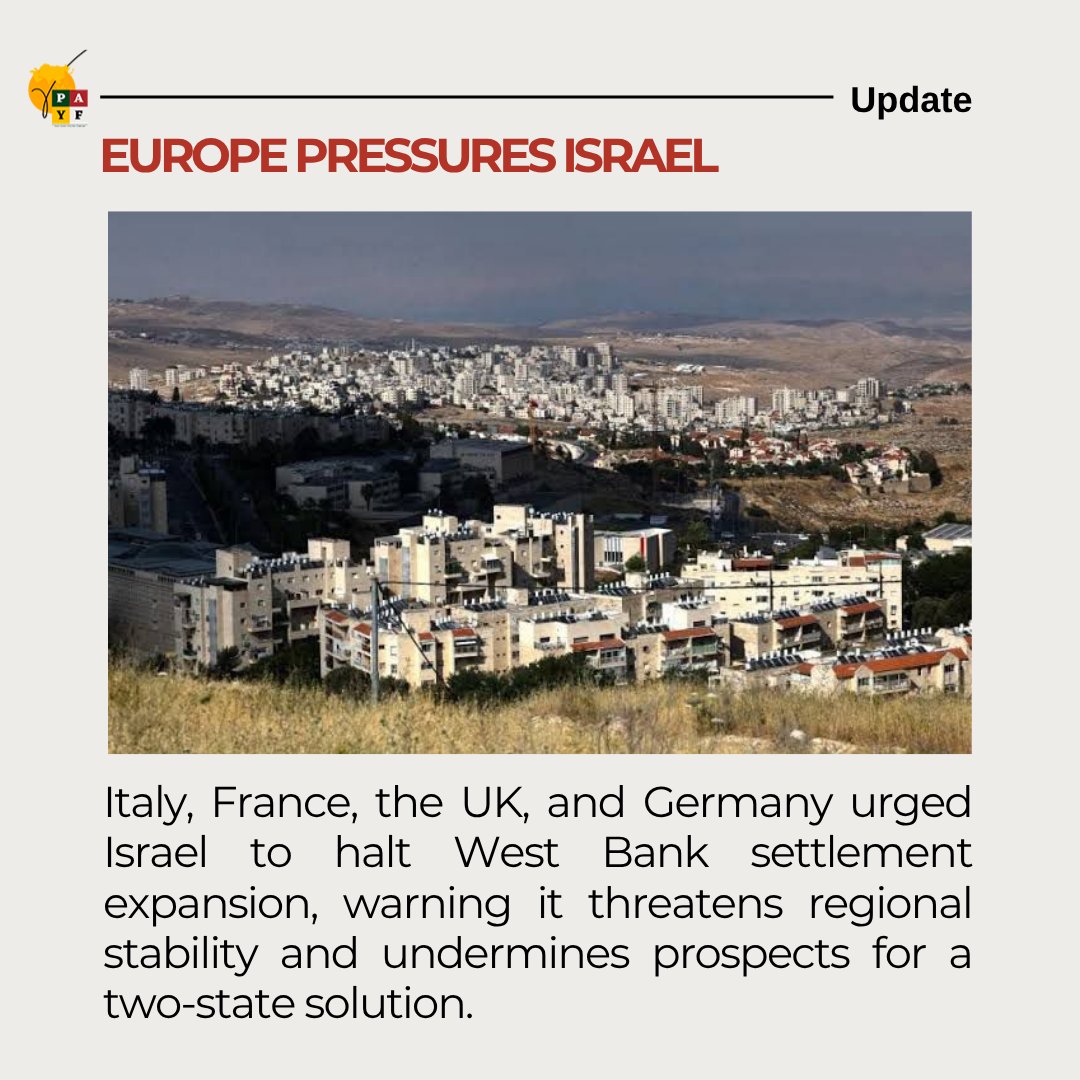
Italy, France, the UK, and Germany have jointly called on Isr-ael to halt the expansion of settlements in the occupied West Bank, warning that continued construction and rising settler violence threaten regional stability and further undermine prospects for a two-state solution.
European powers also voiced concern over the controversial E1 project near East Jerusalem, describing it as a major obstacle to future peace efforts.
On 28 May 1998, Pakistan’s nuclear tests marked a defining moment of strategic resolve and rare national cohesion, demonstrating the country’s capacity for unified action under pressure. The enduring challenge today is to channel that same institutional strength and collective will toward sustained economic development, technological advancement, and governance reform.
SAT Commentary|
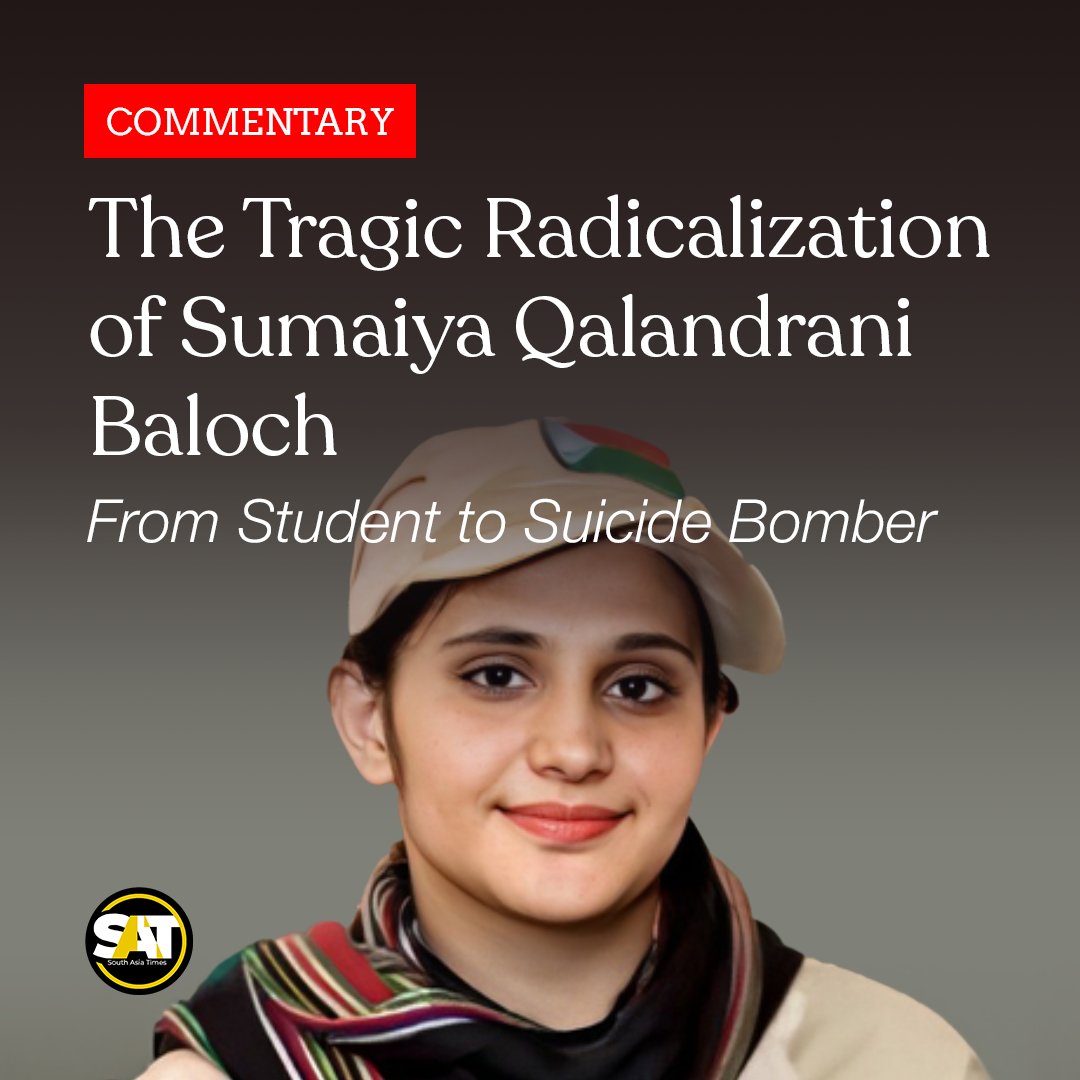
Sumaiya Qalandrani Baloch , aged around 25 at the time of her death, represented an educated, middle-class profile far removed from militant imagery. Before her involvement deepened, she was pursuing a bachelor’s degree in computer science and worked as a journalist associated with the BLA’s media wing. She was engaged to Rehan Baloch son of prominent BLA figure Aslam Baloch who founded the group’s suicide squad.+
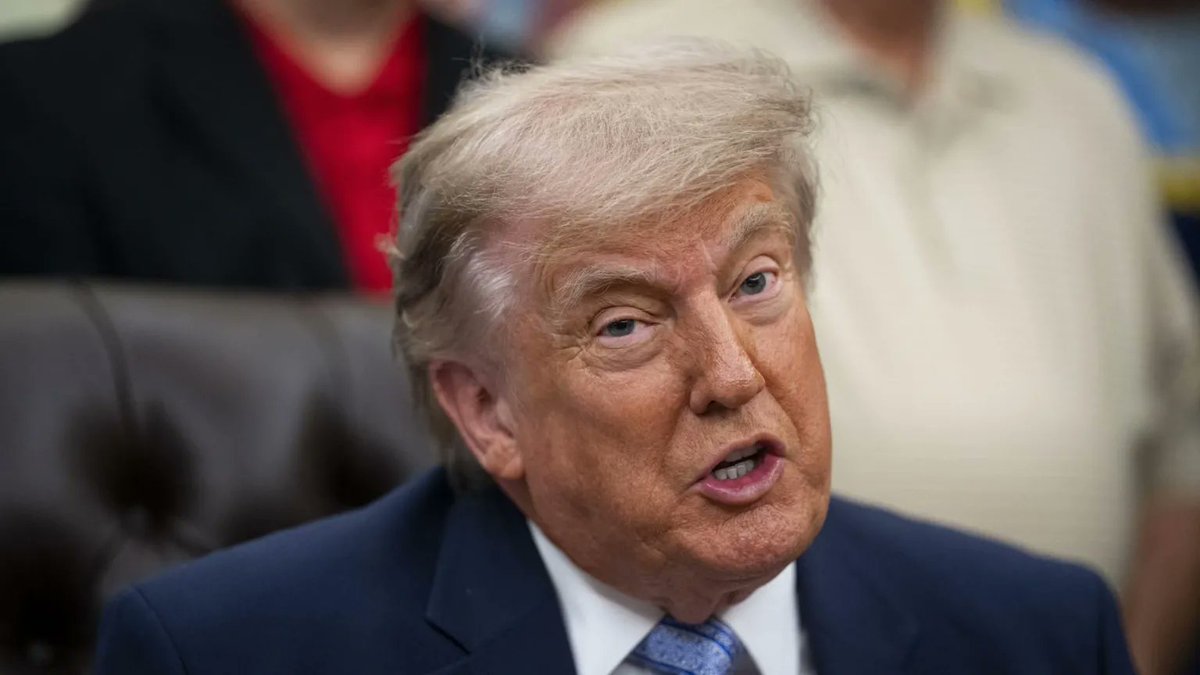
Update | US President Donald Trump has claimed that a memorandum of understanding for a long-term peace deal between the United States and Iran has been “largely negotiated”, with final details expected to be announced soon. Trump said the agreement would include the reopening of the Strait of Hormuz and followed separate calls with the leaders of Pakistan, Saudi Arabia, the UAE, Qatar and Israeli Prime Minister Benjamin Netanyahu. Trump reiterated that any final agreement would prevent Iran from obtaining nuclear weapons.
Meanwhile, Iranian Foreign Ministry spokesman Esmaeil Baqaei confirmed that Tehran and Washington had moved closer in negotiations over the past week, though key disagreements still remain. Baqaei said Iran was working on a 14-point framework memorandum that could pave the way for further talks within 30 to 60 days before a final accord is reached. The development comes months after the February escalation between the US, Israel and Iran triggered regional instability and concerns over the security of the Strait of Hormuz, a critical global oil transit route.
This is massive if it holds.
Pakistan just delivered a major diplomatic breakthrough in recent history!
From Strait of Hormuz tensions to nuclear deadlock, this was one of the most dangerous escalation points in years.
Field Marshal Asim Munir has successfully brokered a US-Iran Peace Framework after direct talks in Tehran. JD Vance and Steve Witkoff stayed fully engaged with him throughout.
Official announcement tomorrow, May 24.
Breaking!
Field Marshal has done it.
He has convinced everyone to give some space to the other and agree to a peace framework.
JD Vance and Steve Witkof remained engaged with Field Marshal while he was in Iran. Both US and Iran have agreed to a Peace Framework.
Announcement Tomorrow.


![Ms_HKS's tweet photo. Amid all the hustle—demanding job, living in b/w deadlines [MS-work-family], moments when I almost gave up on my idea of linking language with security domain—Finally, graduating with a Gold Medal — From being a student to alumni, it's been quite a journey at FAST-NUCES, Lahore! https://t.co/FxuULYkTq9](https://pbs.twimg.com/media/FiQjxy7WQAEa-vc.jpg)









![Ms_HKS's tweet photo. Amid all the hustle—demanding job, living in b/w deadlines [MS-work-family], moments when I almost gave up on my idea of linking language with security domain—Finally, graduating with a Gold Medal — From being a student to alumni, it's been quite a journey at FAST-NUCES, Lahore! https://t.co/FxuULYkTq9](https://pbs.twimg.com/media/FiQkBUTX0AIRgXO.jpg)