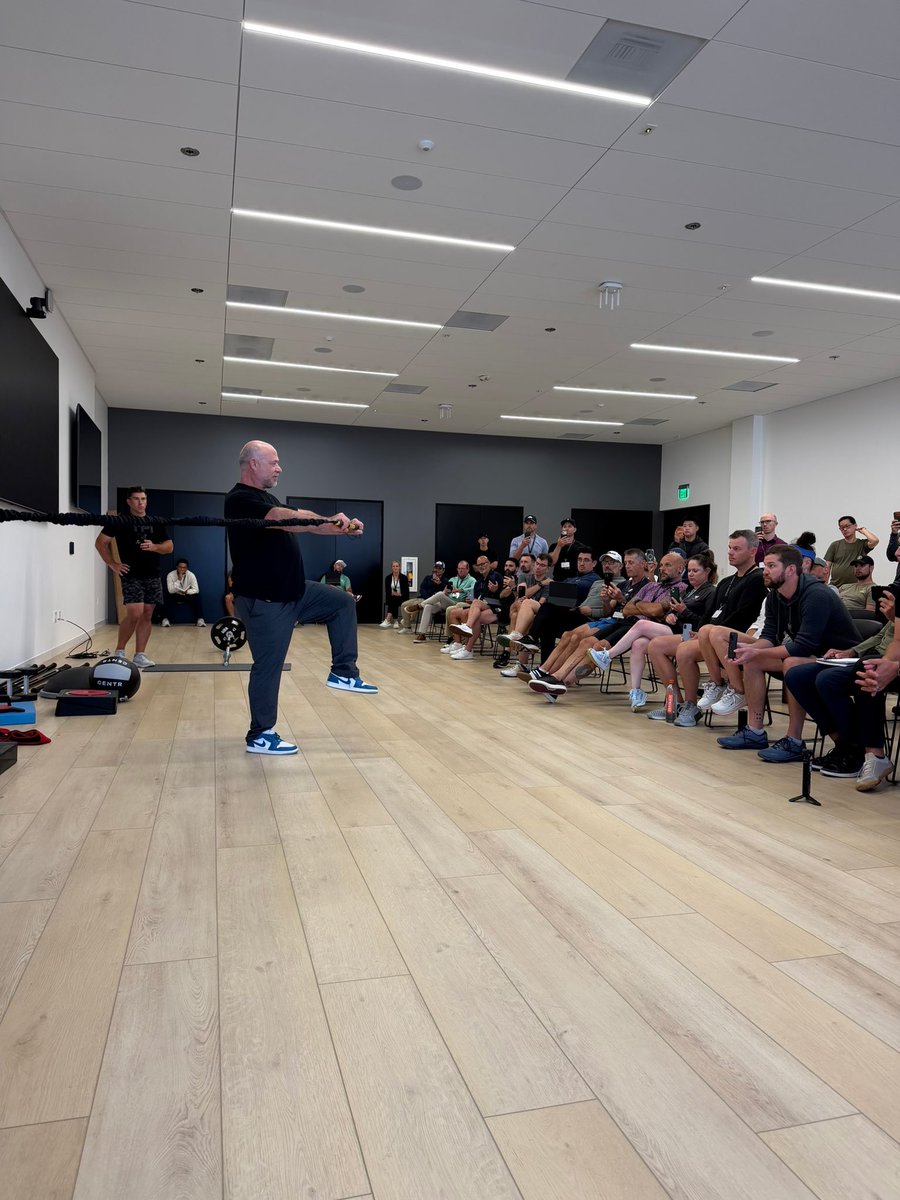
We teach golf instructors, fitness and medical pros how to evaluate golfers for physical limitations which may be affecting their swing. Assess, don’t guess.
🚨 We’re excited to announce that our updated Level 1 course is now live!
🧠 10 hours of completely refreshed content, including three new swing characteristics
📈 Updated motion graphics and visuals for an improved learning experience
🏋️♂️ 50 of our favorite drills and exercises related to Body-Swing Connection insights
🔎 Screen examples from Tour pros and amateurs
📱 Tutorial of TPI Pro App
💰 FREE for active Certifieds
If you’re active Certified, you can find the new course in the Online Courses section of your My Certification page.
If you're not active Certified, simply renew your status for access.
More info, including 🎥 previews: https://t.co/yNdcG2gRM2
Ankle mobility is an important but often overlooked part of the golf swing.
This right-handed golfer had good inversion and eversion in their lead foot, but couldn’t evert their trail foot well.
Limited eversion may make it more difficult to load into the inside of the trail foot during the backswing and transfer toward the lead side in transition.
That doesn’t automatically mean a golfer will sway or hang back, but it’s a piece of the assessment that helps us understand their movement profile so we can program and coach accordingly.
@yippiegolfapp Great way to put it. Yes, there are plenty of very mobile athletes who don't create much speed, but helping someone make a 20° longer shoulder turn will almost certainly increase their speed
While some studies suggest a weak relationship between mobility and clubhead speed, that may understate the role mobility can play.
Improving mobility or modifying technique to allow more movement can help golfers create a longer hand path, giving them more distance to apply force to the club (MacKenzie et al., 2020).
This doesn’t mean the most mobile golfer will be the fastest, but helping golfers create additional range of motion can increase their potential clubhead speed.
Full video on our YouTube channel: https://t.co/bBc2uW9inA
Does your golfer’s body move like stretchy fabric or a three-piece suit?
Dr. Rose shares an analogy from Peter Kostis on why a golfer’s mobility should help guide their swing technique.
For golfers whose bodies “move like a three-piece suit,” improving mobility or allowing more movement in the swing can help create a bigger turn.
https://t.co/klRozLl5Zj
“The driver is a specialty shot.”
If a golfer hits their irons well but struggles with the driver, it may help to treat it that way.
Different ball positions and impact conditions call for different swing mechanics. Trying to make an identical swing with every club may be part of the problem.
A “golf fitness handicap” gives us a baseline to measure progress and highlights the physical limitations most likely to affect the swing.
The TPI Pro app (free for active TPI Certifieds) weights failed screens according to their potential impact. For a right-handed golfer, failing the 90/90 Test for external rotation in the trail shoulder carries more weight than failing it in the lead shoulder.
This helps coaches assess whether a physical limitation is contributing to a swing characteristic and also helps trainers build more targeted exercise programs.
Nearly 200 attendees joined us in Shanghai for TPI Level 1 and Golf Level 3.
The Body-Swing Connection continues to bring professionals together around the world. We’re grateful to everyone who joined us to share ideas and take new insights back to the golfers they work with.
Every golfer has to put in the work, but as coaches and trainers, our job is to make sure they’re working on the right things.
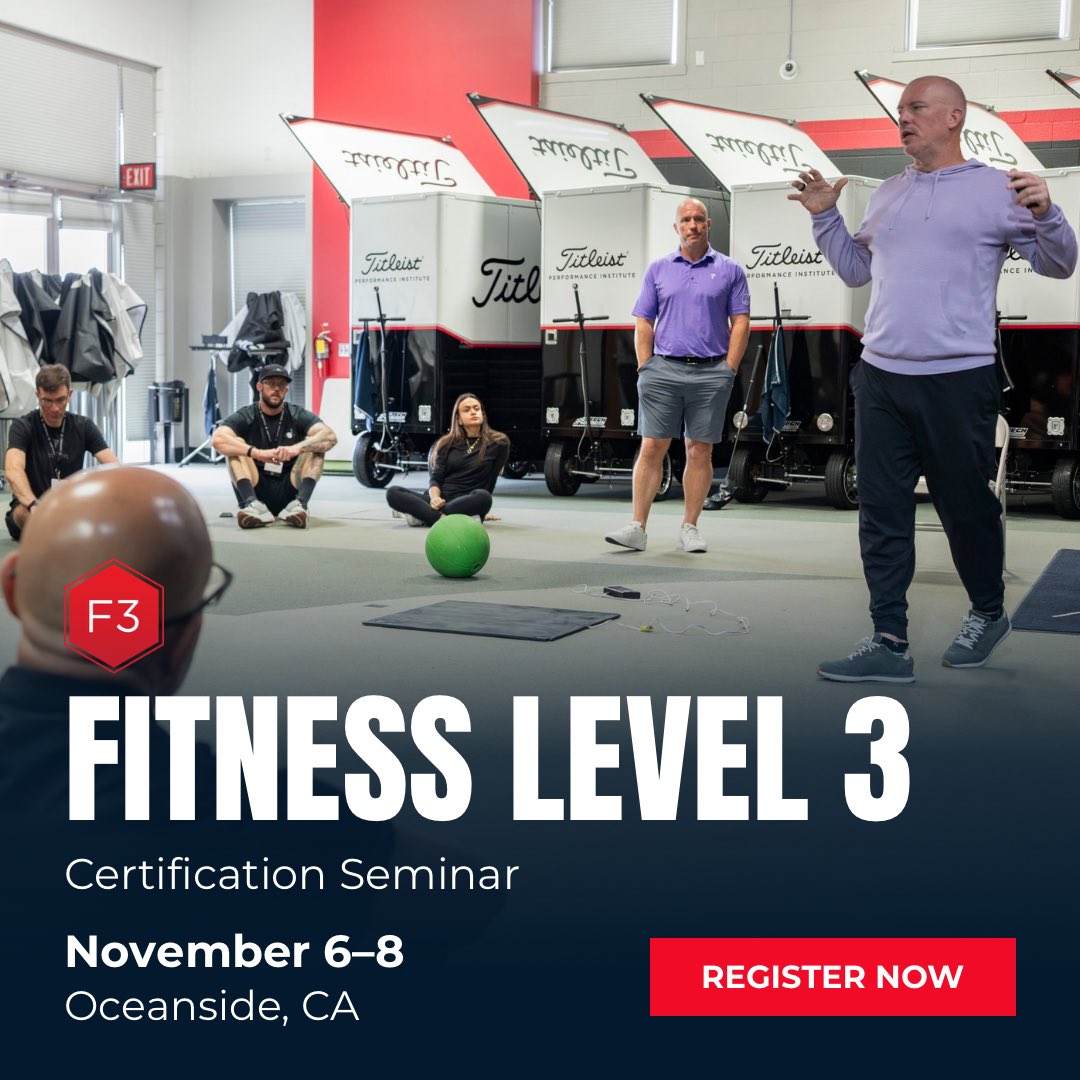
Fitness Level 3 is designed to sharpen that decision-making. Over three days of hands on learning, you’ll work directly with Dr. Greg Rose, Dave Phillips, Lance Gill, Jason Glass, Chris Finn and Janet Alexander, practicing strategies for developing mobility, stability, strength and power.
Fitness Level 3 is just six weeks away. Join us November 6th - 8th in Oceanside. Space is limited. https://t.co/iReyXMctCa
Full schedule: https://t.co/SmoO56Ah4v
If your rib cage is limiting your rotation, deep breathing can be a cheat code for improving mobility.
Distraction is one of the techniques we teach in our advanced Fitness courses to address joint restrictions. As Dr. Rose demonstrates here, deep breathing is our favorite strategy to “distract” the rib joints and improve thoracic mobility.
Our next Fitness Level 3 is November 6th - 8th at TPI HQ in Oceanside. Join us to learn the assessment and training techniques used by some of the world’s leading fitness professionals.
Many golfers are wearing shoes that are too long because they’ve added length when they actually needed more width.
We’ve tested hundreds of golfers on force plates, and shoe fit is a detail worth checking. If the foot slides forward excessively inside the shoe, it can affect both the amount and timing of force a golfer applies to the ground.
How a golfer sees the target can influence how they set up to it.
As Dr. Rose explains, same-side dominant players tend to putt with the ball slightly farther back and their stance slightly open. These preferences can help them see the ball and hole more comfortably.
We teach simple visual system assessments in our Golf and Medical Level 3 seminars because they help us understand why a golfer might favor a particular setup.
The better we understand why a golfer does something, the better we can determine what, if anything, needs to change.
The future is fast. And our Power Level 3 attendees are helping build it.
Thanks to this group for traveling to TPI HQ and spending three days with us. Your commitment to learning and helping your golfers get better is why we love what we do.
Three different lines. The same movement.
Each of these lines could be used to assess sway, but each tracks a different point.
As Dr. Rose demonstrates, the pelvis center can move away from the target during rotation while the trail hip and knee remain relatively stable.
Looking at one line without context could lead to a different conclusion about the golfer’s movement.
Full video on our YouTube channel: https://t.co/2IpWRBugJM
We’re as big proponents of 3D data as anyone in sports, but poor interpretation of good data can lead to bad conclusions.
A common issue we see is confusing movement of the pelvis center with excessive sway when reviewing 3D data.
As Dr. Rose demonstrates, we track sway at the center of the pelvis, but also at the trail hip and trail knee. Because of the pelvis’s elliptical shape, its center can move away from the target during rotation while the trail hip and knee remain relatively stable.
These lines track different points during the same movement.
https://t.co/G7fa3LrGV3
Stance width can influence how much horizontal plane torque a golfer creates because a wider stance can increase the moment arm, allowing the same amount of force to produce more torque.
That doesn’t mean every golfer should widen their stance or try to create a larger moment arm. The goal for a coach is to understand how a golfer’s technique influences their distance potential and recognize when it might be limiting speed.
These are principles we teach in Power Level 3 to help coaches understand what, if anything, needs to change for the golfer in front of them.
Excited to welcome 60+ attendees to our Power Level 3 seminar this weekend. We’ll announce Spring 2027 dates soon.