It was a great conference #ESHG2020, thanks to all participants for such fruitful and meaningful studies!
Hope to see y’all next year! ❤️
#ESHG2020#Megeno
“The main objective of this study is to investigate how prevention centres integrate genetics-related aspects into their practice,” says Adriana.
#ESHG2020#UniversityofLuxembourg#unilu
In five minutes Adriana will present her poster on the current status and future directions of Medical Genetics in Preventive Healthcare in Europe! Looking forward to it!
#ESHG2020#UniversityofLuxembourg#unilu
Today, at 11.45, an employee of Megeno & a graduate-to-be of @uni_lu, Adriana Blazkova, will talk about her thesis on medical genetics in preventive healthcare in Europe.
We sincerely thank Adriana, @uni_lu & @SnT_uni_lu for collaboration on this study!
#ESHG2020
How to realise the promise of genome-informed prevention in a cost-efficient way, while minimising the potential harm from reporting genetic risks to healthy individuals?
Check out our poster P23.02.B. to find out!
#ESHG2020
P23.02.B. Poster presentation at 13:00
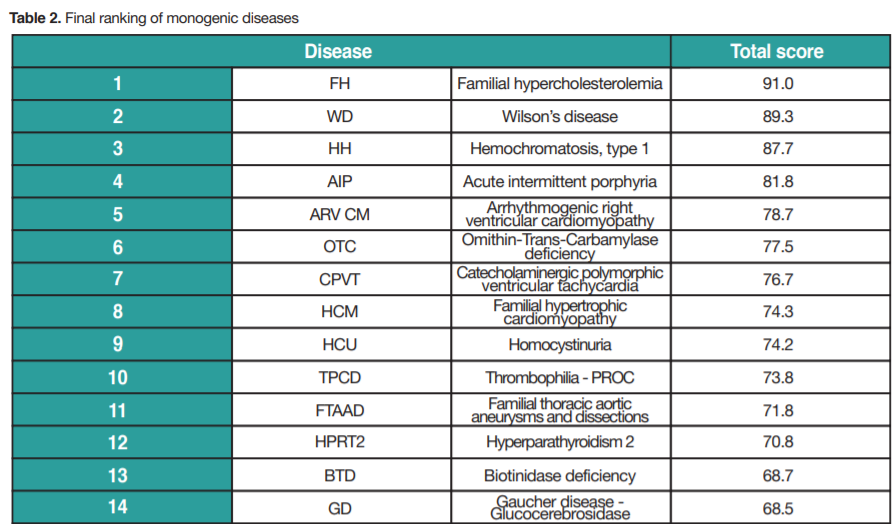
What are the most suitable genetic diseases for enabling #prevention among healthy individuals?
We've ranked diseases to find out!
For more, check out the poster poster presentation!
#ESHG2020
How do you select diseases for predictive genetic testing such that you:
1) enable prevention
2) do not create 'patients-in-waiting'; and
3) do not burden public healthcare system?
Check out this poster at 13:00 to find out!
#ESHG2020
I you are interested in #clinical#genetics, you should definitely check out the poster of Dr. Robert Koesters at 13:00. We have ranked low-penetrant diseases based on their actionability for inclusion in predictive genetic testing
#ESHG2020
However, while in principle this raw genomic data can be reused at a later time for guiding medical decision-making, it is unclear whether European medical institutions are willing to provide clinical services based on externally generated genomic data.
Main takeaway from @shaman_ns's talk at #ESHG2020. Genome-sequenced individual should be seen as the data owner, particularly in the context of the #GDPR. As such genome-sequenced individuals have the right to access their raw genomic data.
Are European clinical and genomic research institutions prepared to handle data access requests from sequenced individuals (i.e. right to data portability)? Other GDPR requirements? (e.g. right to be forgotten) #ESHG2020#Access#GDPR
Hundreds of thousands of genomes and exomes have been sequenced in Europe. And there is significant unrealised sequencing capacity. @shaman_ns at #ESHG2020
“We started with a simple question: are genome/exome sequenced individuals able to access their data?” @shaman_ns at #ESHG2020
(If you are interested to read the full publication on which this presentation is based, you can find it here):
https://t.co/5dhNDCX1t8
In a few minutes, @shaman_ns is going to talk about personal genome data access and retention policies for genome sequenced individuals in Europe! We are all looking forward to the presentation, waiting mode is on :)
#ESHG2020
“Because of the manifold possibilities to reuse genomic data, enabling sequenced individuals to access their own raw (uninterpreted) genomic data is a highly debated issue,” says @shaman_ns#ESHG2020#genomedataacess
Most respondents got this right (it's 500k)! To find out more about trends in the current and projected WES/WGS capacity in Europe, watch the talk by @shaman_ns in the evening session "C16 - The Interplay of Law, Policy and Genomics"
#ESHG2020