Receiving 12% of our foreign buyer purchases, Texas was the #3 destination, where international buyers primarily come from Mexico, India, and China, with the majority already residing in the U.S. and purchasing a primary residence.
Nearly two-thirds of agents who are REALTORS® (64%) volunteer in their communities every month and 84% made charitable donations over the past year, according to the 2026 Community Aid and Real Estate (CARE) report. https://t.co/W04ETWRcty
Whether paid by buyers or sellers, transfer taxes raise the cost of moving. In New York, a 1% tax adds $10,000 to a $1M home sale, reducing affordability for roughly 17,400 households statewide.
https://t.co/S086vRTrxf
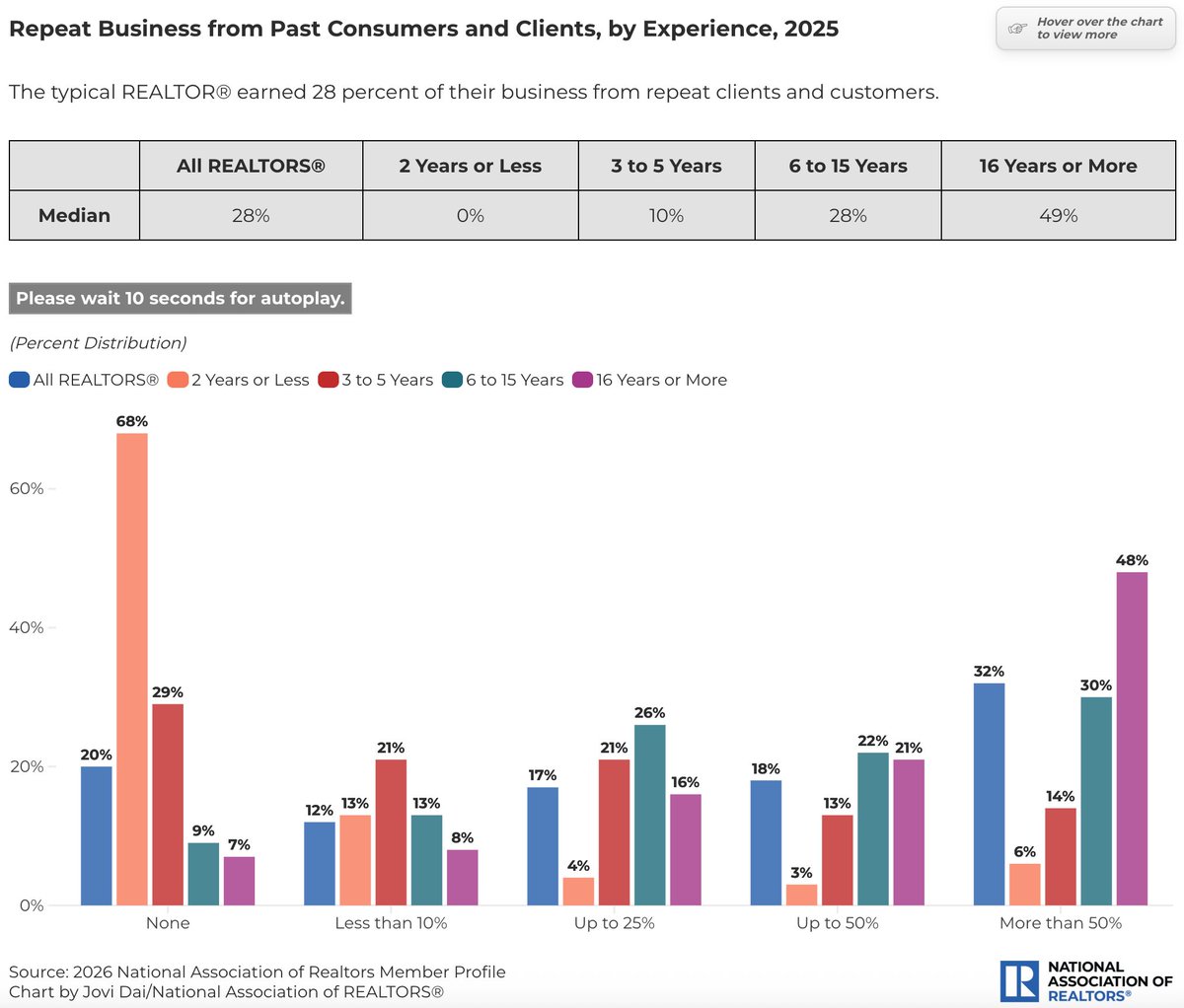
NAR’s 2026 Member Profile shows affordability remains the top challenge, cited by 27% of REALTORS®, and client relationships drive business, with 50% coming from repeat clients and referrals.
Check out interactive tools to see key features of the report: https://t.co/SID7sr6g1o
The economy continued to grow in Q2 2026, with strong job gains and steady unemployment. But inflation kept mortgage rates in the mid-6% to 7% range, weighing on home sales and affordability.
Find more in the Residential Real Estate Market Snapshot: https://t.co/SIgY1KrN39
Data centers are reshaping communities — what does the data say about real estate?
At the NAR Research Summit: Data Centers & Real Estate, experts will examine the relationship between data center growth, local housing & commercial markets. Register today!
https://t.co/G2X6GmifIK
New York’s $1M mansion tax threshold hasn’t changed since 1989, though inflation would put it near $2.7M today. With 49% of Manhattan homes worth $1M+, transfer taxes add to a triple lock-in effect.
https://t.co/S086vRTrxf
Catch up on the latest housing data and insights from NAR Research with our monthly Research Update. REALTORS® can use this data to gauge current demand trends and anticipate market shifts, utilize the affordability data to identify pricing patterns.
https://t.co/6VITrguJDn
NAR's new Commercial Real Estate Demand Index offers an early look at where demand for office, industrial, retail, and multifamily properties may be headed next and which markets are gaining the strongest momentum.
https://t.co/0WQpzYDRrj
Buyers may be finding more negotiating power lately, but strong job growth in a handful of states could mean more competition is soon coming. Read more in NAR’s latest pending home sales report. #NARPHS
https://t.co/hn7NPseowH
National data can tell a big story, but how can REALTORS® make it meaningful at the local level? NAR Chief Economist Lawrence Yun explains how agents can put national trends into local context.
Drop your questions in the comments or email [email protected]
NAR’s new Commercial Real Estate Demand Index helps commercial REALTORS® identify markets with growing demand. Compare 306 metro areas, track trends over time, and pinpoint the drivers behind local growth: https://t.co/b4vQnr3epk
Where is commercial real estate demand building? NAR’s index measures jobs, migration, and economic growth across 300+ metro areas. St. George, UT leads at 128, while Raleigh-Cary, NC ranks at 121.
Check out your market: https://t.co/0fnaTASaal
At the local level, several markets posted notable year-over-year gains in pending home sales. Among the 50 largest metro areas, the following 10 markets posted the biggest annual increases in pending home sales, according to data from https://t.co/lAyYmKQtrT® Economics: #NARPHS
“Pending contracts are 30% below their pre-pandemic 2019 level, while payroll employment is 5% above. That gap points to sizable pent-up demand that should be unleashed in the coming years as more supply reaches the market and affordability improves,” added Yun. #NARPHS
“The highest mortgage rates of the year hit right in the middle of summer, and that's pulling back contract signings,” said NAR Chief Economist Dr. Lawrence Yun. #NARPHS
Buyers are becoming more selective: 16% waived inspection contingencies in July, down from 23% a year ago, while 21% waived appraisal contingencies. Only 6% of contracts were terminated.
Find more market metrics: https://t.co/I6os6pmQnO