Hernan Diaz’s new novel is ambitious, experimental, and takes on the nature of the universe itself as its subject. “Regrettably, the grand intellectual ambitions of ‘Ply’ finally overwhelm the other desiderata of fiction,” Kathryn Schulz writes. https://t.co/G21LhG0jzW
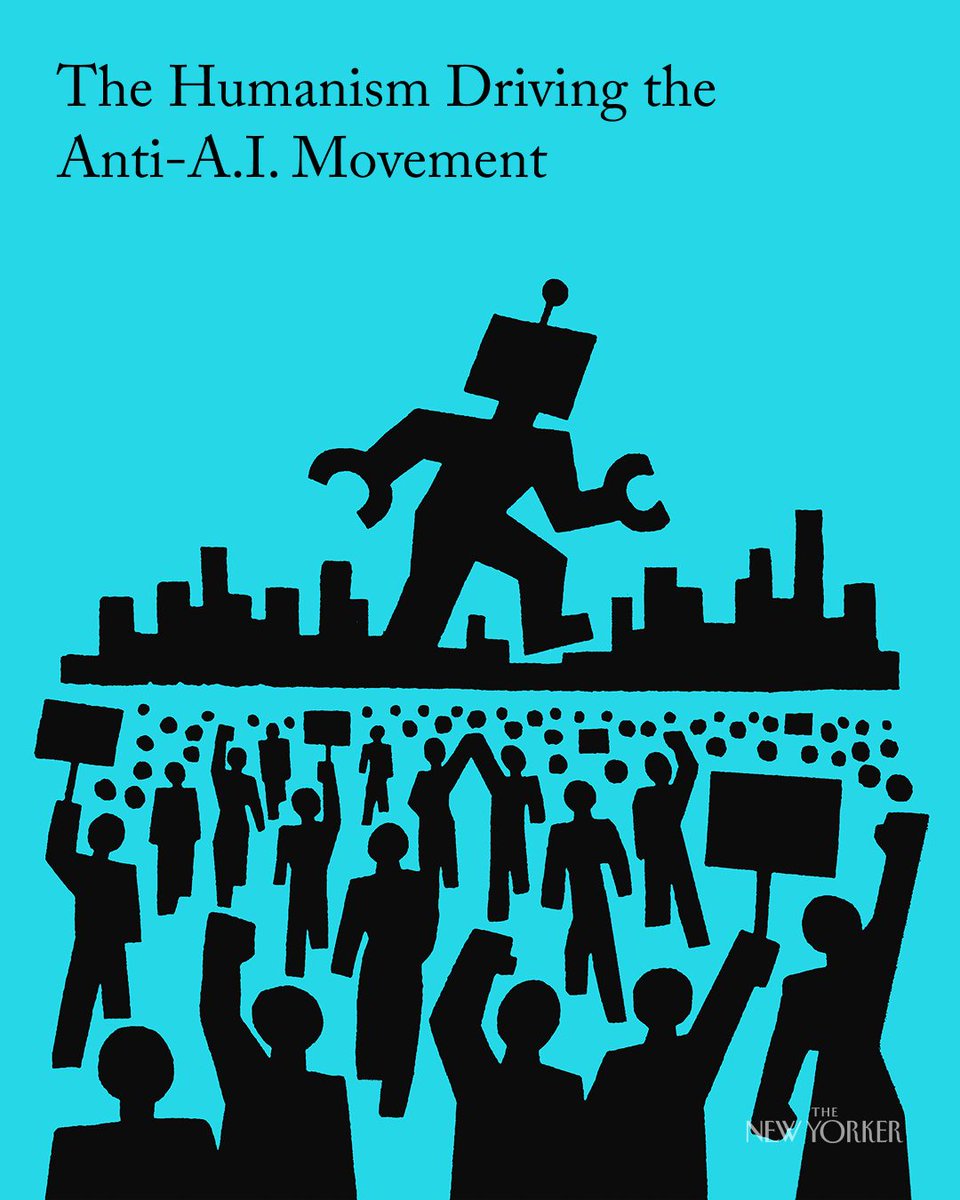
At the Pro-Human Assembly, a bipartisan A.I.-critical gathering held in Washington, D.C., most attendees did not talk politics. When asked why they had gone, few mentioned economic inequality or poor regulation. For the most part, the going concerns were not about matters of policy so much as they were about matters of philosophy: concerns about A.I.’s effects on language, art, spirituality, education, and, fundamentally, humanity.
“In one way or another, everyone I spoke with . . . was expressing something that American politics, in its more recognizable guises, cannot quite wrap its arms around,” Becca Rothfeld writes, “a vision of what they thought a human life was for.” Read her report from the front lines of the anti-A.I. movement: https://t.co/wvmH2zJzW5
In the 1970s and ’80s, the photographer Joseph Szabo captured the insouciant intimacies of teen-agers, before Instagram, A.I., and TikTok. See some of his photos, which have been collected in a new book.
https://t.co/jzd3WUJCj3
Lisette Lojo spends her nights trying to make sure homeless New Yorkers in Penn Station have a place to eat, sleep, and shower. But only if they want those resources. https://t.co/t1mavb3BSe
At the Pro-Human Assembly in Washington, D.C., attendees talked less about jobs and policy, and more about their philosophy of life. https://t.co/MoZFOQS8FW
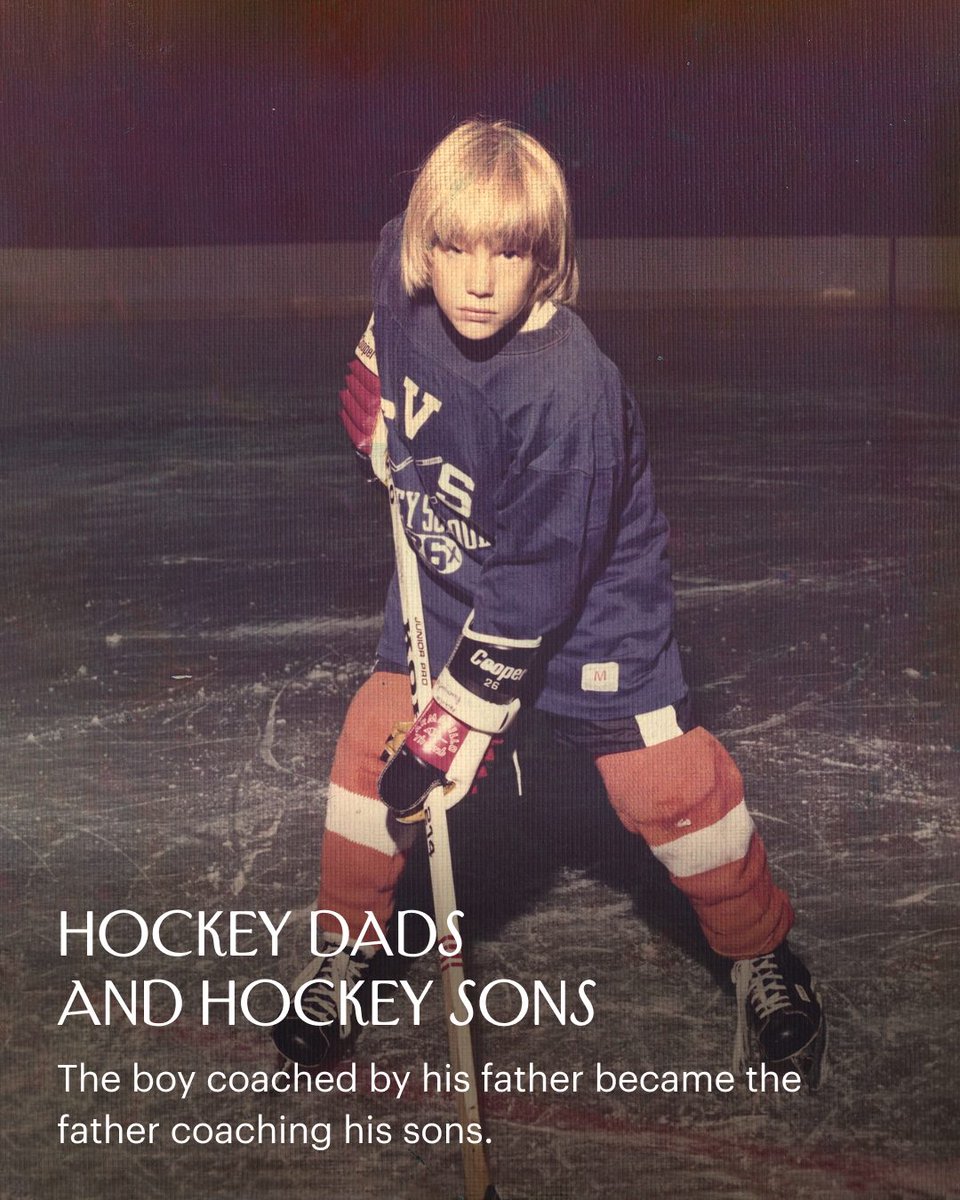
Nick Paumgarten reflects on coaching his son’s hockey teams, after his father had coached his: “Was I living through my child? Of course I was.”
https://t.co/02l8vlw4ni
“When I was growing up, in the early 2000s, ‘conservative’ meant conservative,” Jennifer Wilson writes. “The right was the party of George W. Bush, abstinence-only sex education, and Christian evangelical teens who recited chastity pledges and wore promise rings.” What changed? In this week’s issue, Wilson interviews the founder of Make America Hot Again; goes lingerie shopping with the editor of Evie, the “conservative Cosmo”; and uncovers what’s behind the right’s raunchy rebrand: https://t.co/16UrhcV2Hc
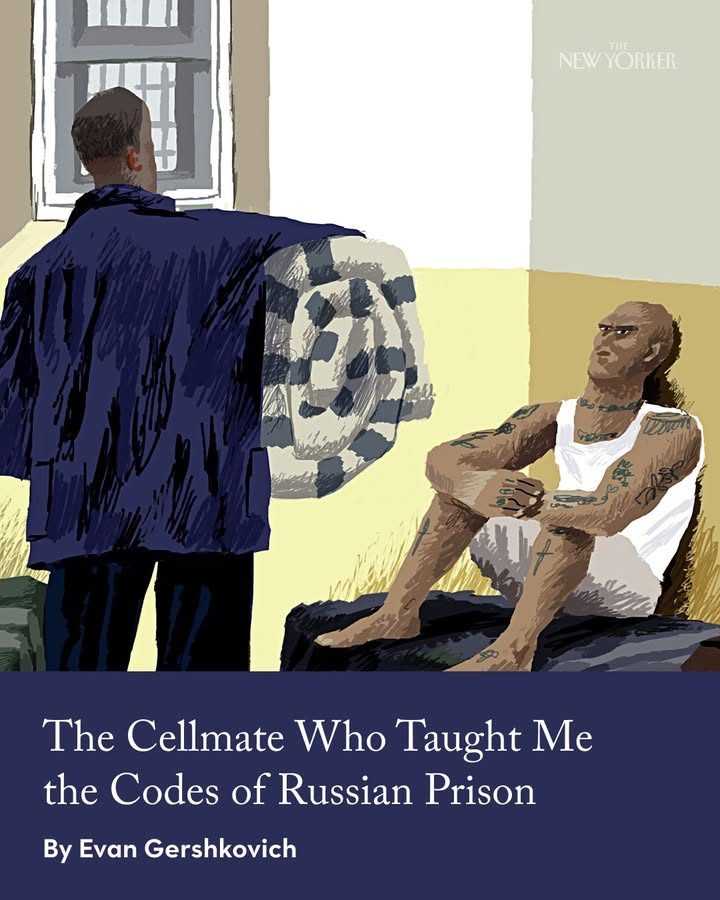
When the journalist Evan Gershkovich was first detained in Moscow’s Lefortovo prison, under accusations of espionage, he was placed in solitary confinement. Then, one day, guards arrived at his cell and told him to collect his things. They took Gershkovich to cell No. 85, where his new cellmate, called Seryoga to protect his privacy, refused to shake his hand and instead greeted him by asking, “What’s the trouble?” Gershkovich didn’t understand the question.
“What’s the trouble?” is a way of asking which article of the Russian criminal code the prisoner had violated. This—along with which prisoners it was acceptable to shake hands with, how to use the bathroom, and cell cleanliness—were all things that Seryoga explained to Gershkovich during their time cohabiting. Read more about Gershkovich’s experience with his first cellmate: https://t.co/gd7acqHHYH
Whatever book you pick up, it’s likely to make you feel better—maybe even a whole lot better. “In a secular age, I suspect that reading fiction is one of the few remaining paths to transcendence, that elusive state in which the distance between the self and the universe shrinks,” Ceridwen Dovey writes, in “Can Reading Make You Happier?,” which was published in 2015. Dive into the research behind the therapeutic effect of books: https://t.co/H94aQp3jtK
Nick Paumgarten started playing hockey in the third grade. “Nothing else made me so assertive, combative, or self-righteous, or brought me so much animal joy,” he writes. Not long after Paumgarten’s first season, his father began coaching his team.
When Paumgarten later had two sons of his own, there was no burning preconception that they would play hockey. But when Oli, his older son, turned three, Paumgarten and his wife bought him his first pair of skates. Soon enough, Paumgarten was the assistant coach for Oli’s team and, later, for his brother James’s. “I hadn’t set out to coach my sons,” he writes. “Still, it was pride, of a kind, that drew me to the bench. . . . But eventually a dad’s tutelage sets in motion the familiar cycle of expectation and disappointment.” Read Paumgarten’s reflection on being coached by his dad, and on coaching his sons: https://t.co/3kGHSeoAvK