National Health and Medical Research Council: Australia's peak body for health and medical research, evidence-based health guidelines, and health ethics.
2027 NHMRC BIENNIAL AWARD NOMINATIONS OPEN NOW! Do you know a group or an individual who has made a special contribution in an area of importance to NHMRC?
Submit your nominations by 5:00PM AEDT, Friday 11 December 2026: https://t.co/BJhTdfxwFr #NHMRC#NHMRCFunding #BuildingAHealthyAustralia #BiennialAwards #NHMRCBiennialAwards
The NHMRC Research Quality Award celebrates individuals, teams and organisations helping lift the standard of Australian health and medical research, such as the 2025 recipient @Guunumaana_heal of The George Institute.
Submit your nomination through our website: https://t.co/Ql1QdiZUEo
#NHMRC #NHMRCFunding #BuildingAHealthyAustralia #BiennialAwards #NHMRCBiennialAwards
What shapes our mental health across generations?
A new NHMRC-funded study will follow more than 100,000 adults to explore how family history, life experiences and social circumstances influence mental health and wellbeing over time.
Read more: https://t.co/9WzsIALN5h
💡 Did you know?
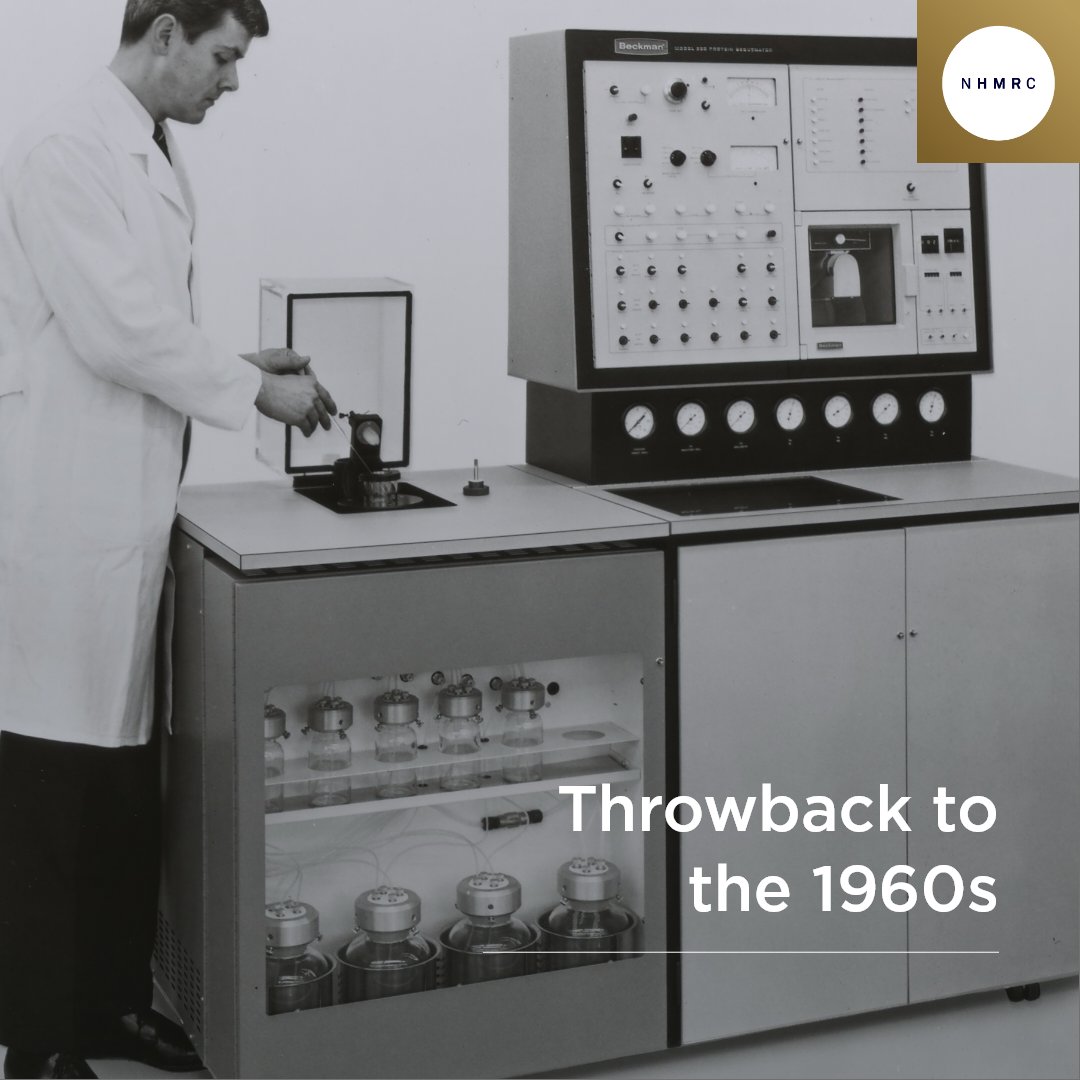
Throughout the 1960s, NHMRC's investment in health and medical research reached new heights, with national research funding entering the million-dollar range for the first time. Read more about this milestone and other moments from NHMRC's 90-year history via our timeline: https://t.co/T7Z3POgGRc
Tracker is out now!
In this edition, read about our next Speaking of Science event, Consumer Involvement Award details and funding opportunities – plus more!
Head to our website: https://t.co/Qx32phUEZv
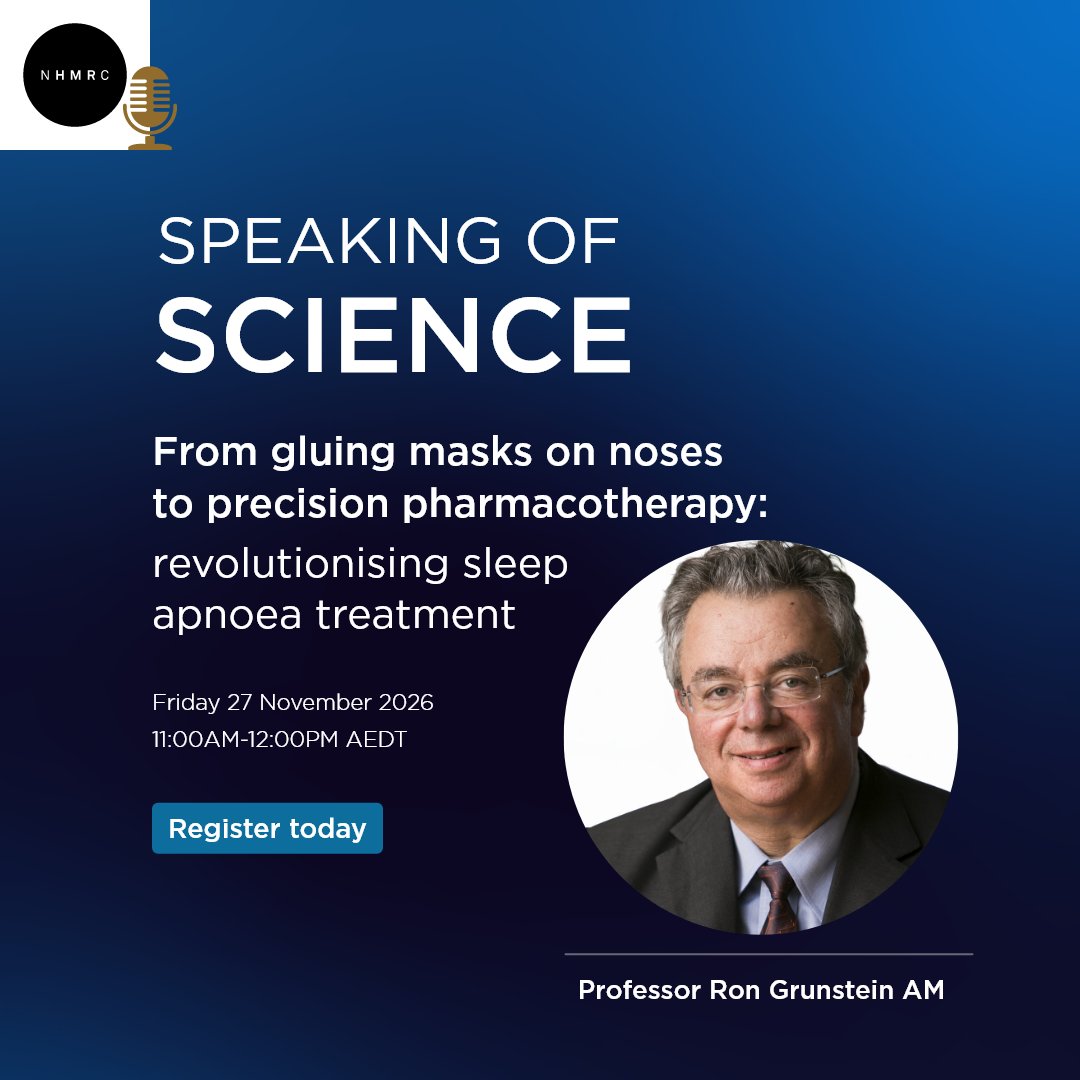
In 1981, NHMRC funded researchers in Sydney found a better way to treat sleep apnoea: CPAP. Join Professor Ron Grunstein AM of The University of Sydney for Speaking of Science to hear how this Australian innovation went from lab to bedside. Register: https://t.co/F8dyVOhGW4
Could ordering a virtual coffee help stroke survivors regain confidence in real-world conversations?
NHMRC-funded researchers are exploring how virtual reality and artificial intelligence could support communication after stroke.
Read more: https://t.co/ennXj39zgM
There is a significant gap in the provision of Indigenous mental health projects in remote areas. Professor Susan Rees of @UNSW leads a research translation project that will address this issue, aiming to substantially improve the mental health of at least 720 men and adolescents across 4 remote communities.
#Movember2026
Can we reduce our risk of dementia in midlife?
NHMRC-funded research has found that personalised support through general practice nurses may help people act on risk factors linked to brain health.
Read more here: https://t.co/g5PeaKOrQj
🕰️ Throwback to 1969 when NHMRC released the first national code to guide the use of animals in research. The code established clear expectations for humane treatment, scientific justification and ethical oversight, providing a framework to support both high quality research and animal welfare. Exploring 90 years of NHMRC's through our timeline: https://t.co/6iixWCIw9l
#ShineALightOnLungCancer – Professor Kwun Fong of @UQ_News leads the CuRE Centre of Research Excellence to prevent and detect curable lung cancer. The project aims to Improve lung cancer outcomes by reducing smoking rates, expanding screening access, understanding risks to non-smokers and trialling virtual care and optimising diagnostic bronchoscopy techniques #LungCancerAwarenessMonth
Great research doesn't happen in isolation.
Professor Yvette Roe believes the most effective research is built in partnership with communities, helping ensure that local knowledge, priorities and aspirations are part of the solution.
In this edition of Meet the Experts, Professor Roe reflects on the power of community-led research and its role in creating better health outcomes for future generations.
Visit our website to watch the interview: https://t.co/eZegoMnFPt
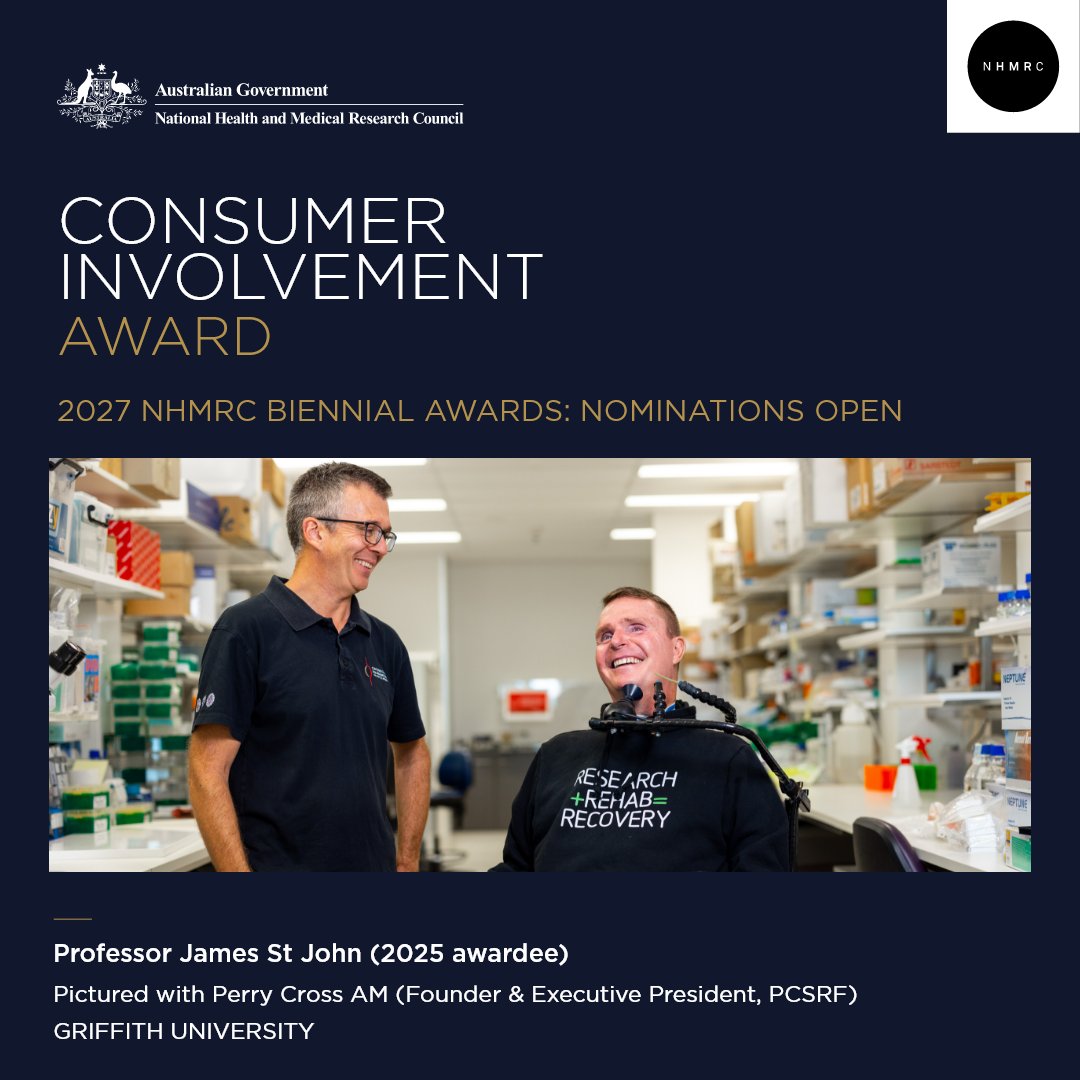
Do you know someone helping put community voices at the heart of their research like Professor James St John of @Griffith_Uni? Submit your nomination for the 2027 NHMRC Consumer Involvement Award by 5:00PM AEDT, Friday 11 December through our website: https://t.co/YpxW62i0AQ
NHMRC-funded researchers, led by @Dr_Shuai_Li are leading the way in advancing breast cancer risk assessment by uncovering hidden insights within digital mammograms.
Read more from last year’s 10 of the Best publication: https://t.co/Ssrs7Sg3Hx
What did 2025–26 look like at NHMRC?
Our latest Annual Report is now available, highlighting a year of investment in health and medical research, research translation and our work to support a strong and trusted Australian research sector. You can access the report here:
https://t.co/dvOi9ug3cY
Over the coming months, NHMRC's grant management platform will progressively become known as NHMRC Grant Management System.
What's changing? The name and look.
What's staying the same? The platform and current grant processes.
Find out more: https://t.co/xcNF2yhwn8
Tracker is out now!
In this edition, read about a new name for NHMRC’s grant management platform, nominations for NHMRC Council, Science to Art Award details and funding opportunities – plus more!
Head to our website: https://t.co/TobabKWpkn
Special Tracker out now!
Nominations are now open for NHMRC Council, Principal Committees and Joint NHMRC-MRFF Advisory Committees. Head to our website to find out more: https://t.co/rou2NhG5Ky
Research led by @WEHI_research and supported by NHMRC aims to make cell and gene therapies more feasible for people who need ongoing immunosuppression. This includes people with rare immune disorders, organ or stem cell transplant recipients and patients receiving cell therapies for cancer.
Read more here: https://t.co/2KWTHB9G5d
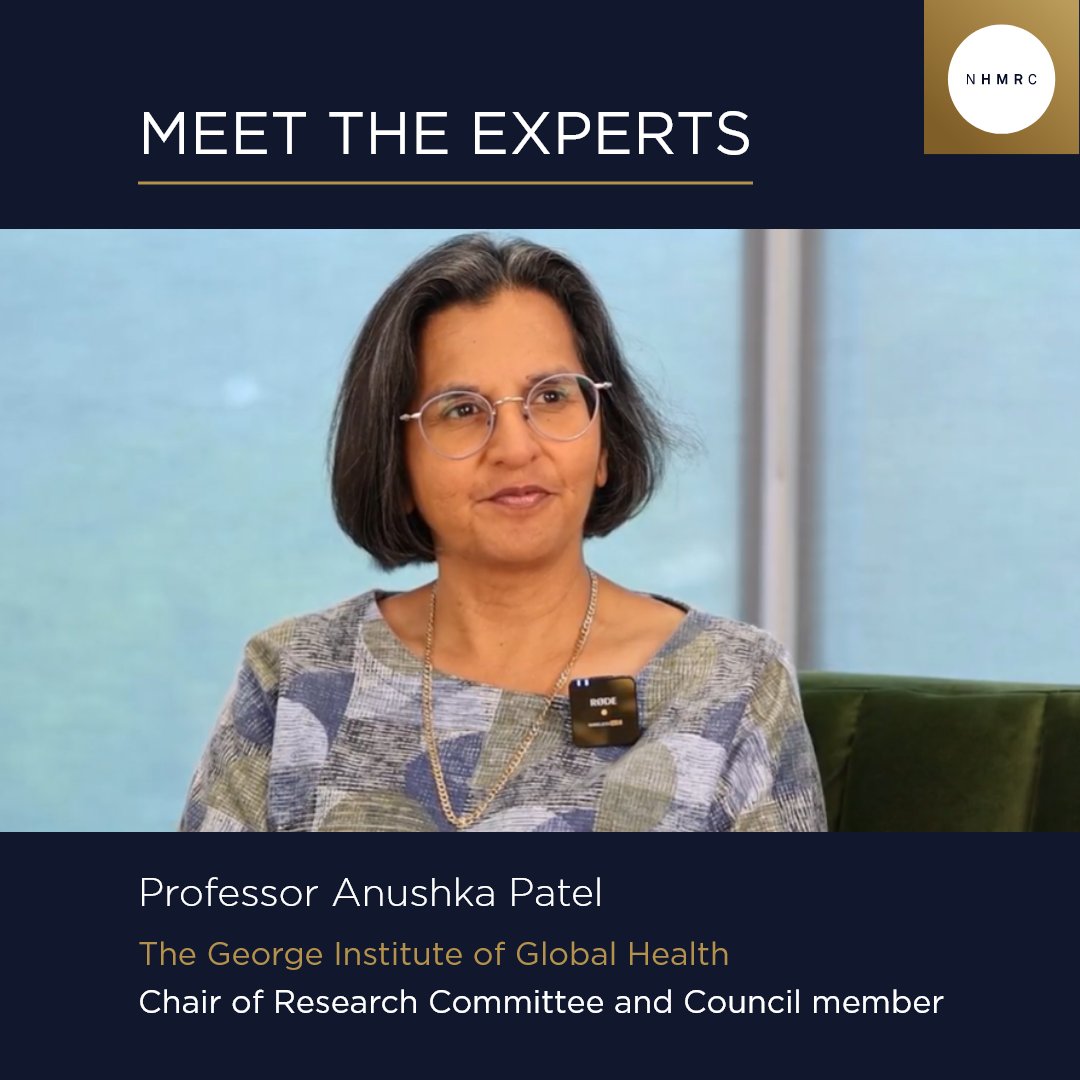
What happens when research moves from the lab into everyday healthcare?
For Professor Anushka Patel, seeing evidence translated into better care for patients inspired a career in medical research.
In this edition of Meet the Experts, Professor Patel shares why impactful research matters, and why investing in future researchers is key to improving health outcomes for generations to come.
Visit our website to watch the interview: https://t.co/flVD5grDRb