#SoutheastAsia is a hotspot of geological activity and natural hazards - but what if there was a way to tap onto that geothermal energy and to sequester carbon?
Join Asst Prof Luca Dal Zilio from @EOS_SG and ASE as he shares more at AlteraCOP on the 21st of November at 5.30pm!
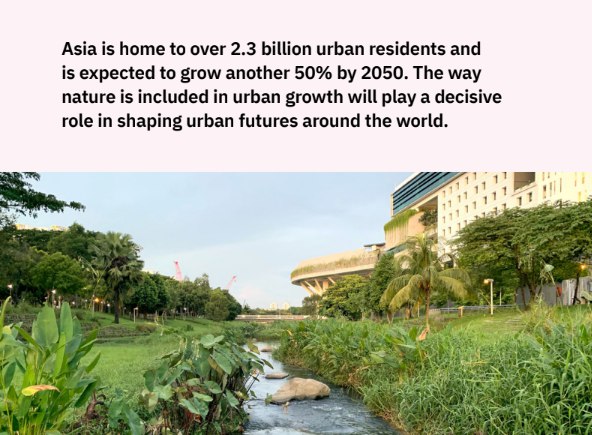
The Asia NATURA report - a comprehensive report which examines nature-based solutions in our respective countries and cities - has launched:
🔗 https://t.co/Dc8TkeX3Ac
Dr @erichwolff and Prof Perrine Hamel are lead authors in the report.
How can #biodiversity form a good foundation for pragmatic and sustainable solutions to #climatechange and #environmental problems around the globe?
Join us as we learn more from Asst Prof Pierre Taillardat and other speakers at @altercop on the 18th of November!
#climatechange is the hot topic these days - but how badly will urban areas have it? And how can we help our most vulnerable communities weather #climatechange and #globalwarming ?
Join us as we learn more from Dr Emma Ramsay as she shares more at #AlterCOP on the 12th of Nov!
Why is there a gap between #climate policy, and #biodiversity? What does it mean to be a 'City in Nature'?
Join us as we learn more from Nasry as he shares more about global biodiversity policies in Singapore's Green Vision at @altercop on the 18th of November!
#climatepolicy
Nearly 50% of protected areas in #SoutheastAsia have experienced forest loss in recent years - and this is almost always due to a lack of proper funding - Asst Prof Zeng Yiwen who leads the SCoPS Lab share some insights on funding #habitatconservation and projects with us.
Financing and nature based solutions may not sound like an obvious combination to combat #climatechange - but PhD candidate Alina and her colleagues have found several working examples of #financial instruments which create a positive loop on #naturebasedsolutions#climatechange
Four months ago, a magnitude 7.7 earthquake struck Myanmar, causing widespread damage in several countries. Watch this video to see how the hashtag#EOSsg Remote Sensing Lab produced damage proxy maps to quickly identify areas likely affected by the earthquake. In the wake of earthquakes and other natural hazards in the video, these maps provide timely information for disaster response and humanitarian aid.
Learn more about the EOS Remote Sensing Lab: https://t.co/AkX3pbKbSI
@ntu_ase #NaturalHazards #DisasterResponse #HumanitarianAid #DamageProxyMaps #RemoteSensing #DisasterManagement
Dr Clarence asks ASE and @EOS_SG#PhD candidate Marlenaabout her recently published paper, showing how mud from land (think land reclamation or heavy rain) can stress corals and slow down reef recovery.
It’s #WorldOceansDay (8 June)! 🪸Coral reefs are vital ecosystems. But a study reveals that mud from land can harm these communities, affecting their recovery from #ClimateChange and coral bleaching 👉 https://t.co/2C1n1eYcGs @kylecoral
Interested in doing a #PhD in #volcano petrology @ntu_ase and @EOS_SG ? 🌋 We have an exciting project looking into timescales and storage conditions in basaltic magmatic systems. For more info contact [email protected] or visit https://t.co/y43hn3PAGy
A study conducted by @NTUsg's Centre for Climate Change & Environmental Health, #EOSsg, @ntu_ase, and @NTU_LKCMedicine shows that stricter air pollution controls in SE Asia could prevent up to 36,000 premature deaths from ozone pollution annually by 2050.https://t.co/xL0kSty7ei
#phytoplankton is essential in our #oceans but PhD alumni Dr Clarence Sim and his colleagues have discovered how nuanced and critical the #Arctic under-ice bloom is to the ocean's #ecosystems - and how climate change could shift this delicate balance.
The ancestors of #indigenous South Americans adapted so well to the harsh and diverse environments, that it led to their wide #genetic diversity today. Dr Amit and Prof Kim from the Population Genetics lab at @scelse_sg uncover some key findings in their latest #researchpaper !