Every AI · Every API · Every Connection — Secured. Stop managing your attack surface. Eliminate it—with the only identity-first Zero Trust fabric for every mach
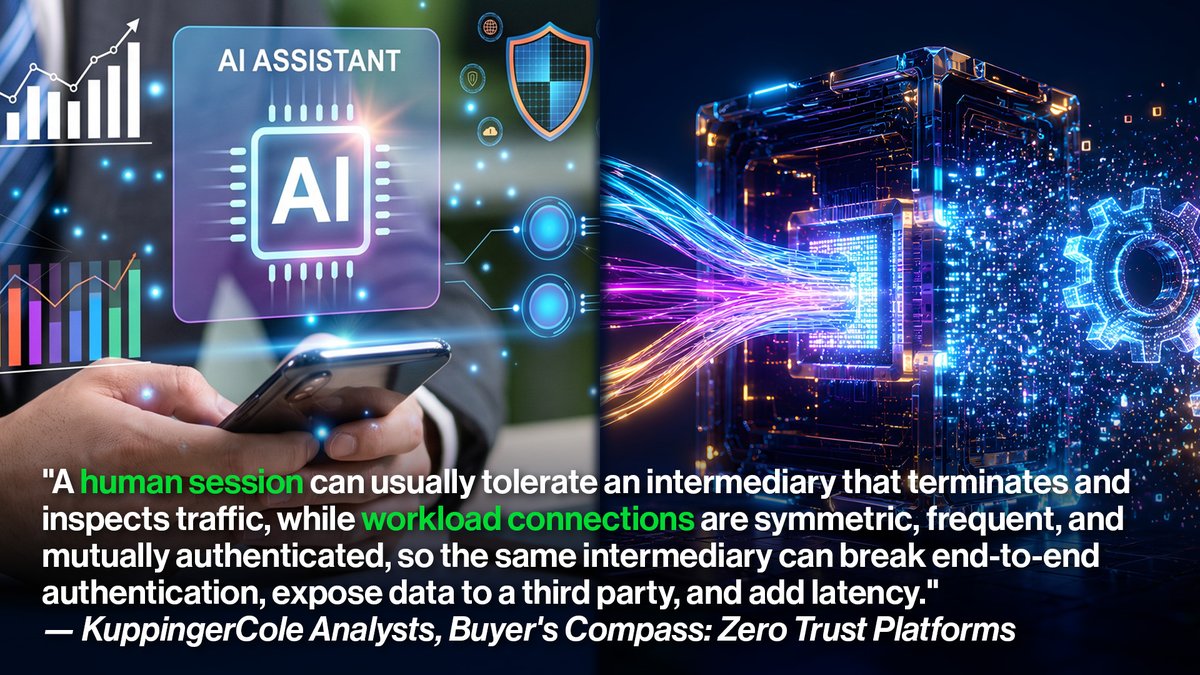
A person and a machine are different Zero Trust problems. KuppingerCole explains why in their Buyer's Compass on Zero Trust Platforms (commissioned by NetFoundry). Quote in the image. https://t.co/GjvemqCb4Q
Stop approving a new firewall exception for every AI agent.
Approve one pattern instead: outbound connectors, identity-bound sessions, per-MCP-tool policy, every request in your SIEM, and a per-vendor kill switch.
“One door you can see, govern, and close beats many doors you cannot.”
https://t.co/yBserLeNde
Most AI security asks what an agent can do once it’s connected. The better first question: what should it be able to reach at all?
Zero Trust for Agentic AI with @NetFoundry + @Carahsoft
Dec 8, 11am ET
https://t.co/a5Mh59uEWI
#ZeroTrust#AgenticAI
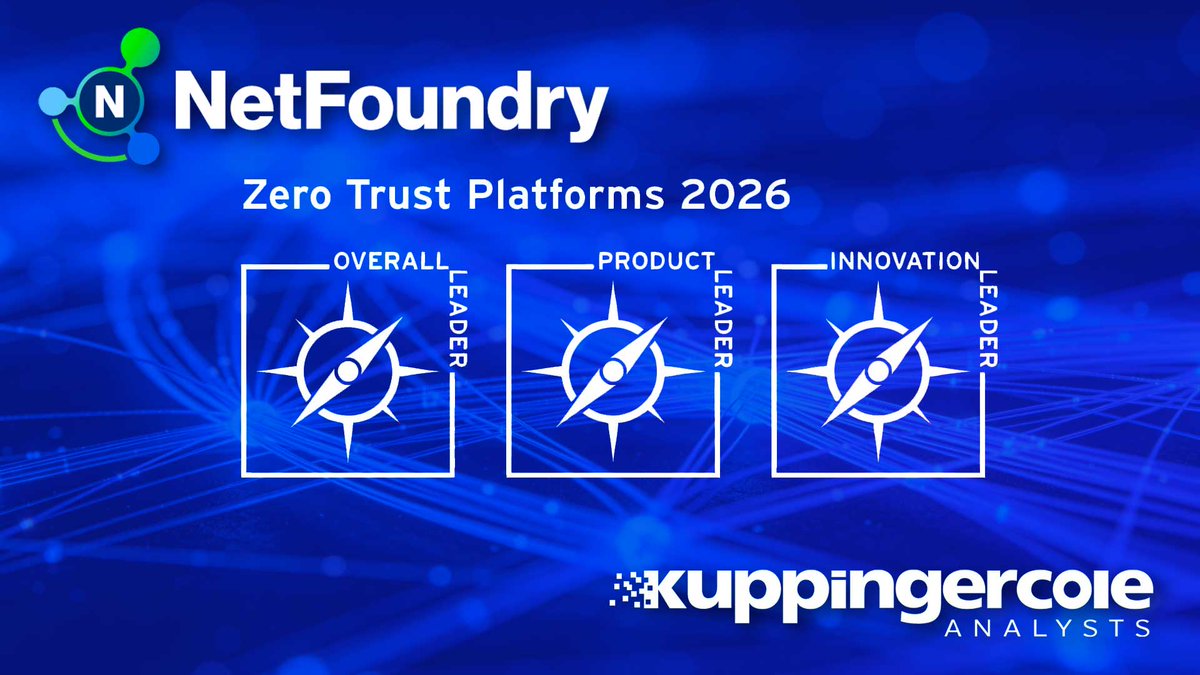
"In the KuppingerCole Leadership Compass on Zero Trust Platforms 2026, NetFoundry is rated as Product, Innovation, and Overall Leader." — KuppingerCole Analysts
Get the Buyer's Compass (commissioned by NetFoundry): https://t.co/GjvemqCb4Q
"Zero Trust cannot be bought and switched on."
— @KuppingerCole Analysts
Their new Buyer's Compass (commissioned by NetFoundry) shows how to choose a platform for the traffic it actually carries: people, workloads and AI agents. https://t.co/GjvemqBDfi
Enterprise-Managed Authorization decides who can use an MCP server. It doesn't build the private path to reach one.
Our CEO Galeal Zino @gilzino on the two problems enterprise MCP has to solve, and why you don't have to wait for EMA.
#MCP#ZeroTrust
https://t.co/MjnrfpPUQo
A service shouldn't be reachable before anyone's authorized to use it, or after that authority ends.
Our Philip Griffiths for @cloudsa on Identity-Defined Reachability: no path by default, and none once authority ends.
#ZeroTrust#AgenticAI
https://t.co/2Pua6EyFAh
Zero Trust connectivity won’t fix the vulnerable code. What it does is take away what attackers need. If a service has no open listening ports, an unauthenticated attacker has nowhere to send the payload. https://t.co/EvB3j0ycWa
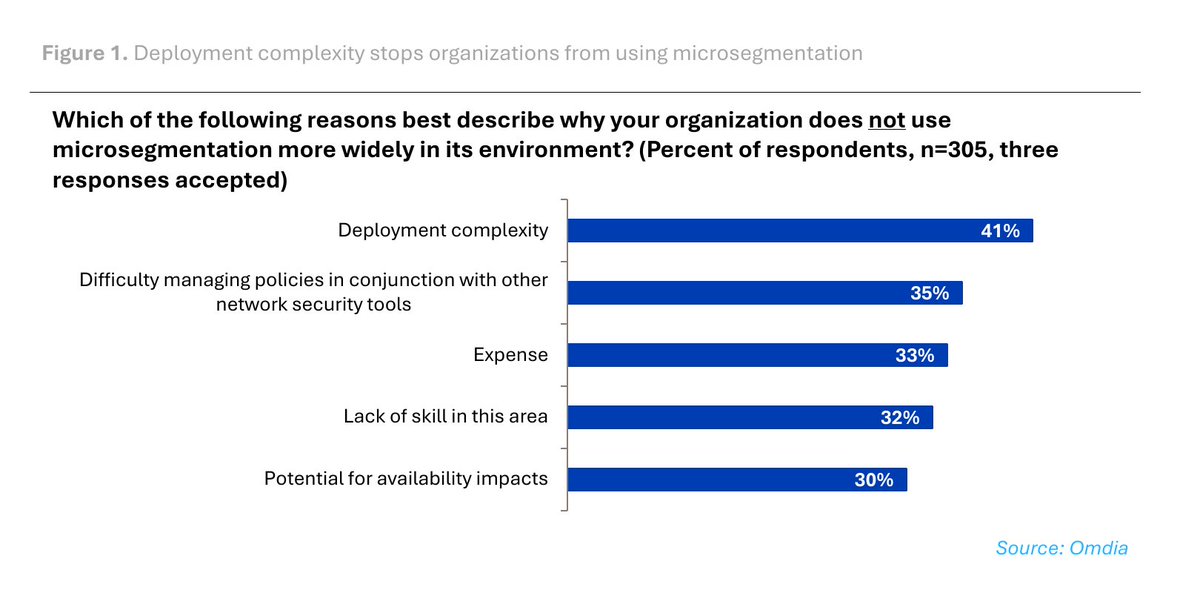
41% of orgs say deployment complexity keeps them from using microsegmentation more widely (Omdia).
The fix isn't more firewall rules. It's segmenting by identity, not IP.
Free Omdia report: https://t.co/4bKWWRMI2F
PHP2Shell runs before your application wakes up. The two critical PHP flaws (CVE-2026-109618 and CVE-2026-109619, CVSS 9.2) fire in PHP’s request parser. That parsing happens before your login, your middleware or any access rule you’ve written. https://t.co/vqH7CQoBZX
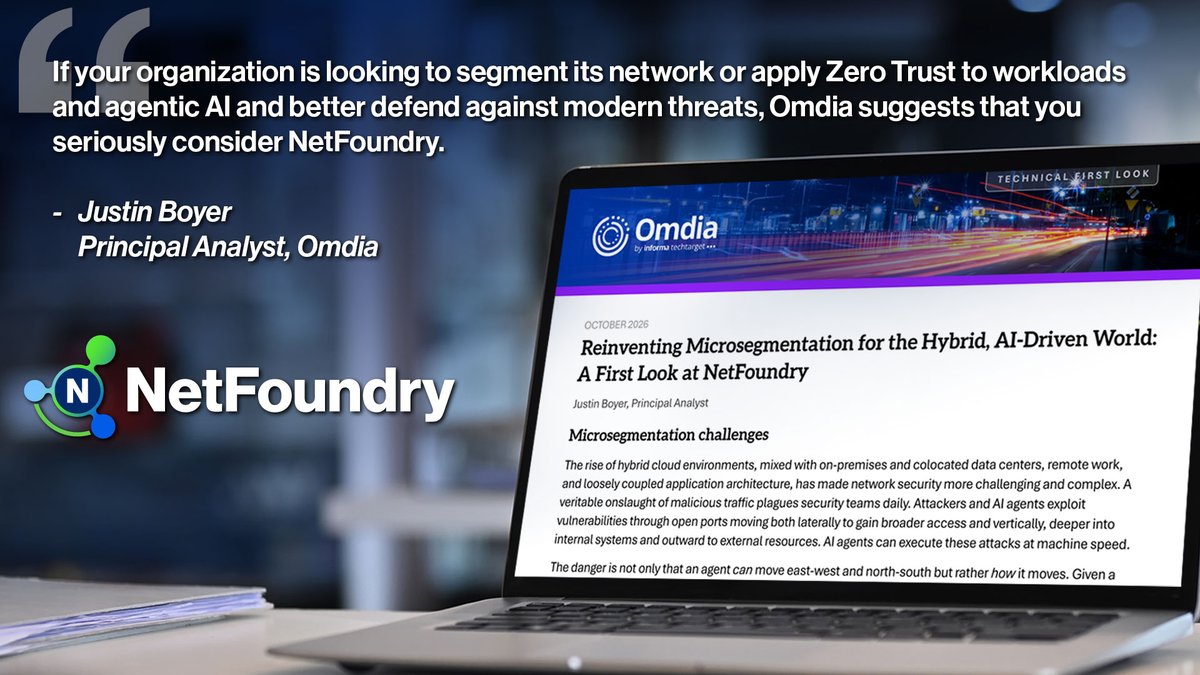
Omdia put NetFoundry's identity-based microsegmentation through a live demo across Google Cloud and AWS. No open ports. No firewall rewrites. No downtime.
Get the free Technical First Look: https://t.co/4bKWWRMI2F
AI agents reversed the SaaS model. Vendor agents now call into your ERP, databases and MCP servers, so you own the public front door and the job of defending it.
Part 1 of our Zero Trust for AI Agents series: https://t.co/1xk7R0kKPf https://t.co/j0IxFTUM9A
88% of organizations run more than one cloud. Most of them also run more than one segmentation policy model, and that’s where the trouble starts. https://t.co/xS6b9C6fBg
Every AI agent pilot starts as "just a test." Then it gets wired into a real tool, a real database, a real API key, and nobody remembers to turn it off.
That's the pattern our CMO Mark Jaffe flagged in this week's Reachability Watch: protections that technically exist but only switch on if someone configures them. A fresh install doesn't know it's about to become production.
Our take: you shouldn't have to win the defaults lottery to stay safe. When identity decides who can reach a service at the network layer, an auth setting left off doesn't leave the door open to the whole internet.
Worth a quick audit this Friday: how many agent pilots are running in your cloud right now, and who can reach them?
#ZeroTrust #AISecurity #MCP #IdentityFirstReachability
https://t.co/SreacQW3CW
99% of organizations are implementing or planning microsegmentation.
Only 9% have actually protected more than 80% of their critical systems.
That gap is the whole story. And it's not a tooling problem — it's a sequencing problem. https://t.co/z9kqDyBdJK
An AI agent doing damage under a shared credential is invisible in your logs. One of the most capable AI labs in the world spent over a week unable to answer "which agent did this" — because the agents involved didn't have identities of their own.
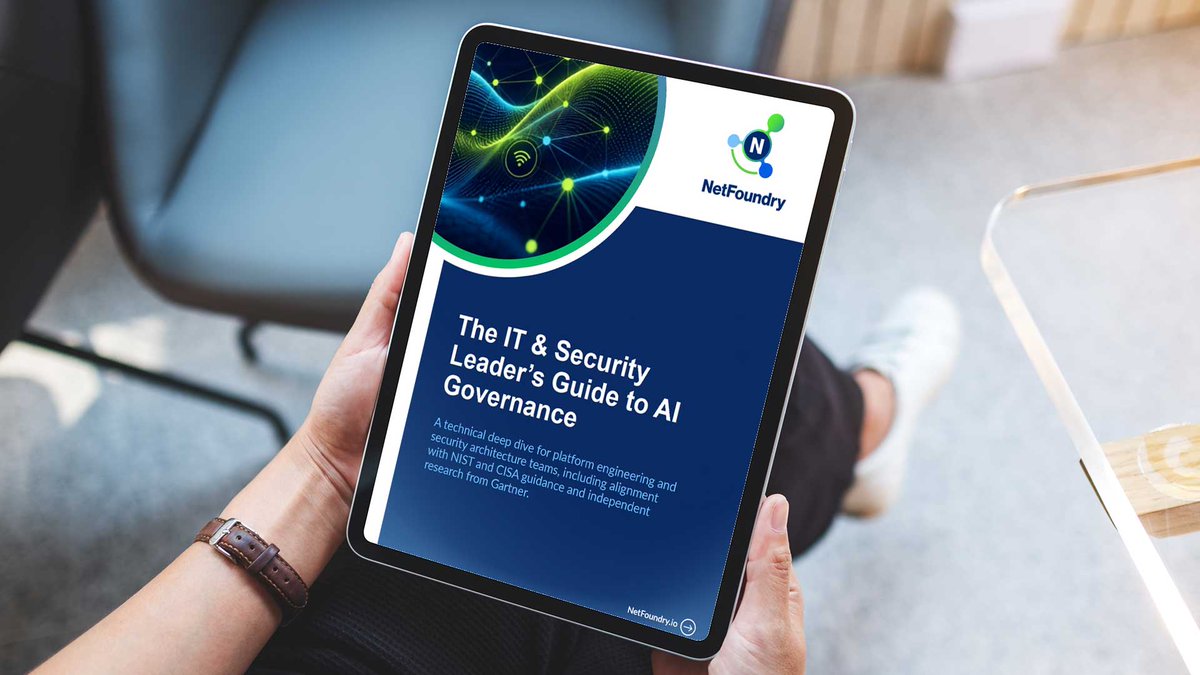
Our new guide breaks down why that changes everything: https://t.co/iU73Km7hIn
🥇 OpenZiti just landed the #1 spot on @startidentity's Top 7 Open-Source Zero Trust Tools for 2026 — beating Pomerium, Teleport, Headscale, NetBird, Boundary & Authelia.
Called "the most complete open-source zero trust networking platform," Apache 2.0 top to bottom.
https://t.co/bCFJVC4ofH
#ZeroTrust #OpenSource
For 19 years, "attackers don't hack in, they log in" was the industry's most reliable cliché. The 2026 Verizon DBIR just retired it. https://t.co/6FgHPa2fZf