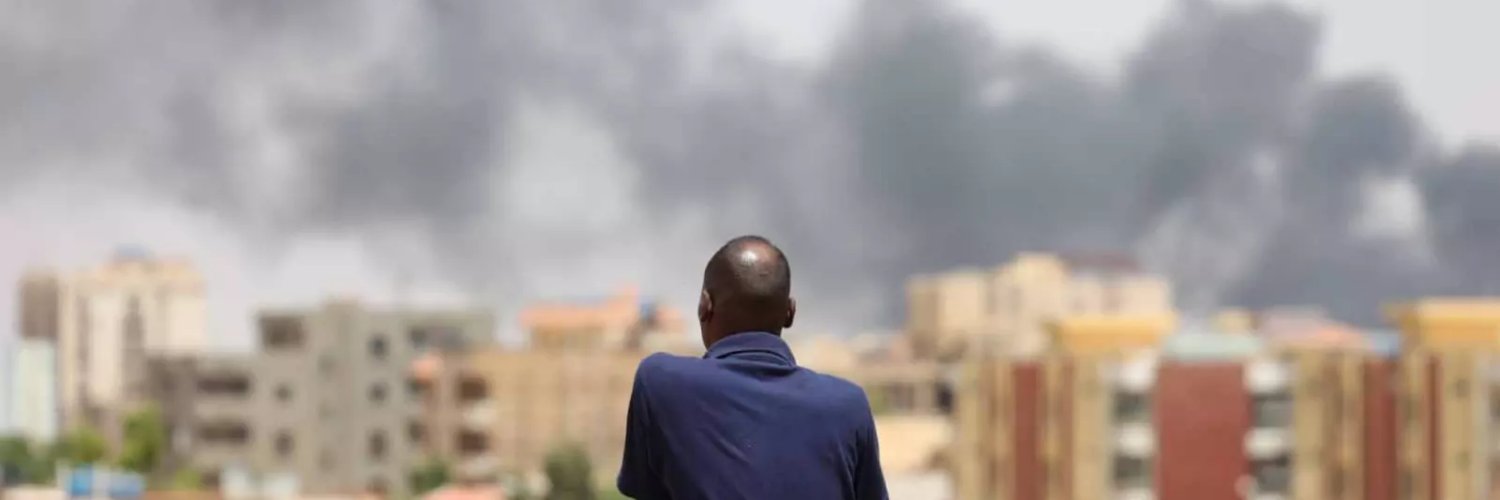
"Freedom – not a pause between violent raids, not a quota of aid trucks, not the right to rebuild ruins again – is the only end to this story that deserves the word peace."
Read Nour ElAssy's latest on the false promise of Gaza's ceasefire ⬇️
https://t.co/dUr42mV6Fr
🌳 Five years away from its self-imposed deadline, billions of dollars have been spent and billions more pledged, yet most of the Great Green Wall remains barren. This investigation explains why:
https://t.co/h6Uinln4WS
Colombia is in the midst of a dramatic surge in violence from armed conflict. Already this year, hundreds of people have been killed, tens of thousands trapped in their homes by fighting, and nearly 122,000 forcibly displaced. How did we get here?
Read our analysis. ⬇️
https://t.co/iuJBdG9tYb
The Afghan people and government overwhelmingly supported Iran during Israel’s bombing of the Islamic Republic, but Afghan returnees tell @newhumanitarian that while hospitals were coming under Israeli attack in Tehran they were being beaten, harassed and deported by Iranians. ⬇️
https://t.co/4JqkllCK6l
The lack of accountability over sexual violence crimes in Tigray, Amhara and Afar has triggered yet more violence, says a new report by Physicians for Human Rights and the Organisation for Justice and Accountability in the Horn of Africa. https://t.co/O9E7lFTVQv
The author fought during the Ethiopia-Tigray war. He was fighting to defend his family, his land and his people. This time is different. Tigrayans are being dragged into a conflict that’s about naked political ambition – and many want no part in it. https://t.co/F6A1vAo96i
Afghan returnees tell The New Humanitarian that while Israel was raining down bombs on Iran, they were being subjected to vigilante violence and false claims of spying for Tel Aviv. ⬇️
https://t.co/FKOqovy7WN
Tigray’s political class is split between support for Ethiopia or Eritrea, and Tigrayans fear they will pay the price. Read this powerful testimony from a young Tigrayan who fears a return to war: ⬇️ https://t.co/s4UVcGMXF3
We’re thrilled to welcome @ahmermkhan as The New Humanitarian’s fourth Humanitarian Reporting Fellow!
Ahmer is an award-winning, two-time Emmy-nominated multimedia journalist, filmmaker, and photographer with over a decade of experience reporting across South Asia. His work—featured in The Guardian, The New York Times, Al Jazeera, CNN, Vice News on HBO, and more—has covered some of the region’s most urgent issues: the Rohingya refugee crisis, the Kashmir lockdown, climate-driven child trafficking, India’s citizenship law, and more.
Over the next six months, Ahmer will be reporting from India and the subcontinent, helping us bring deeper local insight into our coverage of humanitarian issues. As part of the fellowship, he will challenge traditional models and ethics of representing crises and the experiences of the communities living through them. He will experiment with new storytelling formats and develop an in-depth multimedia reporting project.
We’re excited to have Ahmer join our newsroom and can’t wait to share his work with you.
Learn more about our Fellowship:
https://t.co/HrXa3t4cS4
The fragmentation of armed groups competing over territory where lucrative drug production, drug smuggling and illegal mining activities take place in Colombia is driving a new surge in violence. But the root causes of the conflict have been decades in the making.
Read: ⬇️
https://t.co/iuJBdG9tYb
Sexual violence is increasingly being normalised in Ethiopia’s conflicts, warns a new report by @P4HR and the Organisation for Justice and Accountability in the Horn of Africa. ⬇️
https://t.co/O9E7lFTVQv
A new report has found Ethiopian soldiers and their Eritrean and ethnic-militia allies committed grave sexual violence crimes during the Tigray war, constituting “war crimes and crimes against humanity”. See here: ⬇️
https://t.co/r8hL5vhXeQ
Nearly a decade after the 2016 peace agreement, Colombia is experiencing a new surge in armed violence, with conflict related violent events increasing by 45% in the first three months of 2025 compared to the same period last year. How did we get here? Read our explainer here: ⬇️
https://t.co/tsoHqZ3OZc
To kick off the mini series “Colombian fighting for their own peace”, which explores the different ways Colombians affected by violence try to contribute to peacebuilding, we wrote a story providing a snapshot of the country’s current situation in four graphs.
https://t.co/iwfgRNgei5