Two people on the same team can look at the same channel and disagree completely about whether it's working. Most of the time they never agreed on what they hired it to do.
Because a channel's job isn't a property of the channel. It's something you assign, and the right assignment moves with your stage.
Take Reddit. For some companies it acts as a discovery platform, and for some it acts as an acquisition channel too.
It looks like that depends on your stage. Underneath, it depends on your price and your motion, and stage only comes into it because those change as you grow. The real variable is how far the platform has to carry someone before it counts as a win for you.
If you're high-priced and sales-led, that distance is long. People talk about the problem on Reddit, and they may not buy directly after hearing anything from you, but the most it can do is get you into the room. It works as discovery, even if you're a very new startup.
If you're a PLG company with a free signup, the distance is one click. People get to know about you, they sign up, and some of those signups will materialize. Same platform, doing acquisition.
LinkedIn is no different. For a lot of companies it's a strong discovery channel and nothing more, until you build the other things around it that turn attention into revenue.
So every channel has a job, but it doesn't automatically come with one. You assign it
@delhivery@ShiprocketIndia And definitely never order anything ever from https://t.co/2W7ulDuTcV they don't even reply on whatsapp or email or phone. Disgusting indian d2c businesses.
If you see @delhivery, @ShiprocketIndia as logistics partner for any ecommerce in India, don't ever buy anything from that shopify or d2c store.
Your order that is supposed to be there in 5 days gonna take 15.
These companies have no morales or sense of responsibilities.
@anagh_prasad Pwc, McKinsey, BCG, Forrester and many other such companies, they publish anything if you through enough money. They are pseudo fake media houses for b2b.
@delhivery My order was supposed to be delivered on Thur last week. It's Tuesday already. Fuck then. May someone make them go bankrupt soon. We don't need pathetic show like them in India.
Has @delhivery ever delivered a shipment in time? Not in my case whenever the shipment was coming from them or via Shiprocket.
How is this incompetent company surviving.
“Chalta Hai” Is Not Good Enough.
A system rarely rises above the standards society is willing to accept.
We aspire to better governance, world-class institutions and a developed India. Yet, too often, we continue to tolerate poor quality, weak enforcement and mediocrity in our everyday lives.
This is how Chalta Hai becomes more than an attitude. It becomes a culture shaping institutions, eroding accountability and making quality optional.@TheEconomist
#TukaramMundhe #GoodGovernance #FoodSafety #Leadership #GenZ
https://t.co/zHKU0AwsaS
@neilshroff 2-3 weeks is really fast. It generally takes months. In our case, the bank took 5 months. Reason -- banks' employees do everything but work.
@rodri_shema Once built a programmatic seo asset. Extracted Linkedin posts of top influencers, packed their advices in 9 different articles, featured multiple of them in each post and multiple times across the series to piggy back on their reach.
@rodri_shema I would do everything else he suggested than building more.
I'll build more but for getting the word out -- the assets i can use for distribution and telling more about my product.
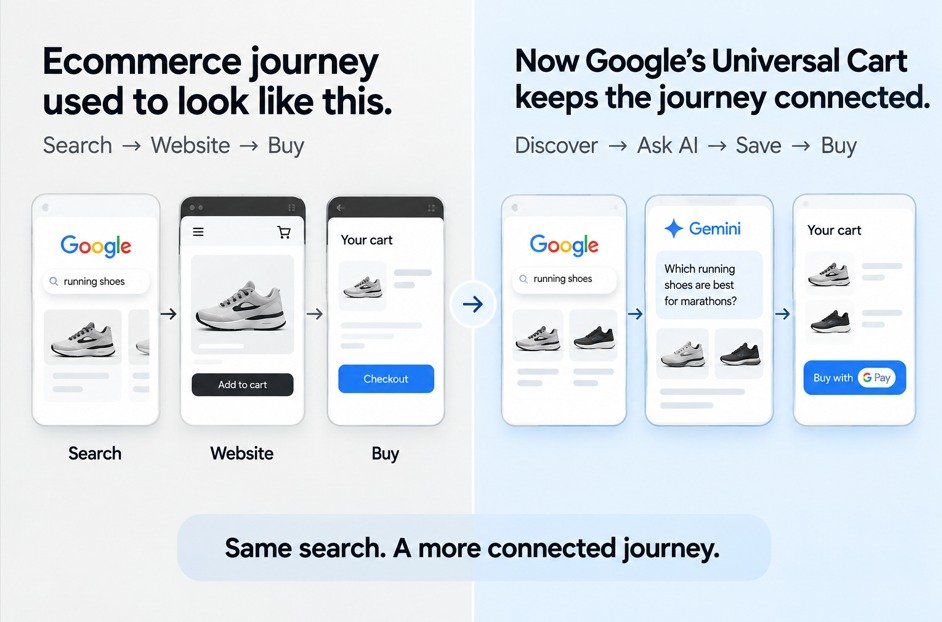
What if the next ecommerce battle happens before the customer even reaches your website?
Google’s new Universal Cart makes that easier to imagine.
A shopper can now save products from different retailers into one cart while shopping across Search and Gemini.
And the cart stays with them.
It can:
→ remember products across sessions
→ track price drops and restocks
→ surface promo codes and payment benefits
→ let shoppers check out with Google Pay where supported, or continue on the retailer’s site
That’s the real change.
Google isn’t just helping people find products anymore.
It’s helping them stay organized and move further toward purchase before they reach the merchant.
For ecommerce marketers, that means product data, pricing, availability and imagery can influence the buying decision much earlier.
The website still matters.
But it may no longer own the whole journey from discovery to checkout.
So the bigger question is:
If more of the buying journey happens inside Google, are ecommerce brands optimizing enough for the moments before the website visit?