Steeds meer Nederlanders lijken plaatsvervangende schaamte te krijgen van de TikTok-video's van Jettens verloofde, Nicolás Keenan. De Argentijn plaatst regelmatig video's waarin hij vooral druk bezig is met zichzelf en zijn uiterlijk. https://t.co/UkqHUsva59
@salahdine020 Wij hebben ook ons eigen gas debiel. Alleen niet toegankelijk dankzij D66 die t vol met beton hebben gestort.
Misschien moet je daar beginnen met janken.
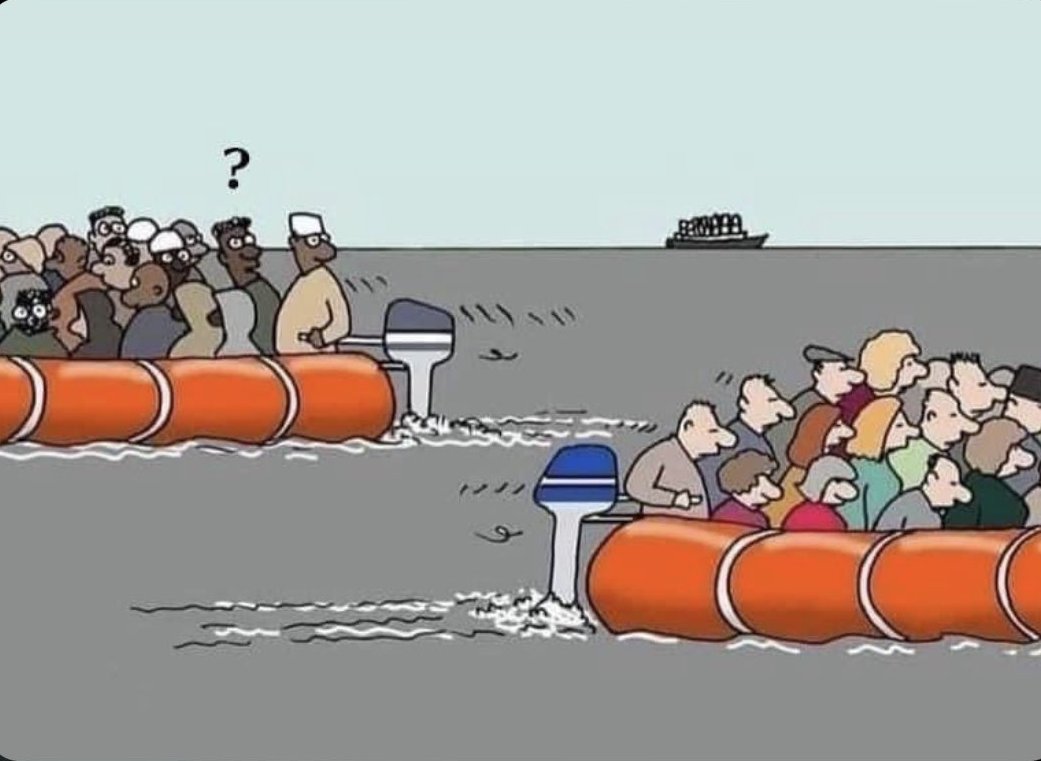
Europe will find every single way to tax their residents into poverty so that they can continue to provide free housing and social benefits for the most disgusting parasites to ever be born on our planet.
They’re betraying their own citizens so that they can fund the worst humans that exist - calling them “refugees”.
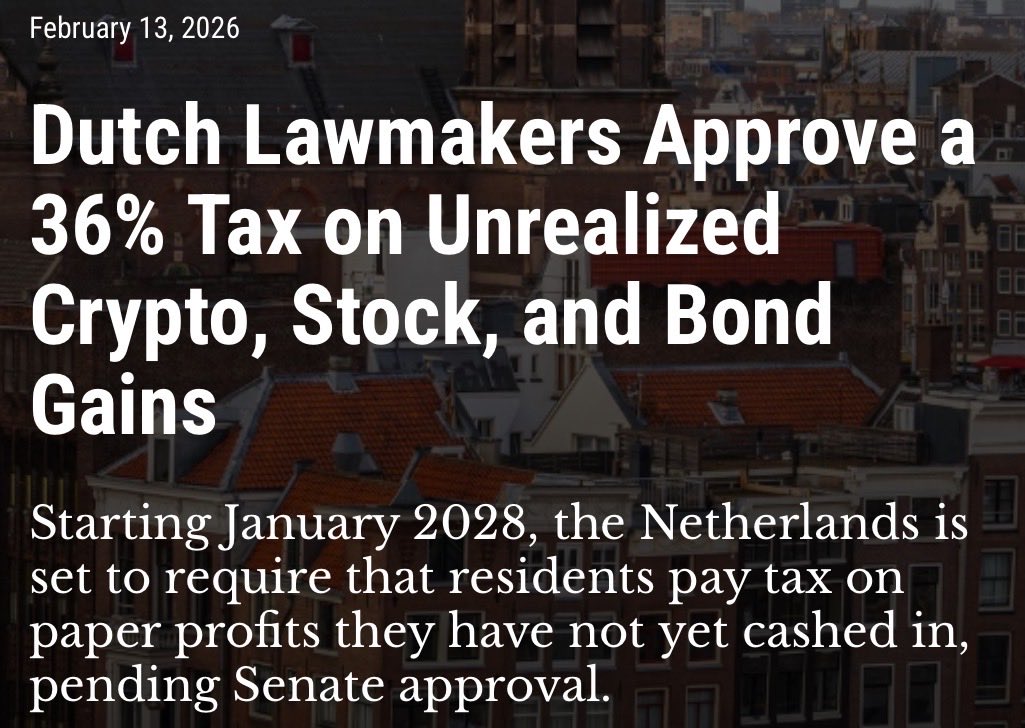
A 36% on money that doesn’t even exist.
How the hell is this even LEGAL?
⚡️A 36 percent tax on unrealized gains is a desperation signal.
It tells you the state is running out of clean revenue sources and is now reaching directly into balance sheets. It is an admission that growth is insufficient to cover obligations.
This is what late stage fiscal stress looks like.
When a government taxes income, it shares in production.
When it taxes consumption, it shares in spending.
When it taxes unrealized gains, it shares in ownership itself.
That is a structural escalation.
Ownership stops being a stable store of accumulated risk taking. It becomes a recurring liability even when nothing is sold. That changes the incentive structure of long term capital formation.
Capital formation is fragile. It depends on confidence that the rules of compounding will not shift midstream. Once the state proves it is willing to tax paper value annually, the rational response is defensive positioning.
Defensive positioning means mobility.
Wealth moves. Founders relocate. Funds restructure. Assets migrate into jurisdictions with clearer property guarantees. Even if only a minority leaves, the signal is enough to alter forward investment decisions.
The deeper truth is this.
Advanced economies are colliding with demographic gravity, entitlement commitments, and debt service burdens that exceed organic growth capacity. Political systems struggle to cut spending. Raising broad taxes is unpopular. So policymakers look for concentrated pools of accumulated capital.
Unrealized gains are visible and politically convenient.
The risk is reflexive. If capital begins to anticipate periodic balance sheet extraction, long horizon investment compresses. Innovation slows. Risk appetite declines. Taxable growth shrinks. That intensifies fiscal stress.
You then enter a loop.
Fiscal pressure leads to aggressive taxation.
Aggressive taxation weakens growth.
Weaker growth increases fiscal pressure.
If this remains isolated and limited, the system absorbs it.
If it spreads across jurisdictions, you get a global repricing of sovereign credibility.
This is about whether property rights remain predictably durable.
When states start taxing value before it is realized, they are testing the boundary between partnership and control.
Capital watches closely.
If it concludes the boundary has shifted, it moves.
That is the real signal.