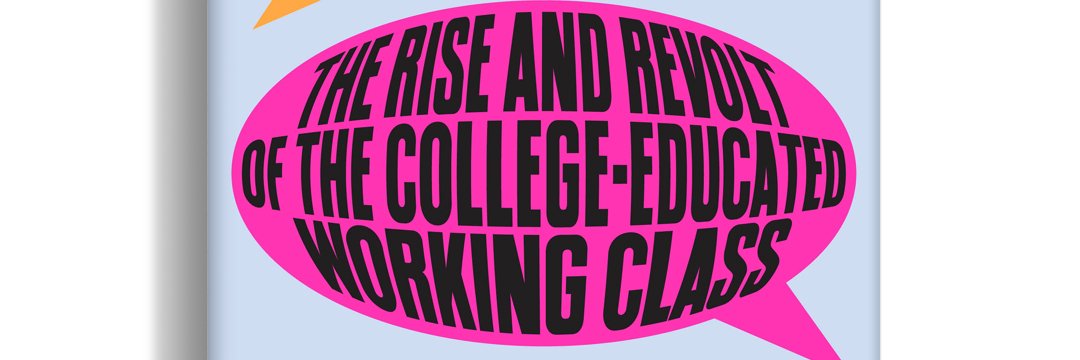
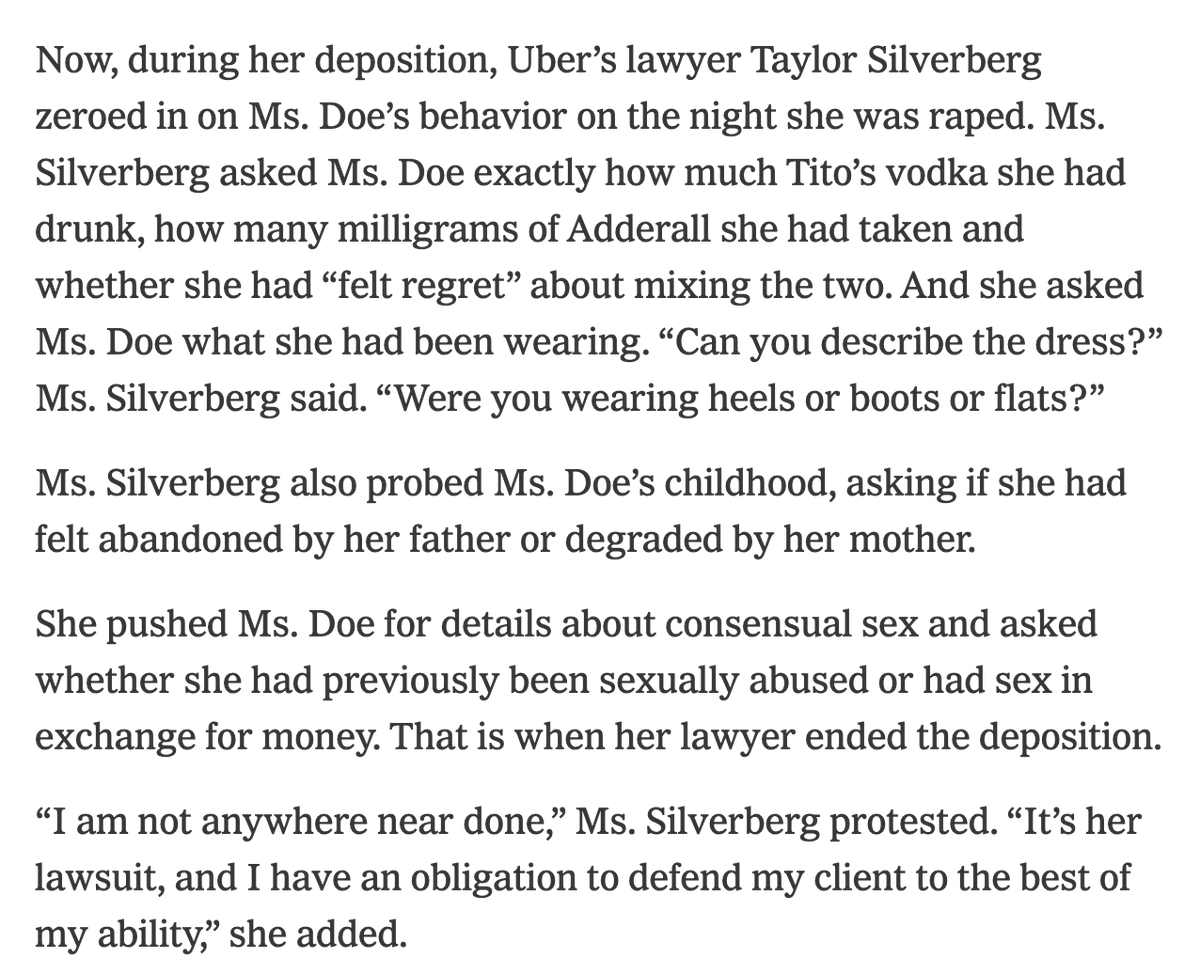
I have a story up today about why young college grads are feeling so angry: It’s more than just rising unemployment and the threat of AI. It’s a deep sense of betrayal. 1/ https://t.co/9JbOLH1zIK
Pew has just put out some helpful data on who identifies as working class. Maybe the most fascinating detail is that Republicans are more likely to identify as working class at every level of income and education. See below. https://t.co/icMsCv3XLs
FWIW, Pew defines upper income as family income above ~$156k. So 61% of Republicans with family income above $156k say they're working class, versus only 38% of Dems with that family income. https://t.co/PpYTOUBWEu
More bluntly, as Casey Newton put it on Hard Fork today: Big tech companies clearly want to build data centers quickly. If that's the case, then throwing sand in the gears gives the opposition leverage, which is the whole point from their perspective. 5/ https://t.co/TH7pOiZLNq
This is an interesting accounting exercise but seems way too literal in interpreting the possible effects of slowing down or blocking data center construction. https://t.co/O8bJhetiUd
What impact do data center bans or moratoria have on AI progress? Let's do some napkin math. A number such as "1 GW of capacity blocked" can be unintuitive. But we can take advantage of the fact that the efficiency of AI inference at a given capability level has been consistently improving over time and this trend will likely continue. So blocking a certain amount of capacity roughly translates to delaying AI progress by a certain amount of time — the amount of time it will take to catch up to a given capability level through improved efficiency rather than increased compute.
As the table shows, if a typical U.S. state enacts a 1-year moratorium, it slows AI efficiency progress by 5-10 hours. That's assuming the blocked capacity doesn't get rebuilt elsewhere, which is extremely unrealistic. Data centers sites are highly substitutable. Assuming 90% "leakage", even a big state like NY banning all new data center construction only slows AI by less than a day.
While I may have gotten some numbers slightly wrong (I used AI for the analysis and did some spot checks), the rough order-of-magnitude is enough to make my larger point: data center bans are not an effective way to slow AI. Of course, the local environmental effects are a big reason for these bans. That's a highly contested topic that I won't comment on here. But to the extent that support for these bans comes from people's generalized anxieties about AI and its societal and economic impacts, slowing new construction is an exceptionally ineffective way to channel those anxieties.
Obviously, not all of that shift, or even a majority of it, is a result of the pushback against data center construction. But the pushback is clearly raising the salience of the issue in helping to galvanize opposition. 4/
"In a dramatic capitulation, the owner of Facebook and Instagram agreed to the financial penalties for violating federal child privacy and states’ consumer protection laws." https://t.co/GwAxvj9pwY
"Zuckerberg’s plans include... a fund to invest in the communities where Meta hosts data centers. The fund size will be $1 billion... Meta is planning up to $145 billion on capital spending this year, largely to build data centers, and $600 bn by 2028." https://t.co/oBPtpXzGqi
"The results were the same almost every time. The [AI] demo looked like magic. But the tool wanted clean, connected data and decisions made in consistent, repeatable ways. Ours lived in a dozen systems that did not agree, layered w/decades of exceptions." https://t.co/snb1Vp6iU0
JD Vance says young Democrats are "downwardly mobile, hyper-progressive, well-educated people":
"A lot of universities sold these kids a bill of goods, they gave them a lot of debt, they did not give them useful skills or credentials and a lot of them are very angry."
Not exactly a shock, but El-Sayed cleaned up in counties with lots of young college-educated folks. He won Washtenaw (home of U of Michigan) 61-36; won Ingham (Michigan St.) 59-36; and Kalamazoo (Western Michigan, Kalamazoo College) 57-39. https://t.co/yggTIdfrVD
"Consensus is a rare feat for DSA members. Among the questions they wrestle with: Is it worth trying to win elections, or is electoral politics bound to disappoint? Should they be trying to run AOC for president or has she distanced herself too much?" https://t.co/4RGJzFwOJh
"For now, there’s little research to indicate that contagious cancers are circulating among people. But it’s conceivable that one will surface someday, said Elizabeth Murchison, an expert on transmissible cancers at Cambridge."
Department of non-reassuring reassurances: "Researchers have found contagious tumors in only a tiny, seemingly random collection of species: dogs, Tasmanian devils and a few kinds of clams and other shellfish..." https://t.co/Th4stY1h4r