Congratulations to Tochukwu Eze on being named among the 100 Most Impactful Education Personalities in Africa! He was recognized at the 4th Africa Education Summit, hosted by the Ministry of Education of Ghana and the Global Skills Hub, United Kingdom.
https://t.co/a6jn4lKOXc
📢We are delighted to announce the promotions of Branden Ghena and Yiji Zhang to associate professors of instruction, effective September 1. 🎉Congratulations!
Read more: https://t.co/72UOebks9p
Northwestern CS alum Yifan Wu (PhD ’25) has received an Honorable Mention for ACM SIGecom 2025 Doctoral Dissertation Award. The annual awards recognize outstanding dissertations in the field of economics and computation.
https://t.co/pprmQVyAvh
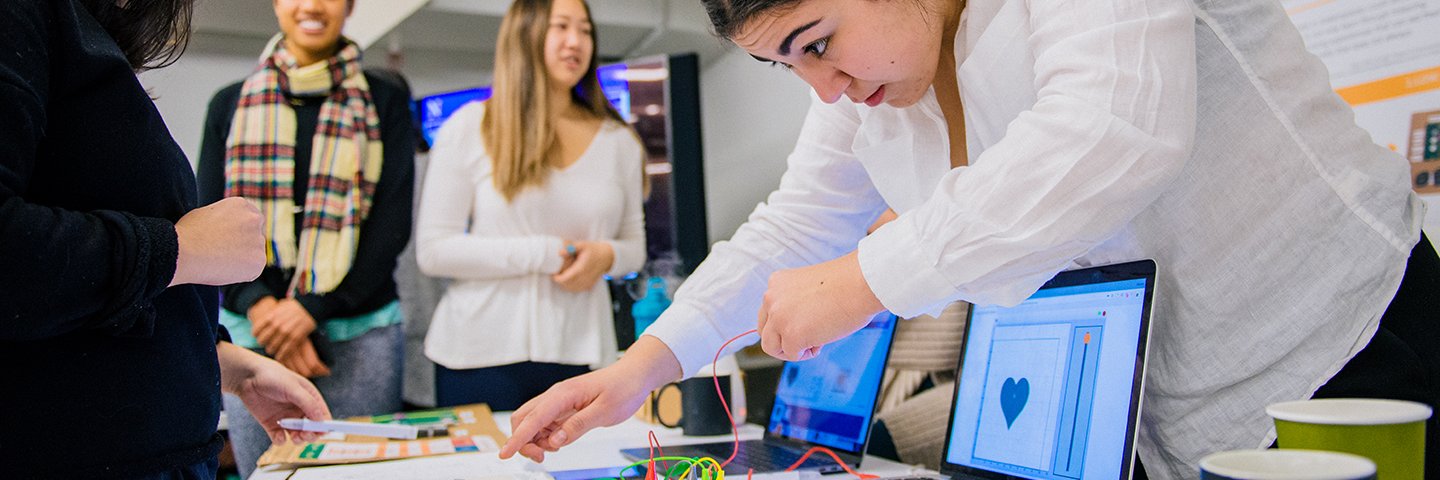
A Computer Science and Learning Sciences team—including PhD students Caryn Tran and Kristin Fasiang and Professor Eleanor O'Rourke—aimed to understand how educational programming tools shape K–12 students’ motivation to learn computer science.
https://t.co/o58aBmQ4F7
Earlier this month, Northwestern CS Research Track students presented the work they developed over winter and spring quarters. The 12 teams investigated topics including attention mechanisms, blame-shifting, microclimate sensors, and scheduling algorithms.
https://t.co/xi8fqIGmqL
New Research: A significant number of U.S. federal judges are already using #AI tools in their work.
In “Artificial Intelligence in Federal Courts: A Random-Sample Survey of Judges,” our team conducted a stratified random sample survey of U.S. bankruptcy, magistrate, district court, and court of appeals judges. Of the 502 judges that we surveyed via email, 112 responded (22.3% response rate).
Key findings include:
1. AI adoption is broad but infrequent
· More than 60% of responding judges reported using at least one AI tool in their judicial work.
· 22.4% of judges reported using AI tools in their work on a weekly or daily basis.
· 38.4% of judges have never used any of the AI tools listed on the survey in their work.
2. Preference for legal-specific AI tools
· Judges are more likely to use "AI for Law" tools (AI tools specifically designed for legal use cases) than general-purpose AI platforms.
3. Legal research dominates use cases
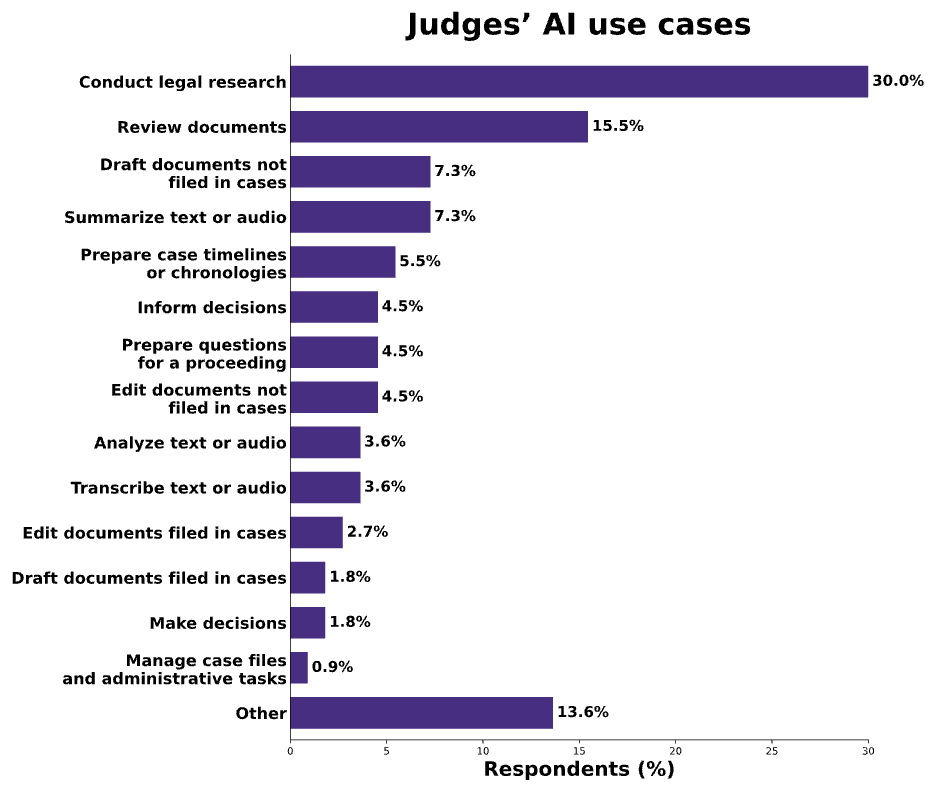
· Legal research is the most common AI use case, reported by 30% of judges.
· Reviewing documents is the second most common AI use case, reported by 15.5% of judges.
4. AI training has not been offered to most judges
· 45.5% of judges said that AI training had not been provided by court administration, and 15.7% said that they were not sure. Three out of four judges offered AI training attended the training.
5. One in three judges permit AI use in chambers
· 25.9% of judges permit and 7.4% of judges permit and encourage AI use in their chambers.
· Approximately 20% of judges formally prohibit AI use, 17.6% discourage but do not formally prohibit AI use and 24.1% of judges have no official policy on AI use.
6. Judicial outlook on AI is evenly split
· Judges were nearly evenly divided between being optimistic about AI’s potential for the judiciary and being concerned.
This study was completed in collaboration with the @NYCBarAssn Presidential Task Force on Artificial Intelligence and Digital Technologies and co-published by New York City Bar and @TSCSedona.
Co-authors: Anika Jaitley, Daniel W. Linna Jr., Hon. Xavier Rodriguez, V.S. Subrahmanian, and Siyu Tao.
The author team worked closely with New York City Bar Task Force members Harut Minasian and David Zaslowsky.
The full study, including additional findings and judges’ comments, is available on the Sedona Conference website (link below).
This research is supported by the Northwestern Law and Technology Initiative, the Northwestern Security & AI Lab, and the Buffett Institute for Global Affairs.
#AI #FederalCourts #AI4Law
@NorthwesternU@NorthwesternLaw@NorthwesternEng@BuffettInst@northwesterncs@NLawBizTech@vssubrah
Professor Sara Sood is among the five impactful leaders who will helm the Northwestern Network for Collaborative Intelligence's three strategic pillars—Research, Education and Infrastructure—and guide human‑centered AI innovation across Northwestern. https://t.co/LB4jMD7xK6
📣 Congratulations to the eight students who earned Winter 2026 Peter and Adrienne Barris Outstanding Teaching Assistant, Outstanding Peer Mentor, and Career Peer Mentor awards!
https://t.co/TJQXZuctR4
These robots are born to run—and never die 🤖
Northwestern engineers developed the first modular robot with athletic intelligence. They can transform into new configurations and keep moving no matter what's thrown at them.
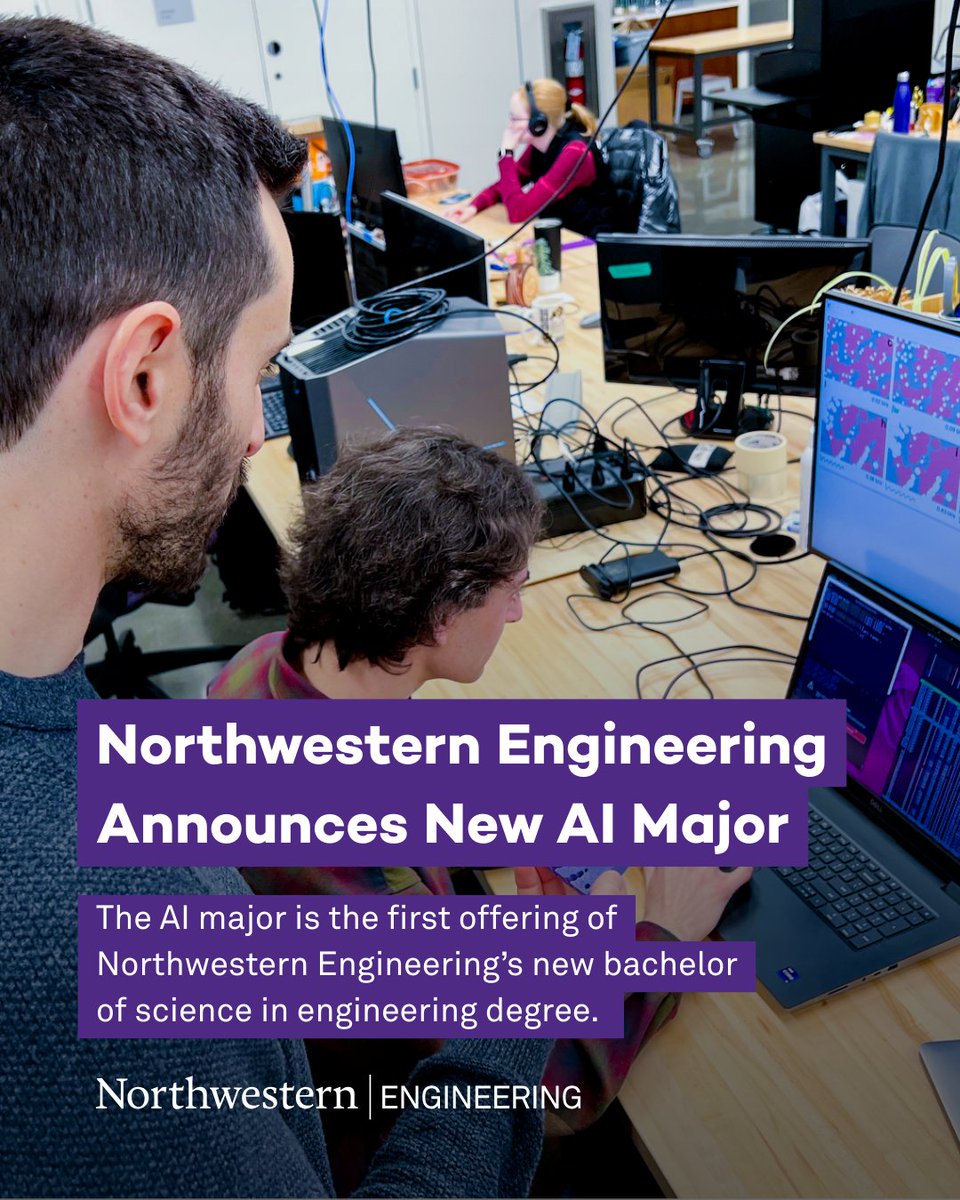
Northwestern Engineering announces a new AI major —the first program in our new Bachelor of Science in Engineering (BSE) degree.
Launching fall 2026, the major will prepare undergrads to design, deploy, and think critically about #AI across industries.
https://t.co/BJ0amruBnY
📣 Professor Sara Sood has been named a 2026 recipient of the Daniel I. Linzer Award for Faculty Excellence in Service. The award celebrates individuals who have performed extraordinary service that has had a positive impact on the University.
https://t.co/dWeSNrI9Qj
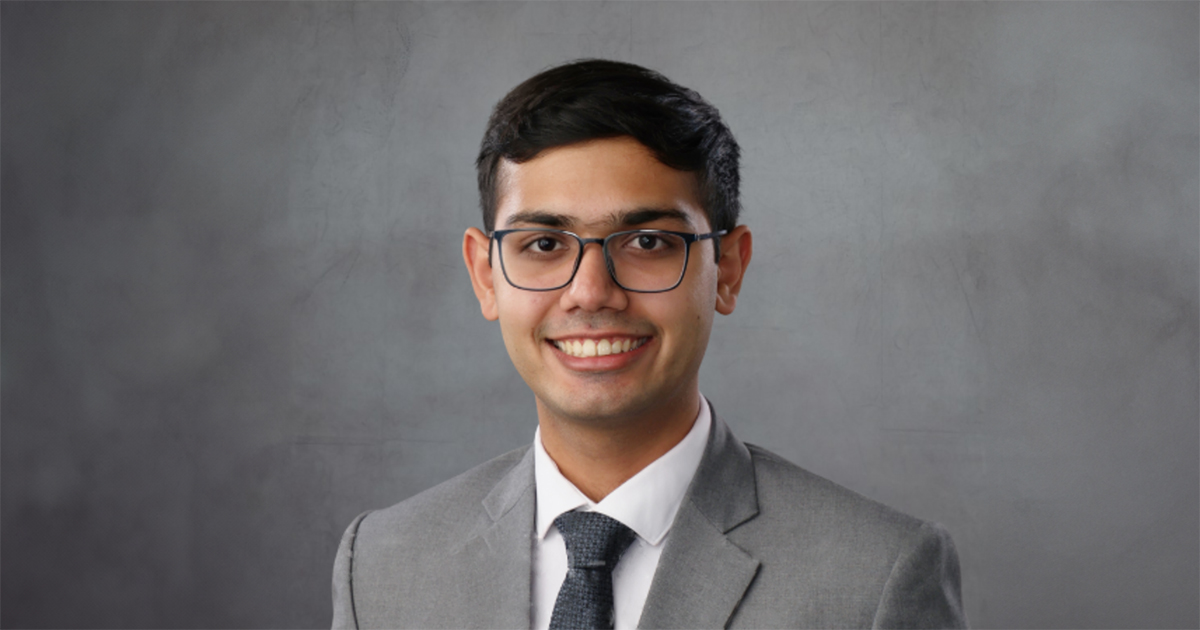
A student of the Department of Computer Science who earned his final credits in December, Dev Shah was named the 2026 Walter P. Murphy Cooperative Engineering Education Program Student of the Year.
Congrats, Dev!
https://t.co/DTCDdeXDgP
Social media and large language models are reshaping scholarly communication. This Wednesday, NICO is excited to host Ágnes Horvát to discuss "The Academic Use of Social Media, LLMs and #AI Assisted Decision-Making".
🗓️ Wed 3/4 at 12pm US Central
🔗 https://t.co/lOt2UeoCZr
Northwestern Engineering's Canyu Chen, a PhD student in computer science advised by @ManlingLi_, led a multi-institution research team in developing a scalable approach to training AI agents without sacrificing users’ data privacy. https://t.co/SHMjhJnrn8
AI should be your thinking partner, not your replacement.
Professor @elizgerber from Northwestern's Center for Human Computer Interaction + Design shares crucial insights on using AI for idea generation: https://t.co/IBhF0bTye4
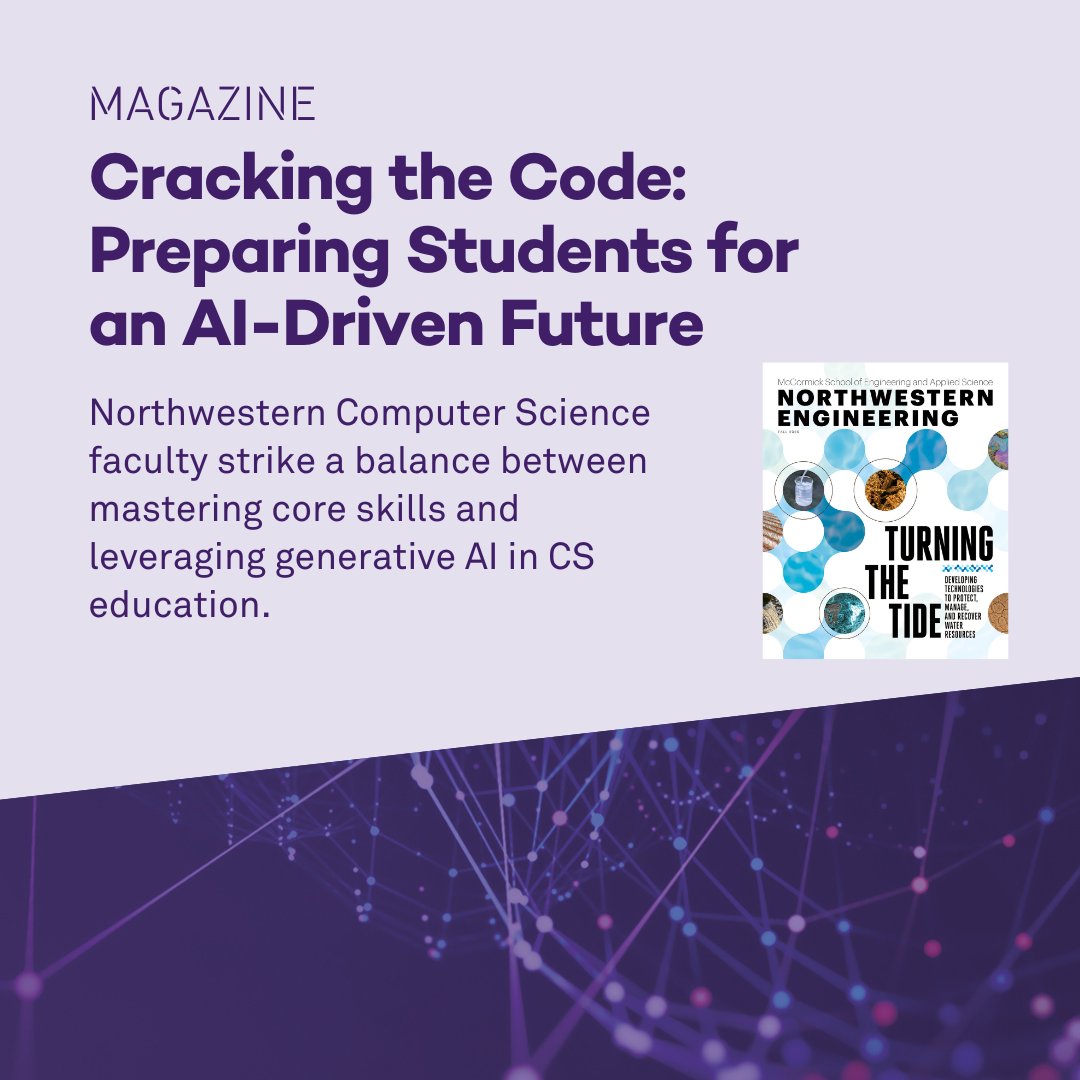
How should computer science education adapt to the age of generative AI?
Read how @northwesterncs is preparing students for an AI-driven future: https://t.co/9W3qgawt2x
How do we turn quantum promise into scalable reality?
@NorthwesternU@northwesterncs professor Kate Smith is advancing #quantum#computing through software, error mitigation, and hardware-aware optimization – helping today’s systems do more, faster.
https://t.co/AcIejKq9Hi
🎉 Congratulations to the fall 2025 winners of the Peter and Adrienne Barris Outstanding Teaching Assistant, Outstanding Peer Mentor, and Career Peer Mentor awards!
https://t.co/dTq30jg2R8
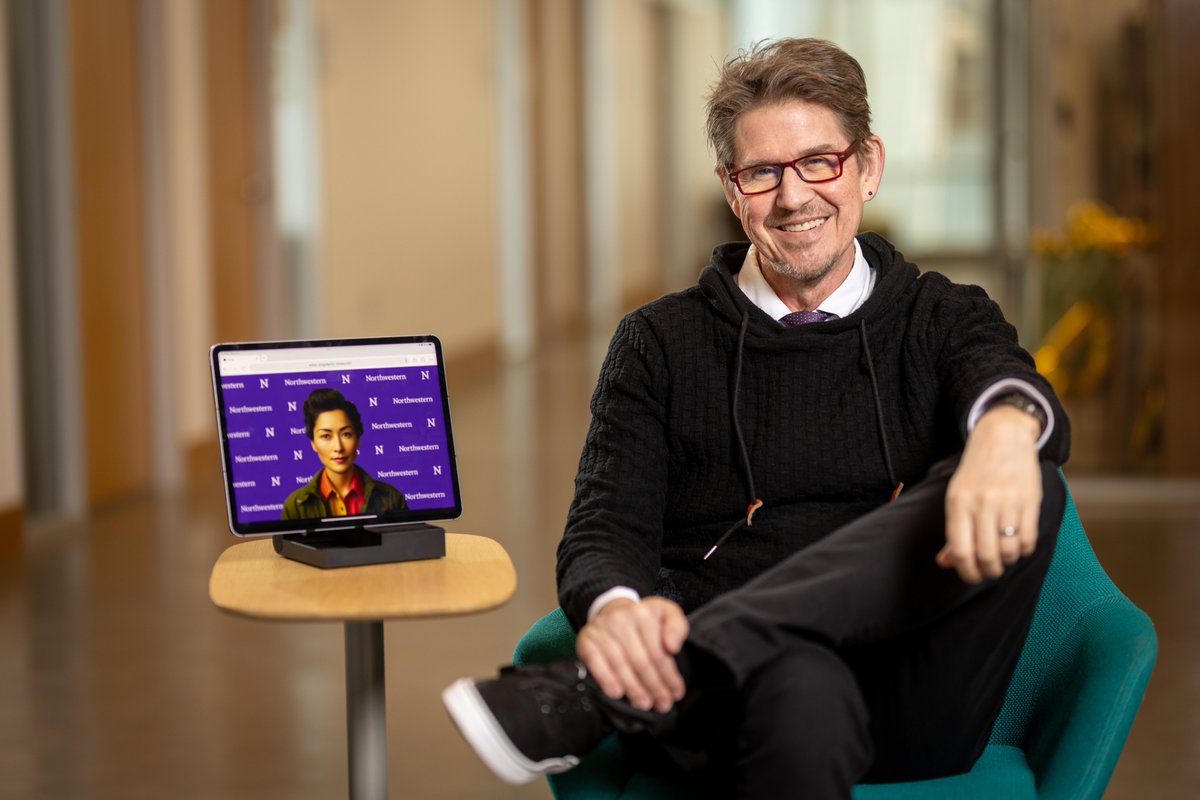
Since joining Northwestern in 1998, Prof. Kris Hammond has dedicated his career to studying and developing #AI tools.
He approaches artificial intelligence with cautious optimism that it can be our partner—not replacement—in a new information age.
@NorthwesternEng@northwesterncs "I desperately want intelligent systems. But taking away our ability to reason and think—that’s horrible for humanity.”
🌊 Read more in Northwestern Magazine: https://t.co/HUhKdOpgGy