The Challenge Hub is open.
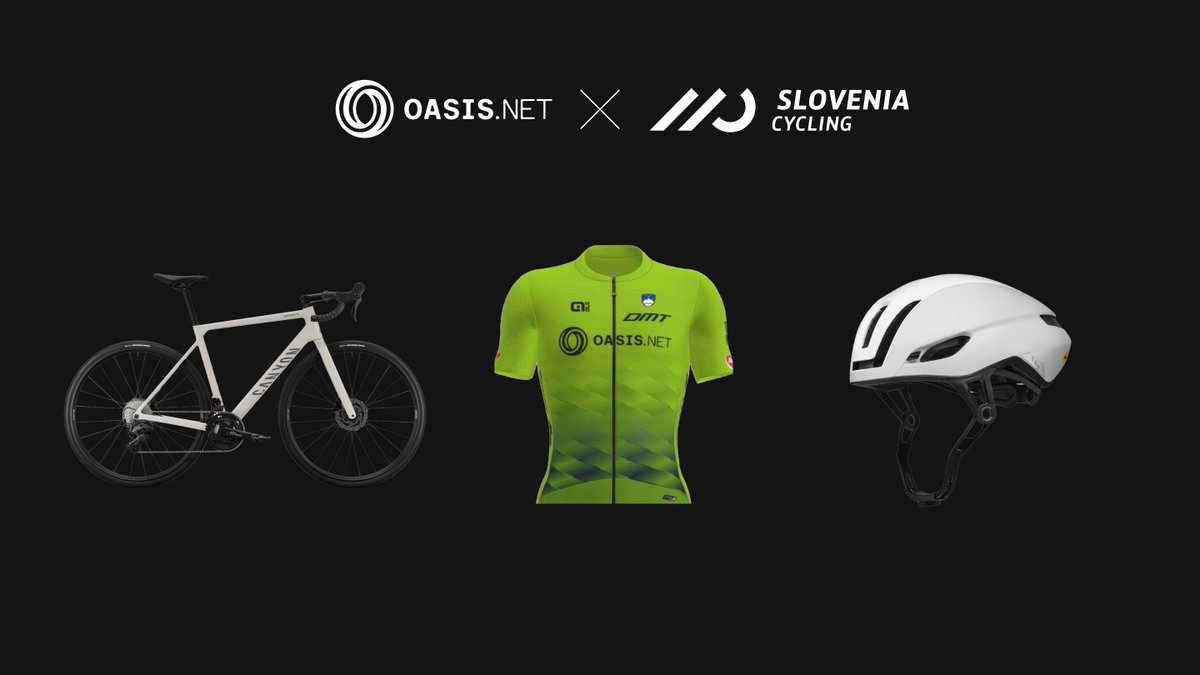
Predict cycling's biggest races, and earn a shot at a Canyon racing bike & other prizes.
Free to enter. Make your picks: https://t.co/UKmCpxCc8u
Idle stables shouldn't mean idle capital.
Opt in, earn on vetted protocols like @aave, swap whenever you're ready and Privana unwinds the position for you.
Closed beta is coming soon.
Sign up for early access here - https://t.co/oykDl738Ey
3/ It is also why fully transparent DeFi hit a ceiling for serious size. You cannot run real markets when every intention leaks. Private order books are how onchain trading grows up.
1/ Decoded: Dark Pools
Public order books carry a hidden tax. The moment you place a large order, everyone can see it and trade against you before it fills. On a transparent chain, that is the default, not the exception.
2/ Traditional finance solved this with dark pools: venues where orders stay hidden until they execute. Onchain you can do the same with confidential order books, where size and price are encrypted until a match is found. This is not secrecy. It is fair execution.
This week: a Decoded on why serious trading needs a private order book, a Thursday thread on what your wallet quietly reveals every time you transact, and the Challenge Hub still open.
The last cycle rewarded whoever shipped the loudest.
The next one rewards whoever can prove what they shipped actually does what they claim.
Trust me is slowly turning into a red flag.
Food for thought: every app you trust is really a bet that someone will not misuse what they can see.
Privacy infrastructure is the quiet work of making that bet unnecessary.
Have a good Sunday.
3/ The alternative is confidential inference: the model runs inside hardware where even the operator cannot read the inputs.
Not we will not look. We cannot.
For software that knows everything about you, that distinction is the whole game.
1/ Your AI assistant is becoming the most privileged software in your life. It reads your email, your calendar, your health data, your messages.
The question nobody asks: where does that context actually go the moment the model processes it?
2/ On most stacks, private means the company promises not to look. That is a policy, not a guarantee.
At inference time the data sits readable in memory, on a server you do not control. Trust is doing all the work.
Wednesday ritual: trivia night in the Oasis Discord. And the Challenge Hub is open , next race opens soon
One rewards what you know about privacy tech, the other rewards whether you can actually call a podium.
Both free to join.
3/ That is the whole difference between trust our RNG and here is the proof.
Onchain games, prediction markets, and raffles that hide the dice are asking for faith.
The ones worth playing let you check the math.
1/ Decoded: Onchain Randomness
Every raffle, every loot drop, every random winner onchain has the same problem.
If one party can predict or nudge the outcome, the game was rigged before it started.
Fair randomness is harder than it looks.
2/ The fix is verifiable randomness: a value nobody, not even the operator, can predict in advance or tamper with after the fact, plus a proof anyone can check.
You do not trust that the draw was fair. You verify it.
This week: a Decoded on how you prove a random draw was not rigged, a Thursday read on the software that already knows everything about you, and the Challenge Hub open all season. Predictions are free.
Privacy stopped being a feature request and became a design constraint.
The apps people will actually trust in a few years are the ones being built for it right now, quietly, before it is the headline.