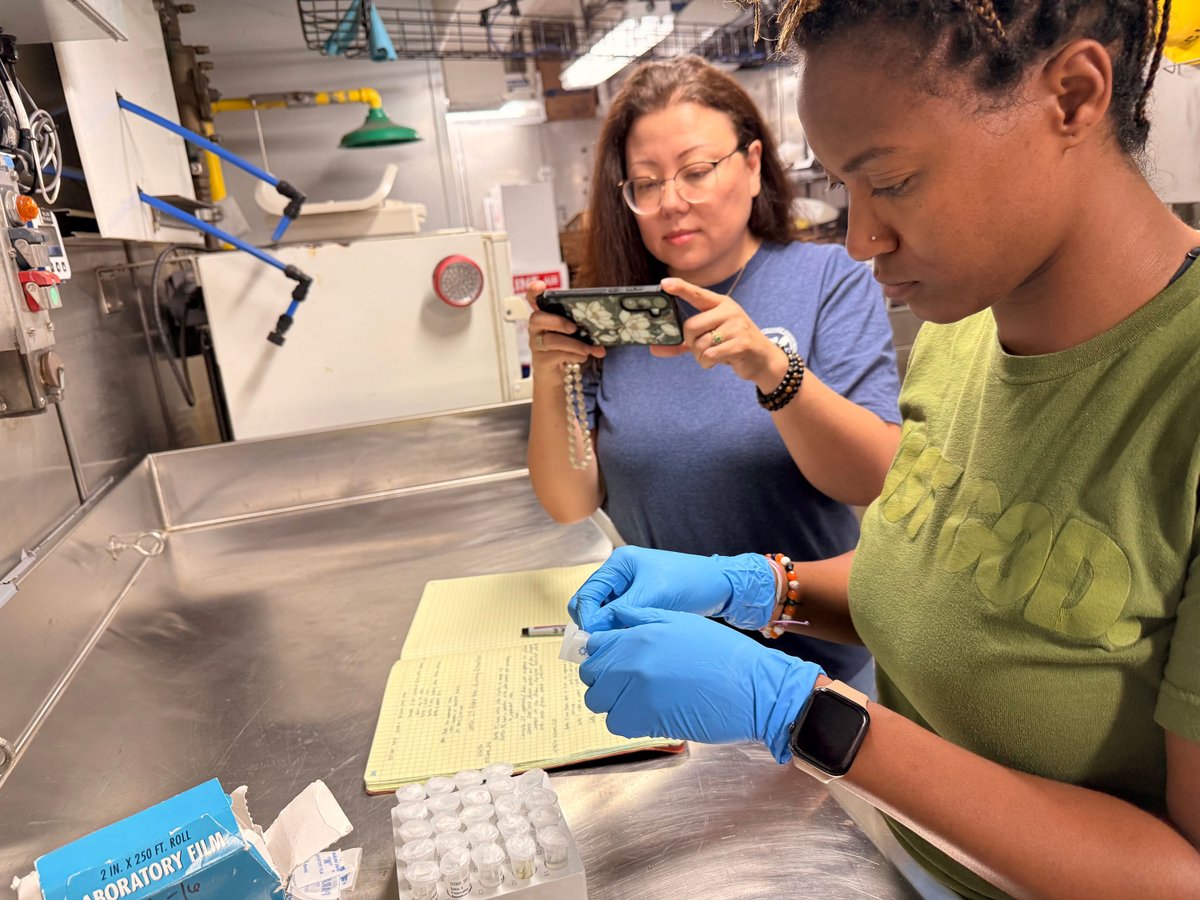
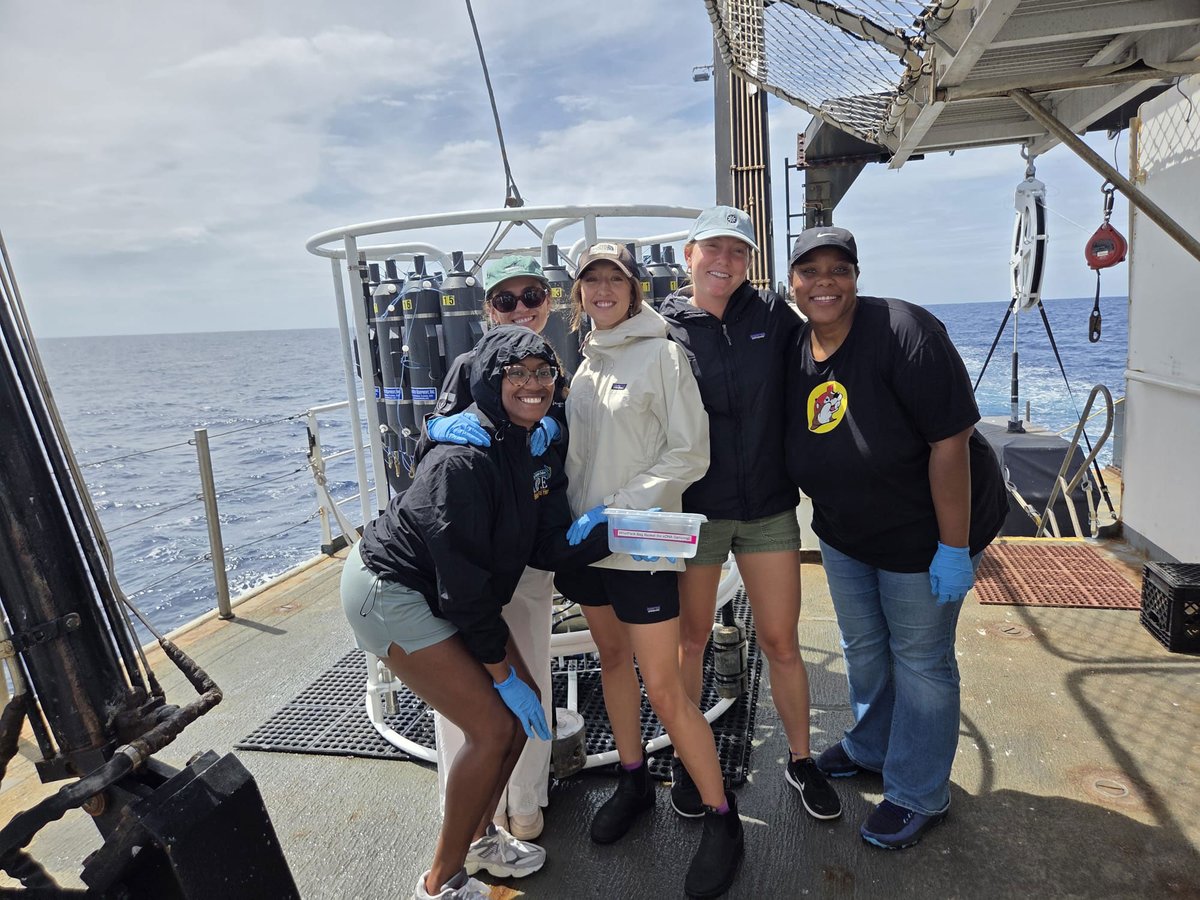
Knauss Fellow Shari Rohret shares her closing reflections, opportunities for reciprocal learning experienced onboard, and new perspectives gained from nearly a month at sea. Check out the rest of her log documenting her journey at sea here: https://t.co/dx37aHIsGK
When equipment breaks at sea, there’s no heading to a hardware store for spare parts. Instead, you have to make do with the supplies & expertise onboard, and adapt to the conditions at hand. Nicole Miller describes some of the challenges of science at sea: https://t.co/m2vUG3jTwQ
For centuries, sailors have celebrated crossing the equator at sea. Those aboard #Okeanos on the last expedition certainly had cause to celebrate as mapping lines took them across the equator not once, not twice or thrice, but FIVE times! Read more here: https://t.co/hemCpyVZUR
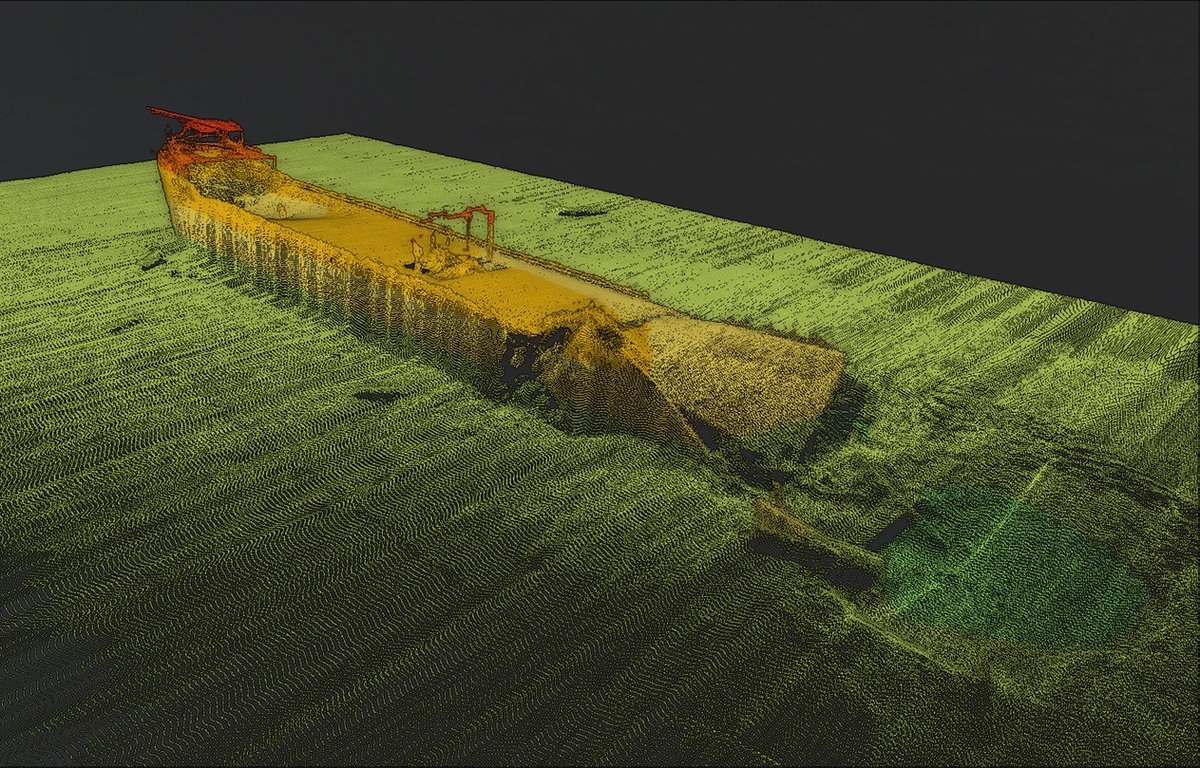
7/13-28, a research team will use a hybrid AUV/ROV with a variety of sensors to explore & document nationally significant #shipwrecks in the deep waters of Wisconsin Shipwreck Coast National Marine Sanctuary in #LakeMichigan.
Learn more: https://t.co/hBrm1QOH1f
During the current expedition, the science team processed a total of 152 eDNA samples and set several records for collections aboard #Okeanos, including the record for highest number of CTD deployments on an expedition. Read more here: https://t.co/dx37aHIsGK
To maximize the reach & impact of our deep-sea data, @OceanExplorer is now sharing biological occurrence data from expeditions on #okeanos in global databases (#obis & #gbif), starting with data from expeditions off the U.S. West Coast & Alaska in 2023.
https://t.co/esjYtJPoZ4
Although satellite altimetry suggested a single seamount at this location, high-resolution mapping via multibeam sonar revealed this dynamic duo. Read more about seafloor mapping here: https://t.co/dx37aHIsGK
Cup decoration may be an unexpected expedition activity, but it's in the name of education: crushed into miniature versions of themselves at depth, then shared with classrooms, they are a tangible demonstration of the immense pressure of the deep sea.More: https://t.co/dx37aHIsGK
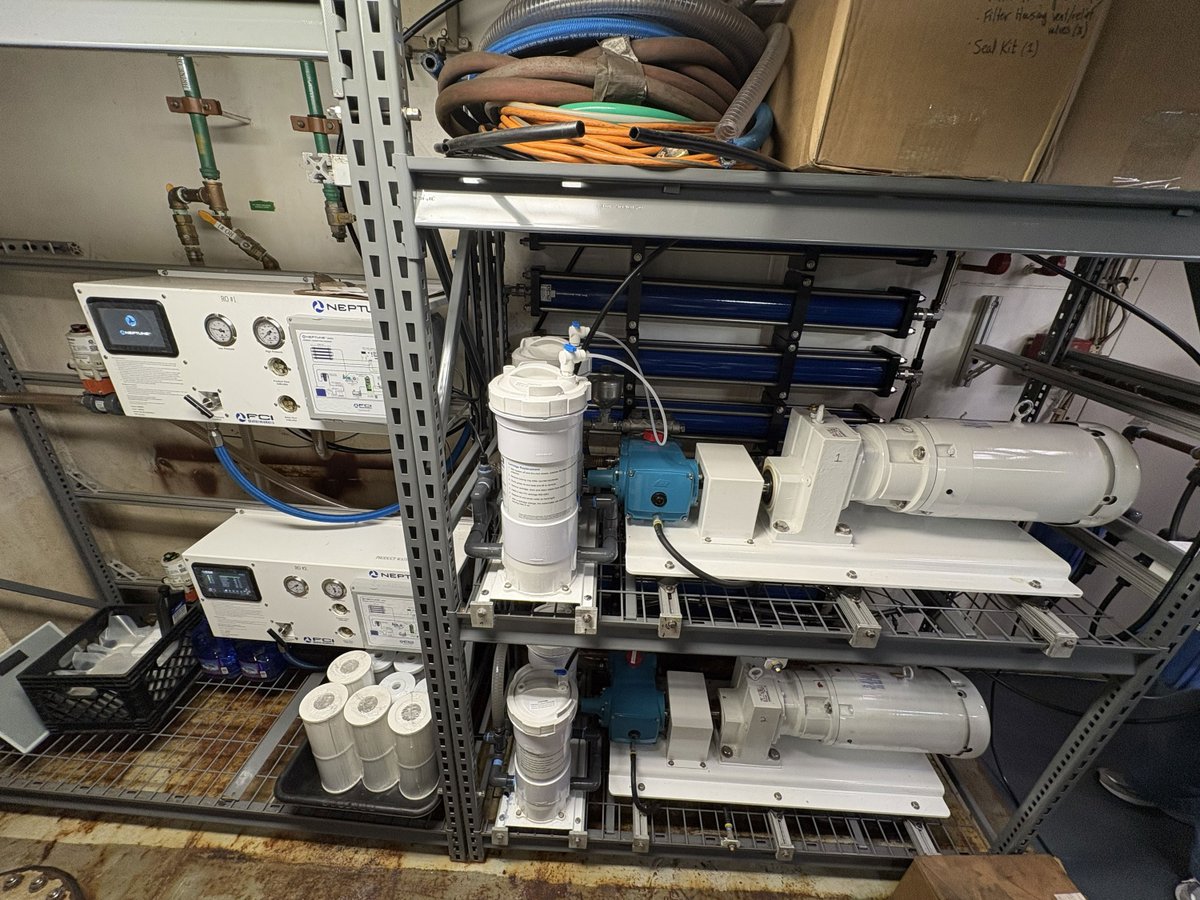
In her latest log entry, Knauss Fellow Shari Rohret takes readers on a deep dive answering a simple but important question for those living at sea: Where does fresh drinking water come from in the middle of the ocean?
Read more here: https://t.co/dx37aHIsGK
It’s July, & the heat of the summer is upon us. At least here on land. The average temperature in the deep ocean is 39° F. In 2017, we saw this vibrant red sea lily at a depth of about 1.3 miles, where it was about 36°.
Get July's desktop wallpaper here:
https://t.co/gTSEflzJwA
Sometimes, the deep ocean can be surprisingly stylish!
We found this decorator crab using its modified back legs to carry a glass sponge at a depth of 762 meters (2,500 feet).
Browse more discoveries from this expedition on our website: https://t.co/3ETMXn6YuB
Just two weeks into her fellowship, 2026 Knauss Fellow Shari Rohret found herself sailing across the Pacific in the name of science. Follow her ongoing log as she documents her experience at sea during the 2026 Pacific Islands Mapping expedition: https://t.co/dx37aHIsGK
It’s the sediment that counts!
Collecting mud samples isn’t the most glamorous part of exploring the ocean. Still, “sediment cores” are critical for studying ocean chemistry, geology, and food webs. Learn how they're collected and used here: https://t.co/fOGiu2Uj8w
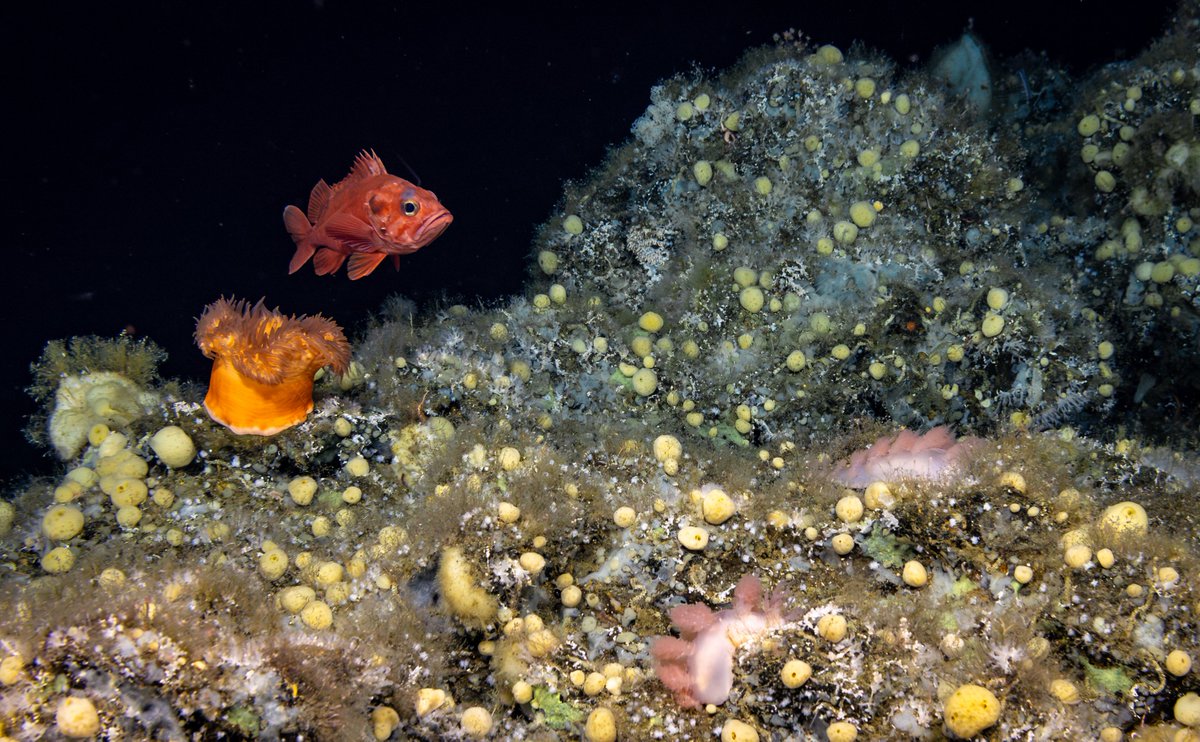
Every once in a while, we’re lucky enough to see the circle of life in action during an expedition. Our team unexpectedly spotted this unfortunate fish falling prey to a sea anemone in 2022.
More highlights from this expedition: https://t.co/L3u8jnDeQB
Summer is upon us in the Northern Hemisphere, but there's no change of seasons in the deep ocean where it's always chilly! This skate was seen at 2,420 m (1.5 mi), where water temps were a brisk 1.7°C (35°F). Perhaps that’s why it looks so coooool…
More: https://t.co/eH4z5RxLQn
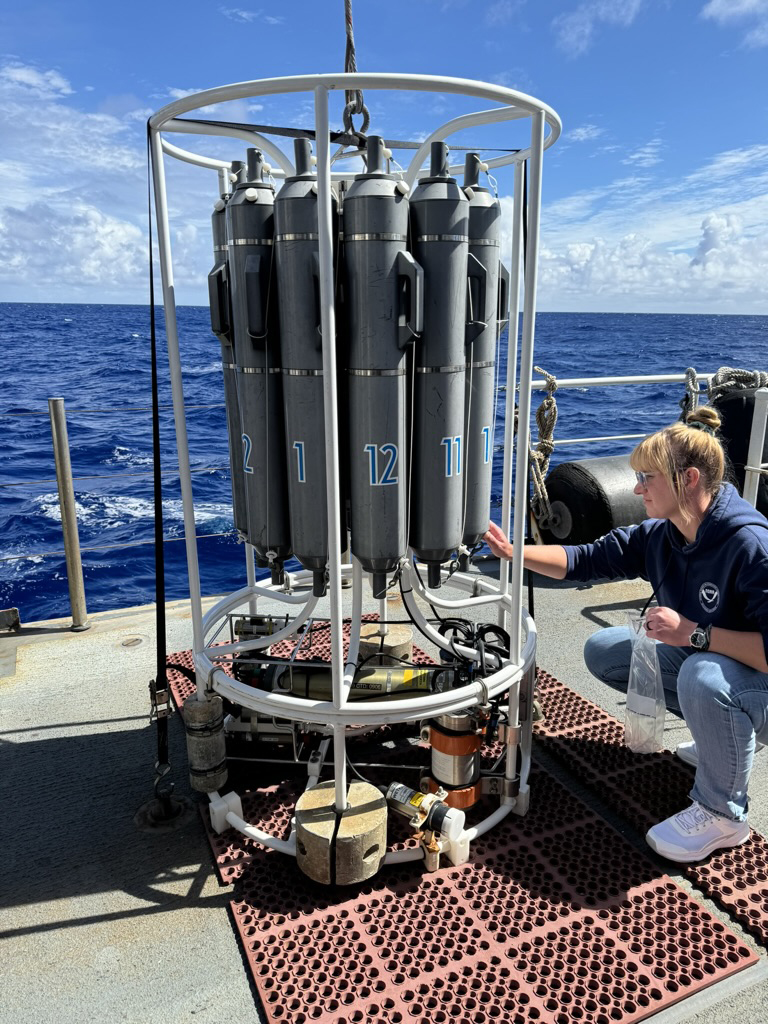
What’s in a name? In the case of the CTD, quite a lot. It stands for “conductivity, temperature, and depth,” and refers to a package of electronic devices used to detect how conductivity and temperature of water changes relative to depth. Learn more here: https://t.co/gcHojnN1JH
Deep-sea expeditions support years of valuable research. Read about a new scientific paper that uses footage from our dives to study dense coral and sponge communities in deep Alaskan waters! https://t.co/j0LAQ1w4tp
Time for a deep-sea lunch date! During Gulf of Mexico 2017 expedition, we caught a rare glimpse of a swordfish feeding at a depth of 530 m (1,739 ft), offering a unique glimpse into life in the deep.
More cool videos: https://t.co/umJ6Inn1y4
At the start of an #Okeanos field season, we’re always a little uncertain about how things will go. We're happy to report, that even with all the new systems & team members, our mapping shakedown was a success, & we completed most major tasks.
Learn more: https://t.co/tfyeuxkCDG