@WorldBankGroup, OCBC and @StraitsX move stablecoin payments into pilots, and @Zelle plans a ZelleUSD launch on @Solana.
Here are the most important developments in Digital Assets, Stablecoins, and RWAs 👇
1. @WorldBankGroup taps @Circle and @Citi to test USDC for fund disbursements.
The World Bank Group will explore regulated USD stablecoins with Citi and Circle to speed up and cut the cost of disbursing development funds. Citi brings its banking rails, and Circle mints and settles the funds in USDC. No figures or timelines have been named yet, but the work builds on a blockchain platform already used across more than 350 projects. Development finance is testing whether stablecoins can run alongside correspondent banking or replace parts of it.
2. @Zelle plans to launch ZelleUSD on @Solana for international payments.
Zelle, the bank-backed payments network run by Early Warning Services, said at Breakpoint 2026 that it will launch ZelleUSD (ZLUSD) on Solana, issued by @Anchorage Digital Bank. A live devnet demo moved $1.25M in a confidential bank-to-bank transfer using Token-2022 privacy extensions. The first international corridor, between the U.S. and India, is targeted before the end of 2026, but no consumer launch date has been confirmed. A bank network picking a public chain for settlement says more than the demo does.
3. @Ripple RLUSD enters the global top five stablecoins.
RLUSD's circulating supply hit a new all-time high of $2.85B across the XRP Ledger and Ethereum. It passed USD1, USDG and PYUSD to take fifth place, behind USDT, USDC, USDe and DAI. RLUSD launched in December 2024, so the climb took less than two years. At roughly 1% of a $284B market, this is a share story more than a scale story.
4. OCBC and @StraitsX launch a cross-border B2B stablecoin payments pilot.
The pilot lets businesses receive cross-border payments into their OCBC accounts without handling stablecoins directly. StraitsX's Dedicated Wallet Address infrastructure handles onchain collection and compliance, and OCBC handles the fiat off-ramp. NTT DOCOMO Asia, the Singapore entity of NTT DOCOMO, is the first participant. No pilot amounts, stablecoin or network, or end date have been disclosed. Keeping the stablecoin away from the customer is likely how banks adopt it first.
5. The National Bank of Cambodia extends Bakong Blockchain across borders with stablecoin and bond tokenization pilots.
The pilots, announced at Black Swan Summit Cambodia in Phnom Penh, include a Japan to Cambodia remittance test with SBI Holdings, SBI Bank and SBI VC Trade, using the yen stablecoin JPYSC as a settlement layer. A separate proof of concept will tokenize Cambodian government bonds on the Canton Network, with no amounts or timeline disclosed. According to NBC Governor Chea Serey, Bakong has handled more than 1.3 billion transactions worth $242B. Every item here is a pilot or proof of concept, and none has a launch date.
Choosing a stablecoin vault comes down to three things: how soon you need access, how much risk you’ll take, and what you want to earn.
OpenTrade vaults include money market funds in USDT, USDC, and EURC, plus delta-neutral SOL staking.
Need something else? Curation+ builds a vault around you.
Fintechs and digital asset platforms can offer their users USDC yield without building the infrastructure behind it.
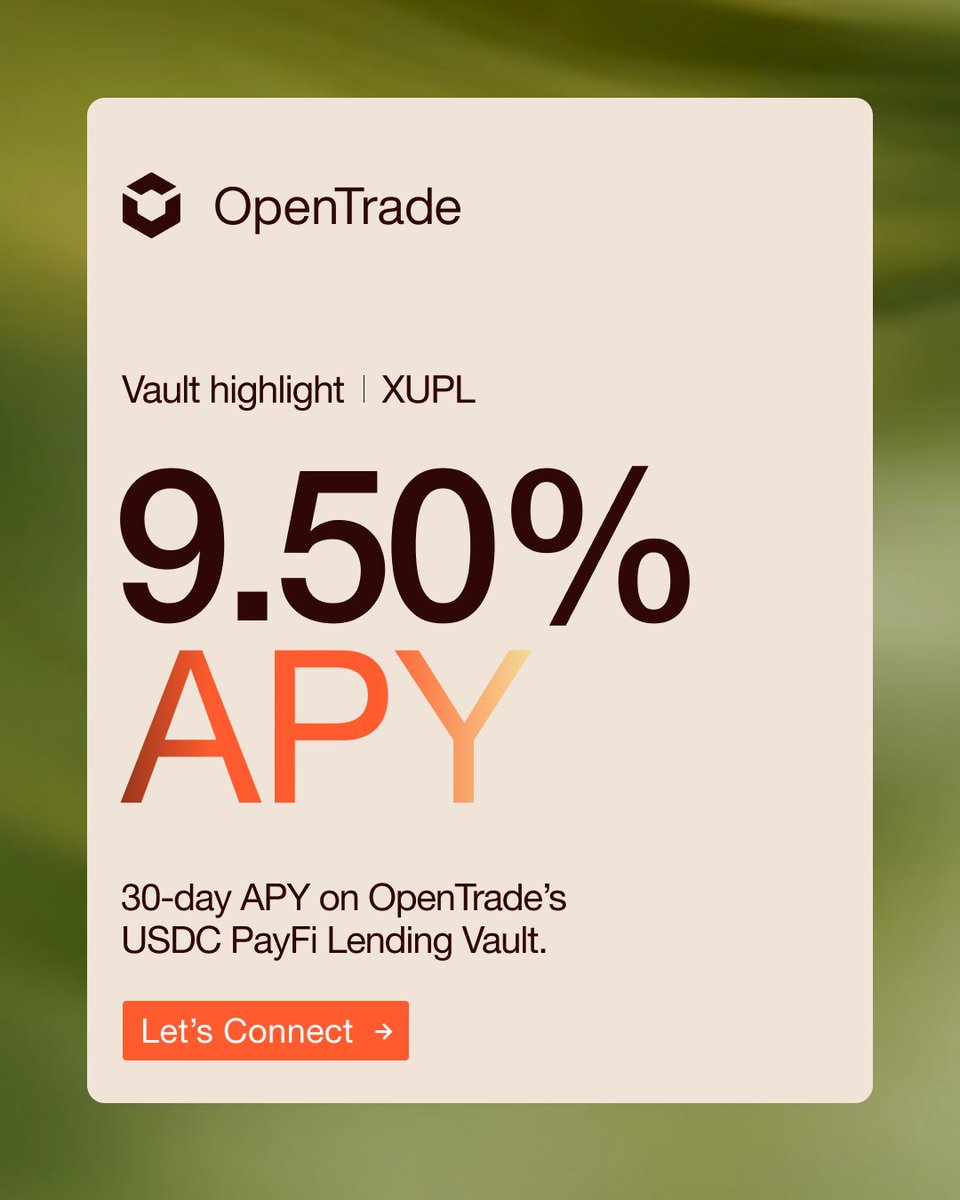
OpenTrade’s USDC PayFi Lending Vault has earned a ~9.50% APY over the past 30 days, with $16.49M in TVL as of November 17, 2026. Plug it into an earn product for your users, or use it on your own treasury balances, through a single API integration.
Talk to us about adding it to your product. Link in the comments
On November 2, 2026, a Paraguayan bank locked about 60% of the country’s adults out of their accounts overnight.
Weeks earlier, it had reported capital above the legal minimum
Banks show you a balance, not what’s behind it. Fiat-backed stablecoins are designed to hold reserves at least equal to every token in circulation.
Read the full piece in the comments below 👇
This week in stablecoins: 21 banks commit $270M to a joint dollar stablecoin, Visa adds Western Union’s USDPT as a settlement asset, and Coinbase secures a national trust bank charter
Here are the most important developments in Digital Assets, Stablecoins, and RWAs 👇
1. Goldman Sachs, Citi, and 19 other institutions commit $270M to the Project Faro stablecoin
According to Bloomberg on November 10, @GoldmanSachs, @Citi, @bancosantander, and @DeutscheBank are among the firms that committed about $270M to Project Faro. The money funds five years of operations for a U.S.-incorporated issuer targeting a 2027 launch, and the coalition has grown from 10 institutions to 21. USDT and USDC together still hold about 85% of a roughly $290B market.
2. Visa adds Western Union’s USDPT as a native settlement asset on VisaNet
On November 12, @anchorage said select stablecoins issued by its bank are now eligible settlement assets on @Visa’s network, starting with @WesternUnion’s USDPT. Visa and eligible partners can use the token directly to settle obligations. USDPT launched on Solana in May 2026, and Western Union plans to use it for 24/7 settlement across more than 200 countries.
3. Coinbase secures a full national trust bank charter for institutional custody
On November 9, @coinbase said the OCC had given final approval to Coinbase National Trust Company, following preliminary approval on April 2. The trust bank focuses on custody for institutional clients, and Coinbase plans to move its existing custody business into it over three years.
4. PNC lets corporate clients receive USDC payments in a pilot with Coinbase
On November 9, @PNCBank made incoming USDC payments available to its Corporate and Institutional Banking clients, on Ethereum and powered by @coinbase’s payment products. Incoming USDC converts 1:1 to U.S. dollars and is deposited into a designated PNC account. The service is starting as a limited pilot for eligible clients.
5. UK, Singapore, and Thailand central banks complete a synchronized FX settlement trial
On November 13, the @BankofEngland, @MAS_sg, and the Bank of Thailand reported results from experiments using a Partior prototype, which coordinated payment-versus-payment settlement and multilateral net FX transactions across their test environments. The Bank of England plans to launch a live synchronization interface in 2028.
We’re at Solana Breakpoint in London, November 15-17. Meet @anyamarkitanov2 to find out how OpenTrade unlocks institutional-grade stablecoin yield on user and treasury balances
Book a meeting via the link below 👇
@Samsung puts USDC in 82M US Galaxy wallets, Western Union bets on a stablecoin card as Q3 revenue falls 2%, @Stripe powers USDC deposits for @OnePay, and euro stablecoins grow 54% in a year.
Here are the most important developments in Digital Assets, Stablecoins, and RWAs 👇
1. Samsung Wallet adds USDC for 82 million US Galaxy devices.
Samsung went live with stablecoin accounts in Samsung Wallet on Thursday, letting eligible US Galaxy users buy, hold, send and receive USDC on Solana across about 82 million compatible devices. It’s built with custodian Bastion, with @Coinbase holding the USDC as sub-custodian.
2. Western Union pushes its stablecoin card as Q3 revenue falls 2%.
Western Union reported $1B in Q3 revenue, down 2% year over year on a slowdown in North America retail, and announced cuts of more than 650 roles. CEO Devin McGranahan pointed to growth bets instead: USDPT, its dollar stablecoin launched in May, and Stablecard, a USDPT-backed @Visa secured credit card launched in August. He pitched it at markets where consumers face currency volatility or limited access to dollars. The biggest name in remittances is now selling the thing disrupting it.
3. OnePay lets US customers fund checking accounts with USDC, powered by Stripe’s Bridge.
Walmart-backed OnePay now lets select US customers fund checking accounts with USDC across 12 blockchains, including Base, Solana, Ethereum and Tempo, with deposits converted into US dollars. Stripe-owned Bridge handles the deposit addresses, transaction monitoring and conversion, and OnePay charges no conversion fees at launch. The target is freelancers, gig workers and overseas employees already paid in stablecoins. The customer sees dollars. The stablecoin does the moving.
4. Euro stablecoins add $263M in a year while dollar stablecoin supply dips.
A DIA study of 140+ stablecoins across 25 currencies found euro stablecoin supply grew 54%, or $263M, in the year to 19 October, reaching $790M, while dollar stablecoin supply fell 1.3%. Euro stablecoin card spending hit $459M in the 12 months to September, more than five times the prior year, with EURC accounting for 80% of it. That’s 8.5% of traceable onchain stablecoin card spending from just 0.26% of total stablecoin supply. Small supply, outsized usage.
5. Nigeria’s central bank brings in stablecoin licensing and bans algorithmic stablecoins
The Central Bank of Nigeria’s new rules, live since November 5, require a license and per-token approval to issue stablecoins, and foreign-currency stablecoins must go through a locally incorporated issuer. Algorithmic stablecoins are banned outright. Dollar tokens now need a Nigerian entity behind them.
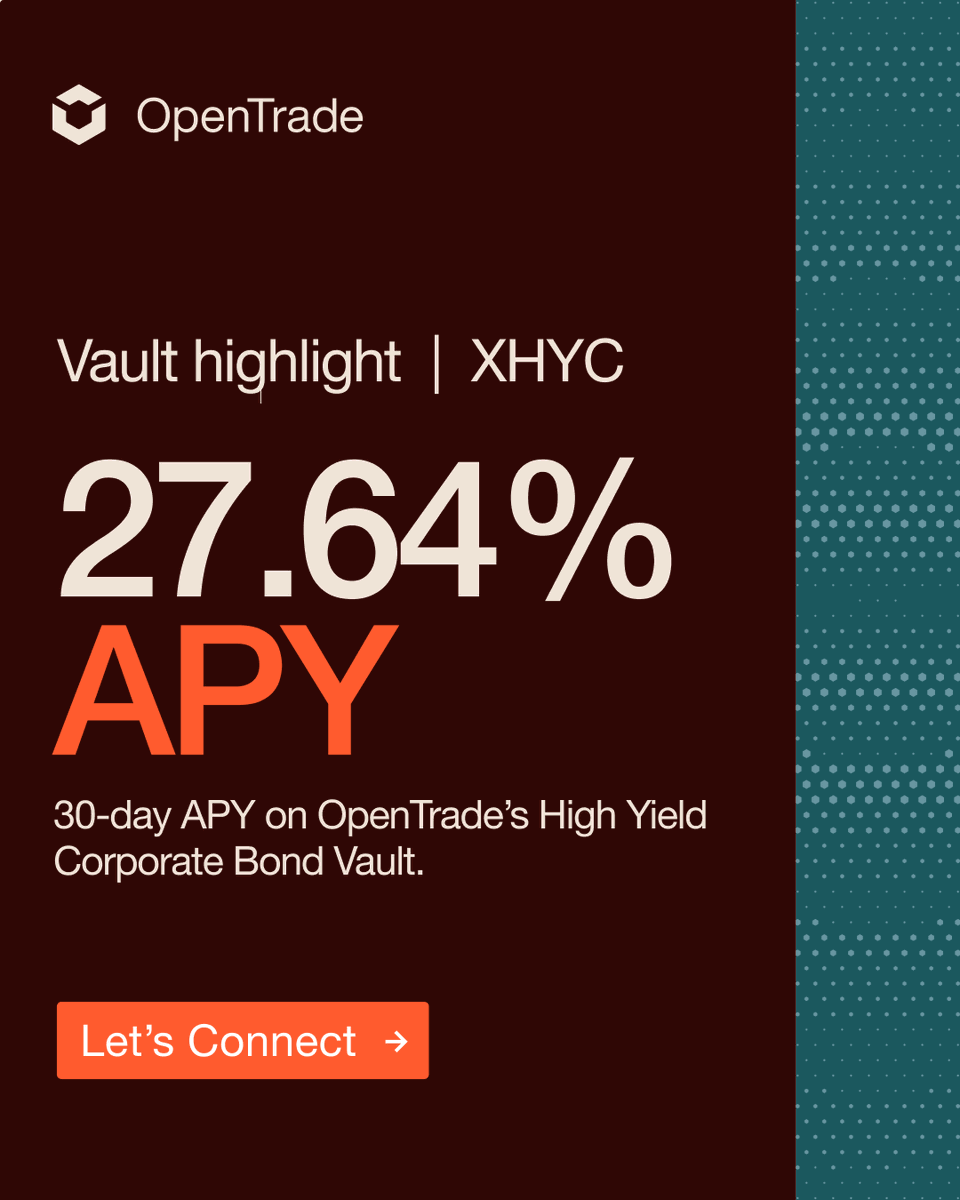
XHYC, OpenTrade’s High Yield Corporate Bond Vault, delivered a 27.64% 30-day APY as of November, 2026, sourced from high-yield corporate bonds.
Talk to the team via the link below.
We’re heading to @FireblocksHQ SPARK, and this year the conversation is all about stablecoins.
@BTC_Jeff, @anyamarkitanov2, and Ronnie Jaworek will be there representing OpenTrade and everything stablecoin yield.
If your platform or business hasn’t yet unlocked institutional-grade yield on its user and treasury balances, let’s connect.
@HSBC launches a stablecoin to 3.3M users, @OpenTrade appoints former Swift CEO Lázaro Campos as Chairman, and Visa explores stablecoin remittances in the Philippines.
Here are the most important developments in Digital Assets, Stablecoins, and RWAs 👇
1. HSBC launches RedCoin, a Hong Kong dollar stablecoin, to 3.3M PayMe users
@HSBC’s first stablecoin is rolling out to more than 3.3 million PayMe users, who can send it instantly and pay over 100,000 merchants. HSBC plans to let customers use it for tokenized investments, including its Hong Kong dollar money market fund. A bank stablecoin launched with a ready-made distribution network.
2. BlackRock and SBI explore linking tokenized money market funds to a yen stablecoin
SBI Holdings and Startale signed an MOU with @BlackRock to explore connecting tokenized money market funds with JPYSC, a yen stablecoin. No live product exists yet. Tokenized funds and stablecoins keep converging, well beyond the dollar.
3. OpenTrade appoints former Swift CEO Lázaro Campos as Chairman
Lázaro Campos, former CEO of SWIFT, has joined OpenTrade as Chairman. OpenTrade has processed more than $1B in transaction volume over the past 12 months and now has $300M in TVL. The former head of the network banks use to move money now chairs a stablecoin yield company.
4. Visa explores stablecoin remittances in the Philippines, where 38% trust them
@Visa is exploring stablecoin money transfers in the Philippines, where remittances were equal to 7.3% of GDP in 2025. Its survey found 58% of Filipinos had never heard of stablecoins, but 40% want to learn more. Awareness is the gap to close.
5. Canada opens a 60-day consultation on stablecoin rules
Canada’s draft rules would require non-bank issuers to hold 1:1 reserves, redeem within three business days, and stop paying interest to holders. Comments close December 23, with rules targeted for fall 2027. Canada is following the U.S. template closely.
6. Polygon brings Open Money Stack to Solana
@0xPolygon has extended its payments platform to Solana, letting businesses accept funds, hold them as stablecoins, and pay out to bank accounts, cards, or wallets. Fees and availability haven’t been disclosed. Onramps and offramps are where chains now compete for payments businesses.
18 years ago today, Satoshi Nakamoto published nine pages proposing value that could move without a middleman.
Stablecoins, tokenized assets, banks issuing their own tokens. All of it traces back to that paper.
Happy Bitcoin Whitepaper Day.
Solana staking rewards usually come with SOL price risk.
xSOLY, OpenTrade’s Stablecoin Staking Vault, hedges it out, so stablecoins earn staking rewards without a bet on SOL’s price.
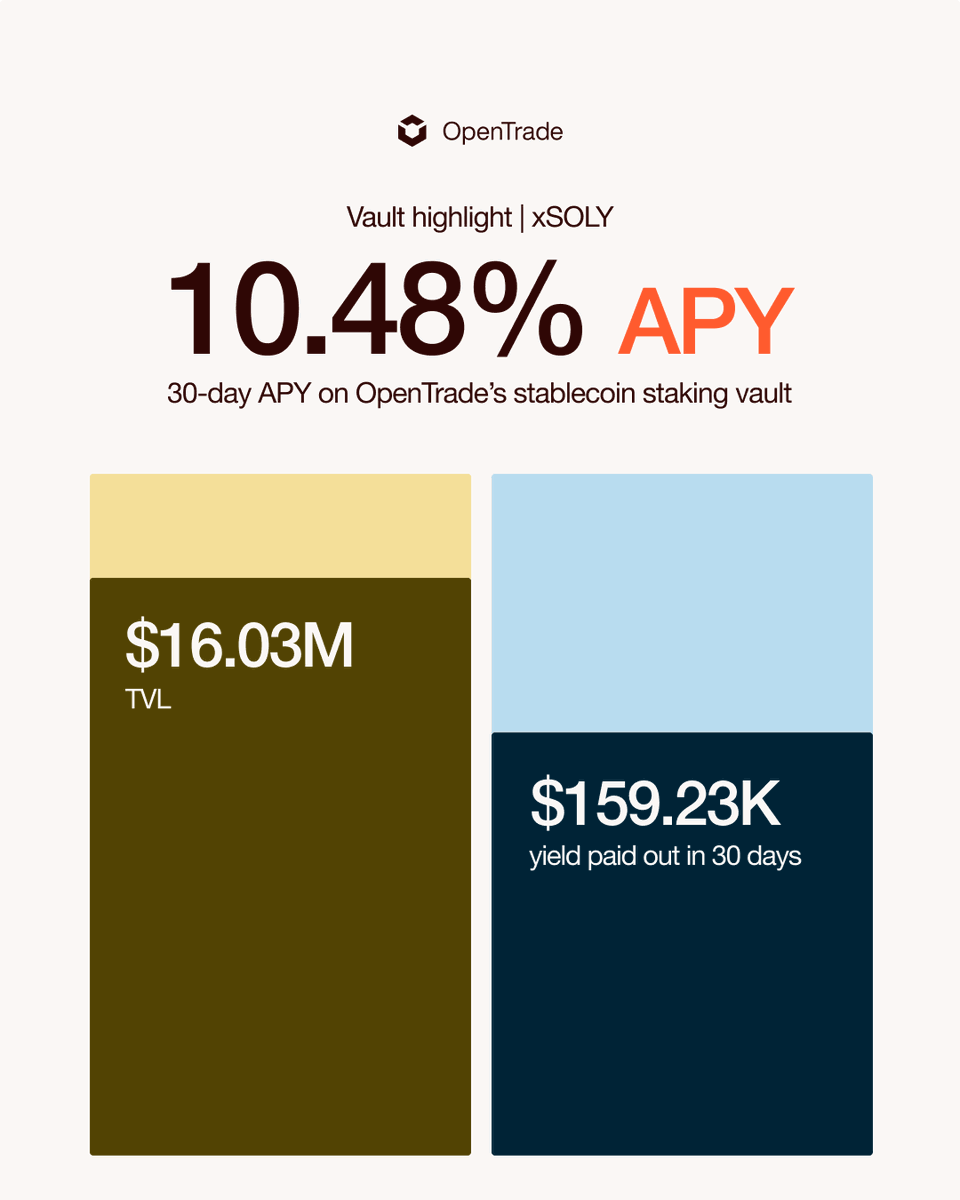
Last 30 days: ~10.48% APY, $159.23K in yield, $16.03M TVL
Earn yield on your users’ stablecoin balances or your own treasury. Get in touch via the link below 👇
We know yesterday's Binance incident has many in the industry concerned. We want to confirm that OpenTrade has not been affected.
Any questions? Our team is always happy to talk. Reach out to your OpenTrade contact or get in touch via the link below 👇