Official journal of NASPEM @naspem & European Group of Pediatric Work Physiology @PWP_2021. Essential reading for all concerned with pediatric exercise science.
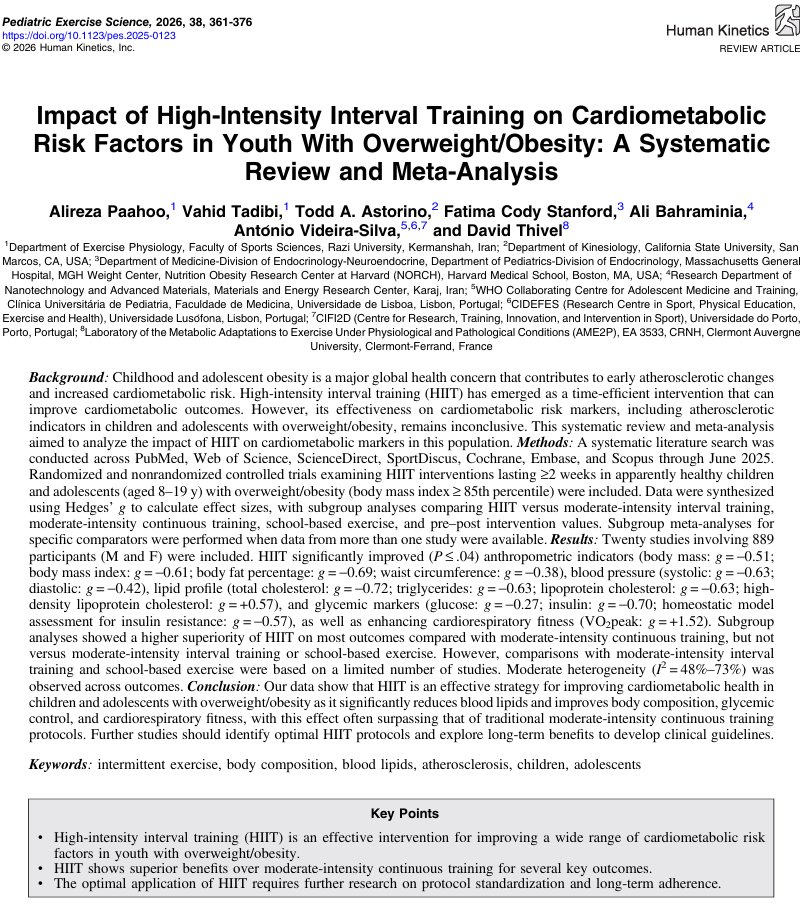
🏃 HIIT works! A systematic review & meta-analysis by Paahoo et al. found that HIIT improves body composition, blood pressure, lipids, glycemic control, and VO₂peak in youth with overweight/obesity.
DOI: https://t.co/LqpIQaWBB5
#HIIT#ChildhoodObesity#ExerciseScience
Want to keep up with the latest research from Pediatric Exercise Science?
📩 Turn on eTOC alerts and have the Table of Contents for each new issue delivered straight to your inbox.
Simply sign in to your HK Journals account, visit the PES homepage, and select “Get eTOC Alerts.”
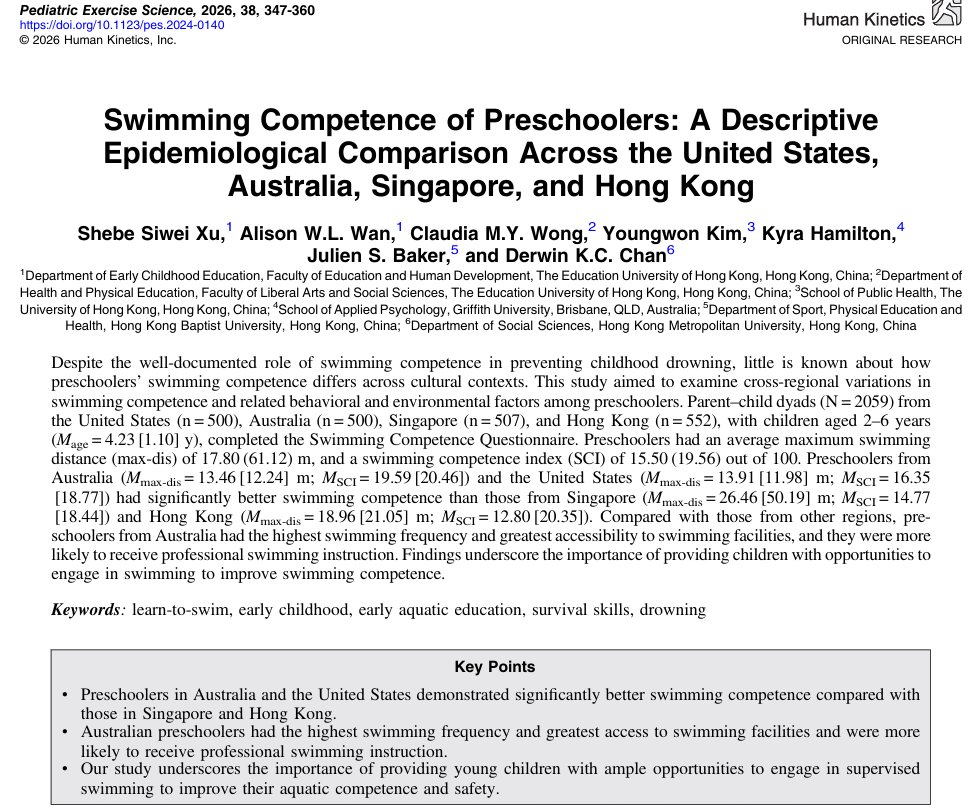
🏊 Xu et al. found that preschoolers’ swimming competence varies across regions, highlighting the importance of swimming opportunities, facility access & professional instruction.
DOI: https://t.co/AmNB5zCllW
#WaterSafety#Swimming#ChildHealth
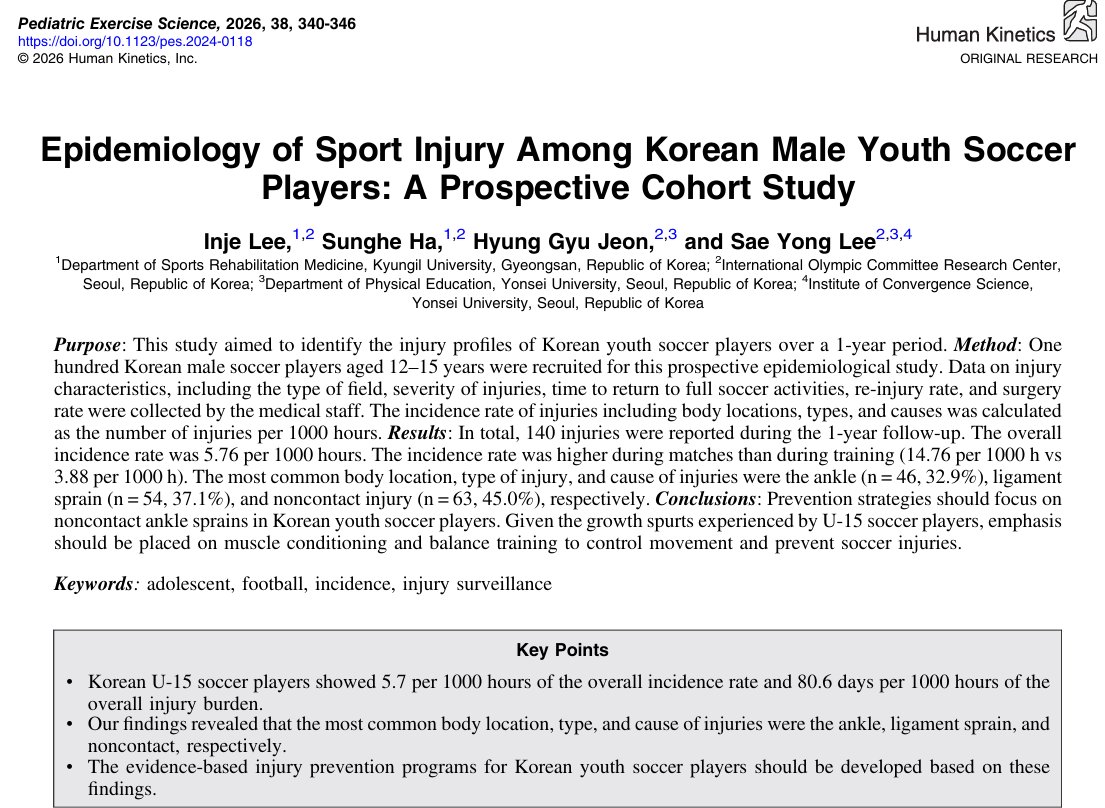
⚽ Lee et al. found that injuries in Korean youth soccer were more common during matches than training, with ankle sprains and noncontact injuries most prominent.
DOI: https://t.co/BZQ1LxiKPh
#YouthSoccer#InjuryPrevention#SportsScience
⚽ Duncan et al. found that poorer functional movement in youth soccer players was linked to higher-risk landing patterns associated with ACL injury.
DOI: https://t.co/PIa2zSygkb
#YouthSoccer#ACL#InjuryPrevention#SportsScience
⚽ Dios-Álvarez et al. found that weekly training load in elite youth soccer increased with more training sessions, while match location was the only match-related factor affecting load.
DOI: https://t.co/1PRLSmRaTn
#YouthSoccer#TrainingLoad#SportsScience
❤️ Schöffl et al. found reduced exercise capacity and slower O₂ pulse recovery in young patients after arterial switch operation or Kawasaki disease, despite no significant differences in echocardiographic measures.
DOI: https://t.co/Z6PshtvUHn
#PediatricCardiology#HeartHealth
Griffith et al. found that youth with POTS and orthostatic intolerance had lower exercise capacity, exaggerated heart-rate responses, and slower HR recovery than healthy peers.
DOI: https://t.co/84eibM0uTb
#POTS#ExercisePhysiology#PediatricCardiology
Olson et al. found that greater physical activity in adolescents with heart disease was associated with less anxiety and depression and better quality of life.
DOI: https://t.co/lWaZSntsvW
#PediatricCardiology#PhysicalActivity#MentalHealth
Lett et al. found that 6 hours/day for at least 4 days provides acceptable reliability for machine learning–based estimates of sedentary time and physical activity, while retaining 94% of participants.
DOI: https://t.co/5GwR2Znjmt
📢Can adding gyroscope data improve energy expenditure prediction in preschool children?
Coyle-Asbil et al. found only marginal improvements with dual-sensor data, supporting the continued use of accelerometer-based models.
DOI: https://t.co/IA1G4w9aZ7
#PhysicalActivity#Children
Findings from Jalanko et al. 👇
Over 8 years, less unsupervised physical activity and more screen time from childhood to adolescence were associated with better cognition in adolescence.
DOI: https://t.co/JOGj639B7Z
#PhysicalActivity#ScreenTime#Cognition
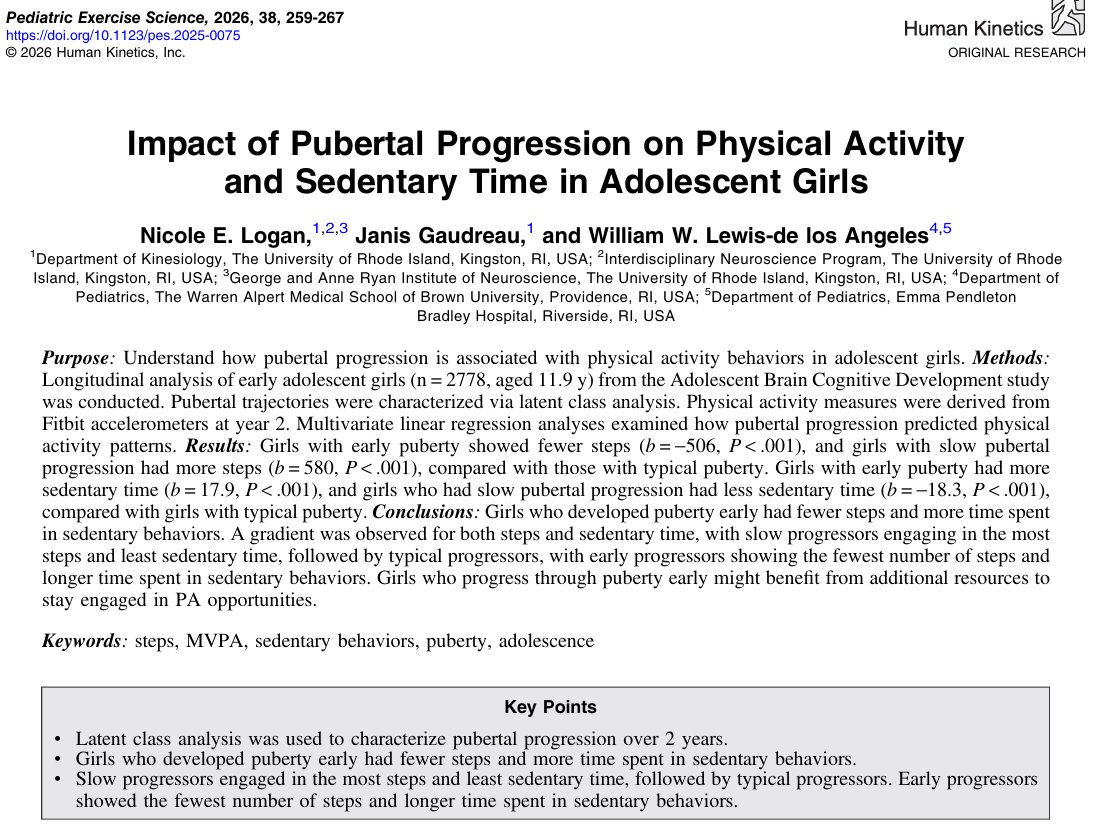
Logan et al. found that girls with early puberty take fewer daily steps and spend more time sedentary than their peers, highlighting the need for targeted support to promote physical activity.
DOI: https://t.co/oYdIUdBoOL
#PhysicalActivity#AdolescentHealth
Palmer et al. 📚 Better locomotor skills were linked to higher physical activity in preschoolers after intervention, but not at 6-month follow-up.
DOI: https://t.co/nGzHg3X9ob
Silveira et al. studied 6,405 children and adolescents and found that cardiorespiratory fitness is the strongest adiposity-independent marker of lower cardiometabolic risk. Agility also showed an independent association.
DOI: https://t.co/5iUhAnO62A
PES Volume 38, Issue 3 (2026) is now available online. https://t.co/ymxNlvP1YC
Latest research on:
a) Children's physiological and physical responses to exercise
b) Exercise in managing pediatric chronic diseases
c) Physical activity for disease prevention and health promotion
⚽A systematic review by Jäger et al. (10 studies, 591 players) found BB may support player development and reduce maturity-related selection bias, but stronger, higher-quality research is still needed.
DOI: https://t.co/vBkR79smH9
Zwiegelaar et al. found 51 different outcome measures across 20 exercise RCTs in juvenile idiopathic arthritis, highlighting the urgent need for standardized, valid, reliable, and age-appropriate assessments to strengthen research and improve care.
DOI: https://t.co/8w69TjWEME
🏐🩸 Ulusahin et al.: Adolescent volleyball players reported lower menstrual pain than nonathletes, despite greater use of dysmenorrhea medication. Supporting menstrual health conversations in young athletes remains crucial.
DOI: https://t.co/NZxLfgSiwq
🏀 New study by García-Angulo et al. shows that modified competition rules in U-13 basketball can increase time spent in cardio-protective heart rate zones and reduce fatigue differences between early- and late-maturing players.
DOI: https://t.co/poFdEeYxIA