Official journal of NASPEM @naspem & European Group of Pediatric Work Physiology @PWP_2021. Essential reading for all concerned with pediatric exercise science.
Ross et al. found that early childhood physical activity differs by race/ethnicity and sex, highlighting the need for tailored strategies to support active lifestyles from a young age. DOI: https://t.co/Ssp8WqjBaU
📢 Ryan et al. found that only 53% of children and adolescents in Fiji met both physical activity and screen time recommendations. Girls were less likely to meet PA guidelines, highlighting the need for targeted interventions. DOI: https://t.co/mmezAds7cS
📢 New publication by Saynor et al.
Exploring barriers to physical activity in young people with Crohn’s disease, highlighting the need for tailored support and lived-experience-informed interventions.
DOI: https://t.co/OuGci4rSs1
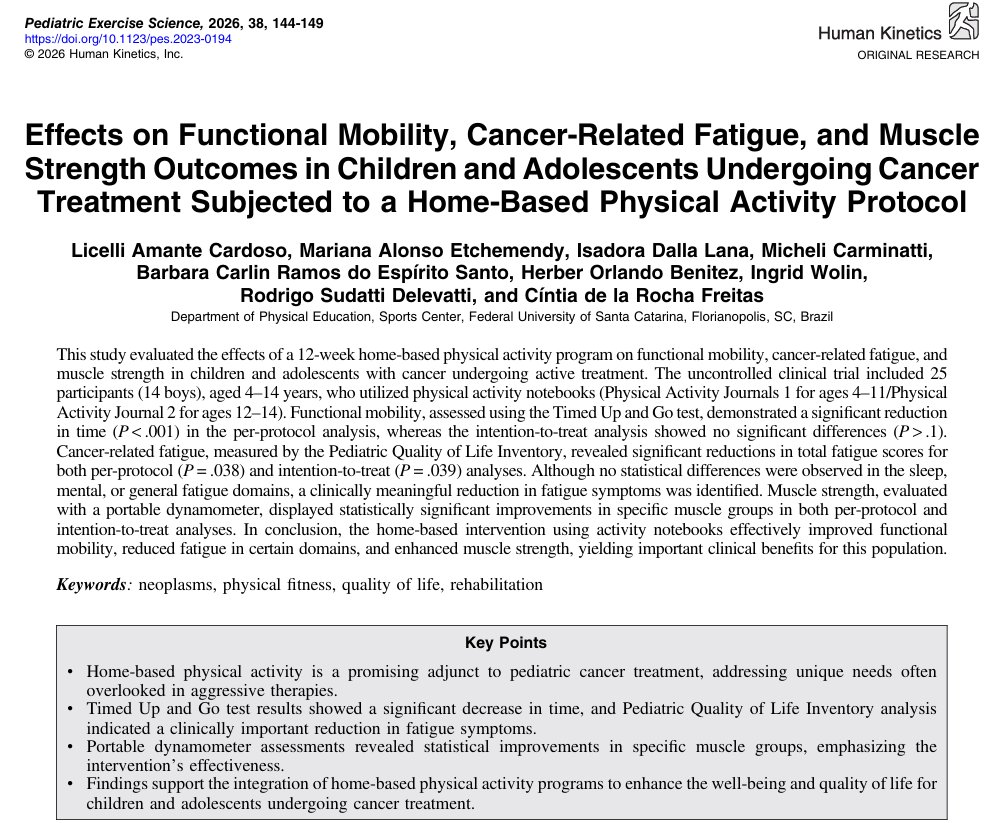
Cardoso et al. found that a 12-week home-based PA program improved mobility, reduced fatigue symptoms, and enhanced muscle strength in children and adolescents undergoing cancer treatment. Simple interventions can make a meaningful clinical impact. DOI: https://t.co/6BVbbFzbmK
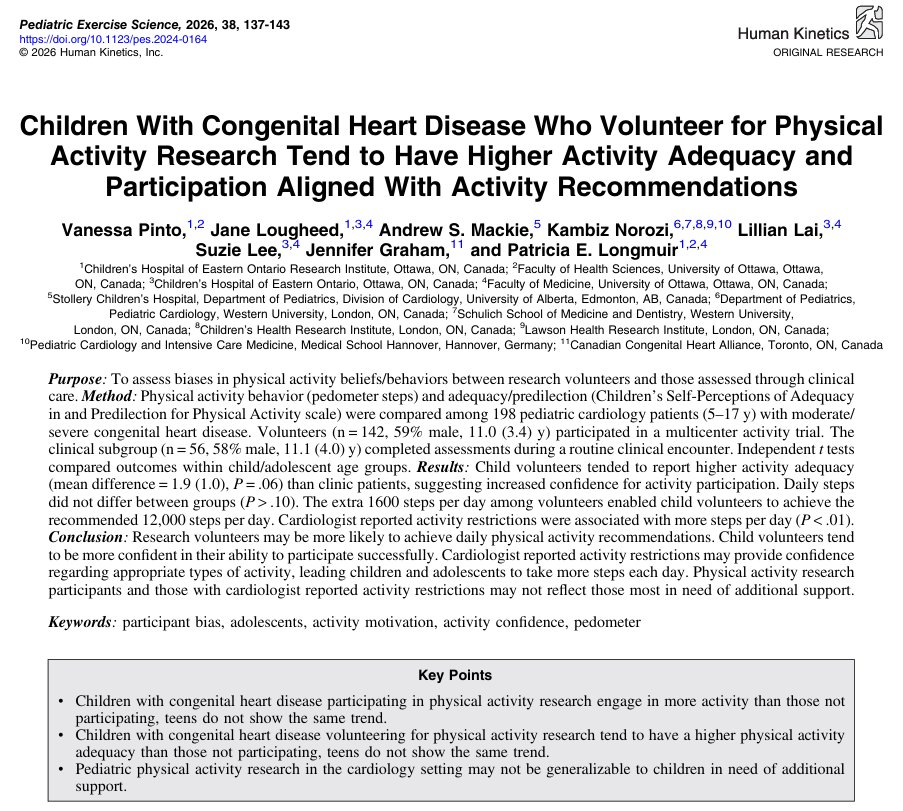
Pinto et al. highlights an important bias in pediatric CHD physical activity studies: children who volunteer for research may already be more confident and more likely to meet activity recommendations than those seen in routine clinical care. 👍
DOI: https://t.co/snh2xZFu3o
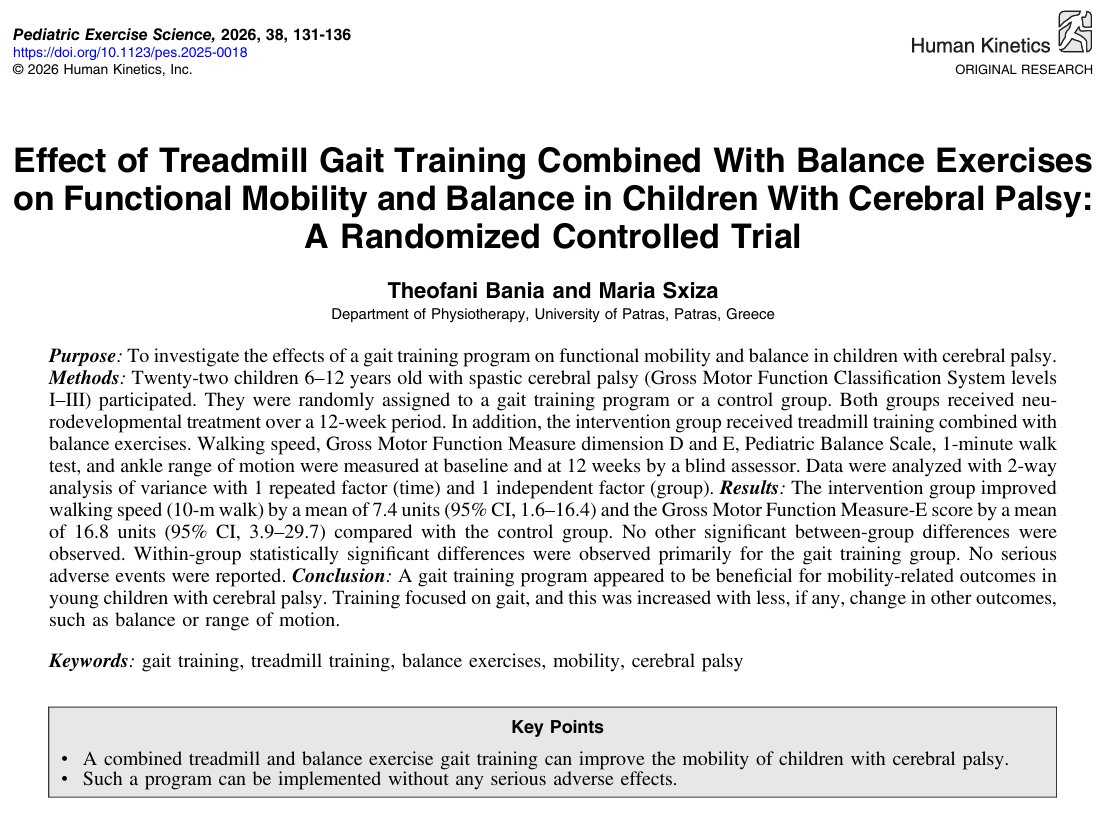
Study by Bania & Sxiza: 12 weeks of treadmill + balance training improved walking speed and gross motor function in children with spastic cerebral palsy compared with controls.
DOI: https://t.co/k54I6eqrUb
Only 29.6% of children with CKD received documented physical activity recommendations in Vega et al.’s study. A reminder that exercise counseling remains underused in pediatric nephrology care.
DOI: https://t.co/DgDhWlNQep
Azim et al. found that trunk-specific training improves trunk control and functional balance in children with unilateral cerebral palsy, with NDT, video game-based, and orthotic-supported approaches showing similar benefits. 👍
DOI: https://t.co/9gFJui0Ppe
📣 PES Volume 38 Issue 2 is now available online at https://t.co/sGLIHuYJLI
Expect the latest studies about
(a) the unique aspects of the physiologic and physical responses of children to exercise
(b) the role of exercise in the treatment of pediatric chronic diseases
👏Engaging in peer review is more than a skill — it’s a pathway to growth.
Our Peer Review Mentorship Scheme is helping shape the next generation of reviewers. 👍
🧐We’re pleased to share insights from participants in our Peer Review Mentorship Scheme.
Paul Galantine reflects on his experience. This scheme continues to support early-career researchers in developing confidence, critical thinking, and high-quality peer review skills.👏
🏆 We’re excited to announce the 2025 PES Article of the Year!
👏 This impactful study highlights improved diagnostic yield using a modified CPET–EIB protocol—advancing care for children with unexplained DOE.
DOI: https://t.co/4mvJUSA8cx
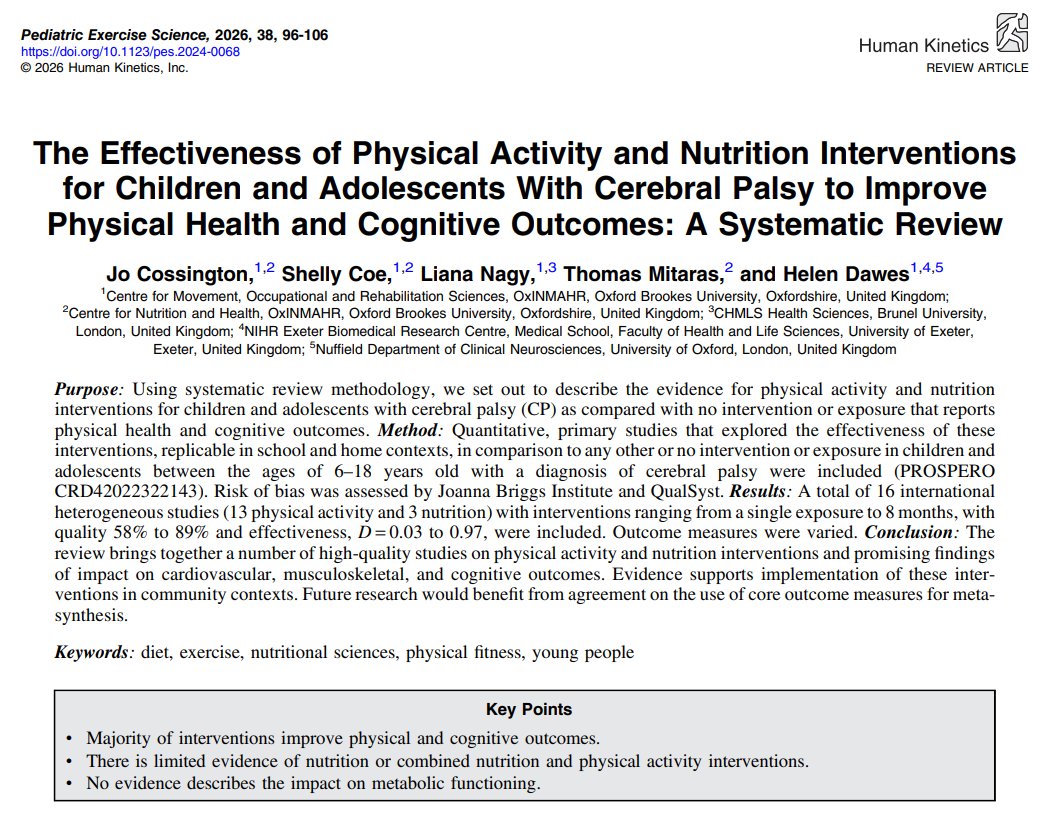
🏃♂️🥗 Cossington et al. show in a systematic review that PA and nutrition interventions may improve cardiovascular, musculoskeletal, and cognitive outcomes in children with cerebral palsy, highlighting the need for standardized outcome measures. DOI: https://t.co/QOO49Oxosk
Kitamura et al.: In 46 boys (5–19 yrs), sprint start reaction time improves sharply until ~8.6 yrs, then more gradually. Rear-leg muscle activation matures early, suggesting whole-body reaction control develops before adolescence. 🏃♂️⚡
DOI: https://t.co/HldSMBPDM2
New study by Morris et al. 🏋️♂️📊
In youth weightlifting, biological maturation > relative age for both selection & performance.
Skeletal age explained ~75% of total load variance.
Talent should account for maturation, not just age.
DOI: https://t.co/YO3LIUTAQt
Çavuşoğlu et al. show that chronic kidney disease reduces functional and pulmonary capacity in children. Advanced stages have the lowest 6-minute walk test, forced expiratory volume in 1 second, and peak expiratory flow. DOI: https://t.co/bMCyZOvkv8
New study by Ge et al.: Exercise & teen mental health show a nonlinear link 🧠🏃♂️
📉2–9.5 hrs/week → lower depression risk
⚠️Too little OR too much (>9.5 hrs/week) → higher risk
👦Excessive exercise especially linked to higher risk in boys
DOI: https://t.co/U2BUzbS9bf
Ahmed et al. 🧪 show that worsening childhood obesity is linked to poorer cardiorespiratory fitness (↓ peak VO₂ & METs, ↑ HR). Cardiopulmonary exercise testing offers an objective way to track and target improvement. 🏃♂️ DOI: https://t.co/So5uQCmngS
Dual-task challenges significantly impair walking in adolescents with ID (P<.001). Physical activity helps in simpler tasks—supporting real-life motor training to reduce fall risk. DOI: https://t.co/WUYy9wQ3fw
M Akdıkan et al. ✍️: In unilateral spastic cerebral palsy, gastrocnemius asymmetry and lumbar extensor symmetry highlight trunk control and muscle balance as key rehabilitation targets. DOI: https://t.co/ITDd0lUCgB