We're extremely proud to announce #PAIN's 2025 supplemental issue: Advancing Pain Research and Management for the Next 50 Years. The entire issue is free to read on our website! https://t.co/sONPcSViZW
Lambert et al. present dual-frequency spinal cord stimulation for chronic pain, a novel approach that exploits the Gate Control mechanism to improve responder rates over conventional stimulation. Learn more in #PAIN https://t.co/jCQQm0Yhfl
Pain Awareness Month Week 4: ADVANCE.
Turn awareness into action through learning, collaboration & evidence sharing. Explore IASP's resources and share how you are advancing pain research, education or care: https://t.co/LcAuqNwQnE
#PainAwarenessMonth#IASP2026
In this week’s #PAIN Featured Image, @PaulWHodges et al. outline a transparent process through which agreement on the definition of “central sensitization” may be achieved. Learn more at https://t.co/mC5avGdbgO
In this week’s #PAIN Featured Image, @PaulWHodges et al. outline a transparent process through which agreement on the definition of “central sensitization” may be achieved. Learn more at https://t.co/mC5avGdbgO
@manishkmadasu et al. identify a novel role for peripheral kappa opioid receptors in cold hypersensitivity associated with chemotherapy in a mouse model. Learn more in #PAIN https://t.co/i9xg4iOYHZ
New #IASP2026 registrants can add one of two Hands-On Workshops on 26 Oct for $99:
- Pain assessment in older adults
- Communication skills in pain treatment
World Congress registration required: https://t.co/nzMQzHAEpk
Zheng et al. find that somatosensory alpha neurofeedback alleviates tonic pain through dual pathways. Oscillation-to-network reorganization reduces sensory intensity, while performance-to-affect reinforcement alleviates unpleasantness. Learn more in #PAIN https://t.co/P60f9iOwvc
Nadinda et al. identify variations in the network structure of cognitive-affective-behavioral factors in individuals with chronic low back pain, indicating the need for a more personalized approach. Learn more in #PAIN https://t.co/td584bpHPE
Pain Awareness Month Week 3: PARTNER.
People with lived experience are essential partners in pain research, education & advocacy.
Explore IASP's resources and share partnership in action: https://t.co/LcAuqNwQnE
#PainAwarenessMonth#GAPPA
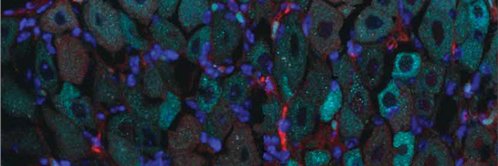
In this week’s #PAIN Featured Image, @KhannaLabUF et al. depict the computational pipeline converting the endogenous proresolving lipid maresin 1 into a stable small-molecule agonist of the satellite glial receptor GPR37L1. Learn more at https://t.co/dtXUQEI3ux
Gungormus et al. find that the type of everyday acoustic environment significantly influences clinical and experimental pain in individuals with fibromyalgia syndrome, with urban sound exposure associated with greater pain. Learn more in #PAIN https://t.co/WznAH5T1z5
Jenkins et al. report that psychological factors partly explain progression from acute low back pain to future disability, identifying pain self-efficacy as the dominant mediator. Learn more in #PAIN https://t.co/Z7C0R3cU58
Practice rTMS & tDCS techniques at the #IASP2026 Hands-On Workshop, Non-Invasive Neuromodulation for Pain, on 26 Oct in Bangkok. Additional seats are now available. Additional registration required: https://t.co/3KgiCDU1ZR #PainEducation
@ralia779 et al. find that adolescent females had higher chronic postsurgical pain (CPSP) after spinal fusion than males. Postsurgical behavioral distraction and emotion-avoidance coping partially mediated sex differences in long-term CPSP #PAIN https://t.co/v5JkWnMSi0
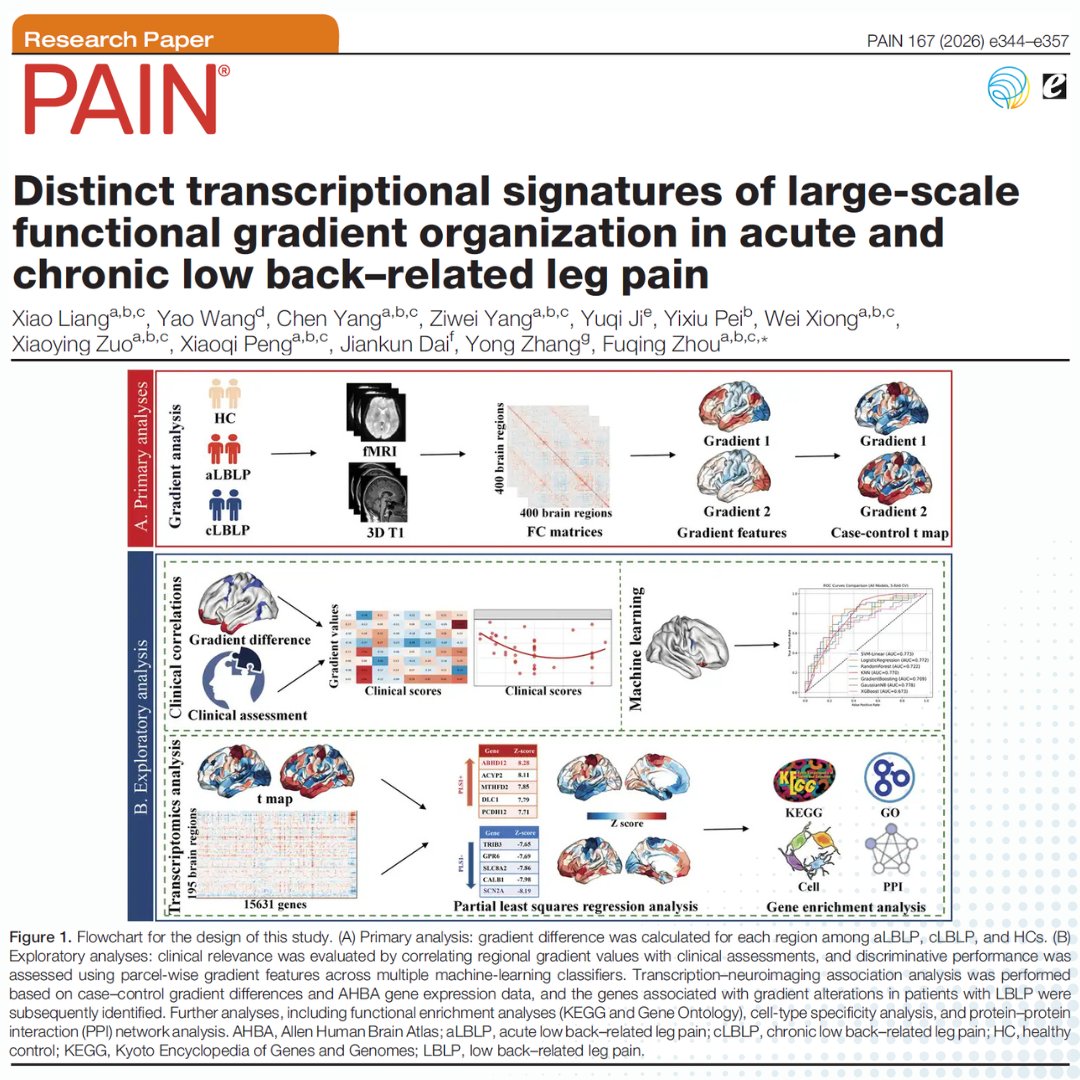
Liang et al. find that acute radicular pain disrupts hierarchical processing linked to energy metabolism dysregulation, whereas chronic pain involves affective-attentional reorganization linked to synaptic plasticity. Learn more in #PAIN https://t.co/ZQohtHADbx
Pain Awareness Month: ADVOCATE.
Explore resources to help people living with pain prepare for care conversations, partner with health professionals & build self-management skills.
Share what supports advocacy: https://t.co/LcAuqNwQnE #PainAwarenessMonth
In this week’s #PAIN Featured Image, Litewczuk et al. present a schematic representation of their study design. Results confirm the essential role of capsaicin-sensitive nociceptors for heat pain. Learn more at https://t.co/YJAUZT95WR
In this week’s #PAIN Featured Image, Litewczuk et al. present a schematic representation of their study design. Results confirm the essential role of capsaicin-sensitive nociceptors for heat pain. Learn more at https://t.co/YJAUZT95WR