🚨BIG NEWS: I’m thrilled to share that StrataPT has raised $25 million to accelerate our mission to help PT, OT & SLP practices run and grow better.
Until now, we relentlessly focused on our customers because, as a bootstrapped company, that was the only way to ensure our own growth.
The result is that we’ve built an integrated EMR and billing-aware practice management system that delivers nearly 100% reimbursement rates for our clients.
Read that last line again….”nearly 100% reimbursement rates.” It’s impossible to achieve this level of proven results with the current mix-and-match being peddled across our industry. And this is why we’re so excited to continue helping therapy practices grow.
There are thousands of additional practices across the country today that need our help running and growing their businesses. This new money, alongside the incredible team we’ve built, will help us do just that.
More details on the deal (including our upcoming plans) here: https://t.co/xXTyYUDRac
High cancellations is a huge issue in the Peds & Neuro space...here's how to solve that:
The Problem:
Long plans of care → Parent fatigue → High cancellations → Weak outcomes and affected pay.
Why it happens: Families are managing YEARS of therapy, not months.
Life interrupts — vacations, illnesses, school schedules. Skipping a session feels "harmless" after so much time.
What smart practices are doing:
✳️ Short bursts of focused therapy (6-8 weeks)
✳️ Built-in breaks (2-3 months)
✳️ Reassess and reboot after the break
The impact:
🔹 Higher compliance during active phases
🔹 Fewer cancellations
🔹 Stronger long-term outcomes
Lesson:
A well-timed pause can be just as powerful as a push.
How have you adapted your plans of care to keep families engaged?
The rehab community is under the microscope right now... here’s why 👇
Audits are increasing.
And a growing number of payers and billers are raising red flags about how Remote Therapeutic Monitoring (RTM) is being used in rehab.
The Peterson Health Technology Institute recently released a major report highlighting the problem:
When RTM and Remote Patient Monitoring (RPM) are used as add-ons — layered over in-person visits without clear integration — healthcare costs go up, but outcomes don’t necessarily improve. 🚨
Right now, too much RTM use looks like a passive revenue generator rather than a purposeful care tool.
Instead of shortening plans of care, improving continuity, or supporting hybrid models, it's often just extending the billing cycle.
And insurers are noticing.
RTM was designed to meet specific patient needs — not to inflate claims.
We need to lead with purpose, not convenience.
Otherwise, someone else — auditors, regulators, insurers — will step in and set the rules for us.
📣 If you're using RTM in your practice: – Are you tracking whether it shortens plan of care timelines?
– Are you measuring whether it improves outcomes or continuity of care?
– Are you ensuring it supplements treatment, not simply adds charges?
Innovation is vital.
But if we lose sight of outcomes, we risk losing the trust that innovation depends on.
h/t: Dana Strauss
#physicaltherapy #PT #RTM
People think the market is too crowded or too uncertain to start a clinic.
I disagree — there has never been a better time to open a practice… if you approach it like a real business. 📈
Why?
Because most of your “competitors” aren’t actually competitors.
They’re well-intentioned clinicians doing great work — but they’re not running businesses.
They don’t understand the numbers, they don’t measure performance, and they’re making decisions based on gut feel instead of data.
If you can learn the basics that most owners ignore:
• simple cash flow
• patient lifetime value
• basic selling
• unit economics
• how to track performance
• how to price and package services
• how to understand your true capacity
…you instantly separate yourself from 80% of the field.
The bar is lower than people think — and the opportunity is higher than it’s ever been.
The market isn’t crowded.
It’s full of clinics that aren’t operating like businesses.
This is the window. Don’t waste it.
In private practice, we’re taught to celebrate more referrals as a sign of growth.
But here’s the uncomfortable truth:
Not all referrals are revenue-positive.
Some insurance plans—Humana being a common example—reimburse so far below Medicare that every visit becomes a loss leader. And if a high-volume referral source is sending mostly low-paying plans your way, you’re not scaling… you’re silently bleeding.
Most clinics don’t realize this until they finally run the numbers.
Volume looks good.
Schedules look full.
Profit evaporates.
This is why tracking referral sources without understanding the financials behind them is a trap.
The smartest practice owners take it a step further: they have transparent, data-driven conversations with their referring physicians.
It’s not about complaining.
It’s about alignment.
Physicians understand margins—they live in the same healthcare economy you do. When you show them that a disproportionate volume of low-reimbursing plans is putting your clinic underwater, most are surprisingly receptive. Many actually adjust their referral patterns once they understand the impact.
Because when you treat them like partners—not just sources of names on a schedule—your relationship gets stronger, not weaker.
The bottom line?
Full schedules don’t matter. Profitable schedules do.
And the practices willing to confront the financial reality behind their referrals are the ones that will survive the next decade.
Too many clinics default to the same template: 3 visits a week for 6 to 8 weeks, regardless of the patient’s lifestyle, goals, or circumstances.
But here’s the thing: Consumers are getting smarter. 💡
They’re expecting tailored, flexible, and realistic care. They know their time and money are limited, and they’re not afraid to ask for alternatives.
Some patients thrive with a high-frequency model.
Others may do better with a once-a-week cadence + remote check-ins + a killer HEP they’ll actually follow.
As clinic owners, it’s time to get creative and strategic with our prescriptions:
✅ Mix in group visits or hybrid models.
✅ Build accountability into digital tools.
✅ Customize plans based on who the patient is, not just what the diagnosis says.
Bottom line: Care plans should fit the patient, not the clinic’s schedule.
Let’s lead the way on personalized, accessible care—and show patients we’re listening.
Right before a clinic runs out of money — usually about 90 days before it closes, this typically happens…
Instead of selling, marketing, or bringing more patients through the door, the owner suddenly becomes obsessed with operations.
They start:
• redesigning the front-desk workflow
• tweaking the intake experience
• reorganizing the exercise flow
• fixing internal processes
All important things — but none of them generate cash when you actually need cash.
Most practices don’t fail because of competitors or low reimbursements.
They fail because selling was neglected — and then, in the final 60–90 days, it shuts off completely.
When pressure hits, owners retreat into the familiar:
treating, reorganizing, adjusting systems, optimizing workflows…
everything except the one activity that keeps the doors open.
Getting more people through the door. 🤯
When cash is tight, your instinct is to hide in operations.
But the solution is the complete opposite:
✅ Talk to more people
✅ Create more demand
✅ Sell more, not less
If you want to keep your clinic alive, remember this:
Operations can be fixed later.
Revenue can’t.
One of the biggest debates in rehab therapy right now is clinician adaptability.
Many clinics report clear differences between long-tenured clinicians and newer graduates—especially around openness to updated techniques, evolving research, documentation expectations, and modern patient engagement methods.
Common industry observations include:
• Experienced clinicians often bring deeper clinical judgment and pattern recognition.
• Newer clinicians tend to adopt new evidence, technology, and treatment models more quickly.
• Each group may face challenges when clinical standards or expectations shift.
This isn’t about declaring one group “better.”
It’s about understanding how to balance strengths in a field that changes faster than most people realize.
How a clinic structures continuing education, mentorship, and expectations around adaptability often matters more than years in the profession.
A practical question for leaders:
👉 Do you have a dedicated clinical education lead in your clinic?
👉 And if you had to build a team today, would you choose a group skewing 15–20+ years of experience… or a younger team with under 5 years?
If the education pipeline for PT, OT, and SLP doesn’t change soon, these "professions" are in real trouble.
The recent Department of Education “professional program” downgrade has everyone talking about image, status, and terminology.
But the real impact isn’t the label—it’s the loans.
This shift threatens the repayment options and financial protections students rely on. And in fields already drowning in debt, that’s the most dangerous part.
Because the crisis didn’t start with a reclassification. It’s been building for years:
💰 New grads buried in six-figure loans
🤯 Salaries that haven’t kept up
📉 Softening enrollment
📈 Rising burnout
🚨 Clinics unable to hire fast enough
The downgrade didn’t cause the workforce problem—it exposed what’s been quietly eroding it.
And yes, contacting representatives matters. Advocacy matters. But even if this decision gets reversed, the underlying issues will still be sitting there, untouched.
If these professions want a sustainable workforce, the entire education pipeline needs structural reform—not just a semantic victory.
🚨 Make the degree financially realistic.
The core issue isn’t prestige—it’s affordability. 🚨
If students can’t reasonably repay their loans, the profession will keep losing talent before it ever enters the workforce.
Therapy is one of the only healthcare fields with a single rigid entry route. And that rigidity is shrinking the pipeline.
We need more ways in:
Bridge programs for assistants
Part-time and modular degree pathways
Apprenticeship-style training models
Tiered competency levels (like nursing)
Flexible pathways don’t lower standards—they increase access.
APTA, AOTA, ASHA, and academic programs can’t only fight the downgrade. They have to address the conditions that made the downgrade so alarming in the first place:
🤑 The cost
🔗 The rigidity
🧱 The outdated structure
🤝 The mismatched incentives
This moment is more than a classification debate.
It’s a chance to rebuild a system that attracts more clinicians—not fewer.
Curious, what solutions do you think actually move the needle?
One of the biggest challenges in cash-based therapy models is this: clients love gadgets.
Shockwave, tape, ultrasound—you name it. The “shiny stuff” feels good, feels fast, and feels worth paying for.
Some argue that “outcomes drive a cash-based practice.”
But I’d push back a bit.
If patients expect something high-tech or hands-on at every visit, it’s tough to keep them long enough to deliver true outcomes unless you meet that expectation—at least initially.
On the other hand, it’s equally hard to convince cash-pay clients that what makes them feel good today (the gadgets) isn’t actually solving the long-term issue.
It’s a tricky balance between value, perception, and education.
Agree or disagree?
#physicaltherapy #healthcare #healthcaretechnology #occupationaltherapy
For clinic owners exploring outside capital, it’s critical to know the investor on the other side of the table — and the criteria they’ll use to evaluate your clinic.
Let's break it down 👇
1️⃣ Angel Investors
Individuals writing early-stage checks.
Fast decisions.
High risk tolerance.
They typically fund innovation more than clinic operations — but they shape emerging care models.
2️⃣ Private Equity (PE)
Funds looking for scalable businesses with predictable EBITDA.
They care about:
✔ repeatability
✔ operational discipline
✔ clean financials
✔ documented processes
PE doesn’t buy “potential.”
They buy performance.
3️⃣ Strategic Acquirers
Health systems, regional groups, or companies where PT adds strategic value.
They prioritize footprint, competitive advantage, and integration — not just profit.
4️⃣ Family Offices
Long-term, patient capital from high-net-worth families.
Often more flexible, less aggressive, and more relationship-driven than traditional PE.
Why this matters for rehab therapy owners:
Because when you understand who you’re talking to, you finally understand what they value — and how to position your clinic as a true asset, regardless of growth stage.
Your clinic is on one of two paths right now — bought or sold. The scary part? Most owners don’t know which. Here's the difference ⬇️
When you’re bought:
You’ve built a clinic with predictable revenue, strong margins, clean billing, and low operational noise.
People approach you.
You have leverage.
You choose the terms.
When you’re sold:
You’re exiting because the business is wearing you down — inconsistent processes, margin pressure, staffing headaches, reimbursement strain.
You don’t choose the timing.
You don’t choose the terms.
The market chooses them for you.
Same profession.
Same owners.
Completely different outcomes.
And the hard part?
Most owners don’t know which category they’re in until it’s too late.
The whole point of Moneyball is helping practice owners move from the sold side of the equation to the bought side by strengthening fundamentals long before an exit is even on the table.
Healthcare needs a mindset shift from
"Insurance doesn't pay for that" to "Let's figure out a way to create the best patient experience"
Simple forms of communication are crucial, especially when the technology is readily available.
Clinic owners, don't fall into the "insurance doesn't pay for that" trap - be entrepreneurial. Find a solution to the patient's & therapist's problems.
#healthcare #physicaltherapy #healthcaretechnology
One of the sneakiest (yet most important) question practice owners rarely think to ask is THIS 👇🏻
“Is any of my data being stored offshore?”
Offshore data storage is one of the biggest hidden risks in healthcare.
And most owners don’t realize it’s happening behind the scenes.
Data security isn’t just an IT issue — it’s a business-risk issue. When PHI or operational data leaves the United States, the protections and oversight you rely on don’t always go with it.
Here’s why location matters:
1. Different legal jurisdictions
Once data lives offshore, it becomes subject to foreign laws and government access policies. HIPAA doesn’t travel across borders.
2. Limited visibility and transparency
It’s harder to know who can access your data, how it’s being handled, and what third parties are involved.
3. Slower or fragmented incident response
International hosting and time zone differences create delays when something goes wrong — and in healthcare, delays matter.
4. Increased compliance and business risk
A single incident involving PHI can trigger investigations and damage patient trust, and those challenges multiply when the data isn’t domestic.
If you’re trusting a partner with your clinic’s lifeblood information, you should be asking:
Where is our data stored?
Is any portion offshore?
Who can access PHI and from where?
What protections exist if the infrastructure is international?
Most practices are shocked by the answers when they finally dig in.
For full transparency: StrataPT is entirely U.S.-based, and all data remains within the United States. Because when it comes to patient trust, certainty matters.
In both tech and healthcare, the real barrier isn’t money — it’s mindset.
Today, you can launch a practice for as little as $1K–$5K using mobile care, lean operations, and cloud-based tools. The limiting factor isn’t capital… it’s the belief that you need permission, perfection, or a big budget to start.
Starting a practice has never been more accessible. The challenge is embracing a lean startup mentality: start small, test fast, iterate constantly.
Entrepreneurial success in healthcare isn’t about avoiding risk — it’s about managing it intelligently.
#LeanStartup #HealthcareEntrepreneurship #TechInHealthcare #BusinessGrowth #RiskAndReward
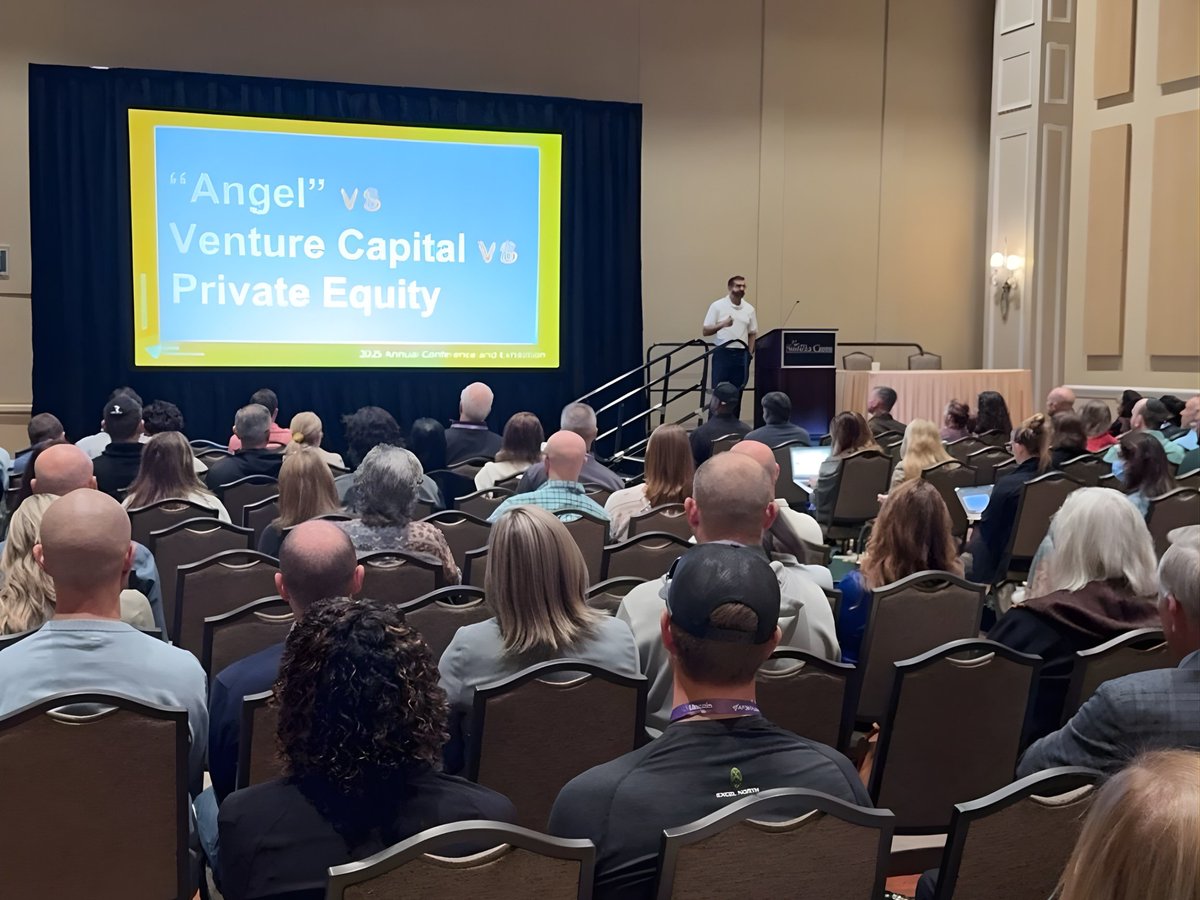
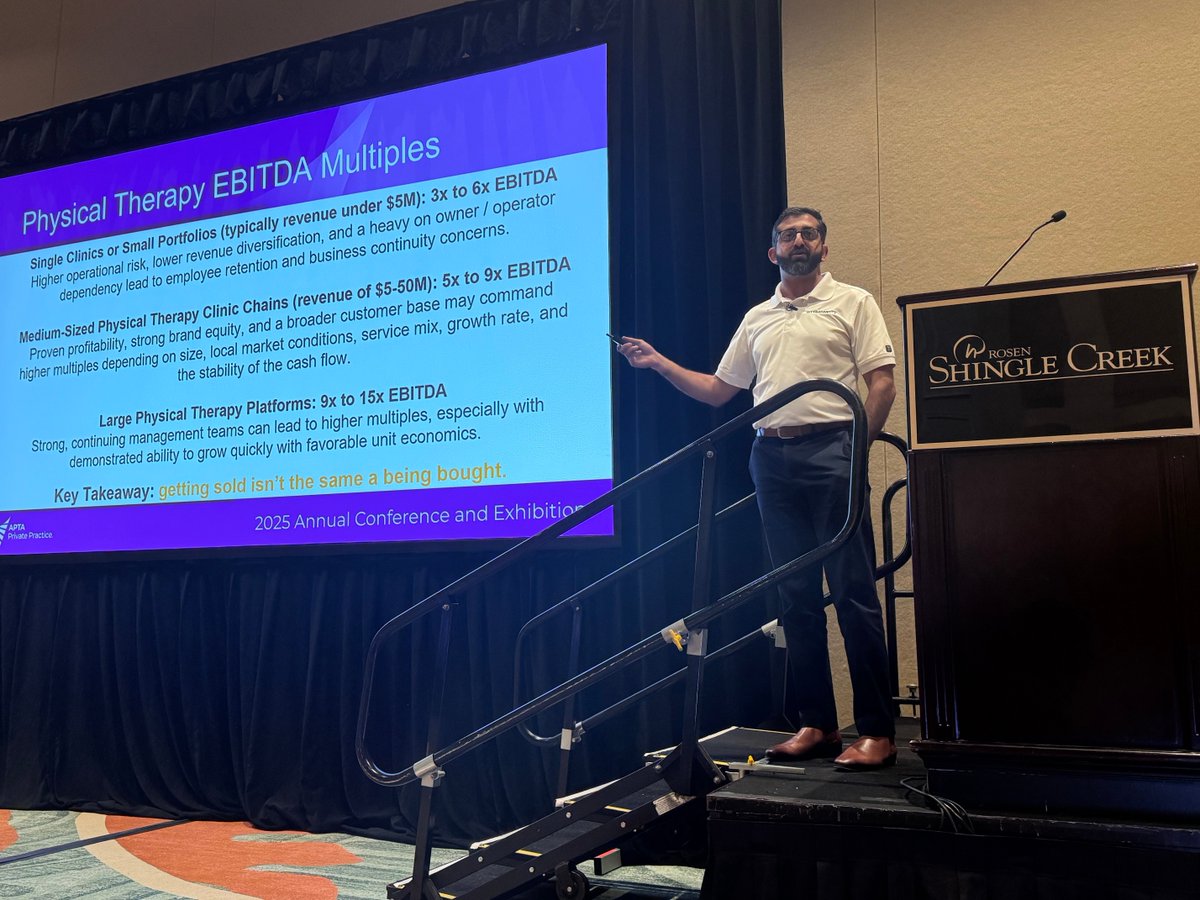
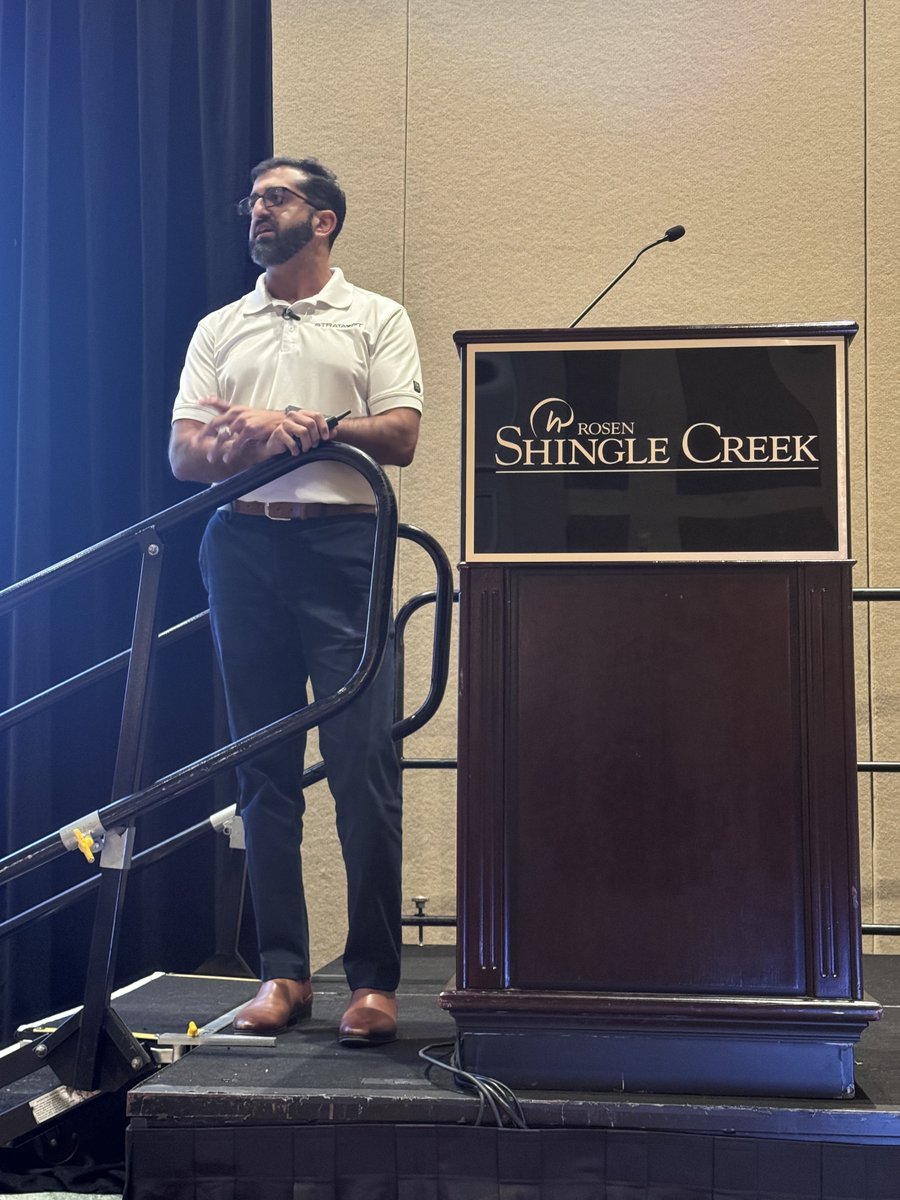
First time speaking at PPS! ✅
Every time I get the chance to speak with practice owners, I’m reminded how much entrepreneurial thinking belongs in healthcare.
The more we treat our practices like real businesses, the more impact we can have on patients, staff, and our communities.
Thank you to everyone who showed up, asked questions, and challenged ideas!
Excited to have more conversations today! Stop by our booth (#1201) if you're around!
#APTA #APTAPPS #APTAPPS2025
This is one of the biggest drivers of new patients and retention:
👉 Do you have openings when people actually want care?
A few questions clinic owners should be asking:
1. Do you offer early morning or evening slots for working professionals?
2. How many days out is your average new eval scheduled?
3. Can someone book online without jumping through hoops?
4. Do you hold capacity for same-day or next-day appointments?
Operational flexibility = competitive advantage.
The clinics that win are the ones that design their schedules around patients, not just around provider preferences.
This isn’t about burnout or overbooking.
It’s about being intentional with availability.
If a patient can’t get on your schedule this week, they’ll find someone else’s who has room.
Greater availability is a growth strategy. Agree or disagree? 🚀
Too many clinics default to the same template: 3 visits a week for 6 to 8 weeks, regardless of the patient’s lifestyle, goals, or circumstances.
But here’s the thing: Consumers are getting smarter. 💡
They’re expecting tailored, flexible, and realistic care. They know their time and money are limited, and they’re not afraid to ask for alternatives.
Some patients thrive with a high-frequency model.
Others may do better with a once-a-week cadence + remote check-ins + a killer HEP they’ll actually follow.
As clinic owners, it’s time to get creative and strategic with our prescriptions:
✅ Mix in group visits or hybrid models.
✅ Build accountability into digital tools.
✅ Customize plans based on who the patient is, not just what the diagnosis says.
Bottom line: Care plans should fit the patient, not the clinic’s schedule.
🚨 Big News: We’ve officially launched Mako — our team of AI-powered agents built to get you paid. Details below 👀
Too many clinics are still stuck trading great patient care for financial stability.
❌Denials.
❌Documentation guesswork.
❌Revenue leaking out everywhere.
Mako ends all of that.
It works automatically behind the scenes to:
✅Validate policies before the visit even starts
✅Recommend optimal charges based on payer rules
✅Monitor claims proactively to reduce the chance of denials
The Result: fewer denials, faster reimbursement, and confidence that every visit gets billed right the first time.
If you want to learn more about Mako, check out the link in the comments below or book a demo with our team.