The Payne Institute for Public Policy @coschoolofmines. World-class insights informing policy on energy, extractives, space, security, and the environment.
My latest for the The @WSJopinion has dropped in time for weekend reading:
On May 11, the Interior Department approved the nation’s first Tribal Energy Resource Agreement. This allows the Southern Ute Indian Tribe of southwestern Colorado to approve its own energy-related leases, rights of way and business agreements without federal signoff. It has been a long road: Legal authority for such agreements was enacted in 2005.
The @payneinstitute NAMES initiative does great work in this area - take a look and join us: https://t.co/32Wa4UANN6
https://t.co/WpIU8hhrM5
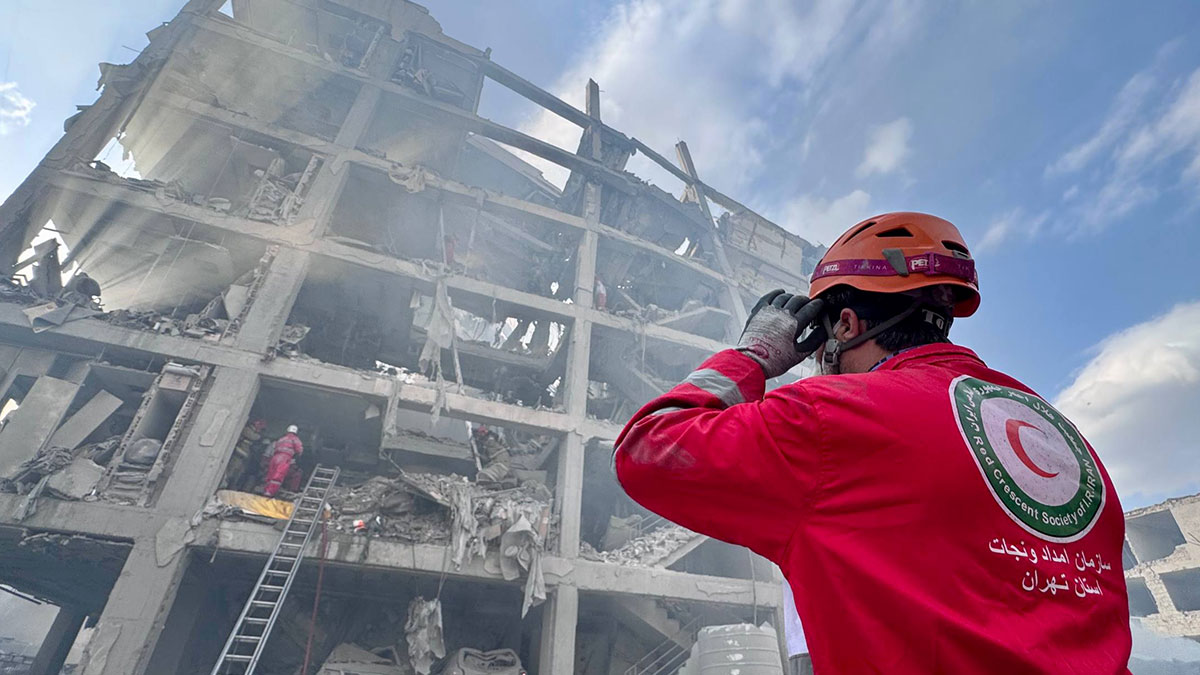
Attacks on water systems as part of war have been happening for millennia. And now drones and cyberattacks are being used to devastating results.
"Iran’s approach has more in common with Julius Caesar’s Siege of Uxellodunum in 51 BC. In that campaign, Caesar and his legions subjugated a Gallic garrison by exerting fire control over access to a nearby river and then digging a tunnel to divert the spring that sustained the rebel fortress in what is now France, as recounted in the eighth book of Caesar’s Gallic War.
The difference in today’s era of increasingly democratized long-range strike is that cutting off water supplies does not require Caesar’s legions, siege works, and underground galleries. A relatively small number of drones, each costing about as much as a typical new American pickup truck, can shut down a water system supplying hundreds of thousands, or even millions of people."
https://t.co/b29wUHUeQ5
Please join the @payneinstitute for our 5th Annual Critical Minerals Symposium on September 24&25. Registration and sponsorships are available. Draft agenda can also be found at the link.
https://t.co/LWSpCCjYuf
In a new essay for the Modern War Institute at West Point, we consider the frail supply chain for something called RDX - an explosive crucial to military munitions.
"An Explosive Problem: Energetics, Supply Chain Fragility, and US Military Readiness"
https://t.co/xhoqIPQCrD
We just put out a new analysis in @WarOnTheRocks. It looks at targeting water infrastructure in war.
"Cheap Drones, Dry Taps: The Iran War Opens a New Era of Water Infrastructure Risk"
Water and energy infrastructure have become one of Iran’s main levers of deterrence against the United States.
https://t.co/b29wUHUeQ5
Our @payneinstitute Energy Finance Lab examines the House and Senate Armed Services Committees FY2027 National Defense Authorization Act (NDAA), Congress’s annual defense policy bill.
"Making Government Equity Ownership Official"
https://t.co/WweslIRqjt
IEA country stock releases have bought the market time, but not fixed the problem. Read the first in our three-part series on the shortage caused by the #Iran war, written by @MBazilian and @websterdrake for 𝑷𝒆𝒕𝒓𝒐𝒍𝒆𝒖𝒎 𝑬𝒄𝒐𝒏𝒐𝒎𝒊𝒔𝒕 #OOTT
https://t.co/9dsveo8Kwj
Our @payneinstitute latest comment looks at Pakistan's solar surge, as one of the world’s largest importers of solar panels.
"Pakistan’s Solar Surge"
https://t.co/fedFA4WD6P
Today, we published an article on building the workforce for quantum systems:
“Commercial success in quantum computing will depend as much on engineers, technicians, and skilled trades as on scientific breakthroughs.”
https://t.co/OuMoohSAN0
In a new piece for AIX Energy, the @payneinstitute takes a look at the financing and risk associated with investing in AI data centers.
Some focus here on VC funding.
"Who Is Financing the AI Buildout, and Where Is the Risk Going?"
https://t.co/x8iPUkipJK
For your weekend reading pleasure:
"The Industrial Race Behind Hypersonic Weapons"
China has spent years developing a robust industrial and research sector supporting hypersonic weapons development. To catch up, the United States has its work cut out.
https://t.co/lAMsz9dN7l
The war with Iran has multiple impacts beyond the price of gasoline. "The Impacts of the Iran War on LPG for Cooking"
When the United States and Israel struck Iran , one the conflict’s largest impact in some developing economies was gas for cooking.
https://t.co/4BX8TilAIb
The @payneinstitute has been monitoring global wildfires from the Pacific Northwest in the USA, to Spain and France.
We monitor the world each night with our satellite capabilities, and have been doing so for well over a decade.
https://t.co/fCulnW6SZu
The @payneinstitute has been monitoring global wildfires from the Pacific Northwest in the USA, to Spain and France.
We monitor the world each night with our satellite capabilities, and have been doing so for well over a decade.
https://t.co/v7B8UWPAYf
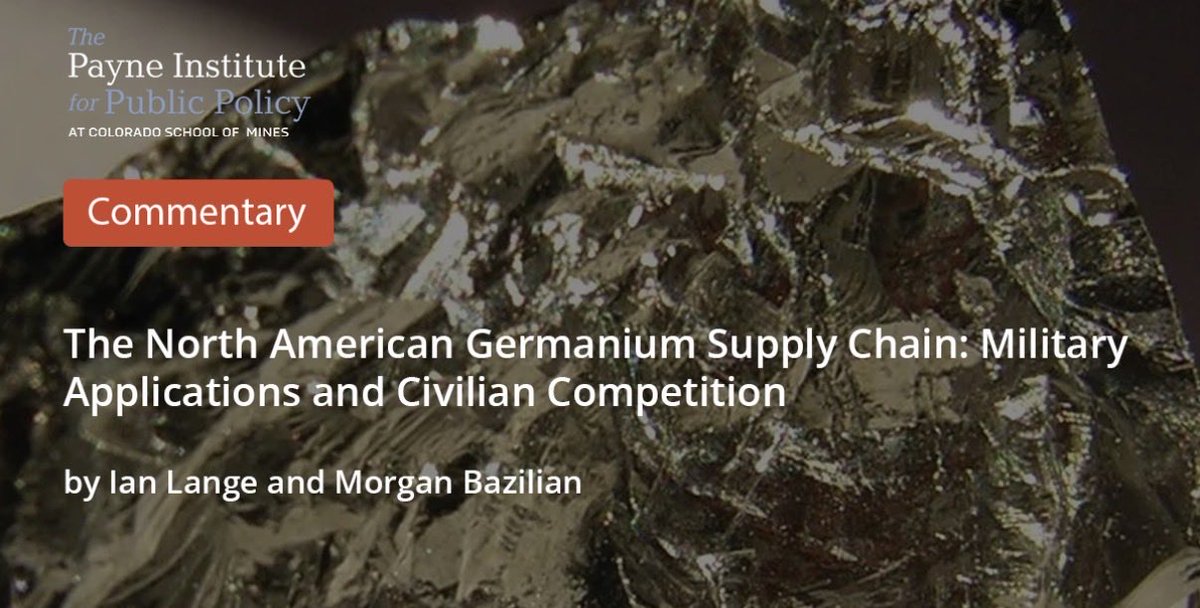
Our latest @payneinstitute Comment looks at the details of the North American supply chain for germanium for both military and civilian uses.
https://t.co/F9Hf2Gtj6N
Our @payneinstitute Director @MBazilian and AIXEnergy's Brandon Owens look at how Washington is opening energy sites and military bases to data center developers.
"The Federal AI Land Rush Is an Execution Test"
https://t.co/zu4zBxbtDS
From our @payneinstitute Fellow @websterdrake and Director @MBazilian explaining what oil futures curves are good for and what they are not so great at doing for the @PetroleumEcon:
"The oil futures curve is a balance sheet"
https://t.co/YIdg2x4qj3
The draft agenda for the @payneinstitute Critical Mineral Symposium is out! We look forward to seeing you in Golden in September. Registration and sponsorship options are available.
https://t.co/6XOE7SVv2C







![payneinstitute's tweet photo. Our @payneinstitute summer end newsletter is out. Catch up on all our terrific research.
https://t.co/d6rcuiRJiJ] https://t.co/iOQp1WfyGJ](https://pbs.twimg.com/media/HQGyOSjaIAAts8F.png)