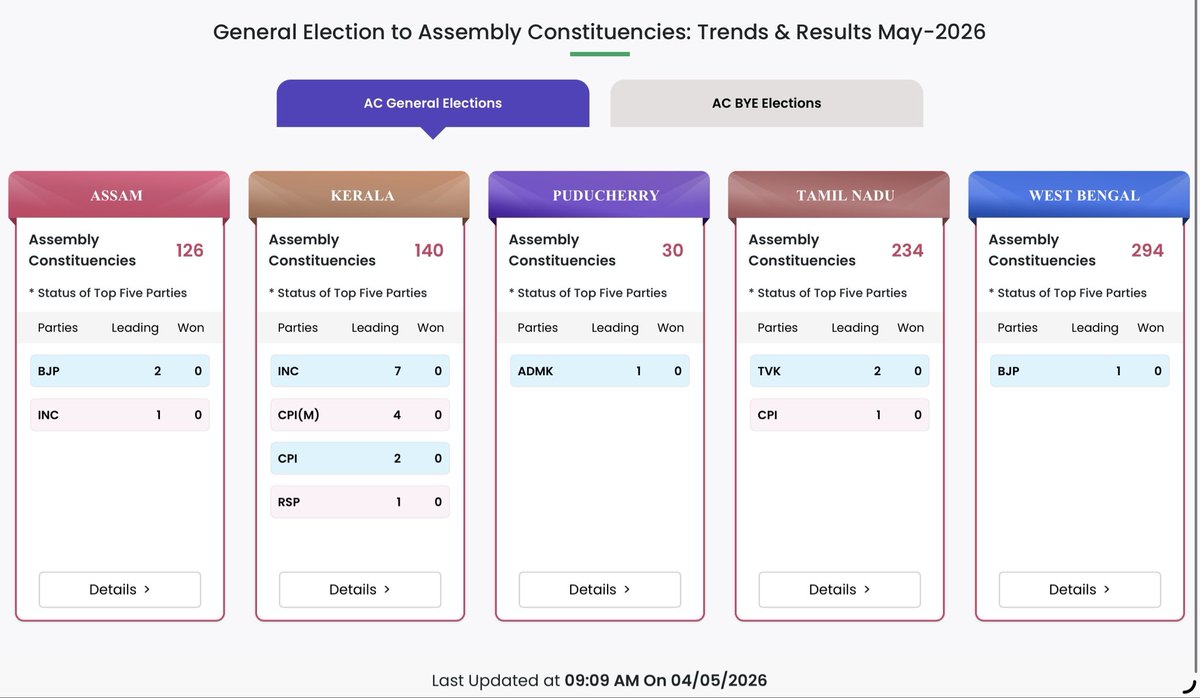
#unpopularopinion: I think this needs to be said. There’s a clear gap between what we see on Twitter, on TV, and what is actually being sensed on the ground in the West Bengal Assembly elections. Those who are travelling, engaging, and observing closely across the state are often describing a very different reality from what exit polls or the dominant narrative suggest.
I am not claiming that one side is right and the other is wrong. I’m only suggesting that perhaps some layers are being missed in the broader reading of the situation. West Bengal’s electoral behaviour is deeply complex and cannot be reduced to a single narrative.
Even within the so-called bhadralok of Kolkata, the variations are striking. A few broad observations (not exhaustive, just indicative):
1. Bengali-speaking voters often behave differently from non-Bengali-speaking voters
2. Those with older Left leanings vote differently from those without that legacy
3. Economic strata—upper middle class, lower middle class, and the poor—show distinct voting patterns
4. Religious identities continue to shape political choices in different ways
5. Among Bengalis, the Ghoti–Bangal divide still influences political outlooks in many cases
6. Among non-Bengali communities, Bihari, Marwari, Gujarati, and Sikh voters all engage with politics differently
7. Professional identities matter—Bengalis in business and Bengalis in service sectors often think politically in different ways; the same applies to non-Bengali groups
8. Gender and generational shifts are crucial—women across classes and the youth are emerging as distinct political voices
9. Age cohorts reflect very different political memories and priorities:
• 60–80: shaped by Left-dominated politics
• 40–60: lived through economic stagnation and job scarcity
• 30–40: often migrants with different exposures
• 25–30: split between those in Kolkata and those who have left
• 18–25: first-time or early voters with entirely different aspirations
10. Bhodrolok of Chowringhee thinks very differently of politics than that of Bhodrolok of Kasba.
All of this makes West Bengal a layered, multi-dimensional electoral landscape—far more complex than what a single exit poll or narrative can capture.