Exe. Dir., Global Carbon Project, @gcarbonproject; human effects on carbon & other biogeochem. cycles, climate change, decarbonization pathways, global ecology.
1/2
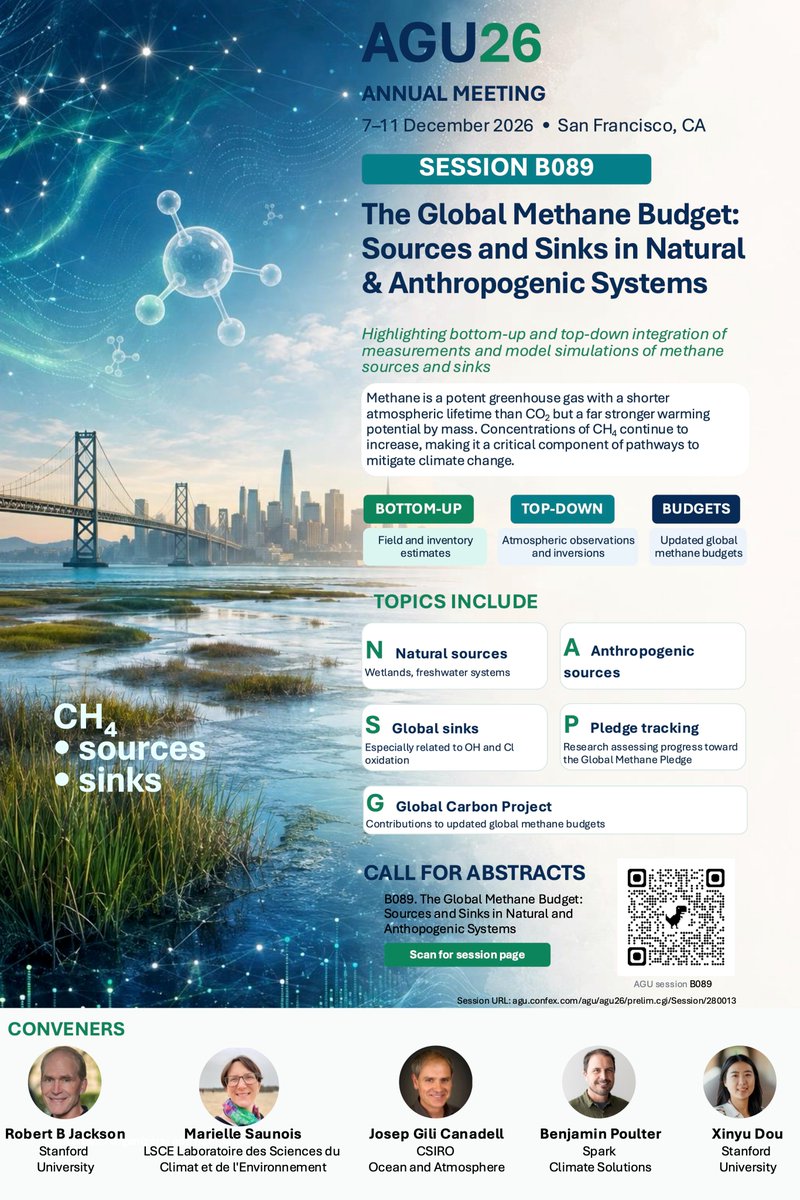
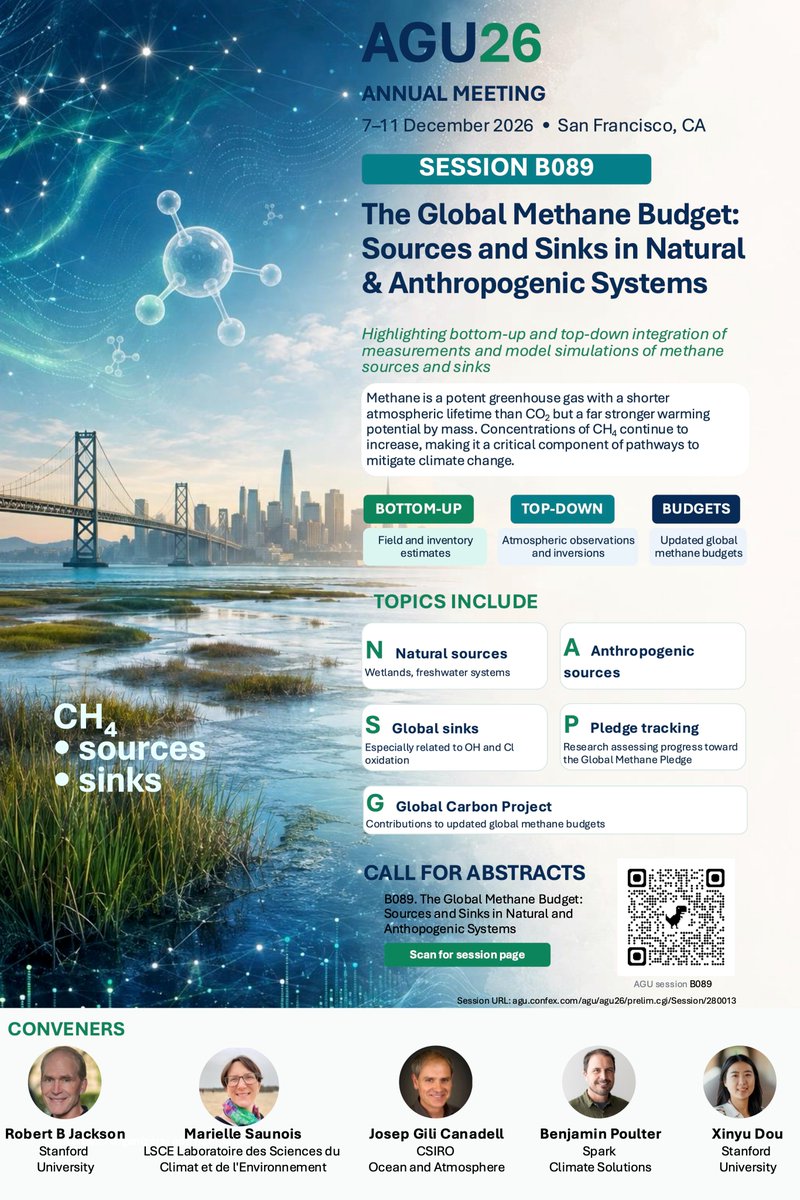
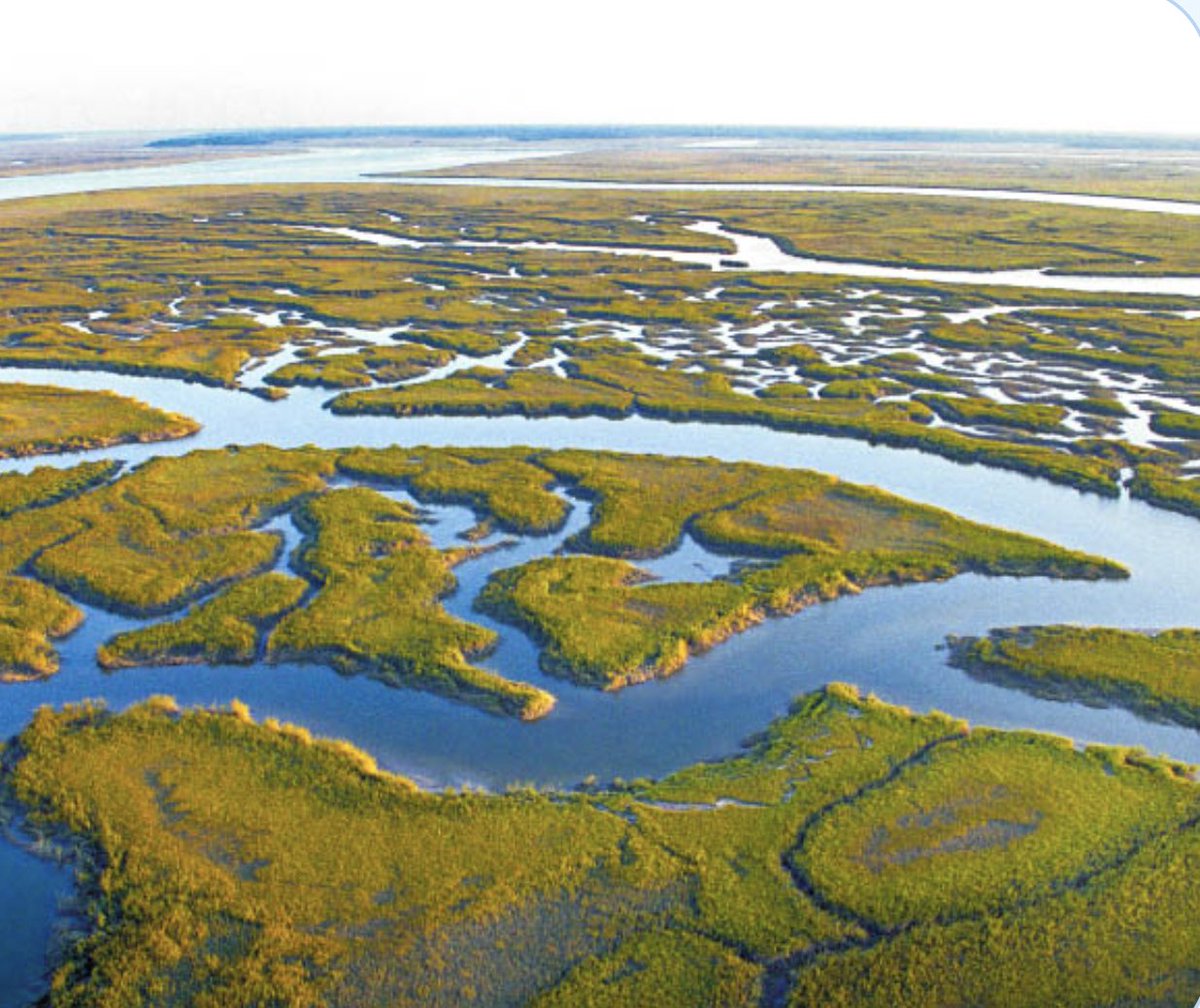
Using the global wetland model ensemble of the Global Carbon Project-Global Methane Budget, constrained by 163 site-year measurements, Zhen Zhang, Ben Poulter
& colleagues show that for every 1 degree C increase in global temperature, CH4 emissions increase by 24Tg per yr
2/2
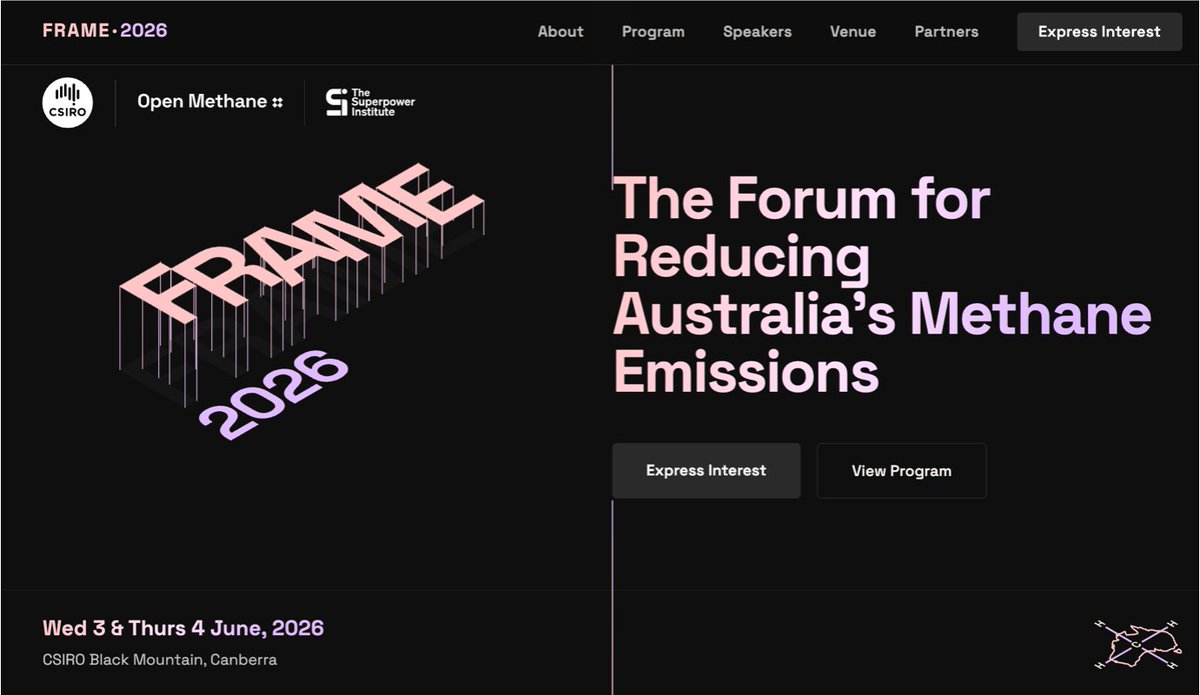
For anyone working on CH4 emissions measurement, climate policy or industrial decarbonization, FRAME is a valuable opportunity to connect with others in the field and engage with the latest evidence and approaches.
Register (expression of interest):
https://t.co/wFl09RV09F
1/2
Next week, I’ll join experts from across the research, industry and policy communities in the Forum for Reducing Australia’s Methane Emissions-FRAME.
We’ll examine methane measurement and abatement, share emerging knowledge, and support stronger cross-sector understanding
1/1
The GCP-Global Carbon Budget 2025, just published in its final form. It is the same data we released at the last COP-Nov 2025, but given the many improvements this budget introduced compared to previous editions, it underwent a longer and more detailed peer review process.
AVEYPA webinar will be on “Remote sensing of the land biosphere to support quantification of carbon emissions and removals” by Philippe Ciais (LSCE) and Marko Scholze (Lund University).
The webinar will be on Tuesday 26th May 2026, 14:00-15:00 CEST.
https://t.co/KNp2VRcjEC
The Global Carbon Project has just published the most comprehensive Global Hydrogen Budget to date.
H2, although not a GHG, has an indirect Global Warming Potential 37 times more potent than CO2.
Carbon Brief:
https://t.co/A1xsI2whbG
Research paper:
https://t.co/sQG37tG3fC
1/2
For Biospheric Modelers
There is a new activity led by @benpoulter at SPARK, supported by the GCP, called Warming Induced Emissions-Model Intercomparison (WIE-MIP).
There is a call for involvement and a funding opportunity with a deadline at the end of November.
1/2
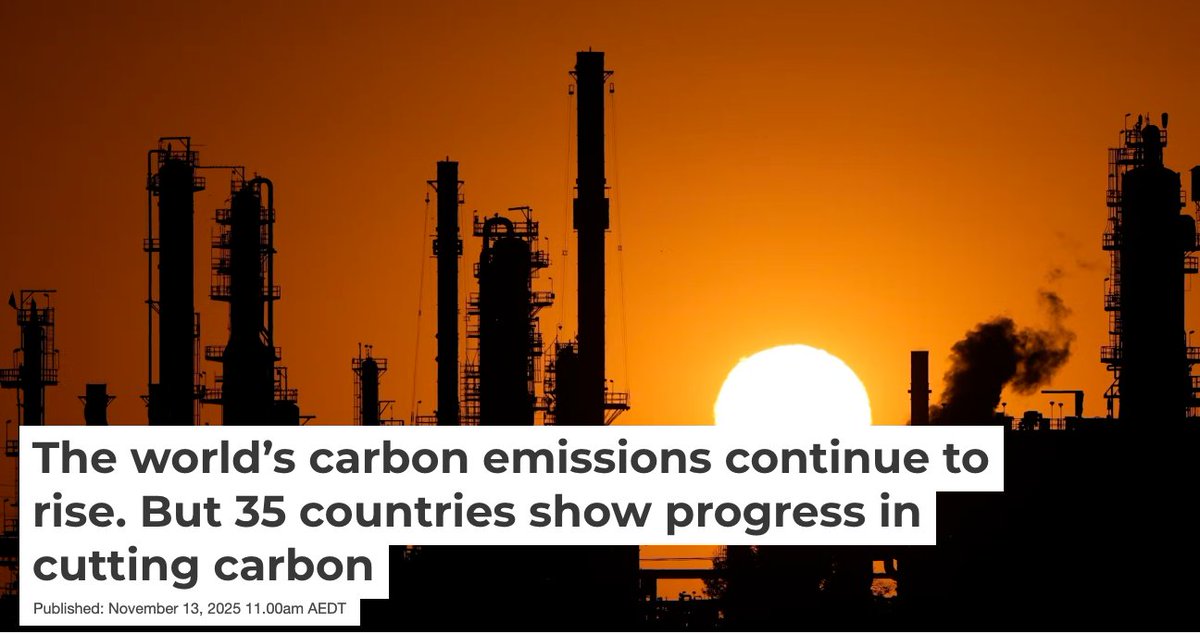
We just published the Global Carbon Budget 2025, with a mix of bad news (CO2 emissions continue to grow) and encouraging news (35 countries saw emissions decline over the past decade while growing their economies). Read the highlights:
https://t.co/HwOBZaHnbu
2/2
And a second paper describing all the research advances the group and the broader community have achieved, leading to this year's much-improved and constrained Global Carbon Budget.
https://t.co/m1T8oX7XOB
https://t.co/6tI82Rptb7
1/2
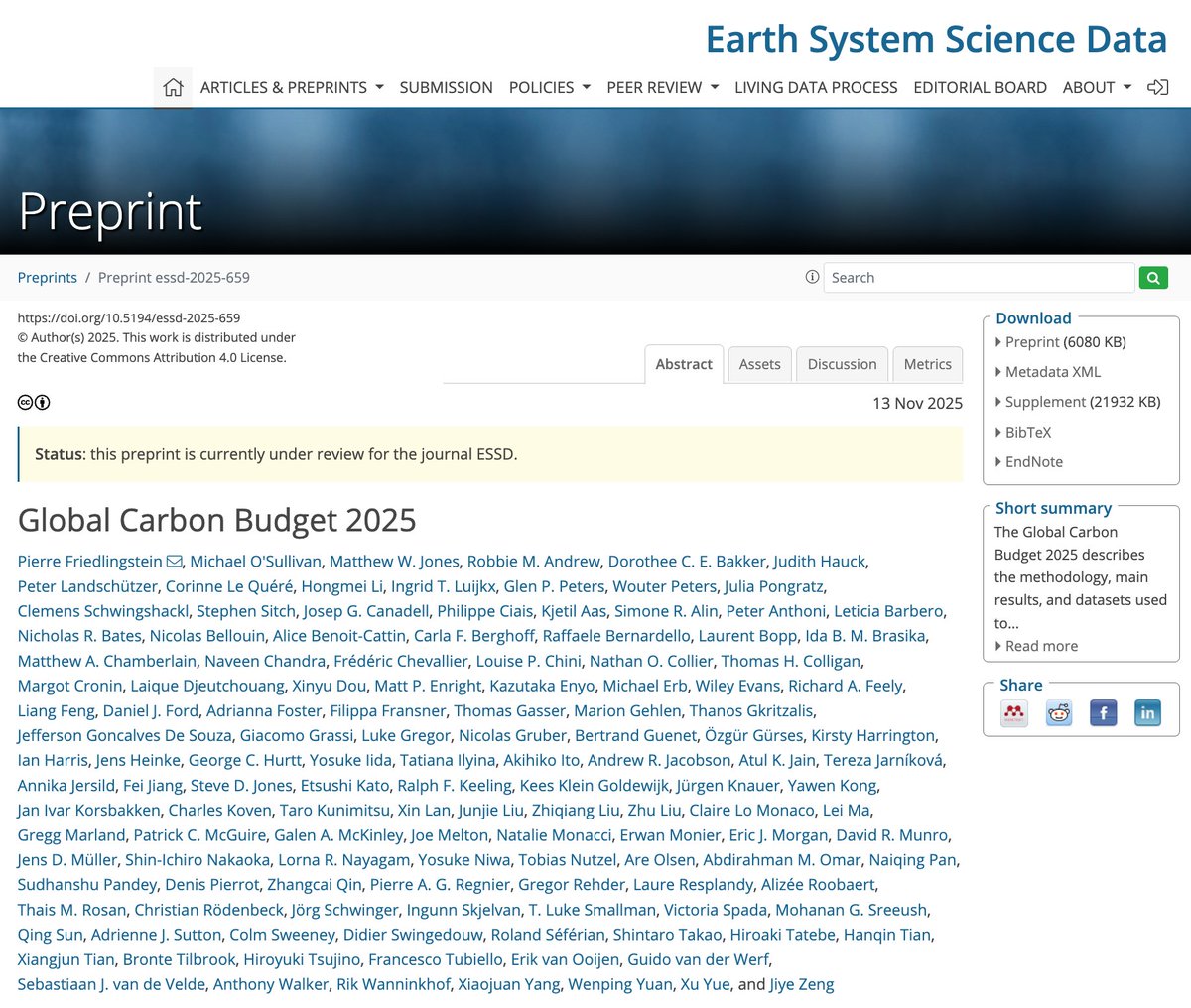
To support this year's Global Carbon Budget, 2025, we are publishing
The big paper, made possible by the strong commitment of a core group of scientists, working with a network of equally committed contributors from 102 research organizations worldwide
2/2
If you are interested in diving deeper into the data, global and national trends, summary PPT, and a myriad of figures, visit the Global Carbon Budget page:
https://t.co/IZHVURj46y
1/2
We just published the Global Carbon Budget 2025, with a mix of bad news (CO2 emissions continue to grow) and encouraging news (35 countries saw emissions decline over the past decade while growing their economies). Read the highlights:
https://t.co/HwOBZaHnbu
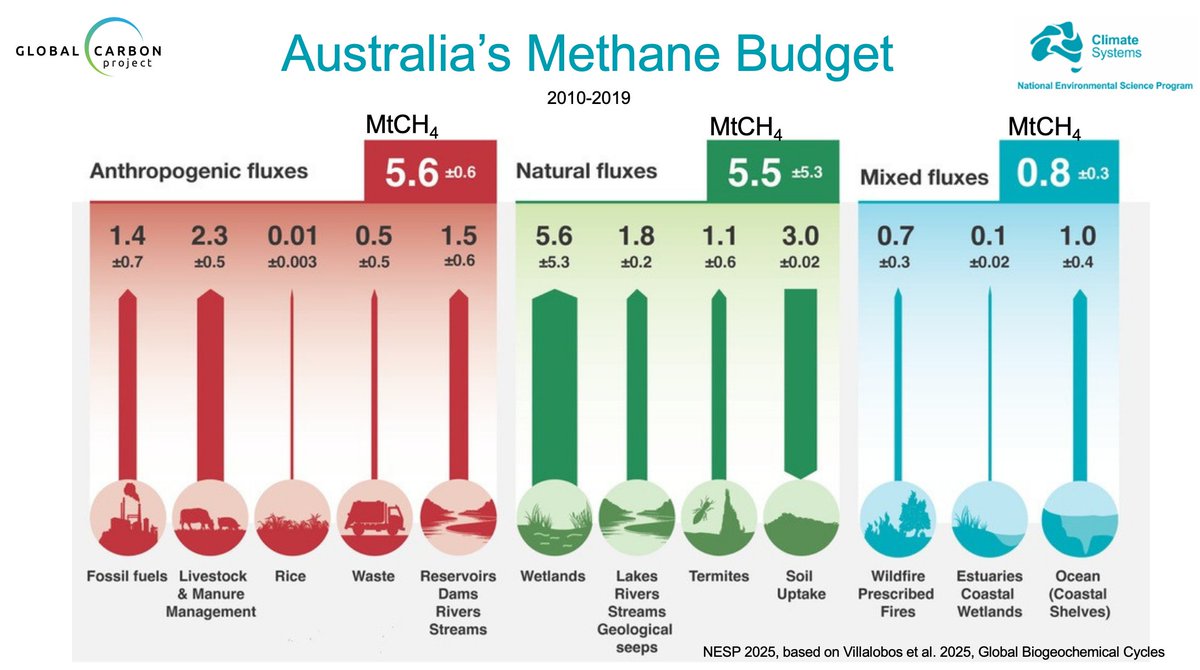
As part of the GCP-Regional Carbon Cycle Assessment and Processes-2, we recently published the Australasia's CH4 and N2O Budgets. The carbon budget was published in 2023, both papers, led by Yohanna Villalobos and a great team of collaborators.
https://t.co/OSrZf37MYC
2/2
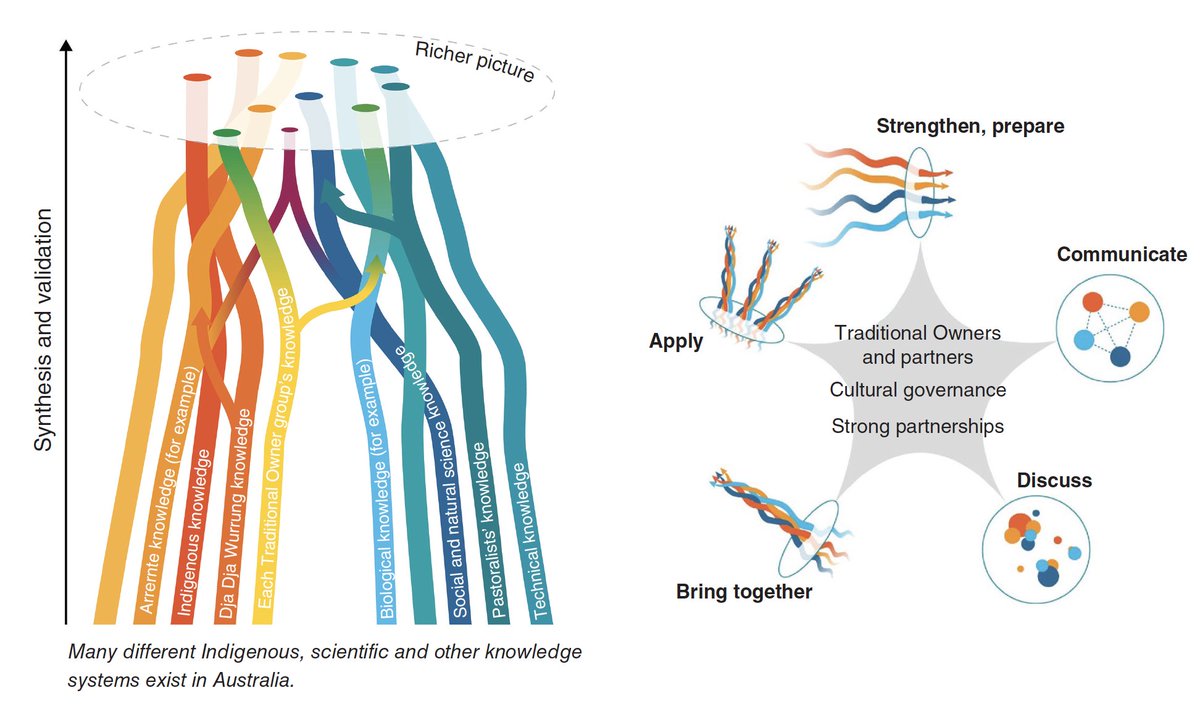
Kudos to the Australian National Environmental Science Program (NESP2)-Climate Systems Hub and CSIRO for being so committed to building a long-term working relationship between Western science and First Nations knowledge.
Access the paper: https://t.co/6CTIB1eP3J
1/2
I feel privileged to have had the opportunity to make a small contribution to this paper, just published.
"Building relationships between First Nations Peoples and Western scientists to increase capacity to understand, respond and adapt to climate change"