The path to timeless tech. Learn Al, data analytics, code, design, trading, and crypto - from beginner to master. Guided by truth. Built for the future.
🎉 Big News from Percorso! 🎉
We’re proud to announce that Percorso is now officially incorporated as Percorso Ltd under the CAC!
This milestone isn’t just paperwork — it’s a solid foundation for our mission to empower and launch the next generation of tech talents.
Training 👨🏽💻
Internships➕️
Hiring & Placement 🌐
Resource Hub 🔍
This is only the beginning. We’re building a future where Percorsians don’t just learn — they grow, connect, and find real opportunities.
Thank you for believing in us. The journey just got even more serious. 🚀
— Team @PercorsoTech
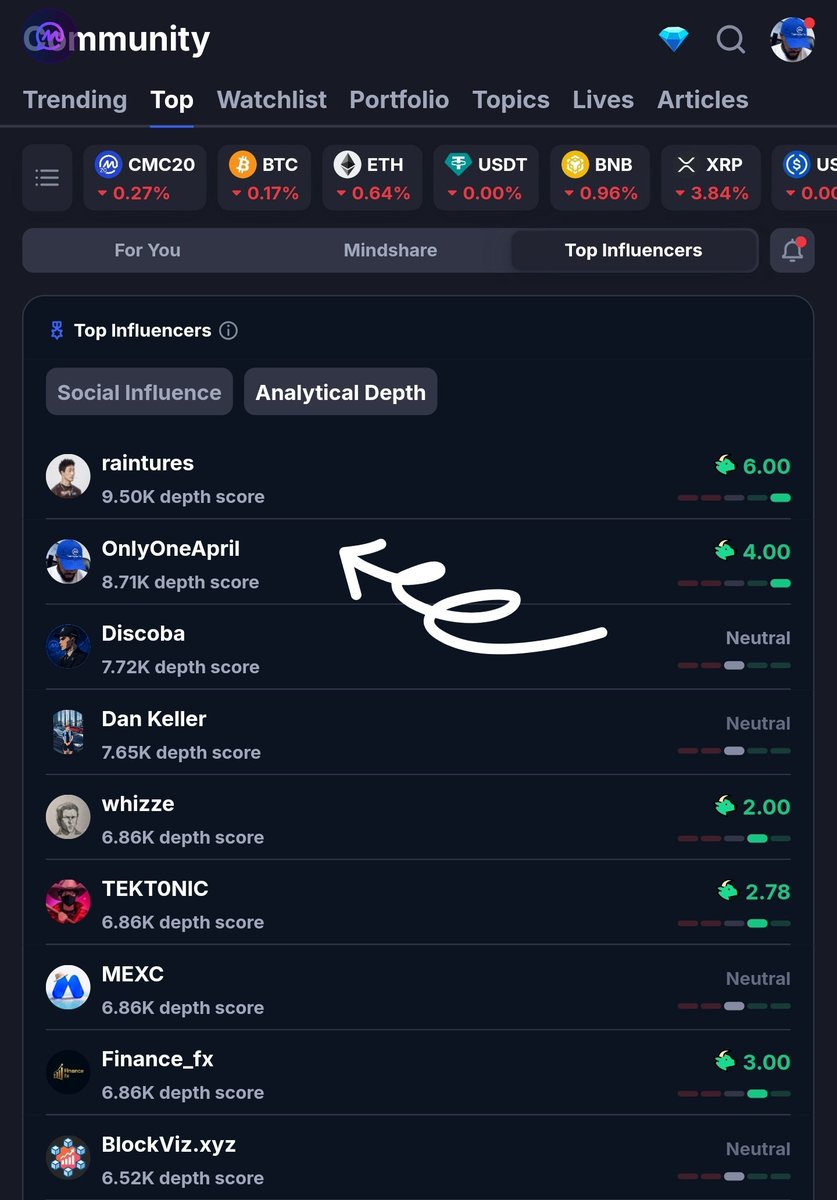
#2 WORLDWIDE on @CoinMarketCap by Analytical Depth. 🥈
I honestly don't even know what to say.
I've spent months consistently researching, analyzing markets, studying data and sharing what I find with the CMC Community.
Today, seeing OnlyOneApril ranked #2 worldwide in Analytical Depth is a moment I'll genuinely appreciate.
It's easy to look at a ranking and see a number.
For me, it represents the countless hours of research, charts, market analysis, writing and showing up even when it felt like nobody was watching.
I'm still building.
My goal has always been bigger than just posting about crypto. I want to become a recognized voice in the space, create useful research, connect with people building the industry and eventually take this work beyond my home country.
So this means a lot.
Thank you to everyone who reads, engages with, challenges and shares my work.
#2 today. Still building tomorrow.
OnlyOneApril is just getting started.
If you want to follow my research on CMC:
https://t.co/ogoUD0opgn
Congratulations to me 🎉
100 people. One research journey.
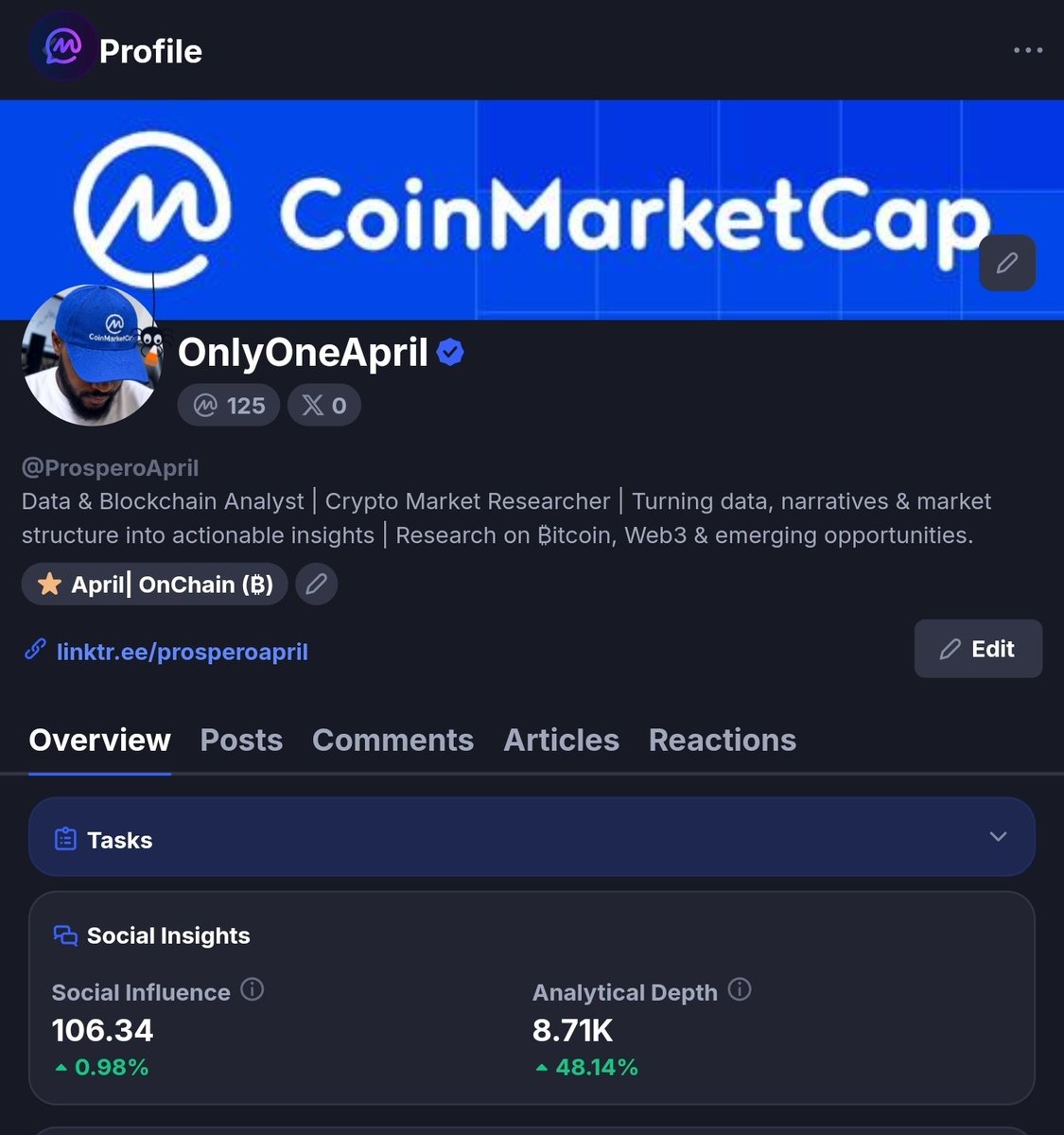
I just hit 100 followers on @CoinMarketCap .
It may look like a small number, but I know what went into getting here.
Market breakdowns.
Token research.
Charts.
On-chain narratives.
Late-night rabbit holes.
And plenty of time trying to understand what the market is actually saying beneath the noise.
I didn't come to CMC to farm posts.
I came to build around one thing:
"Finding the signal in the noise"
100 is only the first checkpoint.
The goal is simple: better research, deeper analysis, and posts that are actually worth your time.
If you're interested in Bitcoin, Web3, market structure and data-driven crypto research, follow me on CMC.
I'm just getting started.
👇 Follow me on CoinMarketCap:
https://t.co/ogoUD0opgn
$BTC
Didn't go anywhere.
I've just been cooking at the @CoinMarketCap community.
Currently one of the highest rated analyst on the community with "Analytical Depth " of 4k+.
You're free to follow:
https://t.co/iI73QGcVZT
What have I missed?
$BTC @ $87K or $ETH @ $2700 .
The hardest part of trading isn't finding an entry. It's doing nothing when there is no setup.
$BTC can move 3% in a few hours and still give you no valid trade according to your plan.
That's where discipline becomes more important than prediction.
A trader sees a large candle and feels the need to participate. If the move is already extended, they chase it. If price pulls back, they convince themselves the dip is an opportunity. If the trade goes against them, they move the invalidation because they don't want to admit the setup failed.
The market doesn't care about any of that.
One of the most valuable habits I've learned is separating “the market is moving” from “I have a trade.”
Those are two completely different statements.
You don't need to capture every move. You need to recognize the specific conditions where your strategy has an edge and be willing to stay out when those conditions aren't present.
Sometimes the best trade is no trade.
Capital preserved during a low-quality setup is still capital available for a high-quality one.
Patience isn't inactivity. It's waiting for your conditions instead of forcing the market to give you a trade.
What's harder for you: waiting for a setup or staying disciplined after taking a loss?
A market can be bullish without every coin being worth buying.
One of the easiest mistakes to make during a crypto expansion is confusing a strong market with a strong project.
When $BTC starts moving, liquidity usually spreads across the market. Narratives gain attention, altcoins begin trending, and suddenly almost every chart has a bullish story attached to it.
But attention isn't the same as fundamentals.
Before chasing an altcoin, I like to ask a few simple questions:
What is actually driving the demand?
Is the volume sustainable or just speculative activity?
Does the project have real users, development, liquidity and a reason to exist beyond the current narrative?
Most importantly, where would the thesis be invalidated?
A coin can have a great narrative and still be a terrible trade at the wrong valuation.
This is why I think the next major crypto expansion will create two very different groups of traders: those who chase whatever is moving, and those who learn to identify why something is moving before deciding whether the move is worth trading.
The narrative gets attention. Data helps you investigate it. Price action tells you whether the market agrees.
What do you check first when discovering a new crypto project: the chart, the narrative, or the underlying data?
@CoinMarketCap gave me early access to test something new.
Agentic Chart.🔥
An AI that can actually analyze what’s happening on a crypto chart.
So I decided to put it through a real test.
I gave it a BTC setup, looked at its analysis, then challenged its own conclusion.
The result surprised me.
Watch the video and tell me what you think.
Dear Trader,
It’s Monday.
The market is opening, but that doesn’t mean you need to trade immediately.
You don’t need to catch every move.
You don’t need to recover last week’s losses today.
You only need to execute your plan.
Wait for your setup.
Respect your risk.
Protect your capital.
Control your emotions.
The market will create opportunities all week.
Your job is to be disciplined enough to recognize them.
Trade smart.
Trade patient.
Have a profitable week.
Same analyst, same dataset.
The difference? A mindset shift.
I decided to focus on answering key analytical questions and turning data into meaningful insights.
Need meaningful visuals? Check out my Fiverr gig 👉🏽https://t.co/GynCVfMnJT
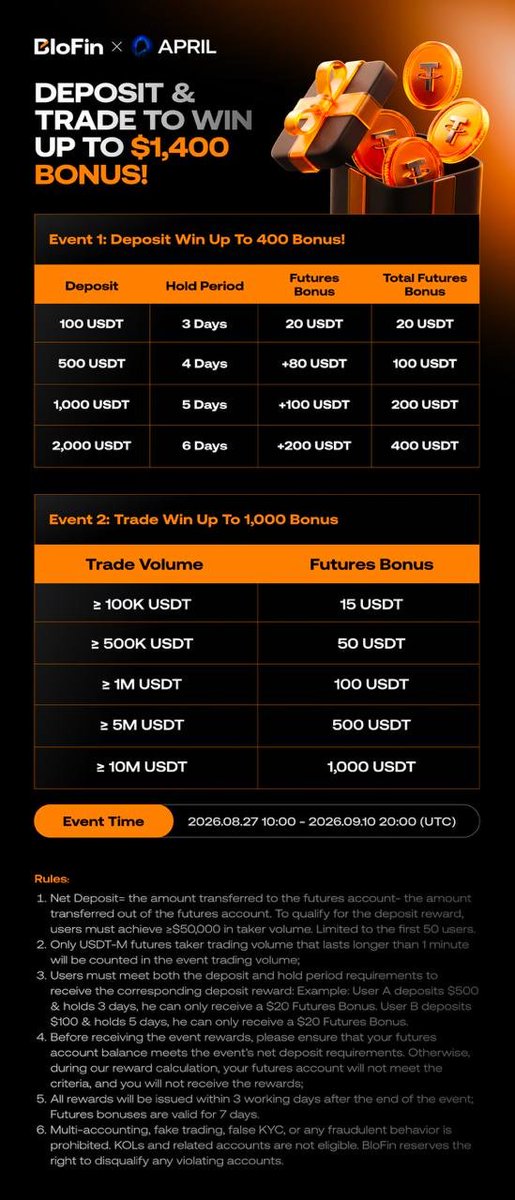
NEW PARTNERSHIP ANNOUNCEMENT 🚨🔔
I’m excited to announce to you that I just partnered with @BloFin_Official as one of their Top affliate/KOL 🎉🔥
Blofin is a fast growing centralized exchange (CEX) with very low trading fees, easy to use, seamless UI/UX and loads of amazing features that makes it stand out from other exchanges.
To celebrate this partnership with my community :
I’m dropping an EXCLUSIVE Early birds bonus reward 💰but it’s strictly limited;
Only the first 50 people to :
1) sign up with my link
2) make a deposit
3) Hold deposit to claim futures bonus
Don’t Miss on this ! make sure you’re among.
Sign up RIGHT NOW with my link:👇
https://t.co/fLZmSDhvUG
Make a deposit to claim rewards.
Happy Trading 📊🚀
Drop a comment, Like, RT & Bookmark this.
The real secret of lower-timeframe trading is this:
Don't use the lower timeframe to decide direction. Use it to execute a decision made from the higher timeframe.
Most people lose on 1m/3m/5m because they treat every candle movement as a new opportunity.
Note these when next you want to trade on lower TFs.
1. HTF gives you the direction; LTF gives you the entry.
2. Start with the 4H/1H to determine market bias.
3. Use 15M to find your key trading zone.
4. Drop to 5M/3M for confirmation.
5. Use 1M only for precision when necessary.
6. Don't trade every movement you see on the lower timeframe.
7. Identify where liquidity is sitting first.
8. Watch previous highs/lows and equal highs/lows.
9. Look for a liquidity sweep before entering.
10. Wait for strong displacement after the sweep.
11. Then look for a market structure break.
12. Enter on the retracement, rather than chasing the breakout.
13. Put your SL where the trade idea becomes invalid.
14. Target opposing liquidity or your higher-timeframe objective.
15. The secret: location + liquidity + confirmation + discipline beats prediction.
What clarity do you need about lower TFs?
Drop it on the comments and I'd give you take.
We all have that one thing we've always wanted but very uncertain of how it'd happen.
If you see can this, just know it's a sign that you're about to witness a miracle.
God has willed it. Amen .
Happy New Month 🍁
GIVEAWAY: 🚨🚨🚨🚨 3 x $25K 2-Step accounts
To enter:
→ Follow @ProsperoApril@LAntonioAF@atlasfunded @atlasfutures
→ Like + RT
Winners in 7 days.
Bonus: APRIL is 50% off sitewide, and I'm gifting a $50K Instant to one person who picks up an account this week.
The crypto market has just shifted into a very interesting phase. BTC is making a violent upside move today, but you shouldn't chase it blindly.
🟢 BTC right now;
BTC is around $77.7K, after trading as high as roughly $79.2K today. That is an exceptionally strong daily move.
More importantly, this isn't just a random pump:
1) BTC broke back above $70K with strong momentum.
2) U.S. spot BTC ETFs recorded about $517M of inflows on Aug. 19, their strongest daily inflow since early May.
3) BTC is benefiting from short covering/liquidations + institutional demand + improving regulatory sentiment.
4) The broader crypto market is responding too. ETH, XRP and other major alts have been moving aggressively.
But here's the important part 👇
BTC has moved extremely fast.
The market went from roughly $64–65K earlier this week to almost $80K today. That's roughly a 20% move in a matter of days.
So although the trend is bullish, the short-term risk/reward of entering after the pump is getting worse.
The technical picture is essentially:
Bullish trend → very strong momentum → short-term overextension → pullback/retest likely.
One current technical assessment has BTC around the $76K resistance area, with $73K as an important near-term support and the ~$71.5K area as a major breakout level.
What I'm watching:
I divide BTC into three zones:
1) $79–80K → Major psychological/resistance zone.
If BTC convincingly breaks and holds above $80K, the market could enter another acceleration phase.
2) $73–75K → The area I'd be much more interested in watching for a healthy retest.
3) $70–72K → Very important. If BTC falls back below this area and can't reclaim it, today's breakout starts looking suspicious.
And the bigger crypto-market question...
The interesting thing is that BTC is leading the move, rather than BTC collapsing while alts randomly pump.
That's generally healthier.
But I wouldn't call this a confirmed full-blown altseason yet.
What I'd want to see is:
BTC breaks/holds $80K → BTC dominance stabilizes → ETH/BTC strengthens → capital begins rotating into large-cap alts → smaller caps follow.
That would be a much stronger indication that we're entering a broader market expansion.
Right now, my read is:
BTC: Bullish
Crypto market: Risk-on / recovering strongly
Short-term entry: Dangerous to chase ⚠️
Medium-term structure: Increasingly bullish
$80K: Critical psychological level
And there's one thing I find particularly interesting: BTC is rallying while global equities are under pressure from rising Treasury yields and inflation concerns.
Reuters reports that Bitcoin has gained about 20% this week, its strongest weekly performance in more than two years.
That makes this move worth paying serious attention to.
Drop a comment if you want me to break down
exact support/resistance, liquidity zones, likely next targets, and where I'd personally look for a long or short setup.
Note: This isn't a financial advice and it's important you DYOR 📈
#BTC
$BTC
A friend asked me why 95%+ of traders still struggles to be profitable.
Here’s was my honest answer 👇🏼
A successful trader has to put 3 things in check. And these 3 things must always be in check.
1) Technical Knowledge of the Market
This is understanding how the market works — TA, PA, indicators, or whatever your approach may be.
This knowledge guides you toward finding good confluences to trade the market.
2) Risk Management
This is the part that makes you a trader, because this is where execution comes in.
Knowing the market and trading the market are two different things.
Everyone on the TL seems to know the market direction almost all the time. That's TA.
But most people are unable to turn that information into money.
Most people can make good analyses but manage risk wrongly. They gamble with their money, which might make them profitable in the short term.
But trading is a long-term game.
Over time, unmanaged risk will cost you more than money. It can cost you yourself.
And that brings us to number 3.
3) Psychology
This one is delicate. Very delicate.
The reason is that your psychology is heavily influenced by how well you handle the first two.
This requires you to fight yourself.
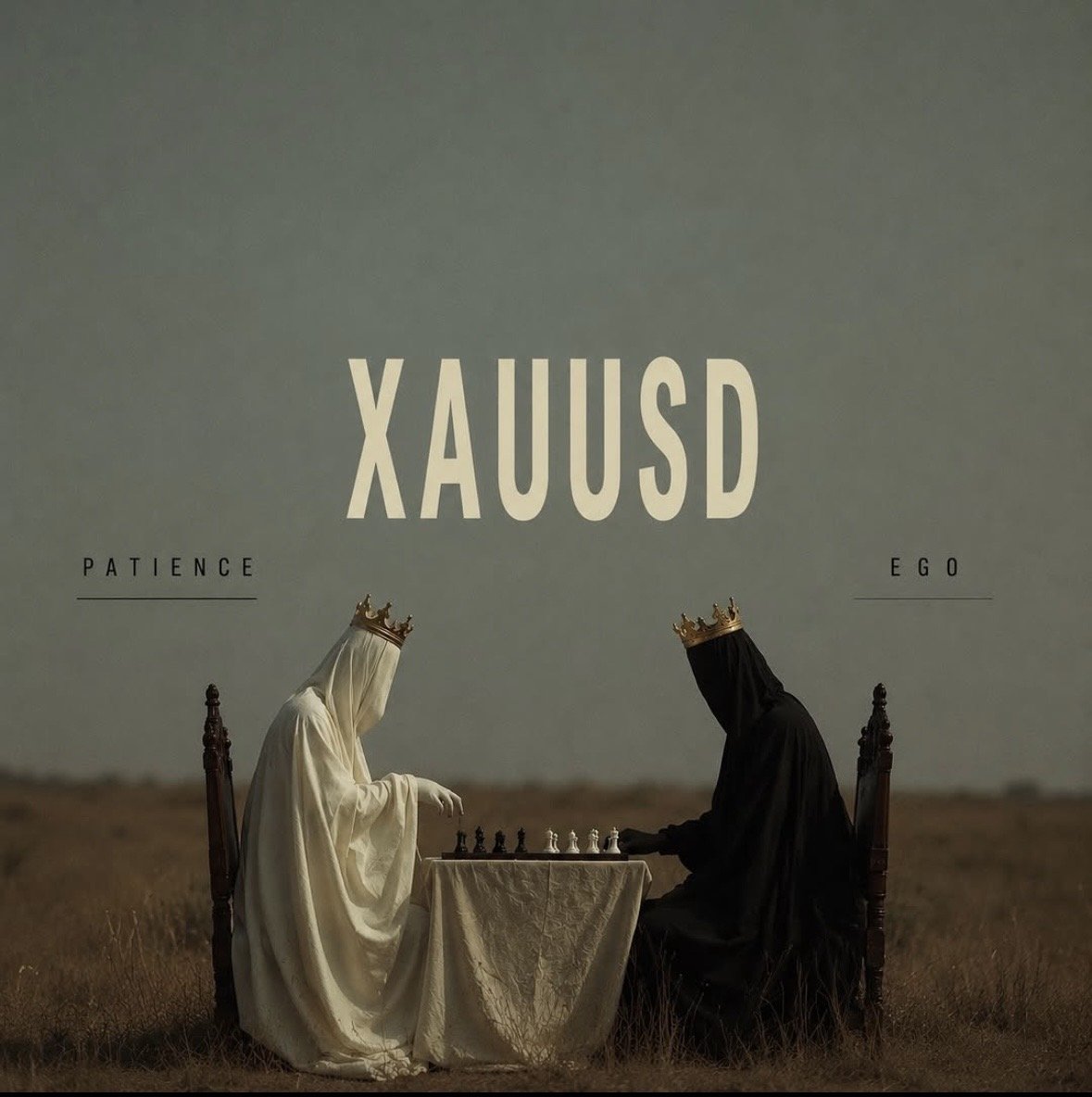
A war between patience and ego.
When people risk without control and lose money without control, it messes with their heads.
They start losing themselves.
And in trading, just like in chess, when you lose yourself — the king — that's checkmate.
Game over.
When your psychology is messed up, it becomes almost impossible to remain profitable.
You start making decisions that feel rational to you:
Taking profit too early.
Extending your SL.
Increasing your risk size to recover losses.
Forcing the market to give you money you didn't protect.
Forcing unrealistic RRs.
Then the "flip mentality" sets in:
"I'll go in with $100 and come out with $1M."
That's when you've completely lost touch with reality.
Trading is a business.
And you have to attach reality to it.
Let's say you run a business with ₦1M.
You make ₦300K profit and walk away with ₦1.3M.
That's a 30% return.
You see it as profitable because you're being realistic.
But in trading, you go in with $100, come out with $130, and somehow feel like you didn't make money.
Why?
Because of the mindset you came into trading with.
You've been conditioned to believe that if $100 doesn't turn into $500+, then no real money was made.
That's you losing touch with reality.
So, the three things are sequential:
TA → Risk Management → Psychology.
You need technical knowledge before you can properly manage risk in the market.
And the understanding and consistent application of the first two gradually develop the third: good psychology.
You may already know how to manage risk from other businesses you've done, but if you don't understand the market you're trading, you still won't make money.
So yes, TA is the simplest of the three.
And ironically, TA is what 95% of traders focus on.
But you cannot consistently make money in a market you don't understand.
A teacher can help you understand the market.
A teacher can teach you risk management.
But the battle with your psychology?
You have to fight that one yourself.
As you were 🗽
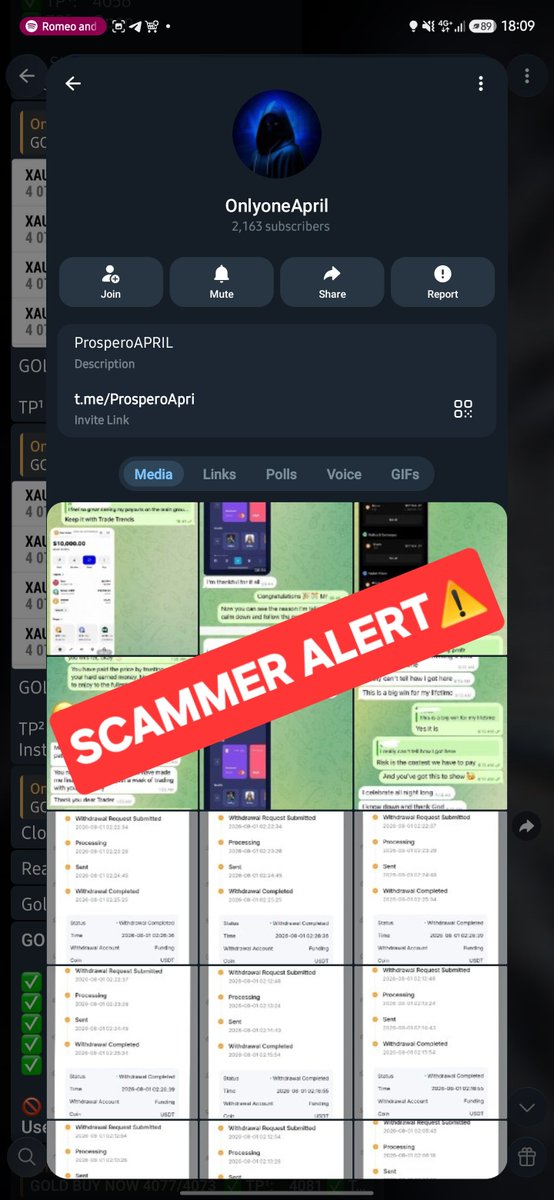
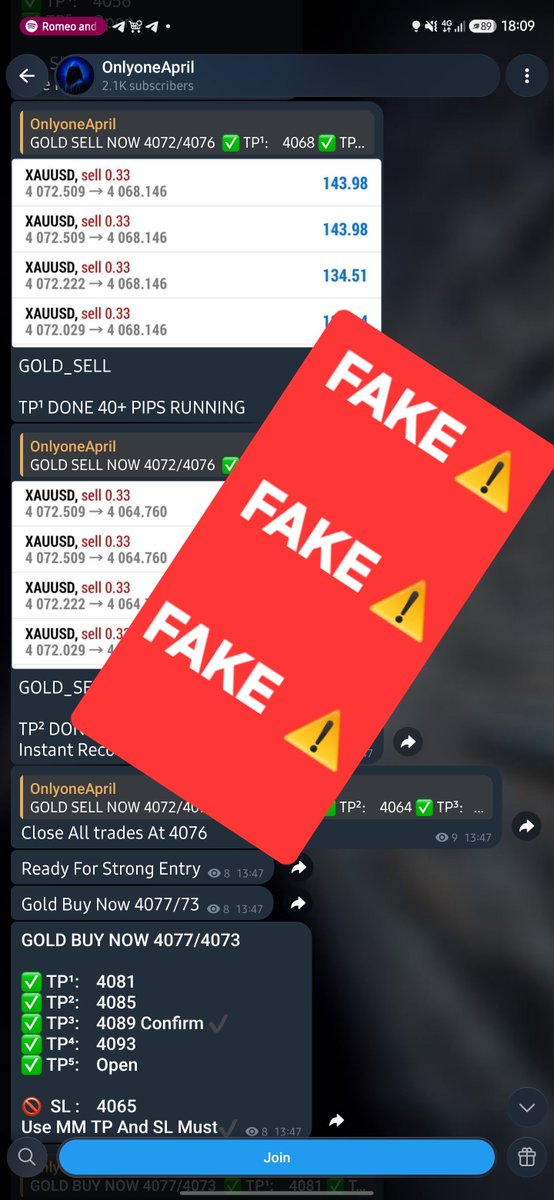
🚨 SCAM ALERT ⚠️— PLEASE READ 🚨
There is a fake Telegram channel impersonating me using:
Name: OnlyOneApril
Username: ProsperoApri (⚠️ missing the “L”)
This is NOT me.
I DO NOT run any investment schemes.
I will NEVER ask you to send money to trade on your behalf.
If anyone is promising profits or asking for funds using my name, it is 100% a scam.
✅ My only official Telegram username is:
ProsperoApril (with the L)
https://t.co/WRt1lQT99U ✅️
No variations. No backup accounts.
What you should do ❗️❗️
Do NOT send them money
Report the account immediately
Please repost and warn others
If it sounds too easy, it’s a trap.
~April