The larger a system becomes, the harder it is for participants to understand why things are the way they are.
Memory helps bridge that gap.
Not by slowing change, but by giving change something to build on.
Web3 often treats coordination as a governance problem.
But governance is only one part of the equation.
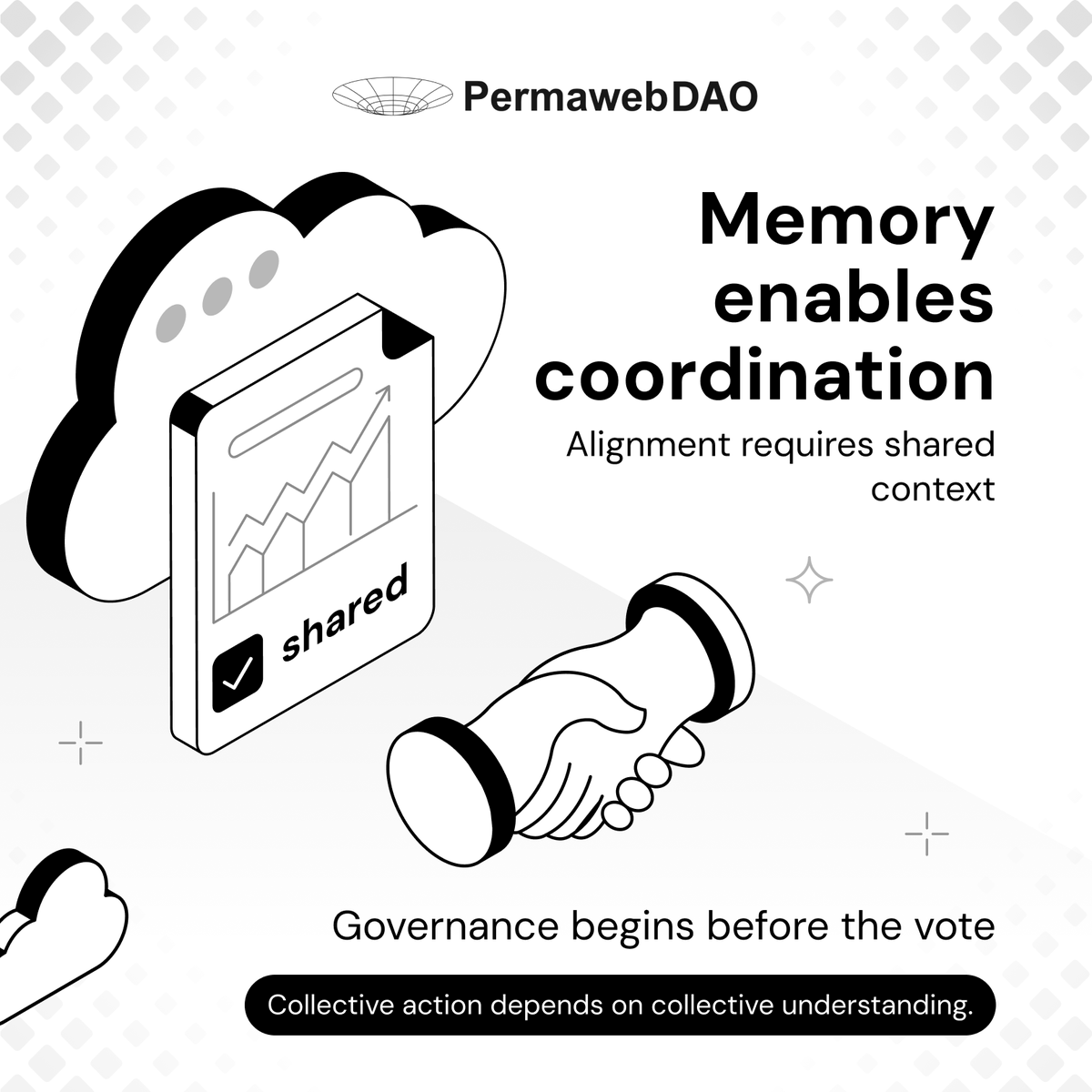
Before people can align on decisions, they need a shared understanding of context. They need access to the discussions, assumptions, and reasoning that shaped the present.
Without that foundation, coordination becomes reactive.
Memory isn't just a record of what happened.
It's one of the mechanisms that makes collective action possible in the first place.
Every growing community faces the same challenge.
People join. People leave. Priorities shift. Contributors change.
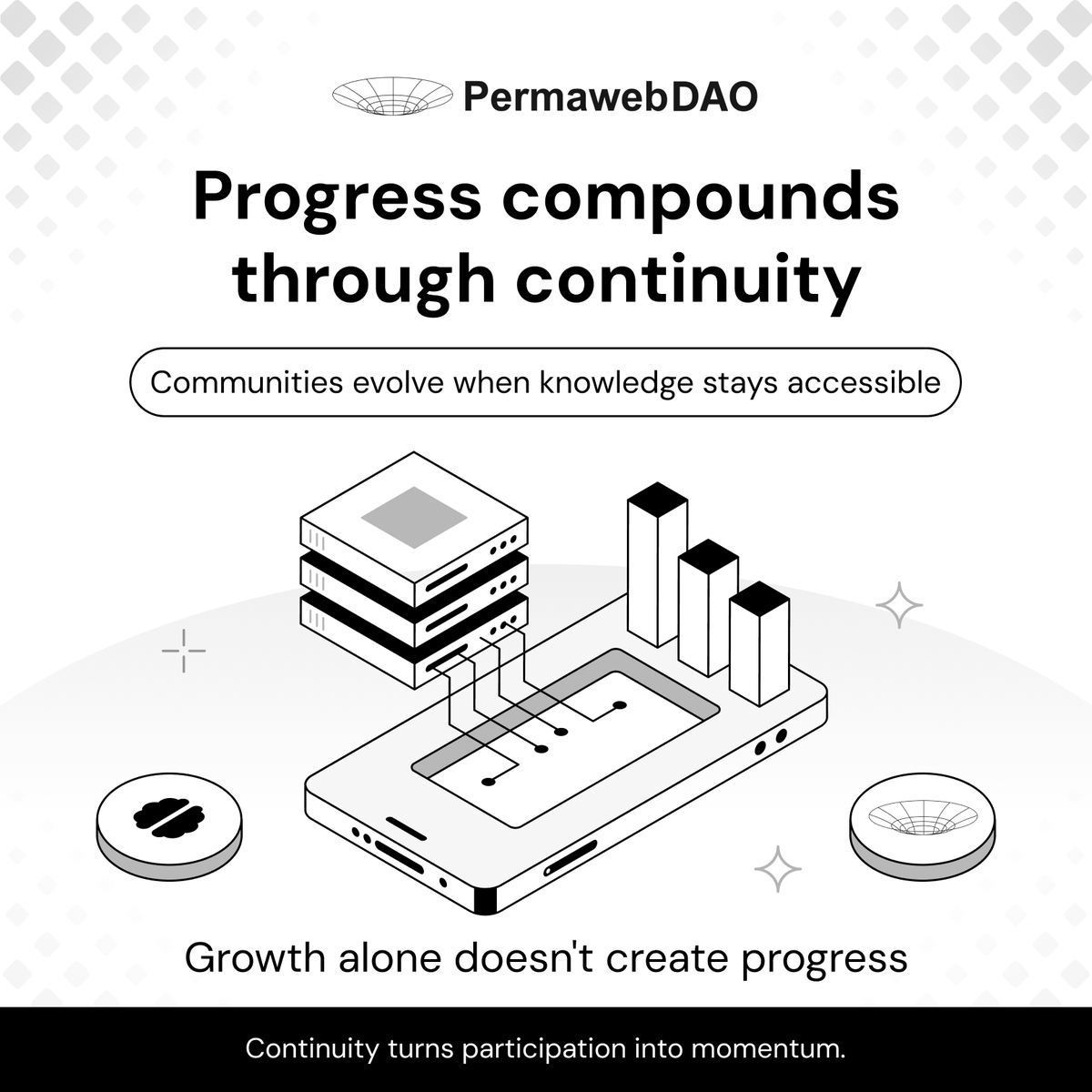
What determines whether a community keeps moving forward isn't how many people it has.
It's whether knowledge survives those transitions.
Without continuity, every new group spends time relearning what the previous group already knew.
With continuity, progress compounds.
That's what memory makes possible.
Most coordination problems don't start with disagreement.
They start with context.
A new contributor joins. A discussion restarts. A proposal gets revisited months later.
Suddenly everyone is spending time reconstructing what happened before instead of building what comes next.
The issue isn't a lack of information. It's the cost of carrying context forward.
Shared memory reduces that cost.
And when context becomes easier to access, coordination becomes easier to achieve.
Web3 talks often about ownership.
Ownership of assets, identity, liquidity, even data.
But memory may be the most important layer of ownership that still feels unresolved.
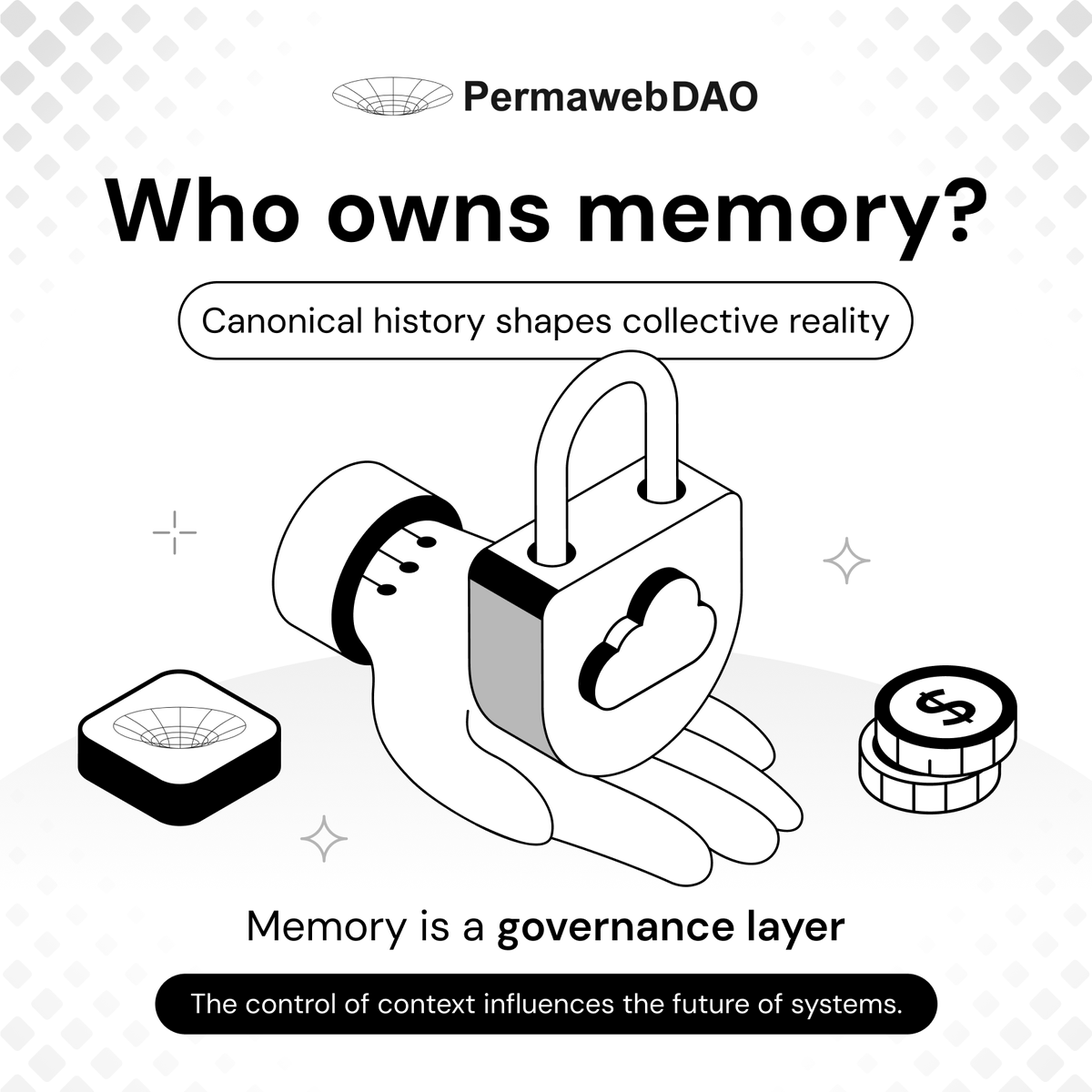
Who decides what becomes canonical?
Who maintains the references people rely on?
Who has the ability to preserve, remove, or reshape context over time?
These are not just archival questions anymore.
They are governance questions.
TradingRazor × @Permaweb_DAO
Permanent storage meets AI trading. ⚡️
Built on Arweave, PermawebDAO is creating a sustainable Web3 ecosystem for long-term applications and adaptive governance.
Smarter. Faster. More resilient.
A governance system is only as durable as its memory.
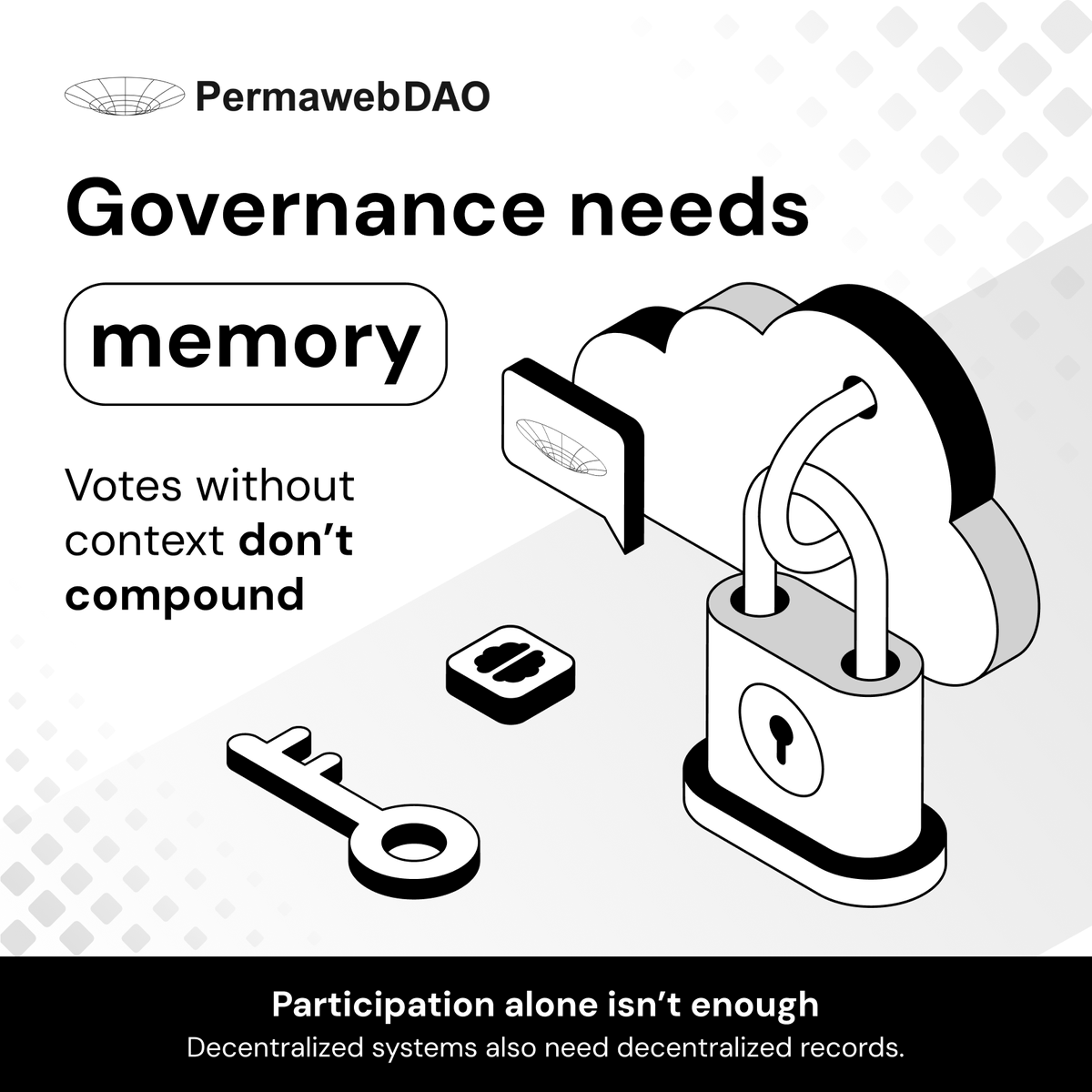
Votes alone are not enough. Decisions need context, reasoning, and a way to trace how conclusions were reached over time.
Without that continuity, governance becomes fragile. Discussions repeat, accountability weakens, and institutional knowledge slowly disappears between cycles of contributors.
Decentralization is not just about who can participate.
It’s also about who controls the historical record those participants rely on.
Once memory becomes infrastructure, its control stops being a technical detail.
What gets preserved, what becomes referenceable, and what fades from collective context all shape how systems understand themselves over time.
That means memory is not neutral by default.
Every archive reflects decisions about authorship, visibility, and permanence, whether those decisions are explicit or not.
Which raises a larger question for Web3:
if governance is decentralized, but memory is still controlled by platforms, timelines, or centralized points of access, how decentralized is the system really? 🧐
Bitcoin gave the internet native value.
Permacast gives narratives permanence.
From the first 10,000 BTC pizza transaction
to a global decentralized financial network,
Bitcoin proved that truly important things should outlive time.
Stories.
Transactions.
Memory.
Happy Bitcoin Pizza Day from Permacast 🍕
Broadcasting narratives across the permanent web.
The internet trained us to publish.
Permanent infrastructure may train us to inscribe.
Different mediums produce different writers:
• one optimized for novelty
• one optimized for permanence
The shift is cultural before it is technical.
Thrilled to partner with @permacastapp — the AI-powered permanent media network built on @Permaweb_DAO. 🦞
Together, ClawWorks and Permacast are powering the future of AI-native media and the Agent Economy. ⚡️
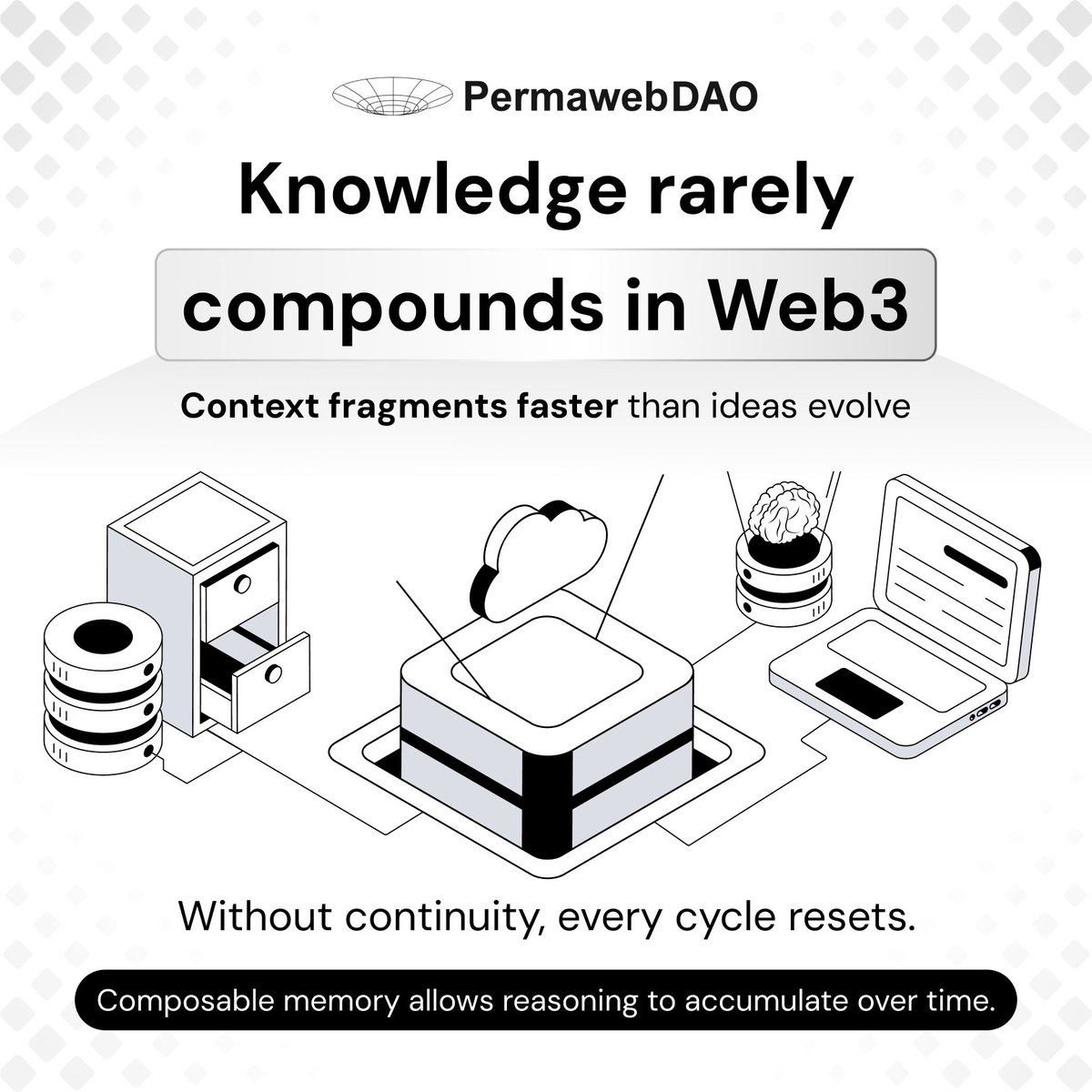
One of the reasons Web3 keeps repeating the same conversations is that knowledge rarely compounds.
Ideas circulate, but they don’t stay connected to each other in a durable way. Context gets fragmented, discussions happen across platforms, and valuable reasoning becomes difficult to build on over time.
Composability changes that.
When knowledge becomes linkable and referenceable, every contribution has the potential to become part of a larger structure instead of an isolated moment in the feed.
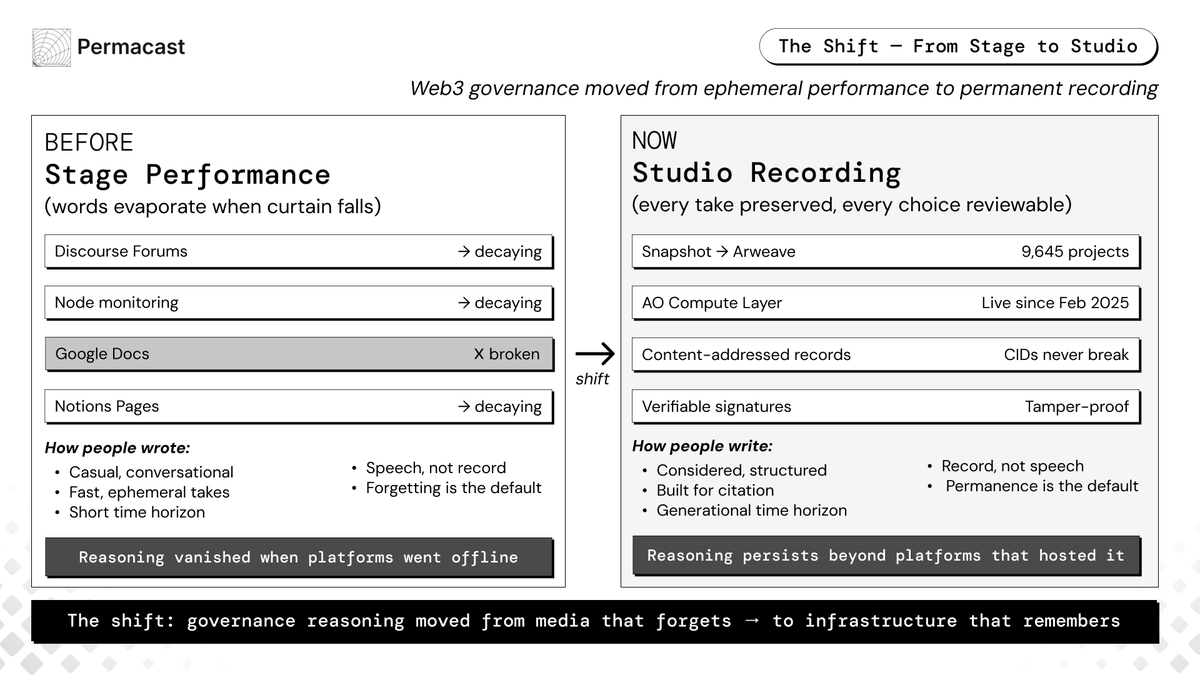
Web3 governance quietly crossed a threshold.
What used to behave like stage performance, ephemeral, conversational, easily forgotten, is becoming studio recording:
persistent
reviewable
citeable
permanent
The shift already happened.
Snapshot governance records are now being written to IPFS + Arweave by default.
Governance moved from media that forgets to infrastructure that remembers.
Most archives are designed for storage.
What actually matters is whether knowledge can be reused.
✦ Can someone trace an idea back to its origin?
✦ Can a proposal carry the context of the discussions around it?
✦ Can reasoning continue instead of restarting every cycle?
That’s where composability starts to matter.
A memory layer isn’t just about preserving information. It’s about making knowledge connectable across people, time, and context.
Two months in, the momentum keeps growing.
• 19,283 registered curators
• 1,025,645 content boosts
On-chain curation is no longer an idea.
It’s becoming an active layer for discovering and rewarding permanent media.
👇 Join Permacast and start building your influence on-chain.
https://t.co/4ggA4VtwfP
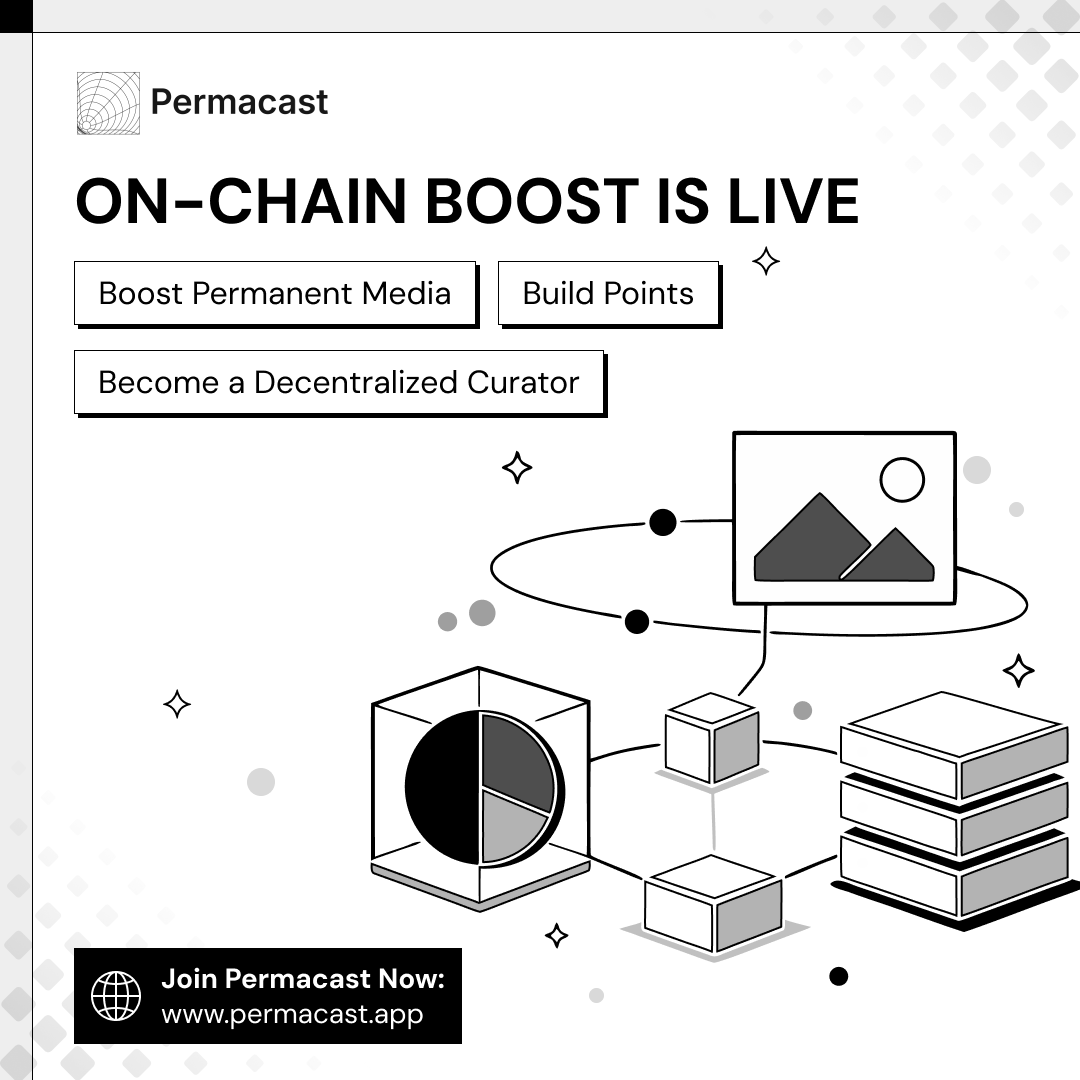
ON-CHAIN BOOST IS LIVE on Permacast
▸Become a Decentralized Curator.
▸Boost Permanent Media.
▸Build Points.
Every boost strengthens the network. Every action earns recognition.
Join now: https://t.co/UKtFOnmnHv
See how to participate below 👇
Web3 already understands composability when it comes to code and capital.
Protocols build on protocols. Liquidity moves across layers. Everything becomes more useful when it can connect to something else.
But knowledge still behaves in isolation.
A good idea appears, gets discussed for a few days, and then disappears back into the timeline with no real way to extend it or build from it later.
That changes when memory becomes referenceable.
Once reasoning can be linked, revisited, and carried forward, knowledge stops behaving like content and starts behaving like infrastructure.
You write something you care about.
A thread, a take, a piece of analysis.
For a moment, people see it. Maybe they engage, maybe they don’t. Either way, it slowly slips down the timeline until it’s effectively gone.
Not deleted, just no longer part of the conversation.
That’s how most writing in Web3 works today.
But if what you write could stay accessible, could be referenced, could actually matter later, then writing stops being ephemeral.
It starts to feel like leaving something behind.
👥 Management Update
As part of our commitment to transparency, we are formally sharing an update regarding our management structure.
Mr. Erudit Salihu stepped down as CEO on February 25, 2026, for personal reasons. This transition was made amicably and in mutual agreement with the company.
Following this transition, Co-Founder Benjamin Brandall has assumed the relevant responsibilities and is currently overseeing operations.
This change does not affect the project's roadmap or ongoing development.
We remain committed to transparency and long-term execution.