This account is no longer active. For health research and recommendations, follow @PewTrusts and find us on:
✔️LinkedIn: https://t.co/jJQtkvQAd0
✔️Facebook: https://t.co/rXdhwkQvAO
✔️IG: https://t.co/jMCIj3vue3
Prefer email? Sign up for our newsletter: https://t.co/C1RC3WdFqT
🗣️ Survey findings: 84% of U.S. adults say the government needs to do more to identify and regulate harmful chemicals—and 83% want companies to be more transparent about what’s in their products. https://t.co/ohwcMtIzqY
Does time of day affect how your body fights infection?
Pew biomedical scholar Dr. John Brooks II studies how the human body’s circadian clock regulates the immune system—and why this partnership is so crucial in preventing and treating disease.
https://t.co/KRLqGXjje0
From 2006–2014, fatal drug overdoses in Alabama rose 82%.
To respond, the state built the Central Data Repository, bringing together data from public health, mental health, Medicaid, law enforcement & more. https://t.co/WDyIVnSiaS
Nearly 40% of Americans live in areas without enough mental health providers.
The gap is widening—and so is the urgency to act. Here’s what states can do:
https://t.co/SZvprVz2PB
☎️ Call/text 988 for support
By 2040, the U.S. will create an extra billion tons of plastic waste—with over 30 million of it entering our lands and waters.
Our new research shows how existing tools can reduce the impact of plastic on our environment. https://t.co/vCBaRQgazs
📸Brett Coomer/Getty Images
How people are exposed to endocrine-disrupting chemicals:
🍽️ Food & packaging
🚰 Drinking water
🧸 Toys & baby products
💄 Cosmetics
🏗️ Buildings
👕 Clothing
These chemicals are common—and hard to avoid.
https://t.co/CG0Naa1G7Q
Outbreaks don’t wait. Data can’t either.
@CDPHE is improving how health data is reported—so officials can detect threats sooner and act faster.
Our conversation with the state’s epidemiologist: https://t.co/YnUJaP6K6B
Fentanyl is driving overdose deaths in the country—what people don’t realize is how prevalent fentanyl is in the drug supply.
One thing that can help reduce people’s risk? Fentanyl test strips.
The body's daily rhythm helps regulate sleep, metabolism, and immune defenses. It can even shape when we're most vulnerable—or most resistant—to infection.
2023 Pew biomedical scholar Dr. John Brooks II @Princeton is uncovering just how that works. https://t.co/wPYRhBnxmv
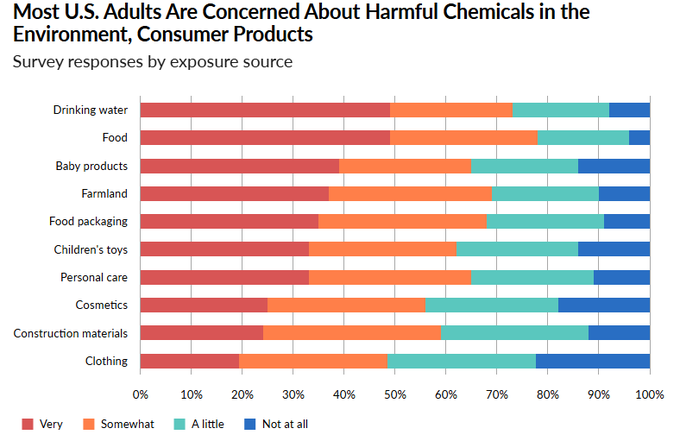
Most U.S. adults are concerned about harmful chemicals in food, drinking water, and everyday products—and 5 in 6 say government and business should do more to ensure chemical safety. https://t.co/ohwcMtIzqY
“A more complete picture can help public health teams more effectively tackle problems and target improvements.” – Pew’s own Margaret Arnesen
She discusses how states need timely, accurate public health data to respond to emerging threats. https://t.co/Z2FZUJGJVZ
Overdose deaths involving multiple substances are growing. 3 ways states can help:
1) Reduce barriers to effective medications
2) Support stimulant use disorder treatment
3) Boost access to naloxone, drug test strips, and other lifesaving tools
https://t.co/h8wx0K3pJQ
Most U.S. adults are concerned about harmful chemicals in food, drinking water, and everyday products—and 5 in 6 say government and business should do more to ensure chemical safety. #WorldHealthDay https://t.co/8QcHVadO5C
Dangerous substances like fentanyl are increasingly found in the drug supply, often without people knowing.
Drug checking equipment, like test strips, can save lives: https://t.co/XNGIP4piyy
Was glad to have the opportunity recently to sit down with Margaret Koller from the @RutgersCSHP and Rachel Hammond from the @NJDeptofHealth to learn more about their ongoing Integrated Population Health Data (#NJiPHD) Project work.
What is public health? When it’s working, it operates in the background. When it’s not, we notice. Chelsea Cipriano of the Common Health Coalition shares how public health relates to everyday life.
Health care workers face higher suicide risks—yet many avoid seeking help. Why?
• Stigma
• Fears of losing their job
• Limited access
Policy reforms and workplace changes can help. https://t.co/xcZy5y2k9F
What if states could connect the dots across health data?
Most data is siloed, but New Jersey is trying to change that. The state linked 90M+ records to better understand care—and close gaps.
Better data → earlier insights → stronger policy.
https://t.co/xKYd4EbzO4
Preventable illnesses are making Americans sick—and fragmented and ineffective use of data is fueling the problem.
When state Medicaid programs and health departments work together, states can lower costs and improve health outcomes.