Corals entrapped in an extinction vortex 🪸
My take on the excellent paper by @AlelimonHA@pimbongaerts & colleagues which highlights the critical consequences of genetic diversity loss in endangered corals @CurrentBiology#conservation#coralCOREgroup
https://t.co/c2AB3MXXXl
Excited to see this paper led by @kepra3 out in @RSocPublishing, inferring generational dispersal distances of corals using a reefscape genomics approach: https://t.co/9G2R5OsT1b
@UQscience @calacademy@reefscapegenomx
Last month, Charles Delbeek and I visited Max Janse at @burgerszoo in the Netherlands to see their marine exhibits and get a behind-the-scenes look. Their coral reef aquarium is amazing 😮—the scale and impressive coral cover truly give the impression of an actual coral reef! 🪸
🚨 Job Alert! 🚨 Naturalis is hiring two tenure-track researchers. We're looking for experts who want to integrate molecular techniques, imaging, and data science (AI) to advance species recognition and detection. Apply here: https://t.co/qurEZAu1xk. #Biodiversity#metabarcoding
What a great week at the #ECRS2024 conference in Napoli. Wonderful to catch up with so many colleagues and friends, and hear about the latest in coral reef research. Great #mesophotic session & awesome talks by @reefscapegenomx lab members @dennis_v_hulten & @jahoey13! 🪸🪸🪸
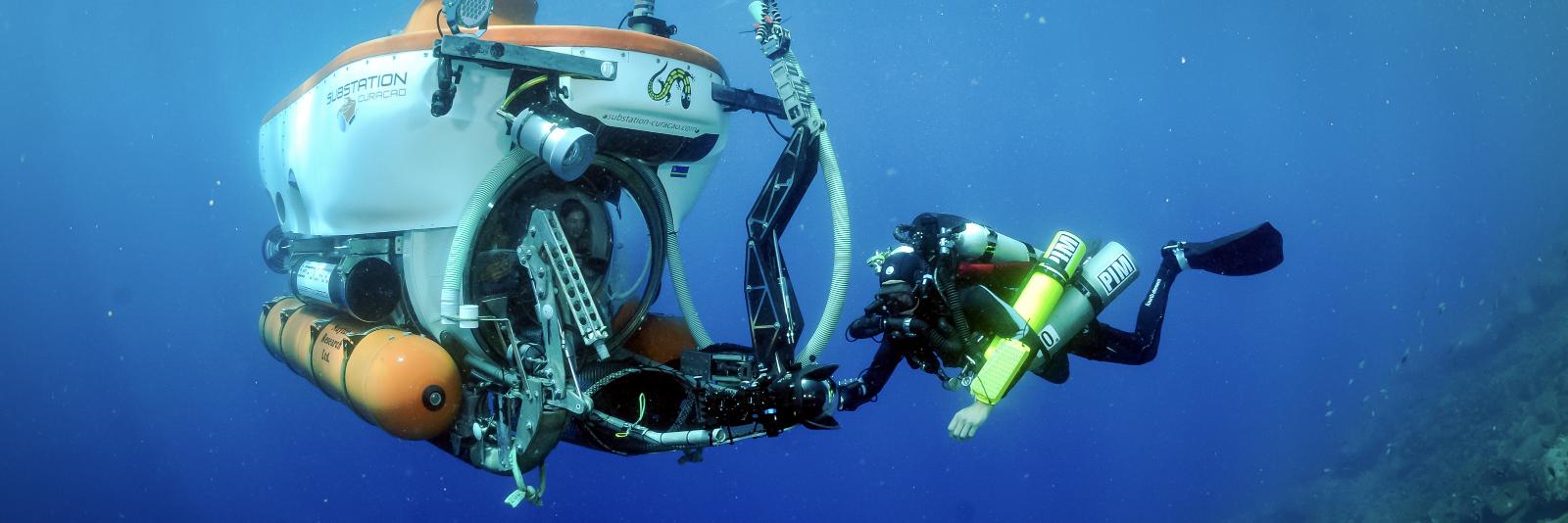
This time last year we conducted our first expedition as part of the @InkfishExplore Coastal Seas program, studying the mesophotic coral ecosystems of Curaçao in collaboration with the Carmabi Foundation:
https://t.co/6EcW4TBeIe
Our team at the Cal Academy is recruiting a college-level intern for a biodiversity genomic project!
It's a 10-month part-time paid position. Please help spread the word ( ignore the application deadline) @calacademy
Our lab has just returned from 3 wks in Curacao resurveying our monitoring sites during the ongoing coral bleaching event. Despite the heartbreak of witnessing the reefs' deterioration and the loss of century-old colonies, there were also hopeful signs of recovery and resilience
One of the most popular “modern” elements of the old Steinhart Aquarium, the Fish Roundabout, opened in May 1977. This 60-foot diameter, ring-shaped aquarium was designed to house free-swimming pelagic fishes, which are unaccustomed to encountering walls.
Our new paper out in @Nature today led by Hudson Pinheiro shows that coral reefs are drowning in plastics! Surprisingly, the deeper you go, the more plastics you find. Near big cities we found mostly consumer plastics, and further, more fisheries trash. https://t.co/z5yw4sv4Us
New work @TaraOceans_Sci in @npjbiodiversity https://t.co/fFPhvlpNRP resolving poci & porites lineages & disparate pop gen adaptation patterns across Pacific.honest paper reconciling morphology & genetics w/ state of the art analytics.Basic need to know what we have to conserve
Until 2004, the main gallery of Steinhart Aquarium looked like this: a series of identically-shaped picture windows, above which were "tank legends" that identified the animals within. Each legend was an original work of art, usually colored pencil and watercolor.
📢 Check out our new paper in @BMCBiology: "Global phylogenomic assessment of Leptoseris and Agaricia reveals substantial undescribed diversity at mesophotic depths"🌍🪸🧬my 1st 1st author paper, where we used RAD sequencing to explore these dominant mesophotic coral genera (1/3)