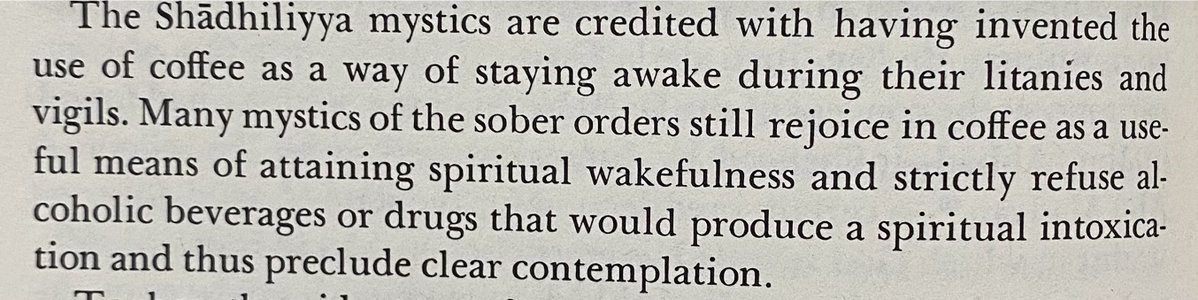
The Dollar Drop for Hello World Coffee sold out in less than 10 minutes on @cryptocomnft !
If you missed it, you can still get one on secondary for reasonable price 😎
Link to collection in thread
they want you to accept their terms that machines are conscious so they can apply human morality, but they haven’t done anything to prove there’s a bridge between cognition and subjective experience
CEOs are quietly realizing the AI replacement plan has a problem.
Two problems, actually.
One: the token costs for running AI agents are now exceeding what they were paying the employees they fired.
Two: when the tokens run out, the AI stops. Just stops. No continuity. No workaround. Just a spinning wheel where your workforce used to be.
You fired humans to save money and bought a subscription that bills you into a corner.
The employees you let go knew what to do when things broke.
The AI just invoices you for the outage.
And then there’s the permission problem nobody wants to talk about.
To do its job, the AI agent needs access. Full access. Your systems, your patents, your contracts, your future plans. Everything you spent years building, handed over to a process that has no loyalty, no discretion, and no skin in the game.
You didn’t hire a replacement.
You gave a stranger with no soul the keys to everything you own.
Enjoy.
met a guy who brought Sun Ra to LA to play - Ra was at his house for a week and each day would dress up in his full regalia (including headdress) and disappear in the middle of the day for hours. Finally he asked Ra where he'd been?
"I went to the Sizzler for some rainbow trout"
“Tradition has broken down. Taste is utterly debased. There is no enlightened guidance or correction from authority. The town, long since degraded, is now being annihilated by a flabby, shoddy, romantic nature-worship. That romantic nature-worship is destroying also the object of its adoration, the countryside. Both are being destroyed. The one agelong certainty, the antithesis of town and country, is already breaking down. Two diametrically opposed, dramatically contrasting, inevitable types of beauty are being displaced by one drab, revolting neutrality. Rural influences neutralize the town. Urban influences neutralize the country. In a few years all will be neutrality. The strong, masculine virility of the town; the softer beauty, the richness, the fruitfulness of that mother of men, the countryside, will be debased into one sterile, hermaphroditic beastliness.” — Thomas Sharp, Town and Countryside, 1932
Fair warning before I dig in: this image is actually a very competent rendition. It's doing more right than most AI Monet pastiches. But you asked what makes it inferior to a real Monet, so here's the honest breakdown.
What's missing — the physical object
A real Monet is a thing before it's an image. This is the biggest gap and it's not solvable by better prompting.
No impasto. Monet loaded paint thick. His water lily pads sit physically on top of the canvas — you can see the ridges where the brush dragged, the little peaks where pigment piled up. Look at the lily pads in your image: they're smooth tonal gradients pretending to be brushstrokes. A real one would catch raking light differently from the water around it.
No canvas weave. Monet painted on linen with a specific tooth that broke up his strokes and let underlayers peek through. Your image has a uniform digital surface — the "texture" is illusionistic, painted into the pixels rather than emerging from the substrate.
No drying history. Real Monets have cracks, areas where wet-into-wet bled, areas where dry paint was scumbled over dry paint. Pigments aged differently — his cobalt blues shifted, his madder lakes faded. The image has no chronology in it. It's all painted "at once."
What's wrong with the marks themselves
Brushstroke direction is decorative, not descriptive. Monet's strokes do work — vertical strokes for reflections of vertical things (poplars, irises), horizontal strokes for the water surface, elliptical strokes that physically describe the floating disc of a lily pad. In your image, the strokes are stylistically "Monet-ish" but they don't consistently track what they're depicting. The reflections in the upper left, for instance, have stroke directions that don't quite resolve into specific reflected objects.
No hierarchy of finish. Monet had passages of intense detail next to passages left almost raw. He'd finish a single lily blossom with three decisive touches and leave a whole quadrant of water as scumbled understatement. AI tends to render everything at the same level of "doneness." Your image is uniformly busy.
Edges are too soft everywhere. Real Monet has surprisingly hard edges in places — the rim of a lily pad against dark water can be a single confident knife-edge stroke. AI defaults to blending. Look at the pads in your foreground: their edges dissolve gradually. Monet's often don't.
The color problem
The palette is plausible but generic. Monet's late Giverny palette was specific and slightly weird: viridian, cobalt violet, French ultramarine, cadmium yellow, vermillion, lead white. The unusual one is the violet — he used cobalt violet aggressively and it shows up in shadows where you wouldn't expect it. Your image has some purple in the lily pad rims, which is the right instinct, but the violets aren't doing structural work the way Monet's do.
No optical mixing. Monet placed unmixed complementary colors next to each other so your eye blends them at viewing distance. Pure orange next to pure blue, reading as a luminous neutral. Your image has colors that are already pre-mixed into harmonious mid-tones. It's pleasant but it doesn't vibrate.
The whites are wrong. Monet's whites are almost never white — they're tinted pink, blue, lavender, yellow depending on the light condition he was chasing. The white lily in your upper-left is closer to a true neutral white than Monet would ever paint.
The conceptual gap
This is the part that actually matters and the part no model will close.
Monet was solving a problem. Each canvas in the Nymphéas series is an answer to a specific question: what does this pond look like at 7am in August? What happens to reflections when wind crosses the surface? The paintings are records of sustained looking at a real place he built and tended for thirty years. Your image is a style reference, not an observation. It's a painting of "a Monet" rather than a painting of a pond.
No series logic. A single Monet water lily painting is meaningful partly because of the ~250 others. They're variations against each other. This image is an orphan — it has no relationship to anything.
No hand, no decision, no risk. Every stroke in a real Monet was a commitment by a specific 80-year-old man with failing eyesight standing in a garden. The image has no author in that sense. The "decisions" are statistical averages of millions of images.
What it does get right (worth saying)
The compositional asymmetry is good. The reflected verticals reading as trees/irises is a smart move. The pink lilies in the lower foreground are placed with reasonable intuition. If you cropped tightly to a 6-inch square anywhere in this image, it would pass a quick glance.
The tell is always scale and surface. Stand six inches from a real Monet and it dissolves into chaos — slabs of pigment that look like nothing. Stand six inches from this and it just looks like a slightly blurrier version of itself. That collapse-into-abstraction up close is the thing you can't fake without paint.
MHS GENESIS holds the military health records of nearly ten million Americans.
It is being moved onto Oracle Cloud Infrastructure and deployed inside the NSA.
Oracle is also building Solstice, the largest AI supercomputer DOE has ever announced.
And no one seems to know where it’s going.
Well. Almost no one.
In 1969, Jethro Tull delivered an electrifying rendition of “Bourée” on the French television show La Joconde.
The performance reimagined Johann Sebastian Bach’s “Bourrée in E minor” as a swinging, flute-driven exploration that defied genre and era alike.