What if kidney disease could be detected years earlier?
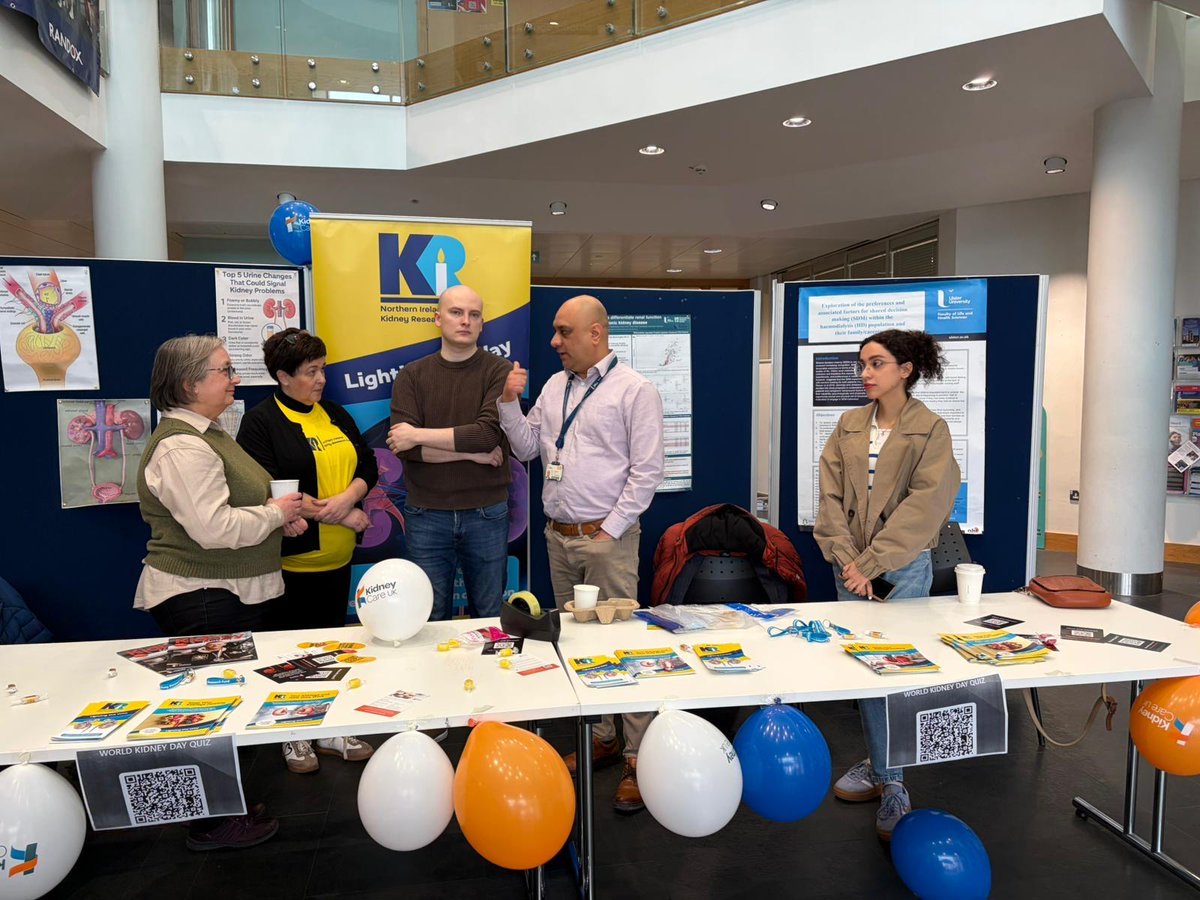
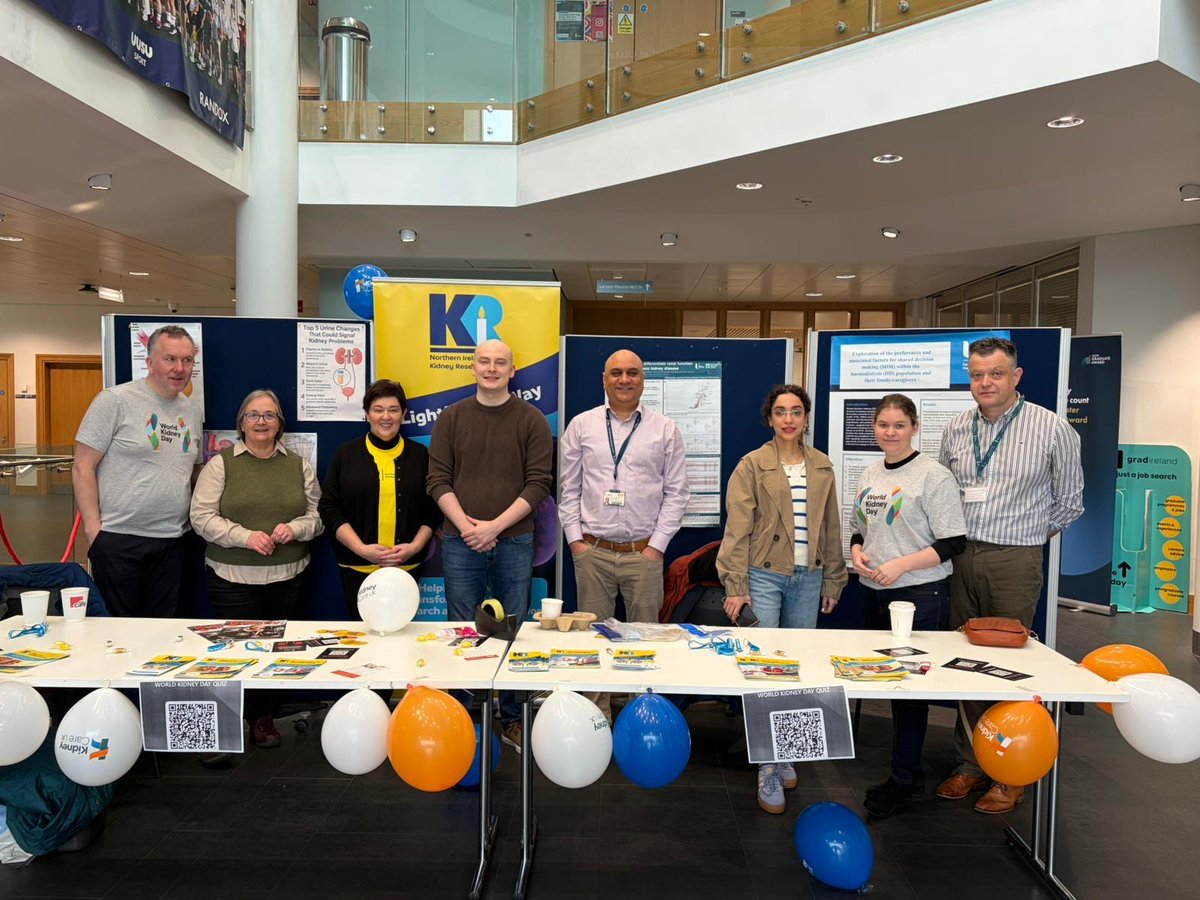
Great to see the @RaiLabCTRIC group highlighting kidney health on World Kidney Day.
Yesterday we hosted an X Space to discuss NephroNet and how AI could detect kidney disease earlier: https://t.co/kXVJaRBqi8
🌍 World Kidney Day at the Personalised Medicine Centre
Today PMC researchers from @RaiLabCTRIC marked World Kidney Day by raising awareness of kidney disorders and sharing tips on maintaining good kidney health.
Kidney disease kills millions. Early detection changes everything.
On World Kidney Day, hear directly from one of the scientists building a solution you voted to fund.
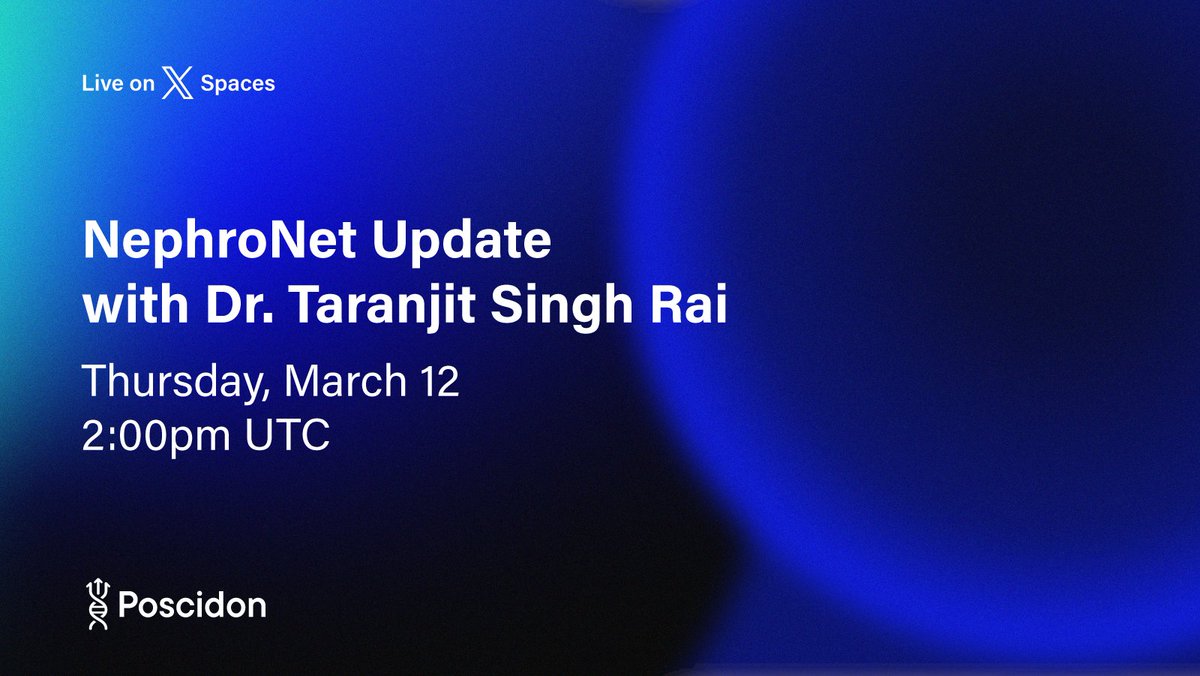
@RaiLabCTRIC joins us to reveal the latest on NephroNet at @UlsterUni.
📆 Thursday, March 12, 2:00 PM UTC
🔗 Set a reminder: https://t.co/RpoFh5Pl69
Kidney disease kills millions. Early detection changes everything.
On World Kidney Day, hear directly from one of the scientists building a solution you voted to fund.
@RaiLabCTRIC joins us to reveal the latest on NephroNet at @UlsterUni.
📆 Thursday, March 12, 2:00 PM UTC
🔗 Set a reminder: https://t.co/RpoFh5Pl69
40 million papers.
The answer you need is buried in there.
You can’t read them all.
Motif can.
Motif scans the literature and surfaces biomarker associations in minutes.
Be first to find answers in minutes. Join the waitlist at https://t.co/KfBR0oU9TL.
One year in.
We kept building.
We funded science.
We shipped governance that actually works.
We built Motif and are getting it ready for launch.
Read the full year-in-review here: https://t.co/CxGP2tqnTC
Huge congratulations Dr. Thomas McLarnon!
Building a clinically meaningful, AI-powered approach to earlier chronic kidney disease detection during a PhD is no small feat.
We’re proud to back Dr. McLarnon and the NephroNet team at @UlsterUni as they take this research beyond the lab and toward real patient impact!
🎓 Congratulations to Dr Thomas McLarnon on successfully passing his PhD viva!
Tom’s doctoral research focused on sendotypes: combinations of senescence biomarkers capable of predicting clinical outcomes years in advance across major age-related diseases, including COVID-19, cardiovascular disease (CVD), and chronic kidney disease (CKD).
A particularly impactful outcome of his PhD is NephroNet (patent filed), a clinical decision-support tool that can predict renal function with precision up to one year in advance, with strong potential for real-world clinical translation.
During his PhD, Tom presented his work internationally (USA and Italy) and made an outstanding contribution to the Rai Lab, where he played a key role in supervising, mentoring, and training undergraduate and postgraduate students.
To date, Tom has two first-author papers, two second-author papers, and a filed patent, with another manuscript currently in preparation.
I am delighted that Tom will remain in the lab as a Postdoctoral Research Fellow, where he will help drive the commercialisation of NephroNet.
Sincere thanks to @PoSciDonDAO for funding his post-doctoral fellowship and to @NIKRFcharity for supporting a prospective clinical study evaluating NephroNet and sendotypes for predicting renal function one year in advance that Tom will lead.
👏 A fantastic achievement and an exciting journey ahead.
Many thanks to the examining panel:
• External Examiner: Professor Salvador Macip
• Internal Examiner: Dr Catriona Kelly
• Chair: Dr Paula Mc Clean
Sincere thanks to co-supervisors Dr Steven Watterson and Dr Frank McCarroll
Special thanks also to Professor David Gibson and Dr Shu-Dong Zhang
Patients don’t trust the system because the system never lets them in.
They’re told to wait.
They’re told decisions are “too complicated.”
They’re shut out of the processes that shape their own health.
DeSci opens the doors.
Patients help choose what gets built.
Communities guide priorities.
Transparency replaces secrecy.
Trust grows when people participate.
$650,000 in 5 seconds.
One year ago today.
We honestly thought the platform broke. Some of us wondered if bots hit the sale.
Nope. It was real.
It was the DeSci community showing what happens when people are finally allowed to act without waiting for institutions to catch up.
You believed in personalized medicine before the rest of the world woke up.
Thank you for backing this vision with that kind of force.
The first year showed our potential.
This next one is where that potential turns into impact with our funded research projects and products built.
Stay close. This is just the beginning.
Science wants more funding.
Crypto provides capital overnight.
The paradox is simple.
Scientists mock crypto, while crypto could very well be the reason some of them still have labs.