The German army flew one-way attack drones into tanks for the first time on November 22 at a training ground in Lithuania.
The ones used in the tests carried inert warheads. Days earlier the same troops tested a targeting tool called Clarity, which sorts satellite and sensor data and recommends what to do next.
More armies are treating these drones as standard kit rather than an experiment.
https://t.co/EFKmuNyXvB
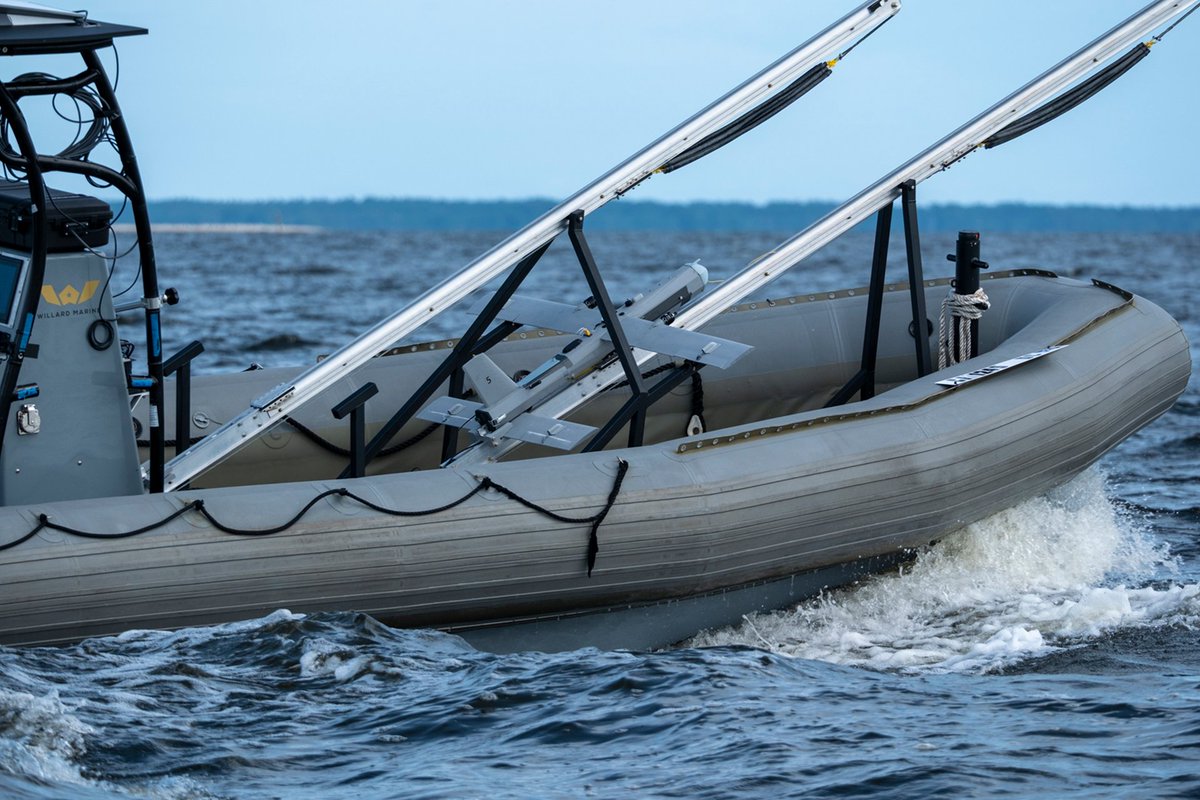
Blue Sky Horizon is a boat converted to run with no crew, with launch rails mounted on the bow for long-range drones. We convert hulls people already own, which is faster and cheaper than building new ones.
Ukraine's 40th Separate Marine Brigade released footage on November 23 of uncrewed boats carrying heavy drones toward Russian lines.
Every drone has a limited range. The boat carries it most of the way, so it can fly further inland than it could from shore.
The Pentagon set up a new office in July to buy cheap mass-produced drones faster. In its first few months it has sent more than 25,000 systems to US Central Command, which covers the Middle East.
More than 24,000 of those are counter-drone systems. The rest is about 1,300 attack drones and over 100 unmanned boats and submarines.
The point is to replace multi-million dollar munitions with systems cheap enough to lose. The year's bill came to about $782 million.
https://t.co/uzQqHEcyTf
California's fire cameras spotted more than 1,200 fires in one season, and a third of those before anyone called 911.
The state has over 1,300 cameras sitting on ridges and towers. UC San Diego and CAL FIRE built an AI that watches the feeds and flags smoke.
Spotting fires is the part of wildfire response that technology has mostly taken over. Putting them out is still done by hand.
Getting water to a fire is still manual work. Someone drives it in and works the nozzle, because the ground changes every season, the load shifts, and wind, fences and people turn up without warning. Where the water goes is a judgment a person has to make and answer for.
https://t.co/OBfhLyiR6S
Today I'm in D.C. joining the Vanderbilt University Institute of National Security as a guest speaker at the 'Convening in the Capital: Autonomy at Scale' conference.
I'll be discussing Powerus drone technology and building the systems warfighters trust with their lives. Should be a lively event, if you are here, come join us!
#ConveningInTheCapital @VanderbiltU@powerus_usa
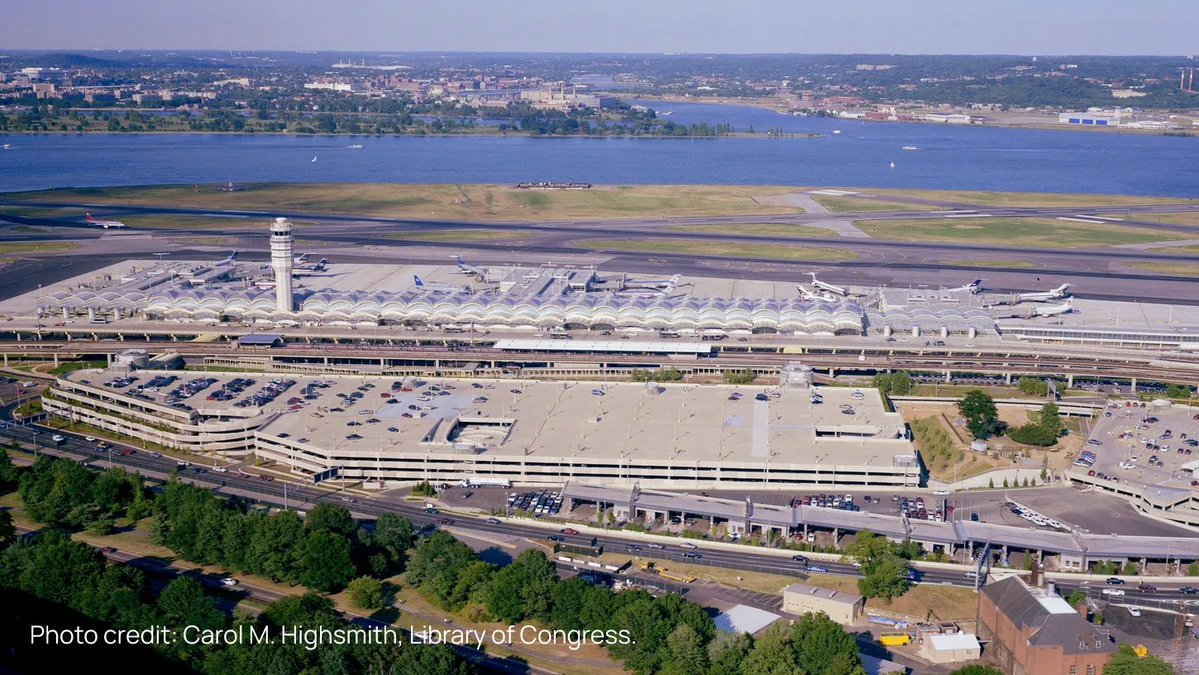
Drone sightings near US airports nearly doubled in a single quarter, from 320 to 601.
That is the FAA’s own count for April through June. It now averages more than 100 reports a month.
A sighting is only a report. The collisions are counted separately, and the FAA has logged at least 17 drone strikes on aircraft since 2017.
This week the FBI published four photographs and asked the public to identify the people in them, over a drone allegedly flown beside Reagan National on 29 October. Nobody has been charged.
The Pentagon has already funded blockchain work to trace component authenticity through the supply chain. Andrew Fox at Solana Breakpoint on where that leads.
When drones handled some 911 calls, officers reached the remaining ones faster.
University of South Carolina researchers ran the first randomized control trial on the idea, across two police departments over five months.
When a drone is dispatched, it arrives about two minutes before an officer would.
Often it handles the call on its own and no officer is sent at all. In Montgomery County that happened on about one in five drone calls. In Philadelphia, closer to three in four.
Each of those is a patrol car that stayed available. With fewer calls to cover, officers reached the rest faster as well.
The findings are preliminary.
https://t.co/MFPnrLqs7z
A resupply drone that signs for its own delivery and settles the bill on landing. An aircraft that proves its identity is friendly before anyone mistakes it for a threat. A flight log no one can quietly rewrite after.
Andrew Fox at Solana Breakpoint in London, on what autonomous systems will need from the rails this industry already built.
The next billion users won’t be people. They’ll be machines. Our CEO at Solana Breakpoint on what happens when drones start signing for their own deliveries.
Equity-only listings belong in the past. Our CEO on why our stock went live on @solana the day we hit Nasdaq, during his keynote today at Solana Breakpoint.
solana:PUSAG1stksTcAoK9MjinEHUwAYRJsbovywYCk37m6hy
Defense autonomy and blockchain are moving toward the same future.
Our CEO Andrew Fox is on stage in London today at @solana Breakpoint 2026.
His keynote, "Why We Went Onchain," is about where defense and blockchain meet, and why the next wave of users may not be people at all.
Defense has a habit of preparing for the last war. We want to build for the next one.
Livestream link: https://t.co/wKnVUJfd9i
Protection starts with command & control.
Oz puts every aircraft, radar track and site zone in one place. Every command is confirmed against live telemetry, and every action has an operator’s name on it.
Every Powerus aircraft. Orchestrated on Oz.
Ukraine is opening five million annotated frames of battlefield footage, most of it shot by drones, to defense companies in allied countries at no charge.
Any firm that trains a model on the archive licenses what it builds back to the Ukrainian military.
The archive is called Avengers Labs. The Defense Ministry says most of it comes from unmanned systems.
The companies never see the footage. They score models against it inside an isolated system, and a model that performs well gets loaded onto an aerial drone, a ground robot or a sea drone.