COACHES | Join Our Team.
The traditional model in our industry has always looked the same.
A facility builds a system.
They collect data.
They conduct research.
They create processes.
And then they keep it to themselves.
Or they position themselves as the experts and tell everyone else that if you want access to the answers, you need to get on a plane and come to them.
We’re building something different.
The Comprehensive Assessment Approach was never designed to be confined to a single location. It was built to create access.
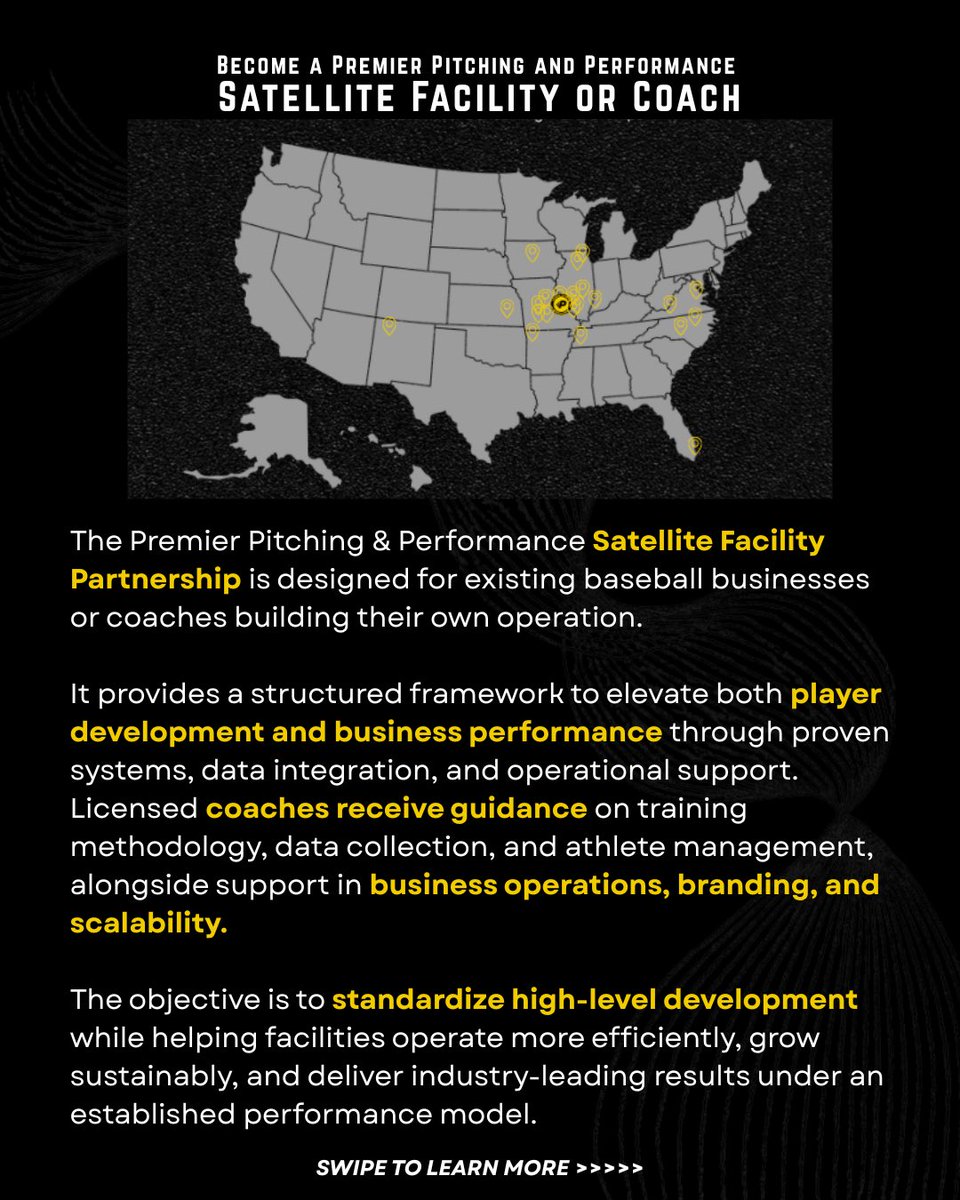
We’re partnering with coaches, facilities, academies, and organizations across the country to bring the same assessment processes, technology, and decision-making frameworks that drive our athlete development model directly into their environments.
This isn’t a franchise.
This isn’t just a licensing play.
This isn’t us telling you how to coach.
It’s a partnership.
A partnership built around helping great coaches become even more effective by giving them access to objective information, proven systems, and a comprehensive evaluation process that has never before been available at this scale.
We believe athlete development moves forward faster when knowledge is shared, not protected.
The future isn’t one facility having all the answers.
The future is high-level coaches working together to bring high-level processes to athletes everywhere.
If you’re interested in bringing the Comprehensive Assessment Approach and/or business management support to your facility, academy, high school, college program, or organization, we’d love to start a conversation.
#DominateTheZone
Dominic Horn (Metropolitan Community College) from opening day of the @PCDL_bsb
▪️ 6’1”, 205 lbs
▪️ FB, CT, CH, SW mix
▪️ Fastball velocity +4.4 mph since 8.4.25
▪️ Power +309 W since 5.21.25
#DominateTheZone | @Dominic_25_Horn
Most athletes are given mechanical cues.
The problem is those cues often describe what happened, not why it happened.
We leverage a Performance Integrated Approach to athlete development. Rather than chasing symptoms, we work to identify the underlying movement constraints that are driving the outcome.
Here is an example of how it works. Insert the Wide Stance Jefferson Curl, it’s a tool that allows athletes to progressively load the spine and pelvis through spinal flexion while developing awareness and control throughout the entire system.
One of the reasons we like this exercise is its versatility. By manipulating band tension and stance width, we can easily adjust the intensity to match the athlete’s current capabilities. For some athletes, it’s a low-intensity movement used to build awareness. For others, it becomes a more demanding loading strategy that challenges their ability to control movement under greater stress.
While the Wide Stance Jefferson Curl is a foundational exercise that many of our athletes perform, its importance becomes even greater when we identify athletes who consistently become extension-biased throughout the throwing motion.
When an athlete extends early through the spine, they often become “stuck” in extension and lose the ability to effectively reposition the trunk and pelvis throughout the delivery. The result is frequent compensations elsewhere in the system, reduced efficiency, and missed opportunities for force transfer.
Instead of simply telling an athlete to “stay closed” or “don’t lean back,” we create training environments that improve the physical qualities necessary to produce better movement solutions.
That’s the difference.
We’re not coaching mechanics in isolation.
We’re integrating assessment data, movement quality, biomechanics, strength and conditioning, and throwing performance to build individualized training programs that address the root cause of the problem—not just the symptom.
Because lasting changes don’t happen from better cues.
They happen when you improve the system that produces the movement.
Assessment drives intervention. Intervention drives adaptation. Adaptation drives performance.
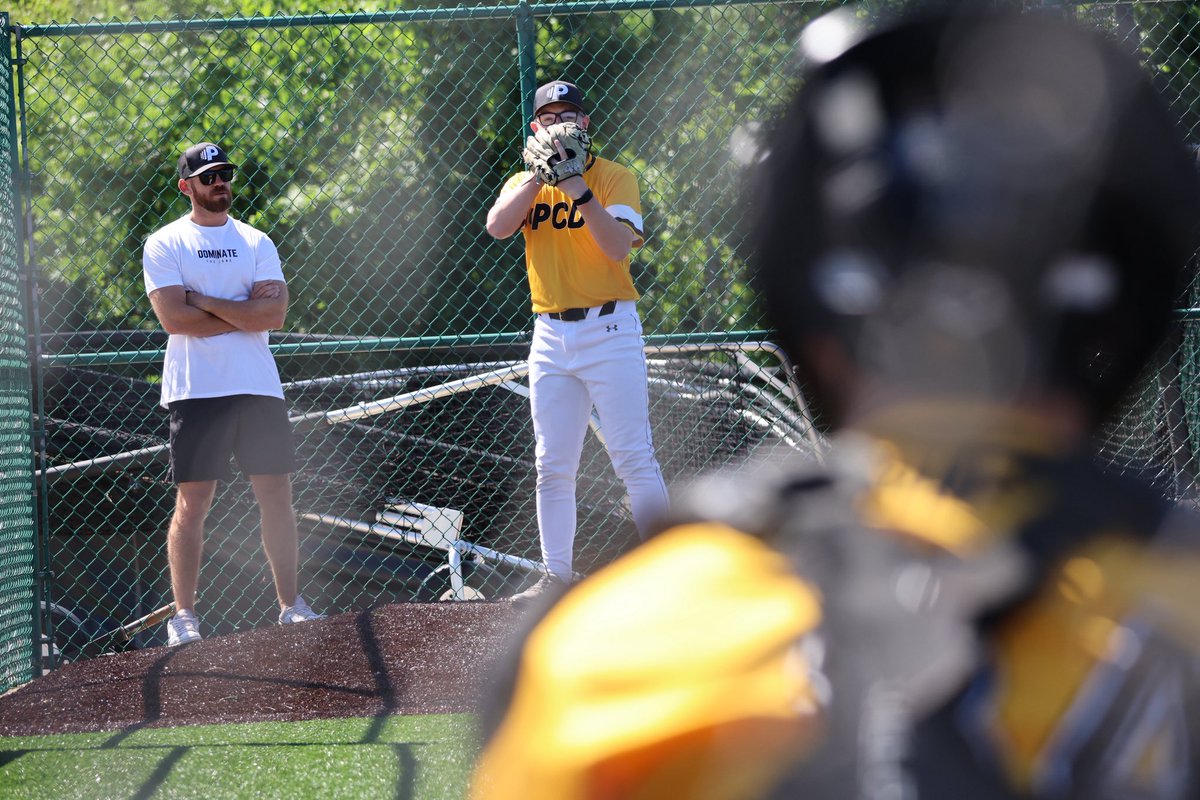
Opening Day of our college summer league was a success! @PCDL_bsb
A successful development journey doesn’t happen from training alone. And it doesn’t happen from games alone.
The best players in the country are constantly balancing both.
Every fall, Division I baseball programs across the country utilize a train + play model. Athletes spend time developing strength, movement quality, pitch design, velocity, command, and recovery systems while simultaneously competing and applying those improvements in a game environment.
That’s exactly what the PCDL was built to do.
Our athletes have access to advanced throwing programs, strength & conditioning, mobility training, biomechanics analysis, pitch design technology, recovery protocols, workload management, and performance testing. But collecting data is only half the equation.
The real value comes from applying those improvements against live hitters.
The PCDL allows our coaches to connect the dots between assessment data, training interventions, and competitive performance. Every outing becomes an opportunity to evaluate progress, identify opportunities, and make individualized adjustments that accelerate development.
Train. Compete. Learn. Repeat.
When elite training and meaningful competition are brought together under one system, development happens faster.
That’s the Premier Collegiate Development League.
Excited to have everyone aboard for the summer of 2026!
#DominateTheZone
Players | Reach your goals with us
Unlock your potential with Premier Pitching’s comprehensive assessment and training ecosystem.
Over 11 years, we’ve refined a proprietary approach used by top-tier schools and professional organizations—now available to you. Choose from in-house training, remote training, satellite training, or our PCDL program.
Prefer just insight? Our assessment-only option gives you the same elite evaluation.
No matter how you train, you get the same world-class assessment process that powers champions. Join us, and take your game to the next level. #DominateTheZone
Learn more and register online at https://t.co/UtzeQkAJoV
Call: (636) 856-1107
Email: [email protected]
Struggling with trunk control? Try this Hover Drill progression
For Carson Mullen, this hover drill with an abbreviated arm action is being used to improve proximal control of the pelvis and trunk, allowing for more efficient energy transfer throughout the kinetic chain.
During Carson’s assessment process, we identified a tendency to dump the trunk forward during the delivery. This forward-oriented strategy made it difficult for him to efficiently load and unload the arm, ultimately disrupting the sequence of energy transfer from the lower half to the baseball.
The hover drill creates an environment that challenges Carson to organize and control his center of mass while maintaining stability through the pelvis and trunk. By improving proximal control, we’re creating a more efficient pathway for force to transfer from the pelvis, through the trunk, and ultimately into the throwing arm.
The abbreviated arm action serves a secondary purpose as well. By reducing the complexity of the arm swing, the athlete is able to focus on sequencing and timing rather than compensating with excessive arm movement. This allows him to feel what an efficient loading and unloading pattern should look like while reinforcing better trunk positioning throughout the delivery.
When the pelvis and trunk can effectively accept and transfer force, the arm no longer has to create velocity on its own. Instead, it becomes the final link in a coordinated sequence that allows force to move efficiently from the ground, through the body, and into the baseball.
This is why assessments matter.
The goal isn’t to prescribe drills because they’re popular. The goal is to identify the specific movement constraints limiting performance and build training environments that directly address those limitations.
Assessment drives intervention. Intervention drives adaptation. Adaptation drives performance. #DominateTheZone
Anyone can create a predictive model now. Anyone can prompt AI to leverage their data to create something to fit their narrative.
You have to take these models through a validation process. Testing sets. Training sets. Limiting overfit. Tuning. Predictive models are only beneficial if they actually translate to an effective intervention.
Tread carefully.
One of the largest, most robust databases for pitching performance in the world has helped us build BOOST and our reporting systems.
Over 20,000 pitches on motion capture alone.
With AI, it’s become much easier for people to create their own models. But what are they based on? Something that seemed so objective 5 years ago now has athletes questioning the integrity of their scores.
#DominateTheZone | @nolan_rappe15
Your training has to go next level before your game will. ⚡️
At Premier Pitching, we don’t just train—we transform. Every throw, every rep, every day pushes you to reach your full potential.
For those who aren’t good with ‘good enough’. #DominateTheZone
Jackson has an awesome personality and is just starting to develop the physicality💪 I’ve seen him sit 84 to 86mph in the facility. Big-time senior season coming up📈 @premierpitching
Super excited for Nolan going into his senior year! Definitely a guy to take a look at. Would be a great addition to the clubhouse as well as a backend reliever at the next level 💪 @premierpitching